
Cut flower variety
Basil Red Rubin
Ocimum basilicum / Basil
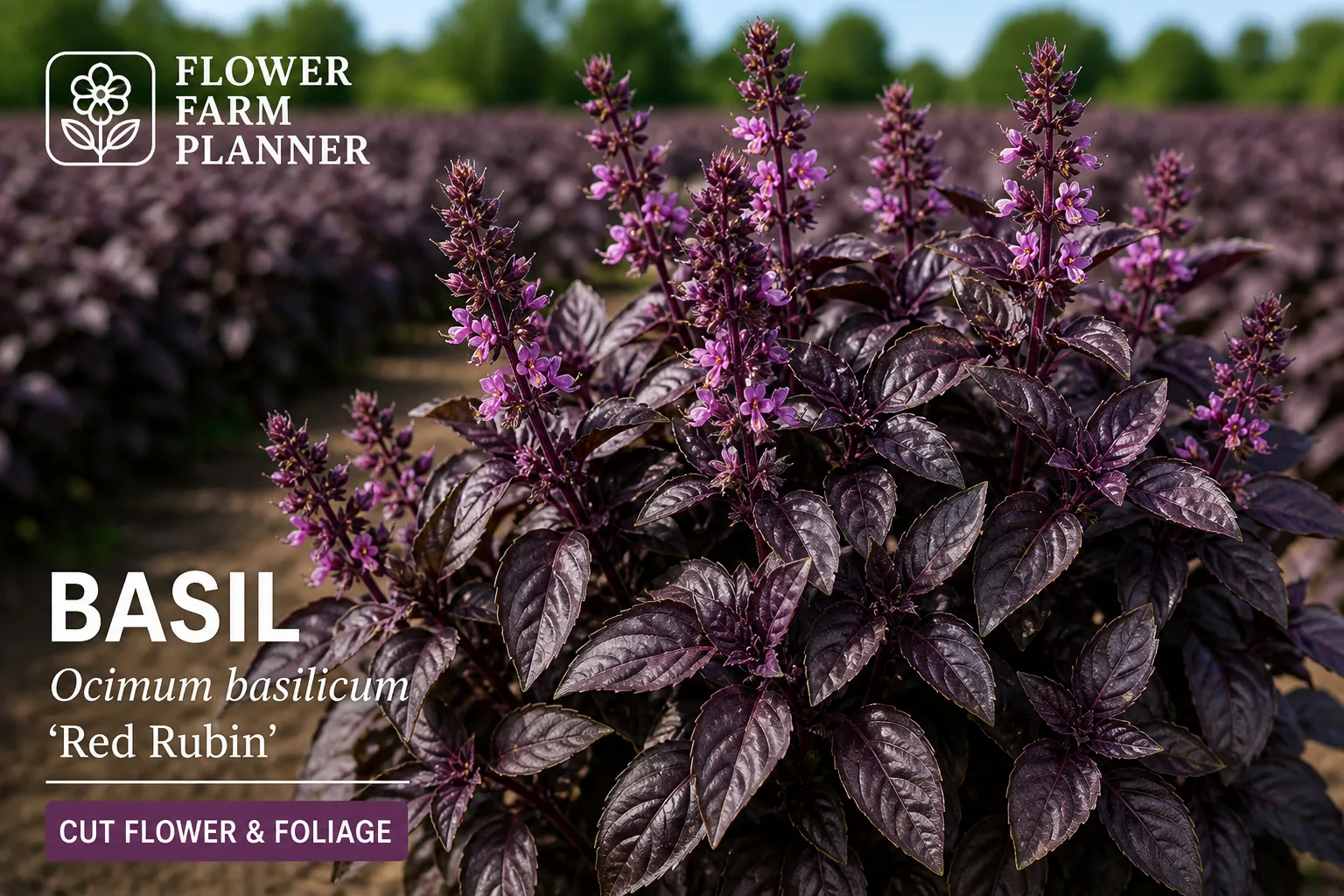
Red Rubin basil is a warm-season purple basil grown for glossy burgundy foliage, strong basil fragrance, and mauve-lavender flower spikes. For flower farmers it works best as a local, repeat-cut foliage and scented filler crop rather than a commodity cut stem. It brings dark color and edible-herb storytelling to bouquets, but it must be harvested cool, hydrated fast, and kept out of ordinary cold flower storage.
Overview
Why growers use it
Red Rubin basil is a warm-season purple basil grown for glossy burgundy foliage, strong basil fragrance, and mauve-lavender flower spikes. For flower farmers it works best as a local, repeat-cut foliage and scented filler crop rather than a commodity cut stem. It brings dark color and edible-herb storytelling to bouquets, but it must be harvested cool, hydrated fast, and kept out of ordinary cold flower storage.
Floral use
Design and market fit
Role
Filler
Texture
Glossy, broad-leaved, aromatic, slightly soft, leafy texture with a bold color block; flowering stems add fine vertical texture above the foliage.
Tone
Dark, saturated, warm purple-burgundy with aromatic herbal character.
Form
Branching upright herb stem with opposite leaves and terminal flower spikes when mature.
Bouquet fit
Best in garden-style bouquets, herb bouquets, moody palettes, market bunches, burgundy autumn work, culinary-inspired arrangements, and relaxed wedding designs. It provides scent, foliage mass, dark contrast, and a fresh local feel rather than formal line or focal structure.
Event use
Useful for summer weddings, herb-themed events, farm-to-table dinners, autumn palettes, moody burgundy designs, subscription bunches, market bouquets, and edible floral displays where only food-safe plant material is used.
Color notes
Purple, Green, White, Pink
Choose a variety
Other varieties in this crop
Basil African Blue
Purple / Foliage, Filler, Accent
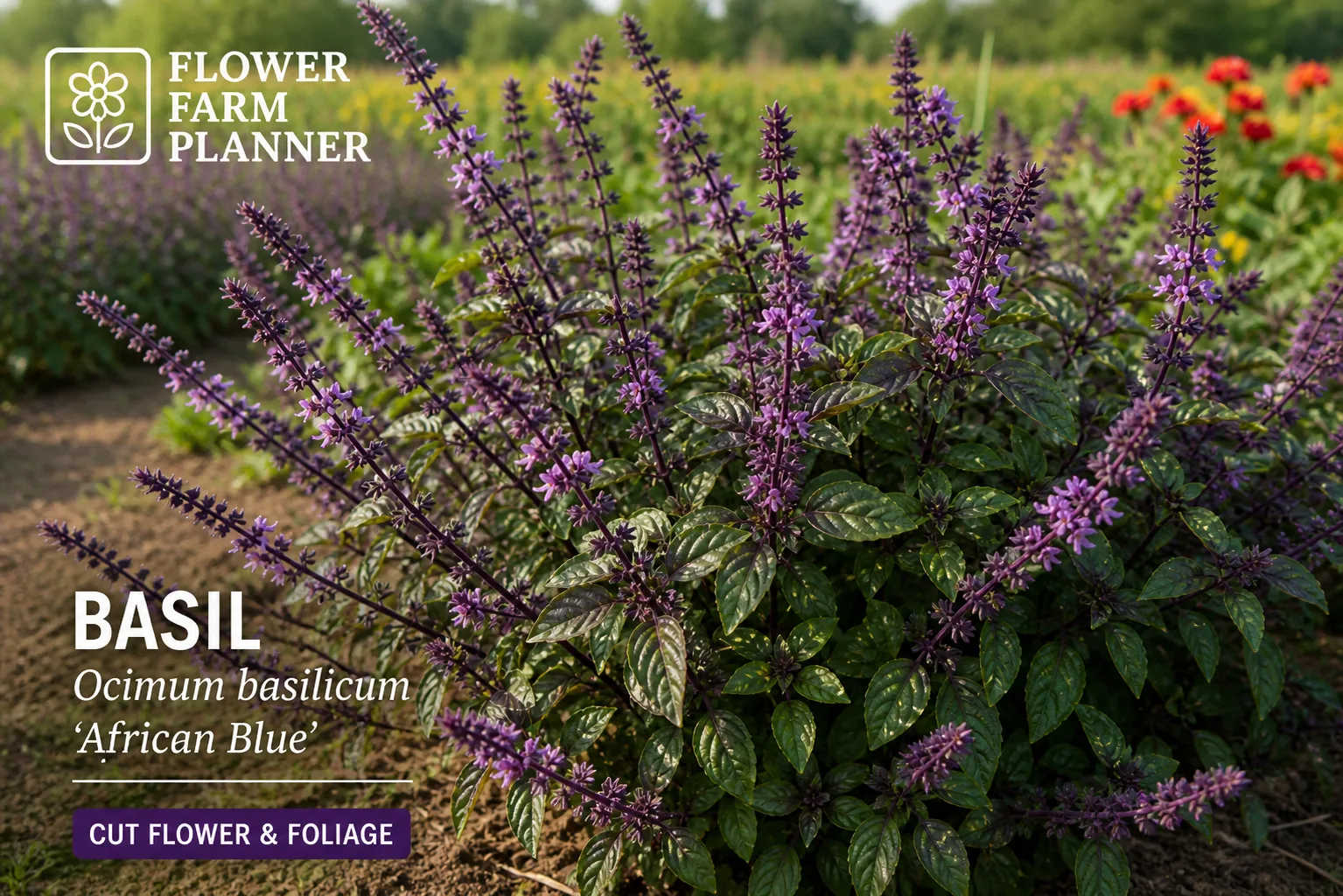
African Blue Basil is a large, aromatic, purple-flowered basil that behaves more like a tender perennial pollinator shrub than a normal seed basil. For flower farms it is most valuable as a fresh scented filler with lavender-purple spikes, dark calyces, and local-season personality. It should be planned from rooted cuttings or live plants, not seed, and handled after harvest with basil-safe temperatures rather than standard cold flower storage.
Open variety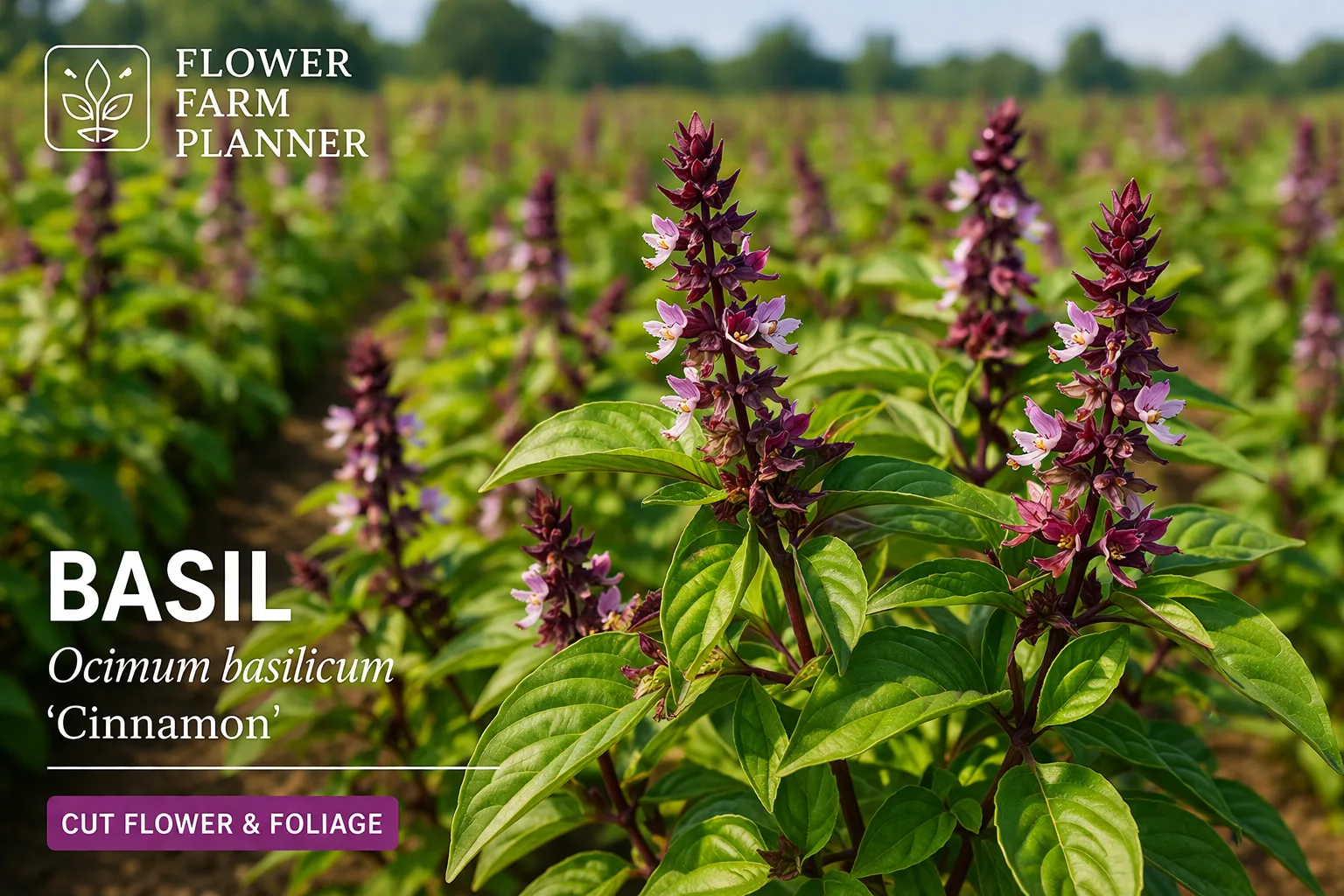
Basil Cinnamon
Green / Filler
Cinnamon basil is one of the most useful fragrant summer fillers for small flower farms because it grows quickly from seed, branches after pinching, produces generous aromatic stems, and brings a warm herbal scent that ordinary foliage cannot provide. Its glossy green leaves, purple-brown stems, and pink-lavender flower spikes make it more floral and decorative than standard culinary basil. The crop is simple to grow in warm weather, but it is not careless: it needs warm soil, steady water, good airflow, and careful postharvest handling. The biggest planning rule is that basil must be treated as a warm-sensitive herb stem, not as a normal cold-storage cut flower.
Open variety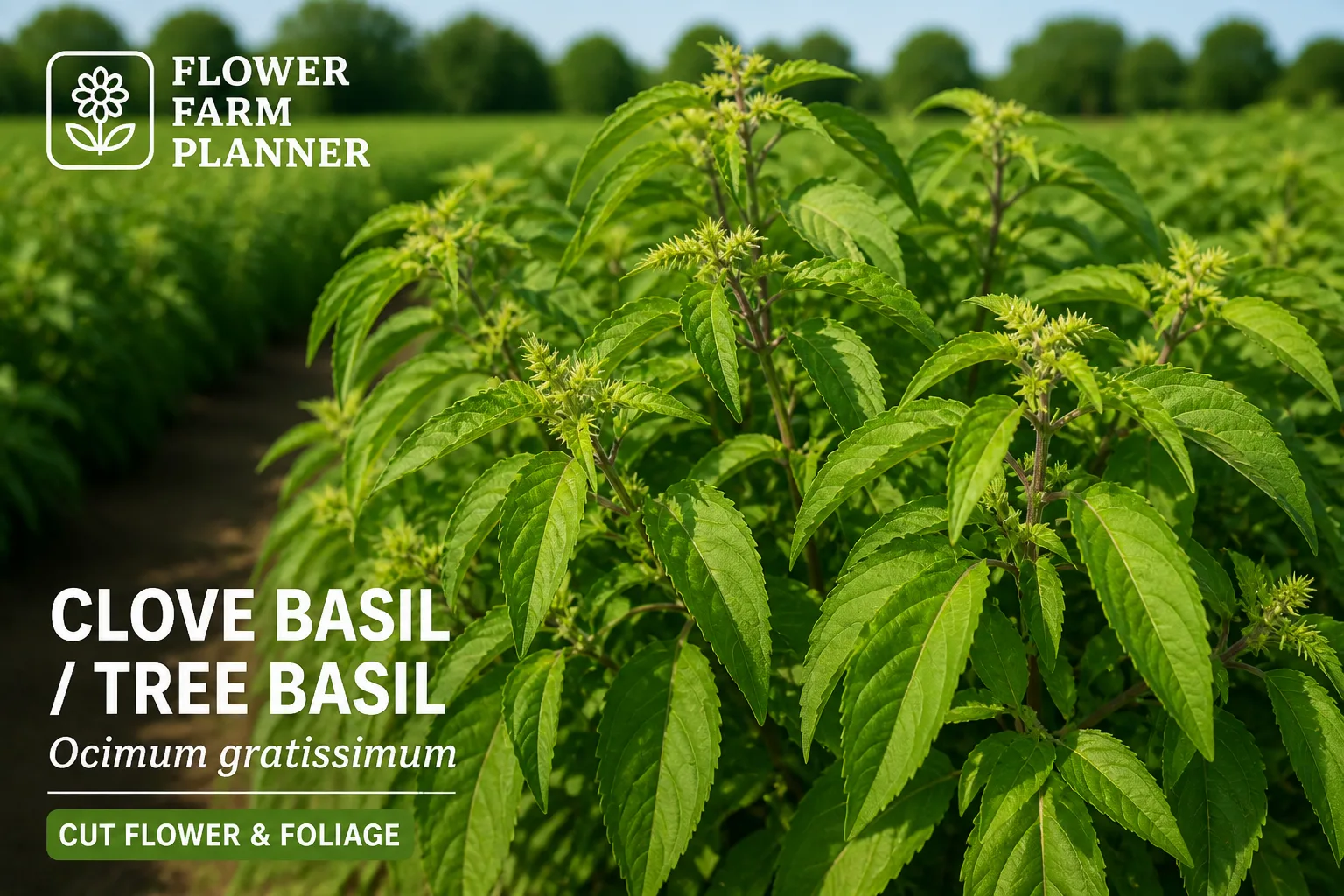
Basil Clove Basil
Green / Filler
Clove Basil is a warm-season, strongly fragrant basil grown for green aromatic foliage, edible herb bunches, pollinator value, and scented bouquet stems. It is most useful for farms that sell locally and can explain its clove-like scent to customers. It should be planted after frost, cut regularly, kept well hydrated, and handled outside the near-freezing flower cooler because basil foliage can blacken when chilled.
Open variety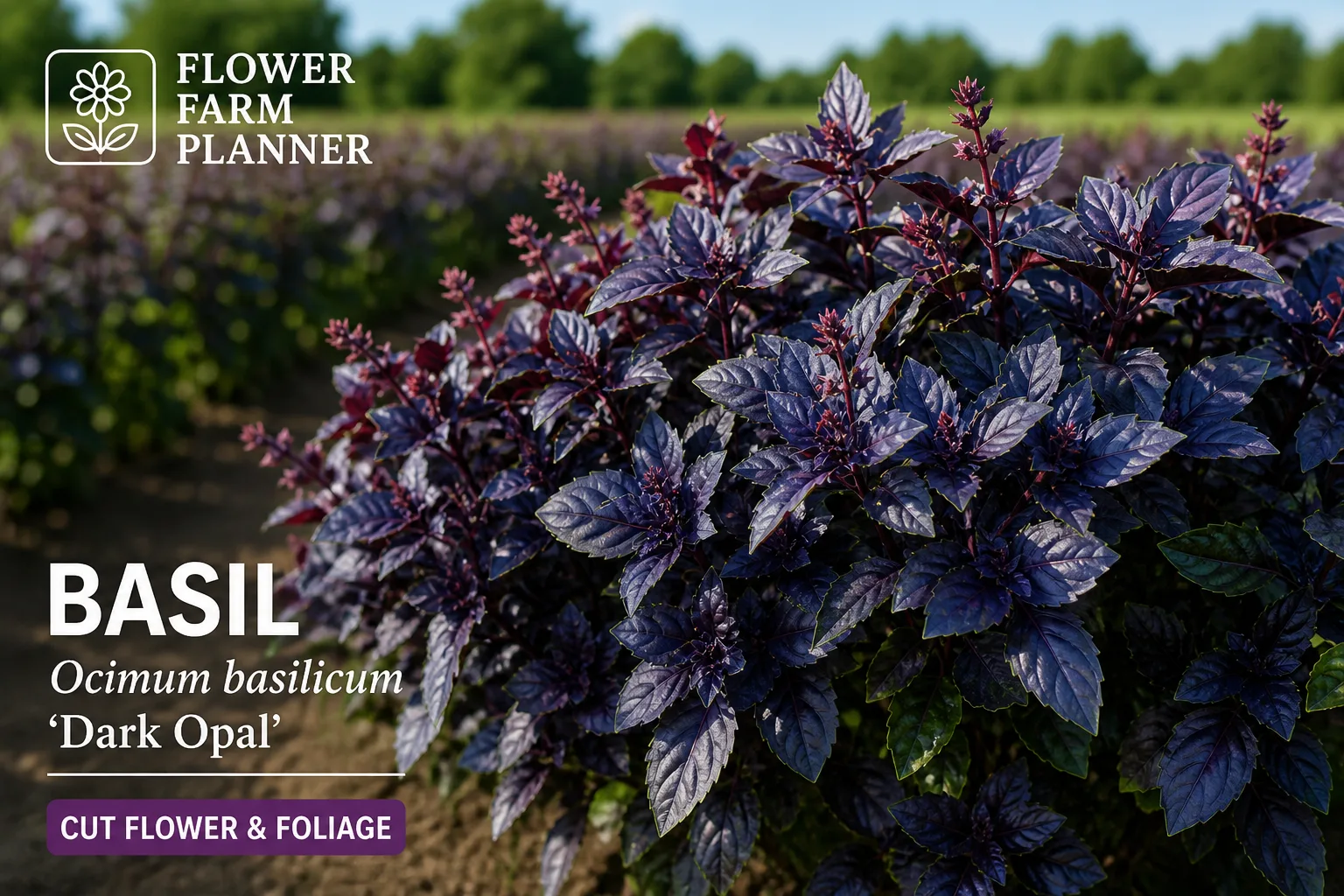
Basil Dark Opal
Purple / Filler
‘Dark Opal’ basil is a fast, warm-season annual herb that gives flower farmers dramatic dark purple foliage, clove-like fragrance, edible bunch potential, and strong contrast in summer bouquet work. It is easy to start from seed, responds well to pinching and repeated cutting, and can produce many small bunches from a compact bed. Its main planning weakness is not production but handling: harvested basil wilts, bruises, blackens under cold storage, and can decay quickly if wet or crushed. Grow it for close-to-harvest sales, subscriptions, restaurants, culinary bunches, and fragrant mixed bouquets rather than for long-distance cold-chain wholesale.
Open variety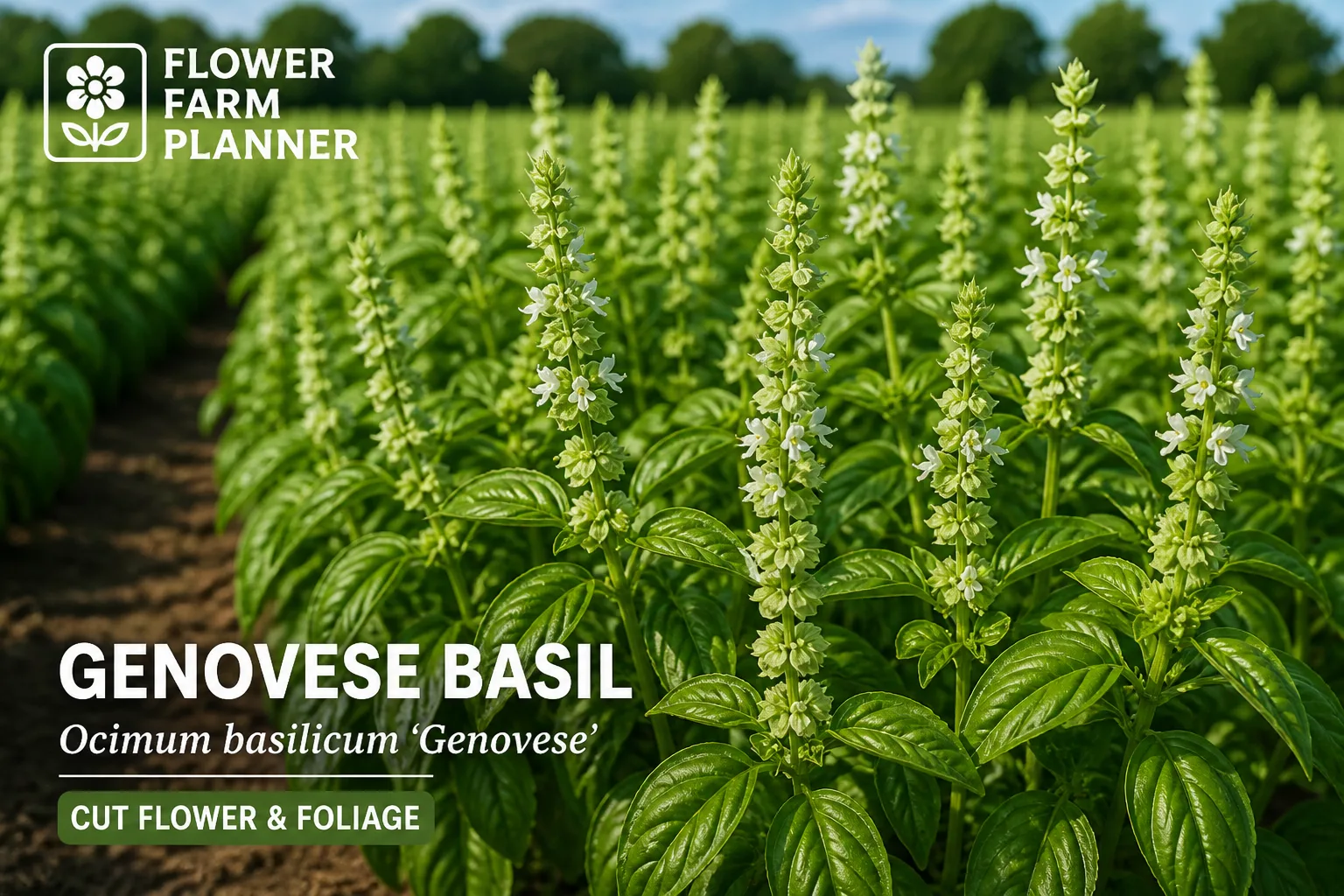
Basil Genovese
Green / Filler
Basil is a warm-season annual herb that can also function as a fragrant cut-foliage and filler crop. It is fast from seed, easy to establish when weather is warm, and highly useful for farms that sell local bouquets, edible herb bunches, subscriptions, and farm-to-table flowers. Its strength is fragrance and repeat cutting; its weakness is postharvest sensitivity. Basil should be grown as a quick, local, fresh crop rather than a long-chain refrigerated florist commodity.
Open variety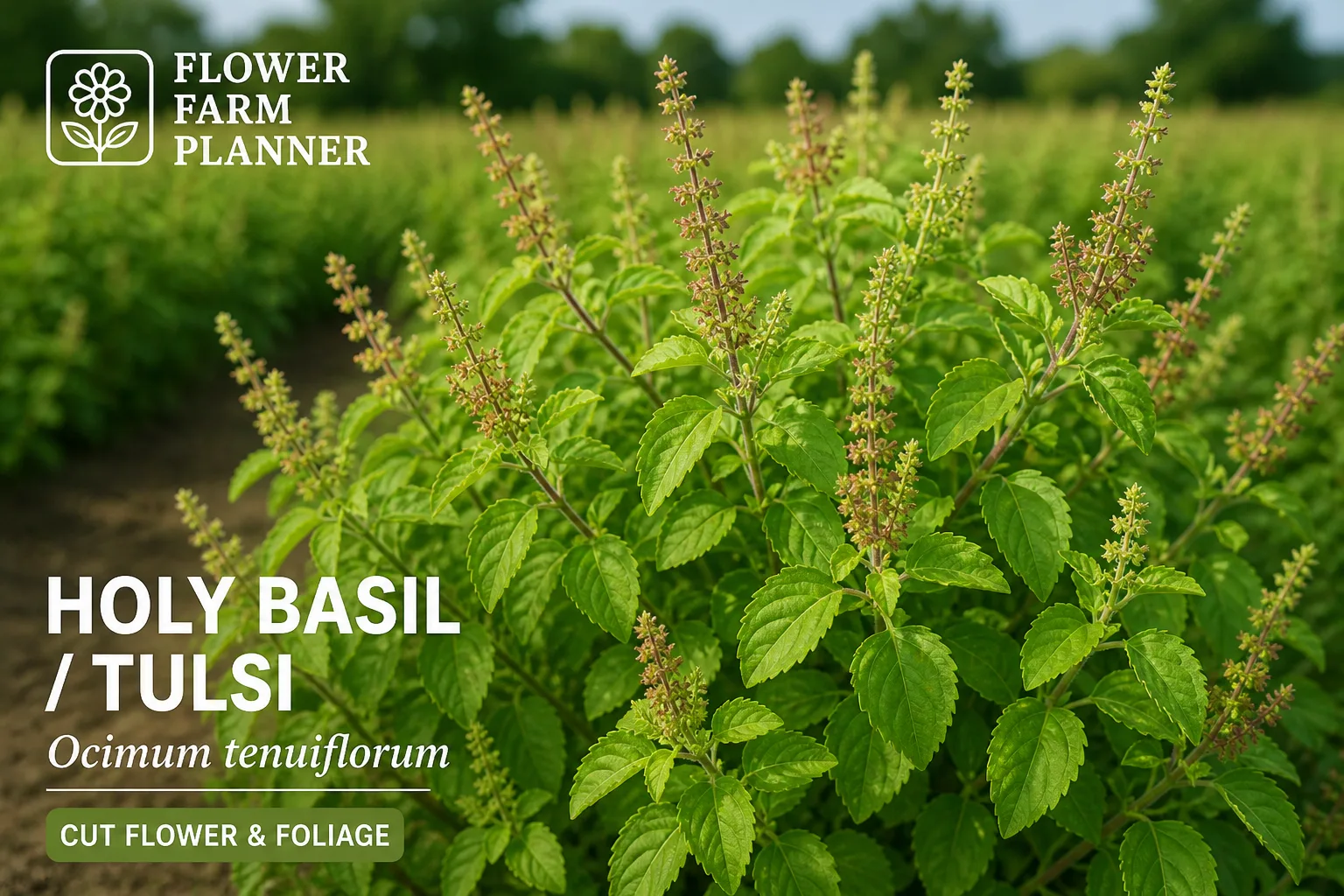
Basil Holy Basil
Green / Filler
Holy Basil is a distinctive tulsi crop for growers who want a scented, edible, pollinator-friendly summer filler. It should be marketed as an aromatic herb foliage and tea/cut-stem crop rather than as a long-stem premium flower. It shines in subscriptions, farmers markets, herbal wedding work, farm dinners, and culinary accounts where fragrance and story matter.
Open variety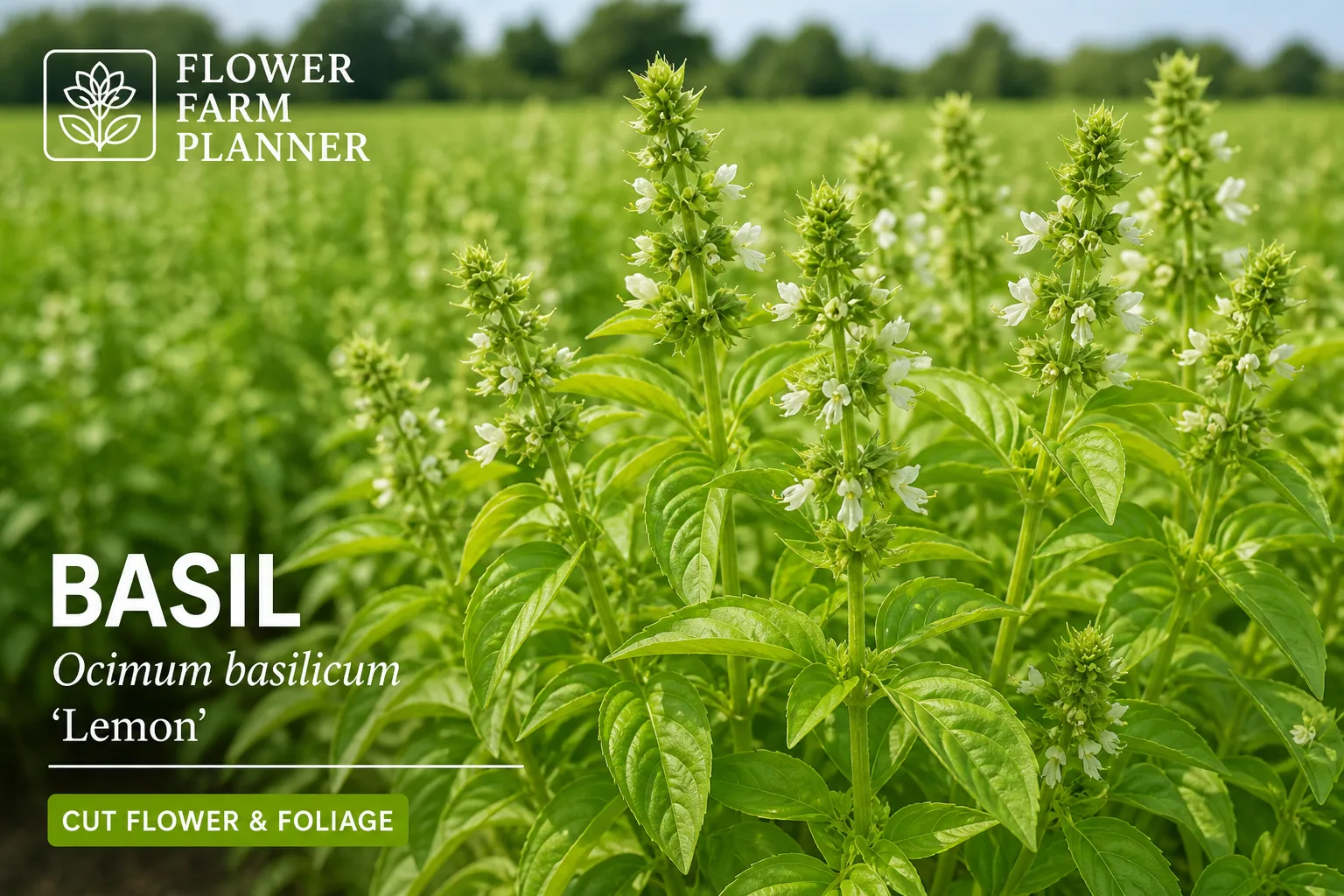
Basil Lemon
Green / Filler
Basil is a warm-season annual herb that can also function as a fragrant cut-foliage and filler crop. It is fast from seed, easy to establish when weather is warm, and highly useful for farms that sell local bouquets, edible herb bunches, subscriptions, and farm-to-table flowers. Its strength is fragrance and repeat cutting; its weakness is postharvest sensitivity. Basil should be grown as a quick, local, fresh crop rather than a long-chain refrigerated florist commodity.
Open variety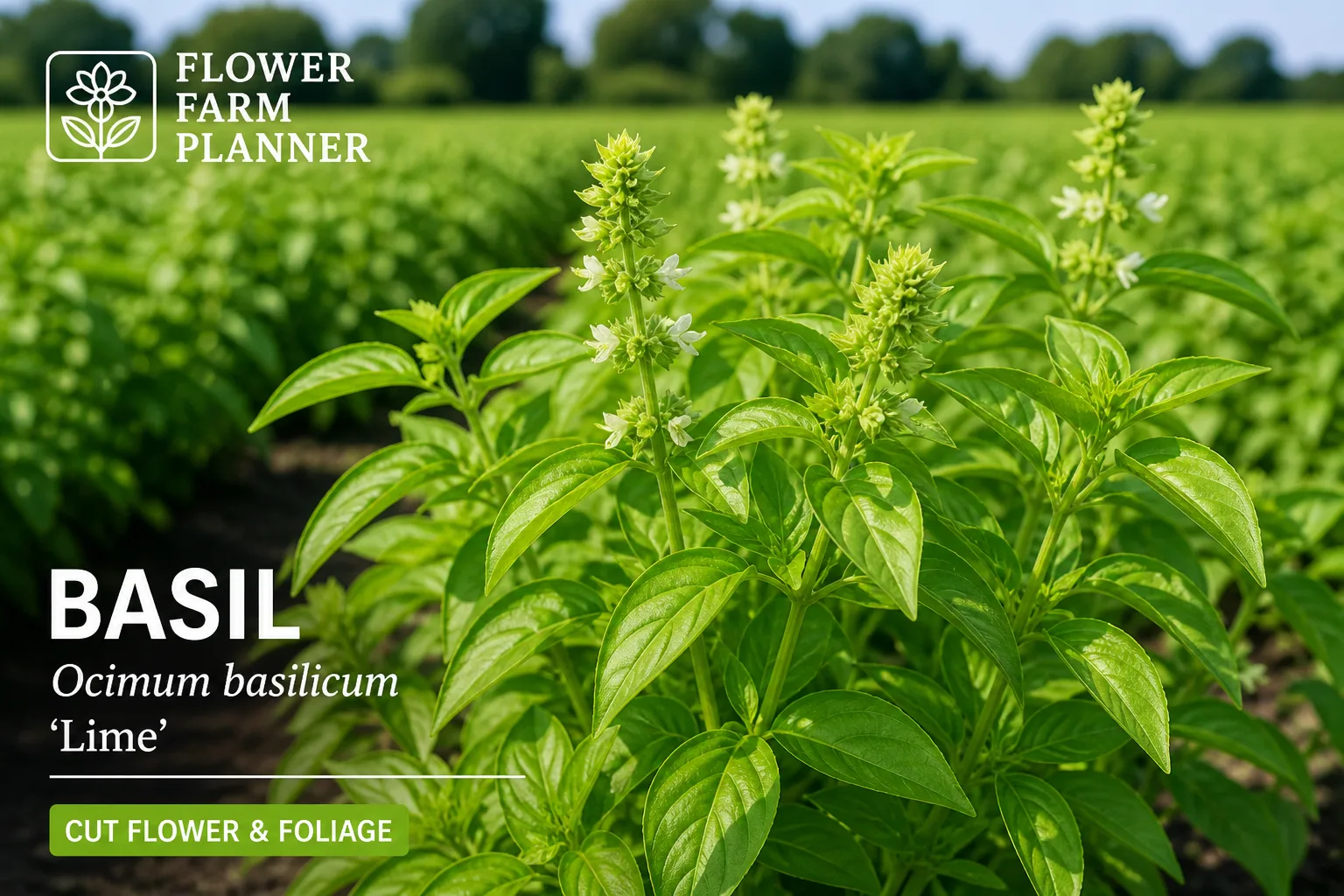
Basil Lime
Green / Filler
Bright green lime-scented basil for fragrant summer bouquets, herb bunches, and edible floral work.
Open variety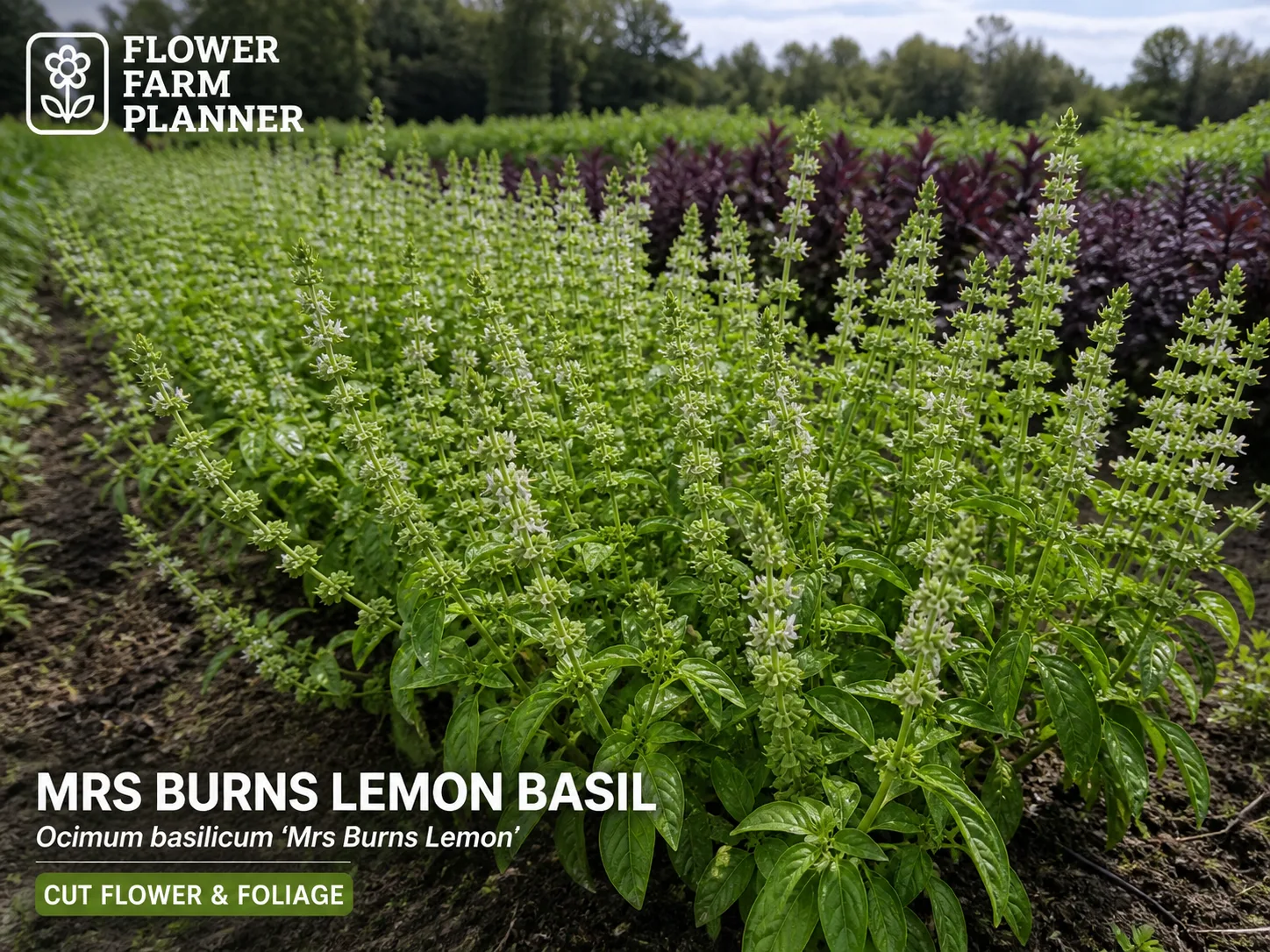
Basil Mrs. Burns’ Lemon
Green / Filler
‘Mrs. Burns’ Lemon’ basil is a warm-season, lemon-scented basil that gives flower farms a useful bridge between culinary herbs and bouquet foliage. It is not grown for dramatic flower colour; it earns its place through fragrance, fresh green texture, edible value, and fast summer production from seed. For local sales, it can make bouquets feel more alive because customers can smell the citrus note before they even notice the foliage. The crop is easy to start and quick to harvest, but it must be handled carefully after cutting because basil wilts in heat and blackens if refrigerated too cold.
Open varietyPlan with Flower Farm Planner
Full planning data inside Flower Farm Planner
The planner includes crop spacing, sowing dates, yield estimates, harvest handling, pricing, profit, and planning tools.