
Cut flower variety
Carnation Altair
Dianthus caryophyllus / Carnation
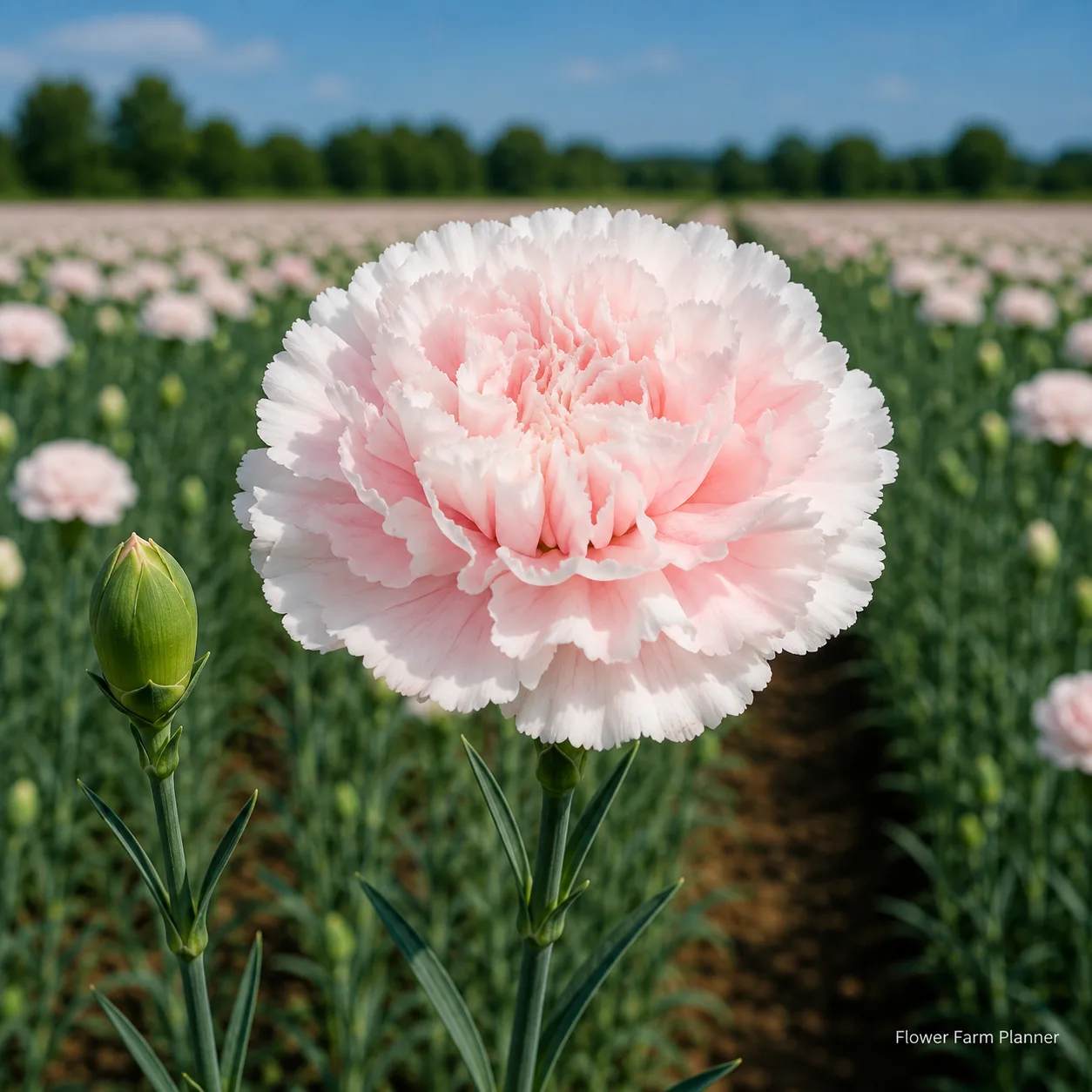
Carnation Standard Altair is a soft blush to light pink standard carnation grown for one large ruffled bloom per stem. It is best treated as a cool, protected, florist-grade crop rather than a casual field flower. For a local flower farm, its value is not novelty alone; its value is dependable vase life, romantic color, strong focal use, and the ability to offer florists a fresh local alternative to imported carnations. The crop requires discipline: start with clean rooted cuttings, support with netting, pinch correctly, disbud standard stems, scout for thrips and Botrytis, and protect every harvest from ethylene.
Overview
Why growers use it
Carnation Standard Altair is a soft blush to light pink standard carnation grown for one large ruffled bloom per stem. It is best treated as a cool, protected, florist-grade crop rather than a casual field flower. For a local flower farm, its value is not novelty alone; its value is dependable vase life, romantic color, strong focal use, and the ability to offer florists a fresh local alternative to imported carnations. The crop requires discipline: start with clean rooted cuttings, support with netting, pinch correctly, disbud standard stems, scout for thrips and Botrytis, and protect every harvest from ethylene.
Floral use
Design and market fit
Role
Filler, Secondary Focal, Accent
Texture
Ruffled, layered, frilled, soft, full, petal-rich, slightly velvety; the bloom gives strong visual volume for its stem count.
Tone
Soft romantic; pale; warm blush; gentle pastel; wedding-friendly; refined rather than saturated.
Form
Standard carnation form with one large, fully double, rounded, ruffled bloom carried on a long straight stem.
Bouquet fit
Excellent for soft romantic, pastel wedding, classic florist, sympathy, vintage, cottage-luxe, blush-and-cream, and budget-luxury bouquet styles. Use as a focal or secondary focal, especially when the design needs long vase life and a soft full flower at a lower cost than garden roses or peonies.
Event use
Weddings, bridal bouquets, bridesmaid bouquets, corsage and boutonniere work where carnations are acceptable, ceremony arrangements, sympathy flowers, Mother’s Day, Valentine’s pastel palettes, retail bunches, subscriptions, long-lasting gift bouquets.
Color notes
Pink, Peach, White, Cream
Choose a variety
Other varieties in this crop
Carnation Alvira
White / Filler, Secondary Focal, Accent
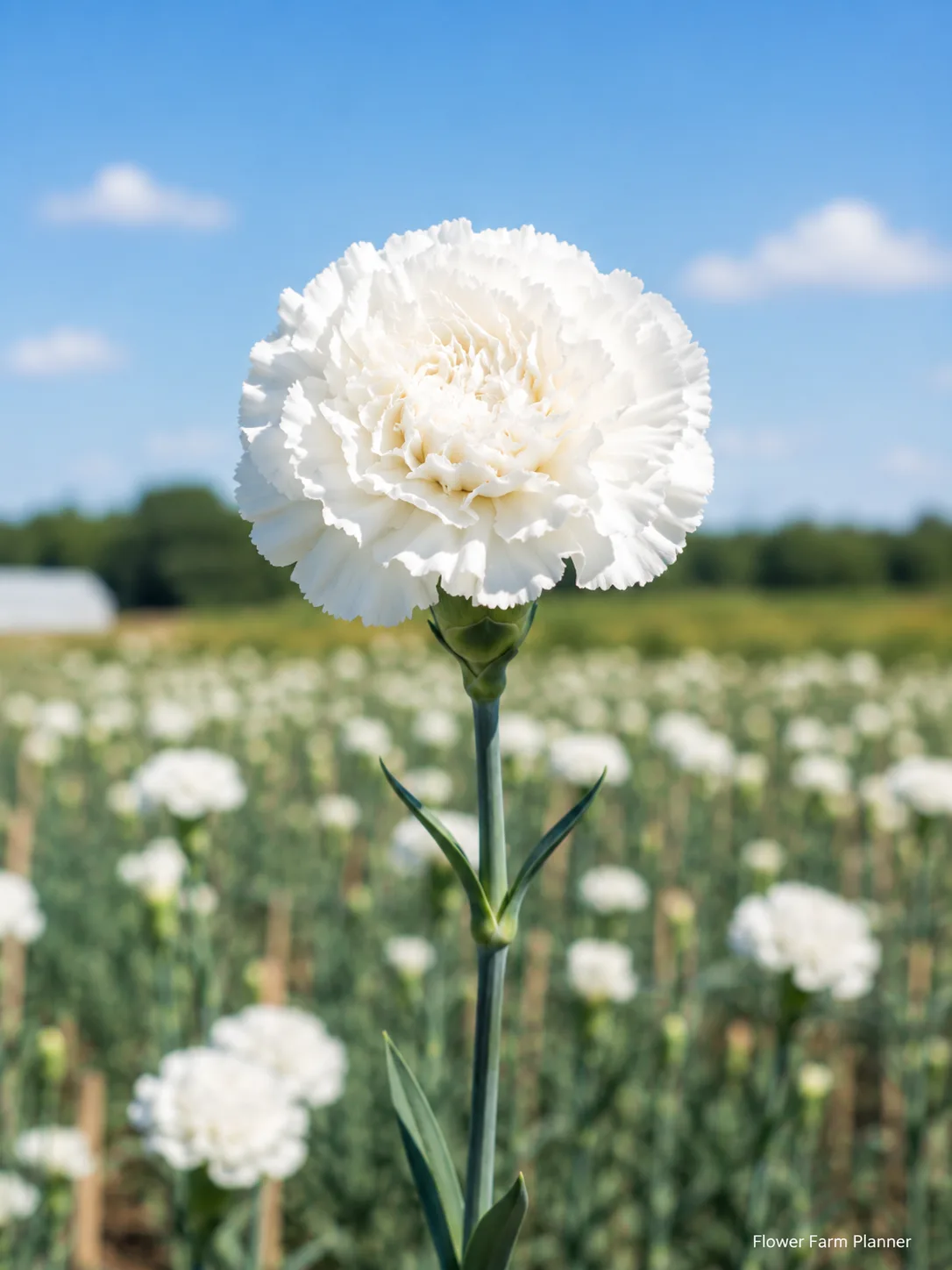
Carnation Standard Alvira is a white, extra-tall, large-flowered florist carnation bred for clean modern work and reliable professional production. It is best treated as a protected, netted, vegetatively propagated cut-flower crop rather than a casual seed-grown annual. Its strengths are long stems, excellent stem quality, large white blooms, strong florist usefulness, and long vase life; its weaknesses are technical production requirements and the visibility of every mark on white petals.
Open variety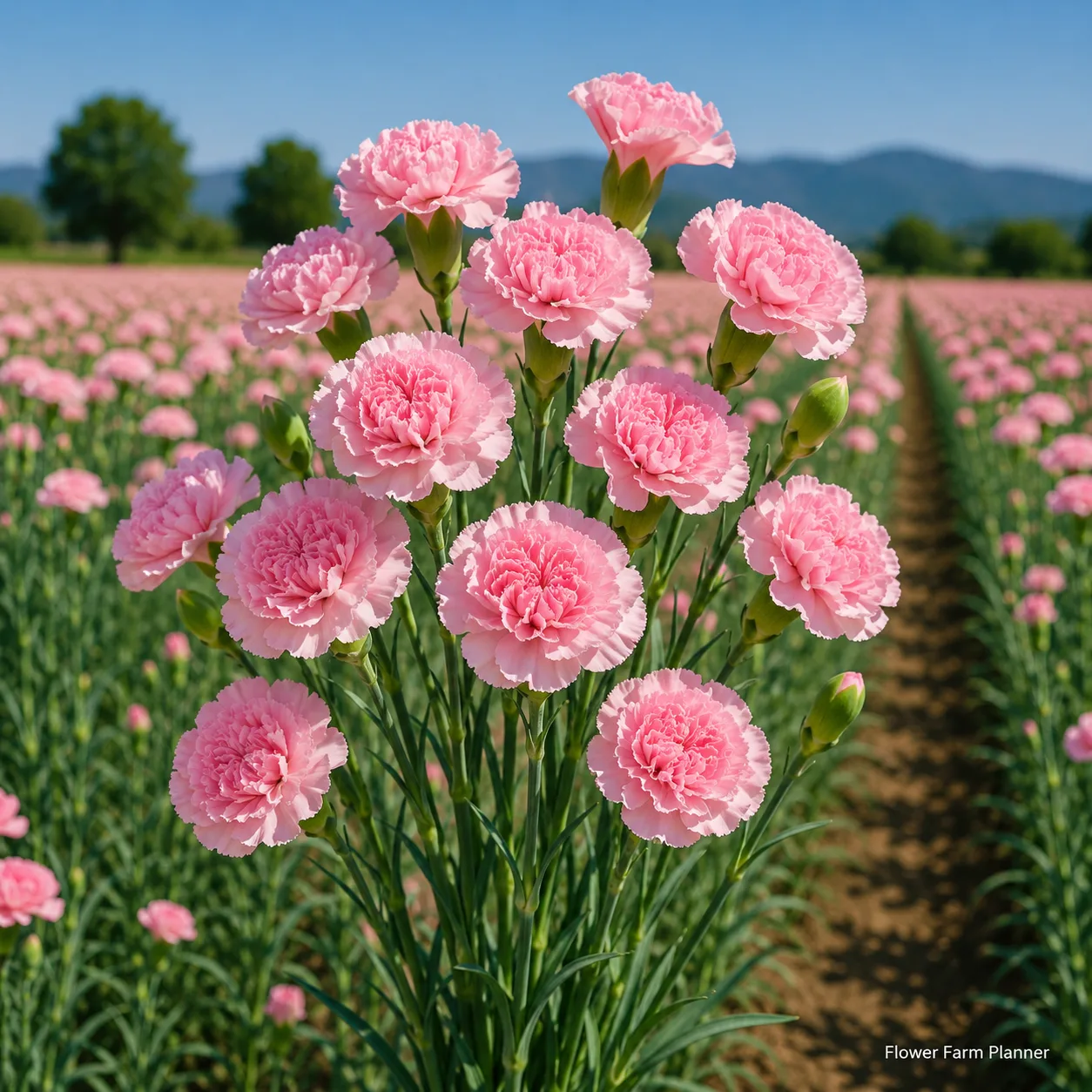
Carnation Amaral
Pink / Filler, Secondary Focal, Accent
‘Amaral’ is a soft pink commercial spray carnation for growers who want a long-lasting florist stem with gentle romantic colour and strong bouquet utility. It is not a low-input casual annual; it should be grown from clean rooted cuttings or plugs, supported, scouted carefully, and handled with a professional postharvest routine because ethylene and Botrytis can undo otherwise excellent crop quality.
Open variety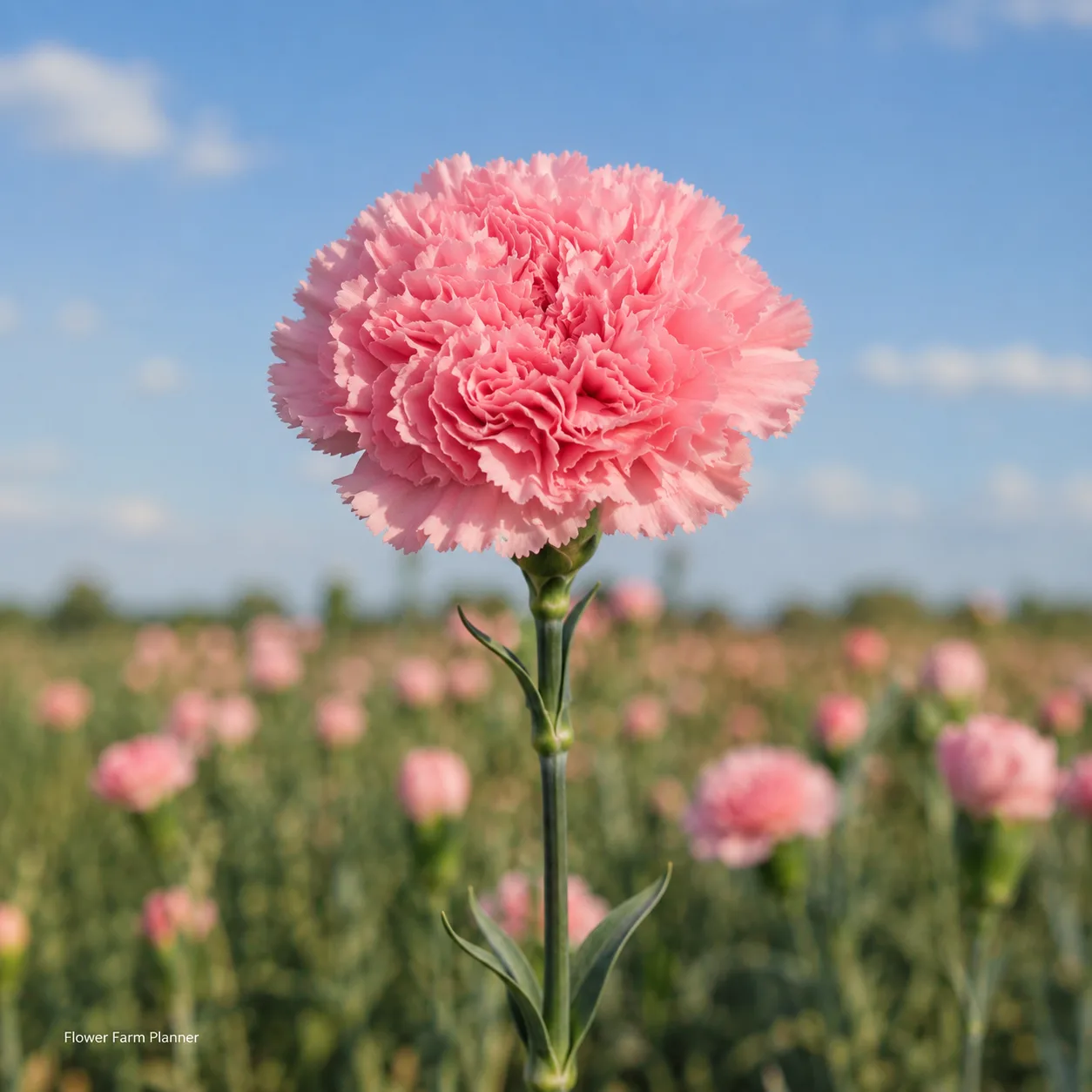
Carnation Ambrose
Pink / Filler, Secondary Focal, Accent
Ambrose is a premium pink standard carnation for growers who want extra-tall, strong stems and extra-large ruffled flowers in a classic florist color. It is not the fastest carnation and should be planned as a quality stem rather than a quick filler crop. Its high Fusarium resistance is a useful advantage, especially for growers concerned about carnation wilt, but clean stock, drainage, ventilation, pest control, and postharvest discipline remain essential.
Open variety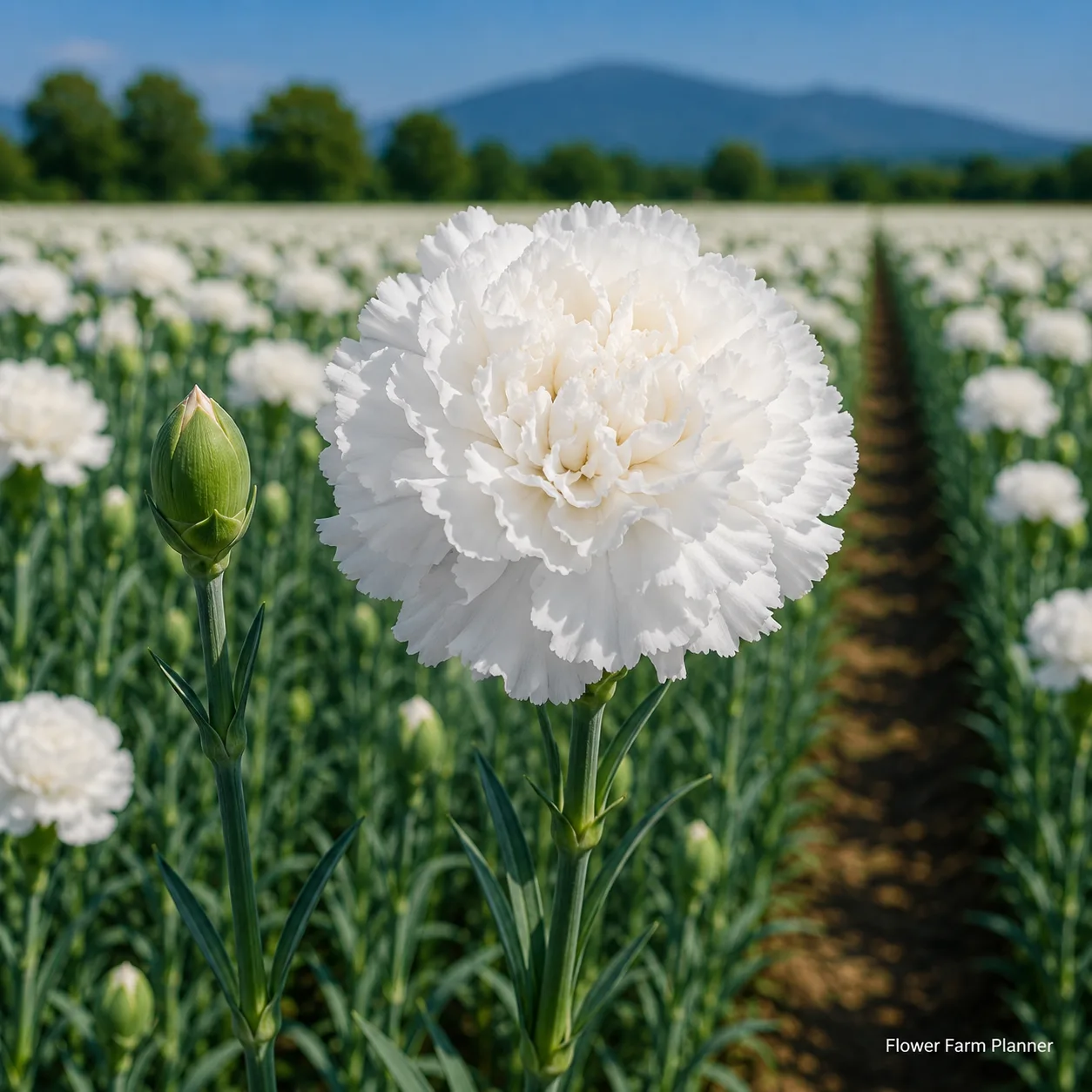
Carnation Antartica
White / Filler, Secondary Focal, Accent
Carnation Standard ‘Antartica’ is a pure white, long-stemmed standard carnation for florist-quality fresh cut stems. It should be grown from clean rooted cuttings or plugs, pinched to build harvestable shoots, disbudded to one large bloom per stem, supported with netting and protected from heat, humidity, thrips, Botrytis and ethylene. It is not a casual seed-grown dianthus; it is a professional cut-flower crop that earns its place by producing clean white stems with excellent florist usefulness, long vase life and broad wedding/sympathy demand.
Open variety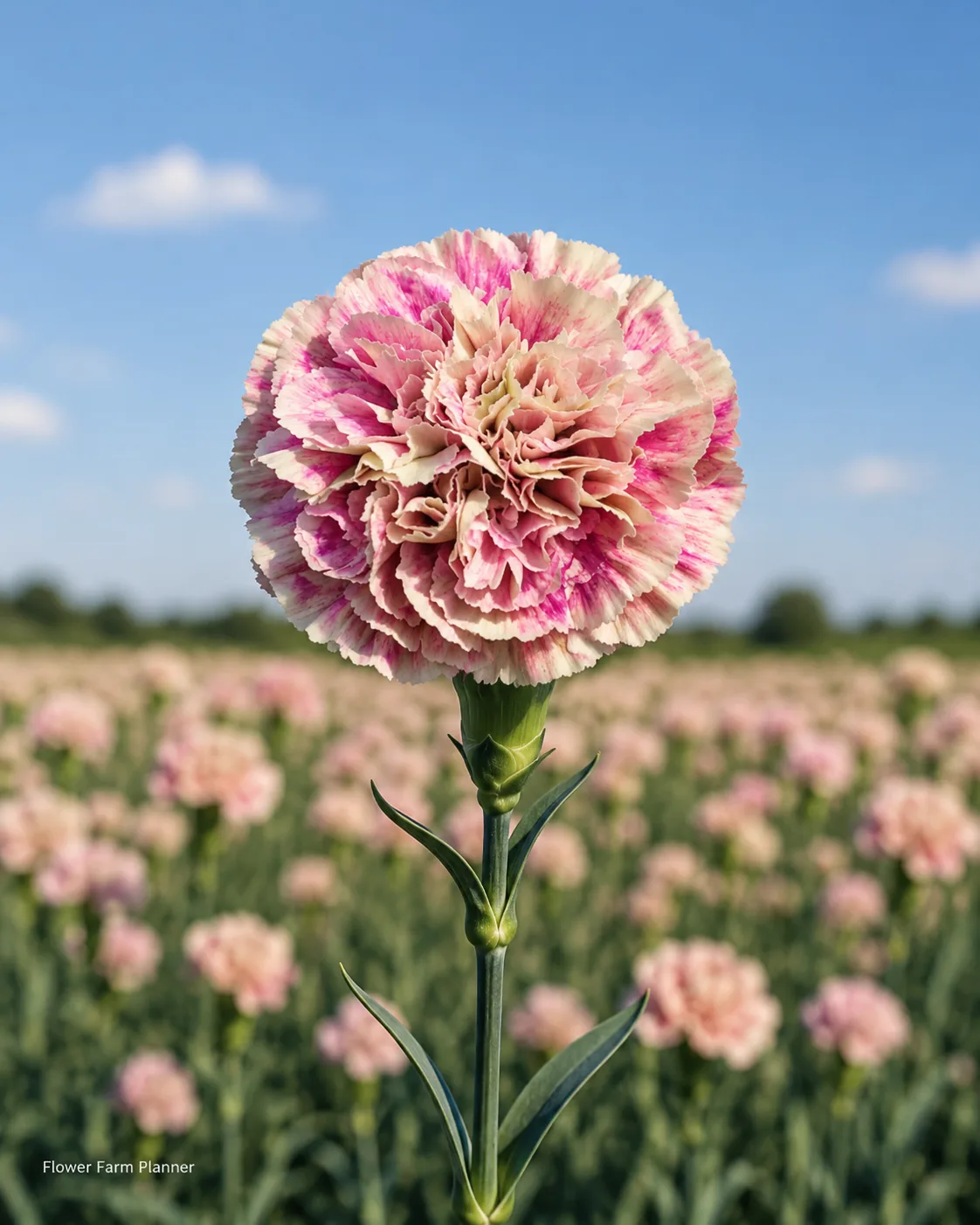
Carnation Antigua
Cream / Focal
Antigua is a premium standard cut carnation with a cream base and purple-lavender markings, bred for professional cut-flower production. The breeder lists it as normal in growth speed, high in productivity, high in Fusarium resistance, extra tall in stem length, strong in stem quality, and extra large in flower brush size. For the farm planner, it should be treated as a long-cycle, protected, netted, disbudded stem crop that can produce valuable vintage bicolor stems if grown cleanly and cooled quickly after harvest.
Open variety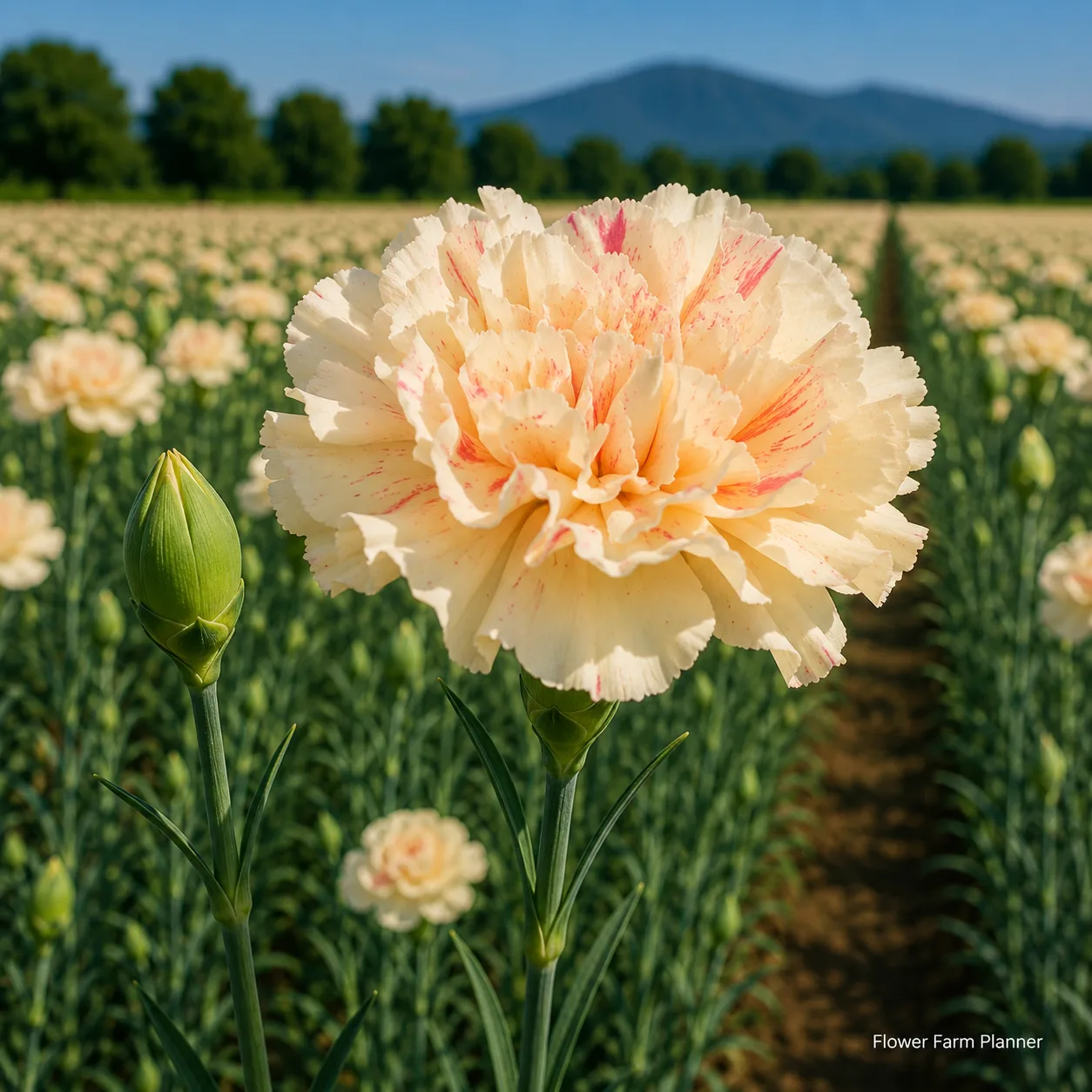
Carnation Apple Tea
Cream / Focal
Apple Tea is a premium-looking standard carnation with antique cream to pale peach petals marked by soft pink flecks and streaks. It should be planned as a single-bloom carnation for long, strong stems rather than as a spray type. The crop is durable after harvest and very useful for florists, but it requires a more disciplined production system than easy annual cuts: clean rooted cuttings, cool bright growing conditions, support netting, pinching, disbudding, airflow, sanitation and careful ethylene-free postharvest handling.
Open variety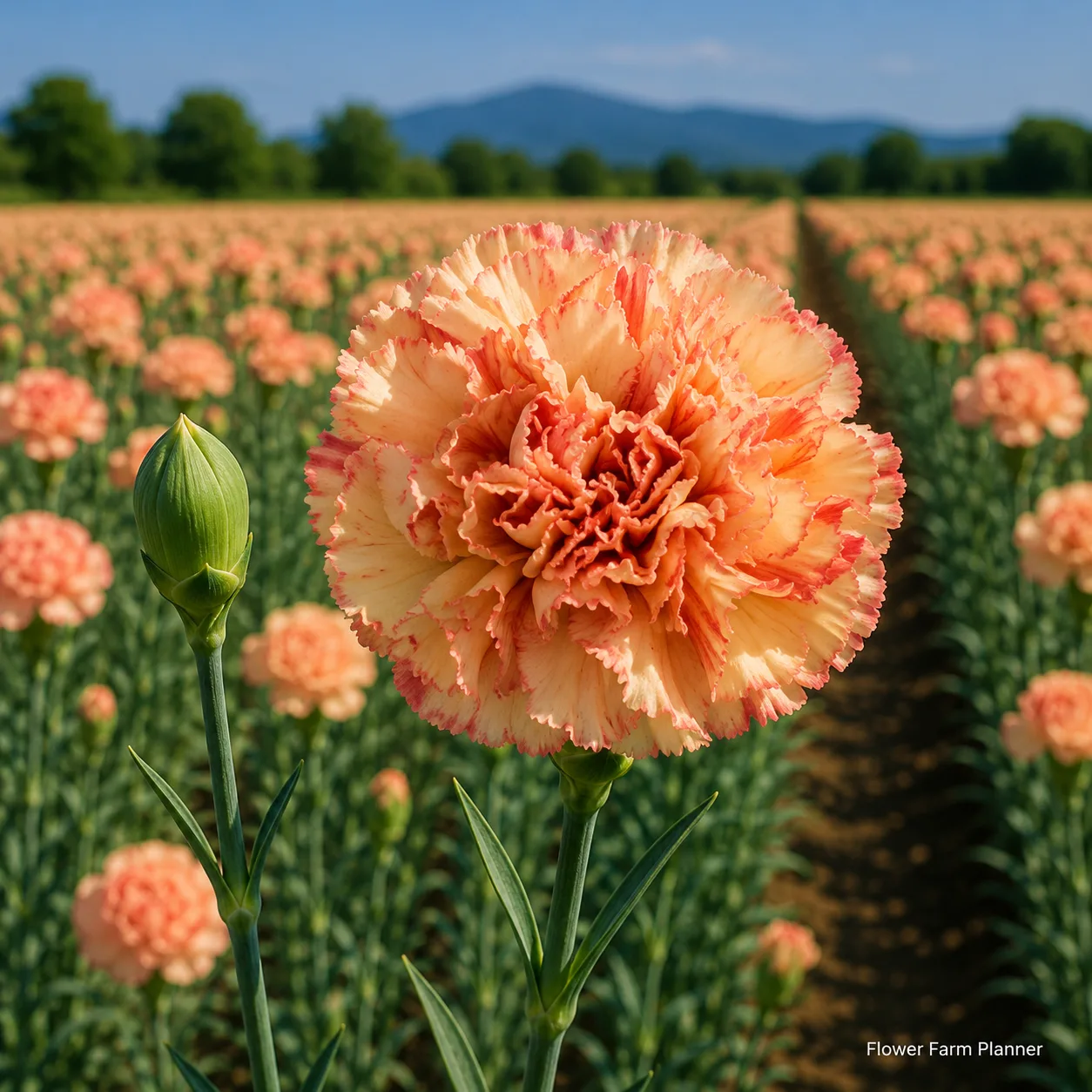
Carnation Aprilia
Cream / Focal
Aprilia is planned here as a warm peach-apricot standard carnation with a full ruffled head and coral or salmon edging. It is grown for one large bloom per stem, so it should be produced from rooted cuttings or plugs, pinched to build a productive frame, supported early, and disbudded so that each market stem carries a single quality flower. The crop wants strong light, cool-to-moderate temperatures, excellent drainage, good airflow, disciplined sanitation, and ethylene-aware postharvest handling. Its main farm value is the combination of long vase life, florist familiarity, soft warm color, and a bloom form that can act as an affordable ruffled focal in bouquets and event work.
Open variety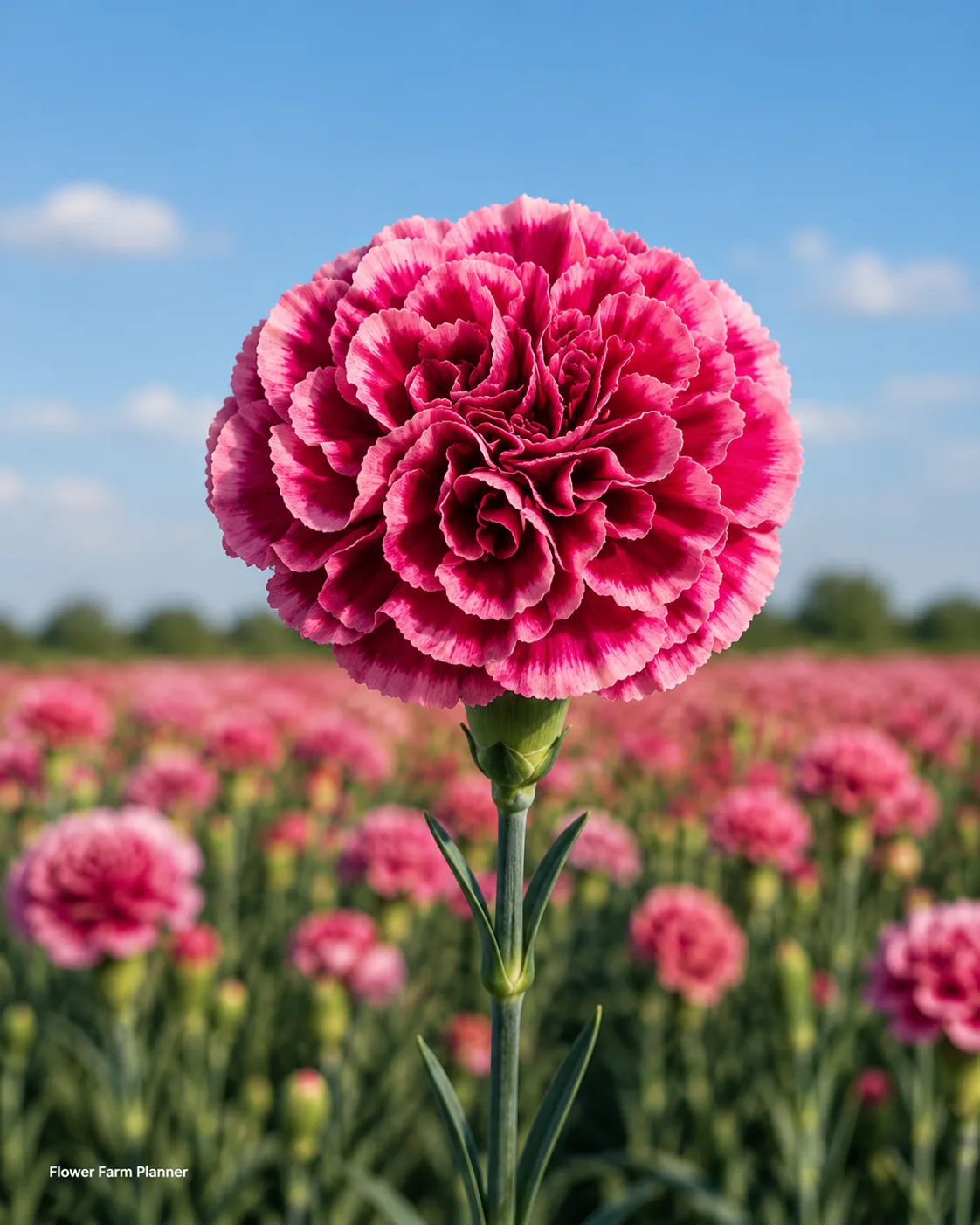
Carnation Arandu
Purple / Focal
Carnation Standard Arandu is a professional standard carnation cultivar from HilverdaFlorist with large, ruffled, purple-and-soft-white bicolour flowers on extra-tall, excellent-quality stems. It is described as relatively fast and highly productive, making it attractive for commercial growers and florist sourcing. In Flower Farm Planner it should be treated as a protected-culture standard carnation or as a sourced florist stem, with all the normal carnation requirements: clean vegetative plant material, support netting, disbudding, careful harvest stage, rapid cooling and strong ethylene protection. It is not a seed crop and should not be planned like a casual annual cutting flower.
Open variety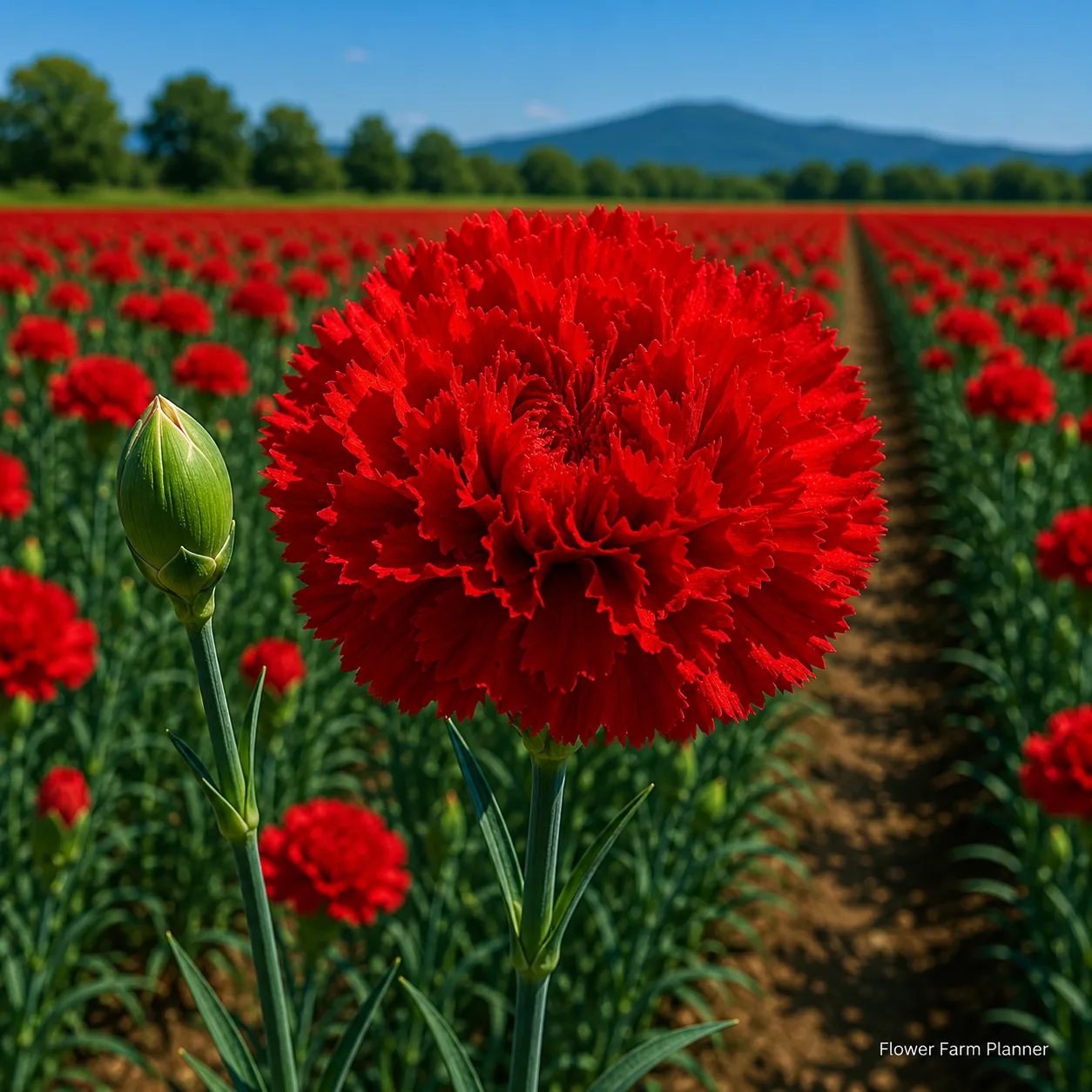
Carnation Argos
Red / Focal
Argos is a red standard carnation bred for commercial cut flower production. It is a florist-staple crop with one large, ruffled red bloom per stem, strong market recognition and excellent vase-life potential. It suits growers who can manage a protected, supported, disbudded carnation crop and who have a channel for red standard stems.
Open varietyPlan with Flower Farm Planner
Full planning data inside Flower Farm Planner
The planner includes crop spacing, sowing dates, yield estimates, harvest handling, pricing, profit, and planning tools.