
Cut flower variety
Zinnia Polar Bear
Zinnia elegans / Zinnia
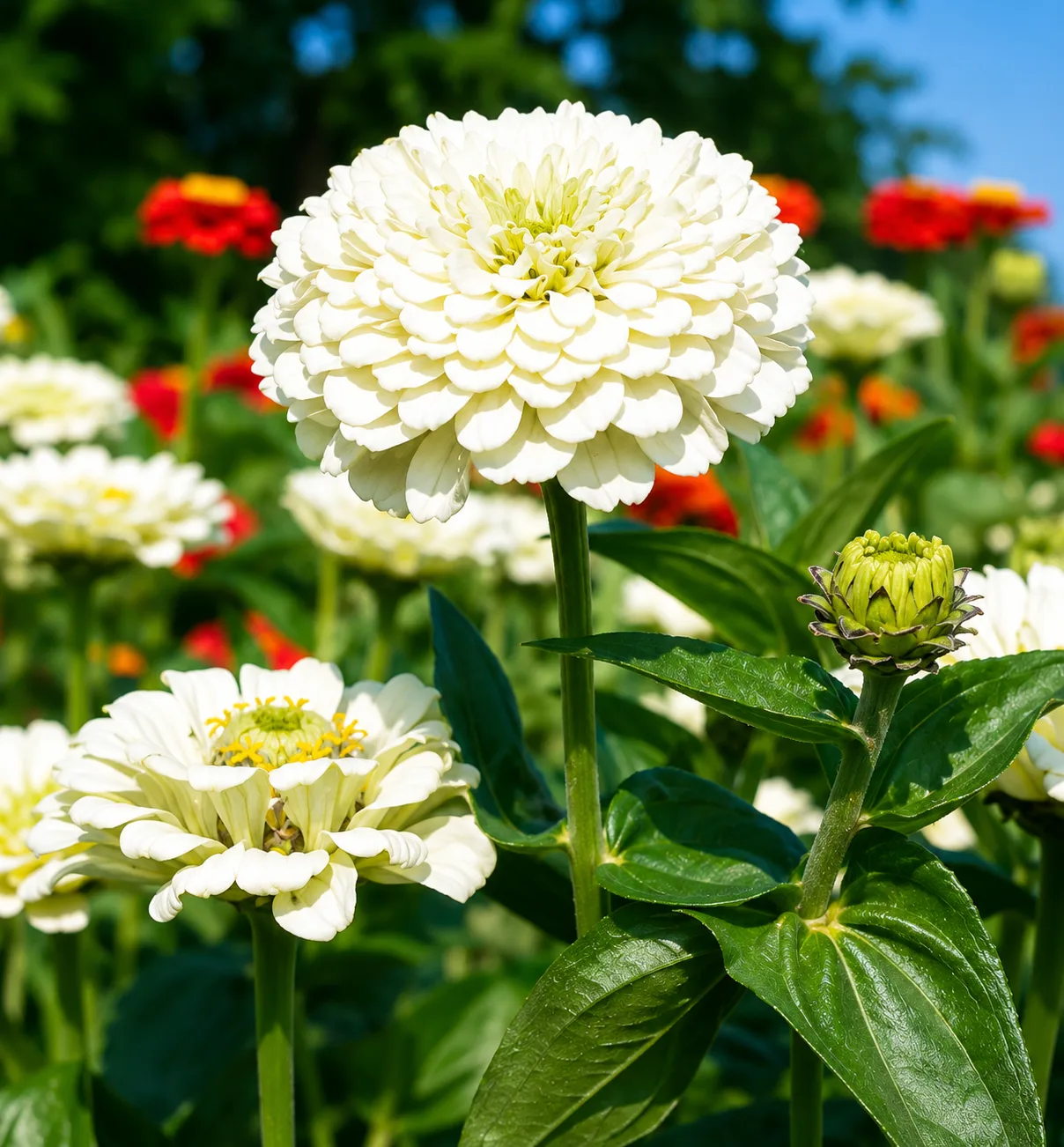
Zinnia 'Polar Bear' is a creamy white, dahlia-flowered heirloom zinnia for warm-season cut-flower production. It gives growers a useful white summer flower at a time when many white crops are either finished, expensive, or difficult in heat. The plant is grown from seed, establishes quickly in warm soil, branches well when pinched, and responds to frequent cutting with repeated stems. It is best planned as a local fresh-cut crop, not a long dry-shipped commodity stem. Its greatest strengths are color usefulness, easy propagation, fast cropping, and broad bouquet appeal. Its biggest weaknesses are disease pressure in humid conditions and the fact that white petals reveal every mark, bruise, beetle scar, and weather stain.
Overview
Why growers use it
Zinnia 'Polar Bear' is a creamy white, dahlia-flowered heirloom zinnia for warm-season cut-flower production. It gives growers a useful white summer flower at a time when many white crops are either finished, expensive, or difficult in heat. The plant is grown from seed, establishes quickly in warm soil, branches well when pinched, and responds to frequent cutting with repeated stems. It is best planned as a local fresh-cut crop, not a long dry-shipped commodity stem. Its greatest strengths are color usefulness, easy propagation, fast cropping, and broad bouquet appeal. Its biggest weaknesses are disease pressure in humid conditions and the fact that white petals reveal every mark, bruise, beetle scar, and weather stain.
Floral use
Design and market fit
Role
Focal
Texture
Layered, full, petal-rich, dahlia-like, rounded, slightly informal
Tone
Soft, clean, bright, neutral, warm white
Form
Fully double to semi-double dahlia-flowered zinnia head, usually round and broad with layered petals and a visible or partly visible yellow center as it ages.
Bouquet fit
Cottage garden, white summer bouquet, garden wedding, farmers market mixed bouquet, pastel wedding, romantic neutral bouquet, pollinator garden style, casual florist bunches.
Event use
Excellent for summer and early autumn events where locally grown white flowers are wanted. Best for garden-style weddings, farm events, subscriptions, sympathy posies, white-and-green palettes, and mixed market bouquets. Use with care in very formal designs because individual blooms can vary and mark easily.
Color notes
Orange, Gold, Peach, Purple
Choose a variety
Other varieties in this crop
Zinnia Agave
Orange / Focal, Accent / Main growing season; adjust for the farm's confirmed season dates.
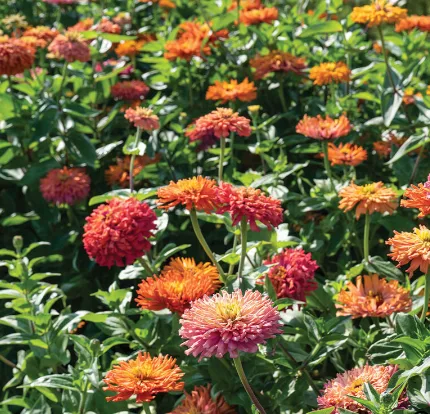
Zinnia ‘Agave’ is a tall, heat-loving, seed-grown cut zinnia selected for large cactus-form blooms in a cohesive sunset blend of buff, coral, gold, peach, pink, and orange. It is best grown as a warm-season local-market crop in full sun, fertile well-drained soil, and good airflow. The crop is productive and visually distinctive, but quality depends on harvesting only firm-neck stems, avoiding wet foliage, succession planting, and selling promptly while flowers are fresh.
Open variety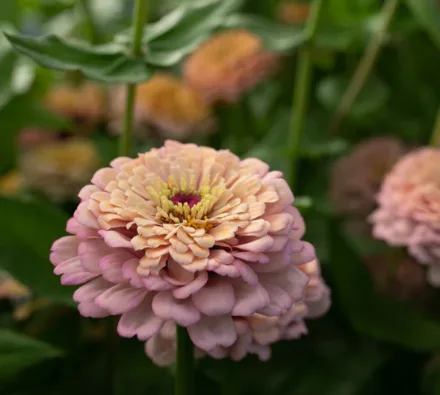
Zinnia Alpenglow
Peach / Foliage / Main growing season; adjust for the farm's confirmed season dates.
Zinnia 'Alpenglow' is a variety-level cut-flower record with starter planning values awaiting review.
Open variety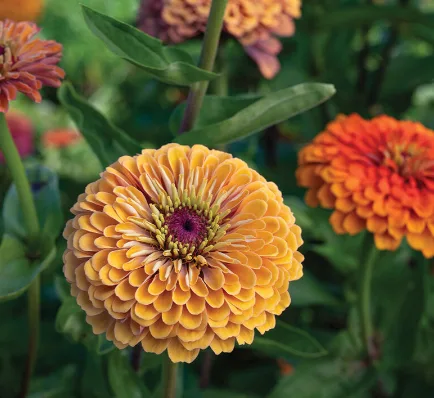
Zinnia Aurora
Yellow / Focal / Main growing season; adjust for the farm's confirmed season dates.
Zinnia 'Aurora' is a warm-season, seed-grown, cut-and-come-again zinnia mix bred for large dahlia-shaped blooms in warm vintage tones. It is easy to start, fast to flower, and highly useful for local bouquets, but it should be treated as a perishable local-market crop rather than a long-storage commodity flower. The main success factors are warm soil, full sun, succession planting, clean water, strong airflow, and removing plantings before disease ruins stem quality.
Open variety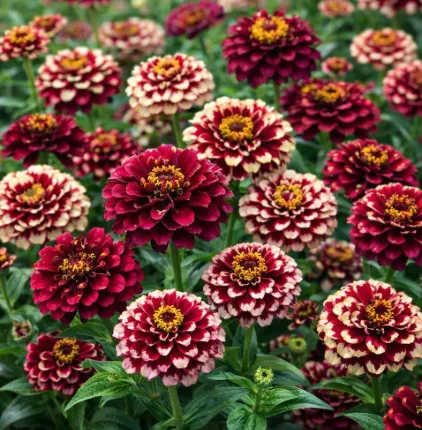
Zinnia Aztec Burgundy Bicolor
Red / Focal / Main growing season; adjust for the farm's confirmed season dates.
Zinnia Aztec Burgundy Bicolor is a compact Zinnia haageana variety with small double to semi-double blooms in deep burgundy, rose-red, and cream-tipped bicolor tones. It is best treated as a specialty posy, mini-bouquet, container, and pollinator crop rather than as a tall commercial florist zinnia. The plants are short, well-branched, fast from seed, and capable of producing many small flowers over a long warm-season window when harvested or deadheaded often. Its strongest value is visual personality: the flowers bring high contrast, moody warmth, and a playful vintage look that customers notice at market. Its main limitation is stem length, so it should be sold and designed intentionally as petite seasonal material.
Open variety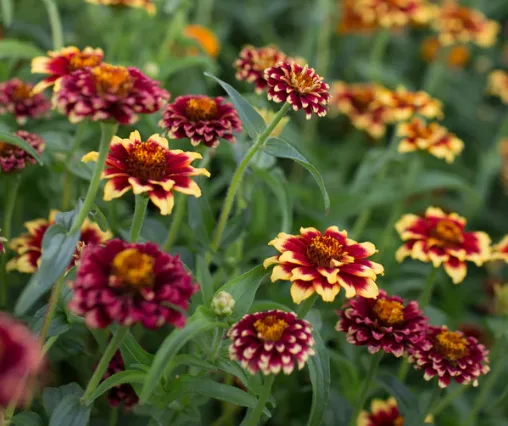
Zinnia Aztec Sunset
Multicolor / Focal / Main growing season; adjust for the farm's confirmed season dates.
Zinnia ‘Aztec Sunset’ is a compact, warm-season Zinnia haageana mix valued for its unusually rich bicolor flowers in buttercream, gold, rust, cranberry, deep red, merlot, copper, and burnt orange tones. It is not a giant florist zinnia; its commercial strength is abundance, charm, heat tolerance, color complexity, and usefulness in mixed bouquets. The plants are bushy and productive, with smaller flowers that bring movement and patterned detail to bunches. Grow it from seed after frost, give it full sun, pinch young plants, cut frequently, and succession sow for clean foliage and steady summer-to-autumn color.
Open variety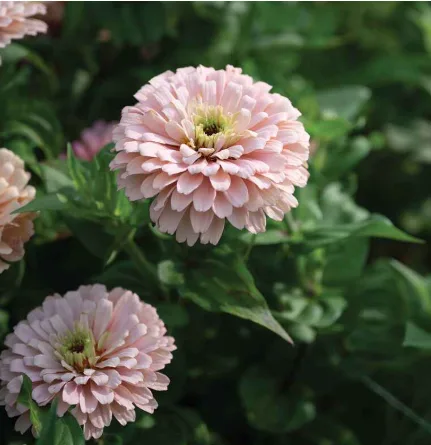
Zinnia Ballerina
Pink / Focal / Main growing season; adjust for the farm's confirmed season dates.
Zinnia ‘Ballerina’ is a warm-season seed-grown cut zinnia selected for romantic pastel blooms in soft pink, pale peach, blush, and warm cream tones. The flowers are large, usually 4–6 inches across, and often highly double, with a mixture of dahlia-like and occasional cactus-like forms that gives the crop a softer, more premium look than many standard zinnias. It is best grown as a local-market and wedding-season annual: easy to raise in warm soil, productive when cut regularly, and valuable for bouquets where gentle color is more important than intense brightness. Its main risks are the standard zinnia problems of mildew, leaf spot, beetles, weather-marked petals, and postharvest cold sensitivity, plus the need to sort occasional off-color or off-form blooms.
Open variety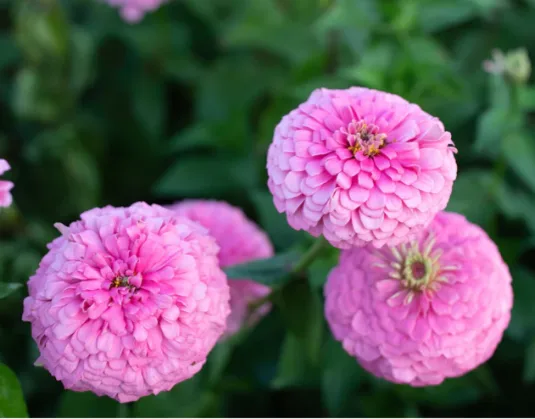
Zinnia Benary’s Giant Bright Pink
Pink / Focal / Main growing season; adjust for the farm's confirmed season dates.
Zinnia 'Benary’s Giant Bright Pink' is a tall, vigorous, professional cut-flower zinnia with large, fully double, dahlia-like blooms in a clear saturated bright pink. It is one of the easiest pink summer focal flowers to understand, sell, and design with, especially for farmers markets, subscriptions, and florist-direct seasonal work. Grow it after frost in warm soil, give full sun and airflow, pinch for branching, harvest only firm mature stems, and sell it fresh rather than treating it as a long-storage commodity stem.
Open variety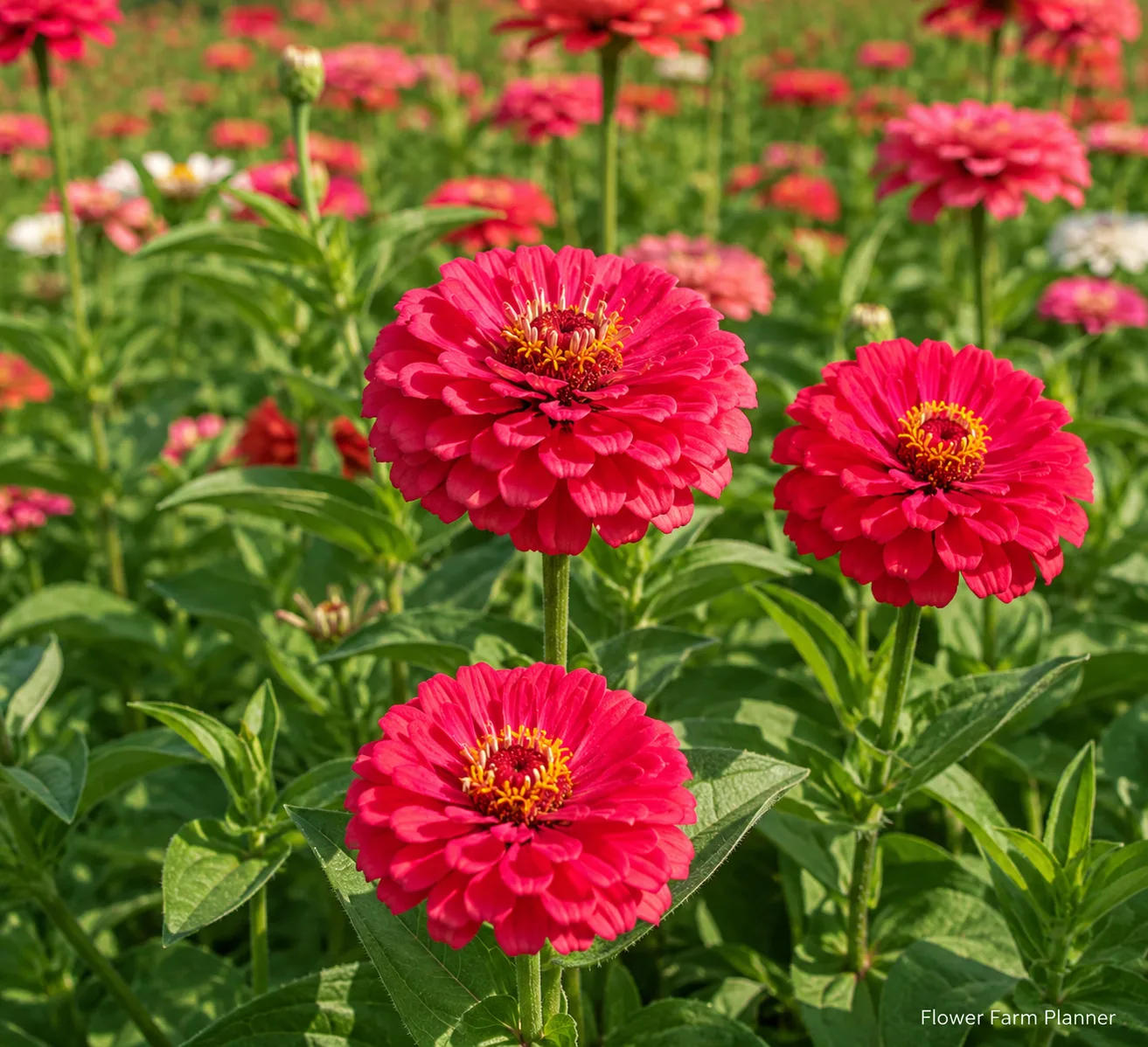
Zinnia Benary's Giant Carmine
Pink / Focal / Main growing season; adjust for the farm's confirmed season dates.
Benary’s Giant Carmine is a tall, vigorous, large-flowered zinnia for warm-season cut-flower production. It produces fully double, dahlia-like carmine blooms on long sturdy stems and is one of the classic dependable choices for market bouquets, florist bunches, subscriptions, and high-color event work. It is easy to start from seed and highly productive, but premium quality depends on warm planting conditions, full sun, clean water management, regular harvesting, and strong disease prevention.
Open variety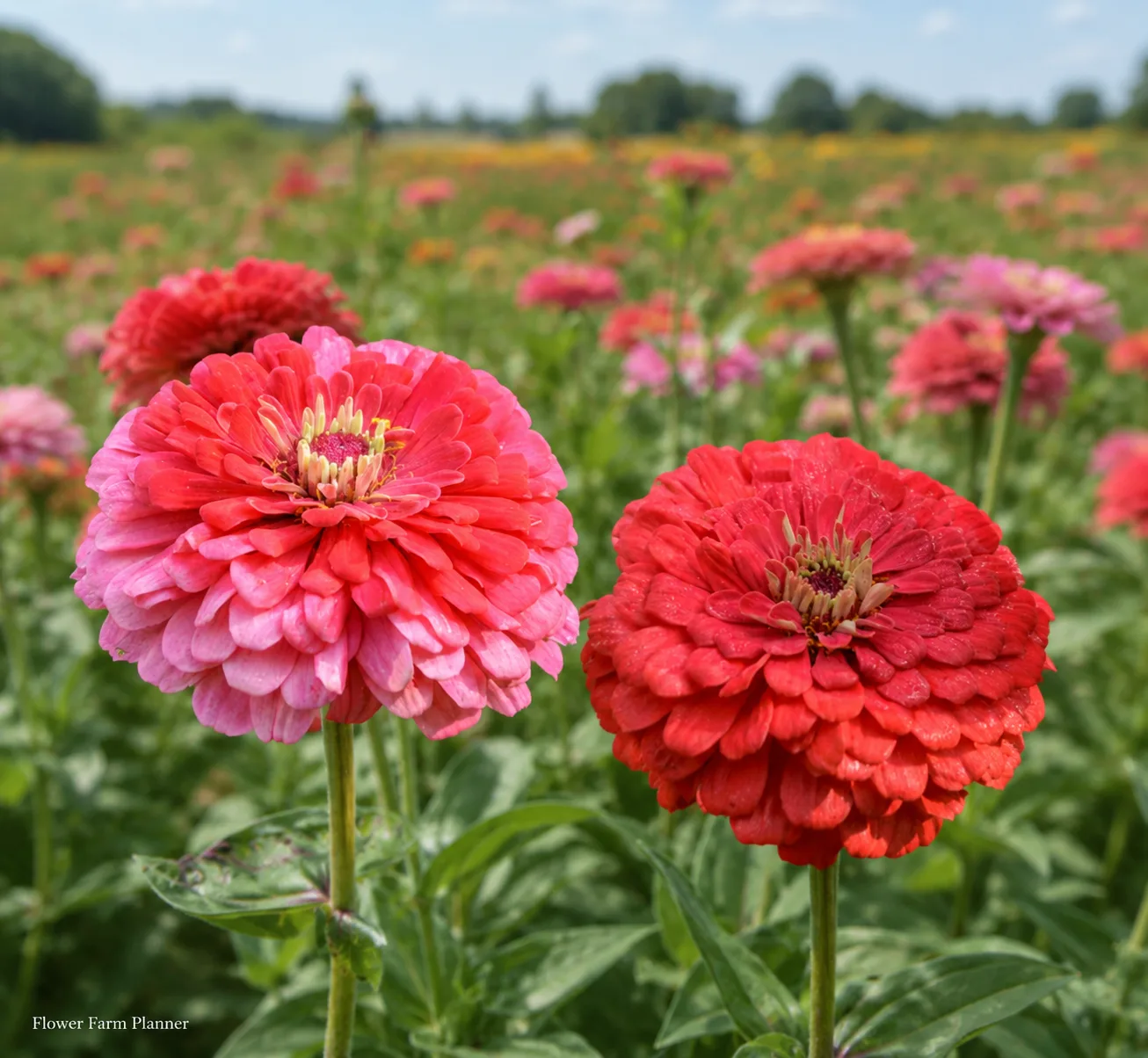
Zinnia Benary’s Giant Coral
Coral / Focal / Main growing season; adjust for the farm's confirmed season dates.
‘Benary’s Giant Coral’ is a premium large-flowered Zinnia elegans selection in the Benary’s Giant series, grown for bold coral-salmon fully double blooms on strong stems. It is one of the most useful warm-season annuals for growers who need reliable colour, fast turnover, and high bouquet impact. The crop is easy from seed and highly productive, but quality depends on warm soil, full sun, drip irrigation, airflow, frequent harvest, and correct postharvest handling. It should be planned as a local fresh cut flower rather than a long-storage commodity stem.
Open varietyPlan with Flower Farm Planner
Full planning data inside Flower Farm Planner
The planner includes crop spacing, sowing dates, yield estimates, harvest handling, pricing, profit, and planning tools.