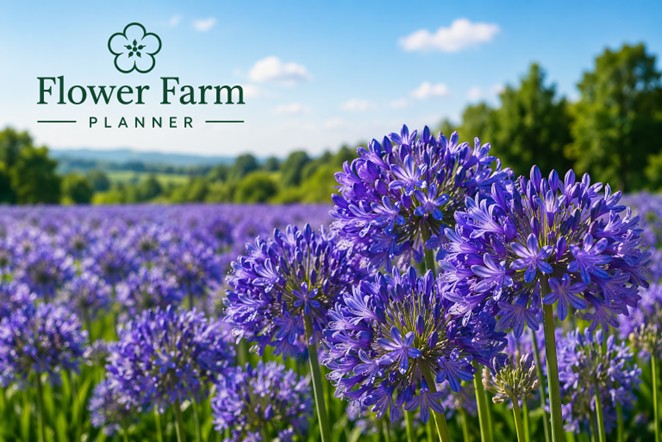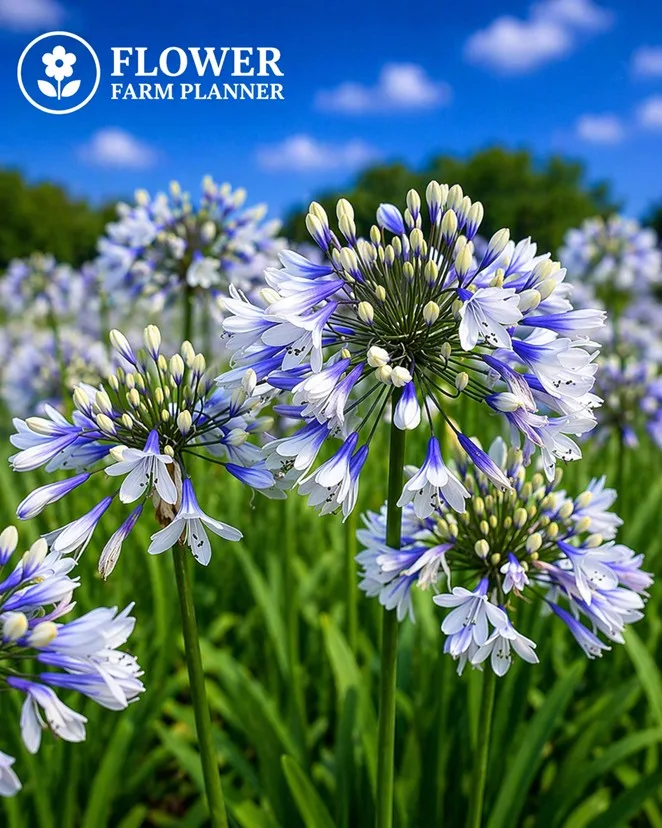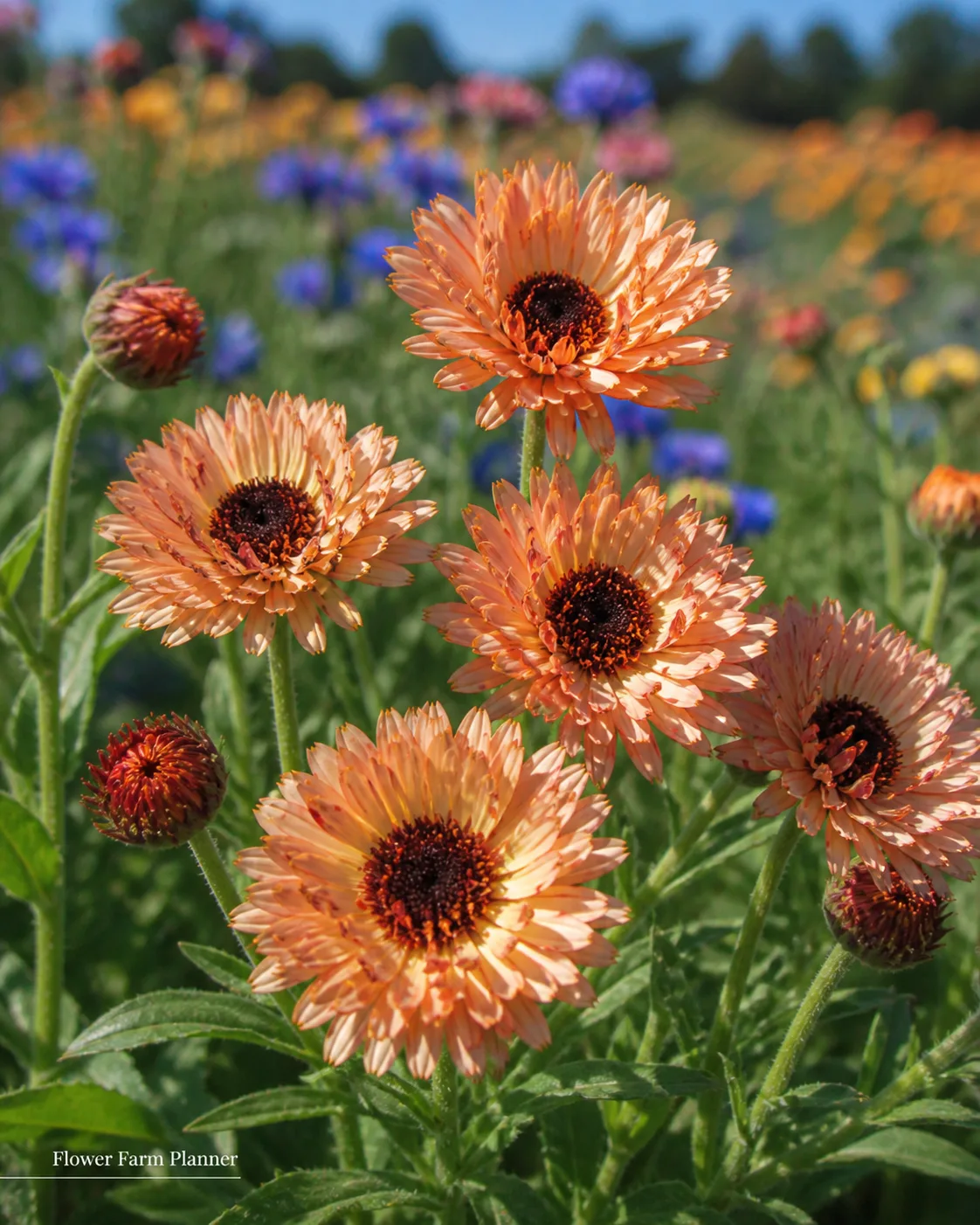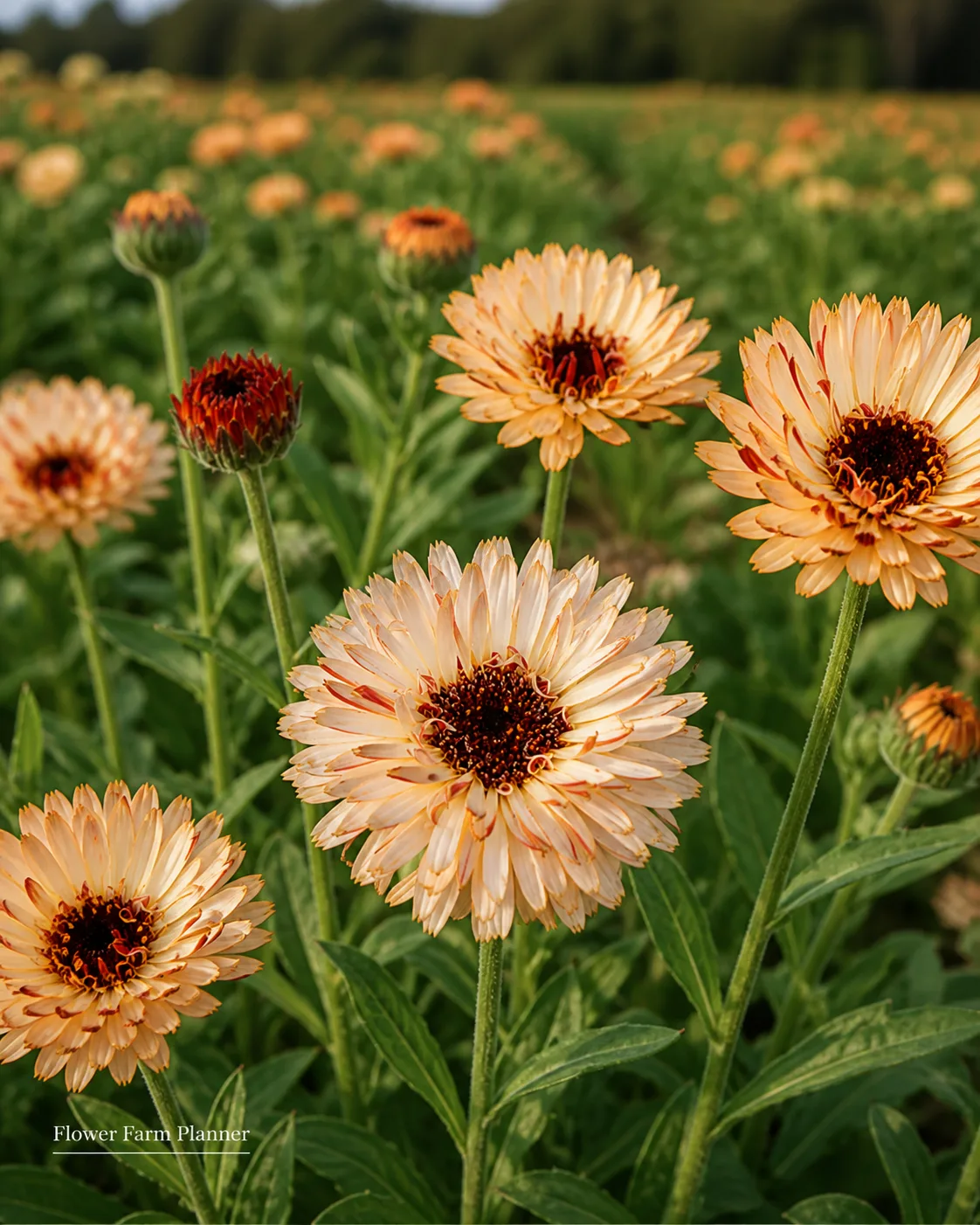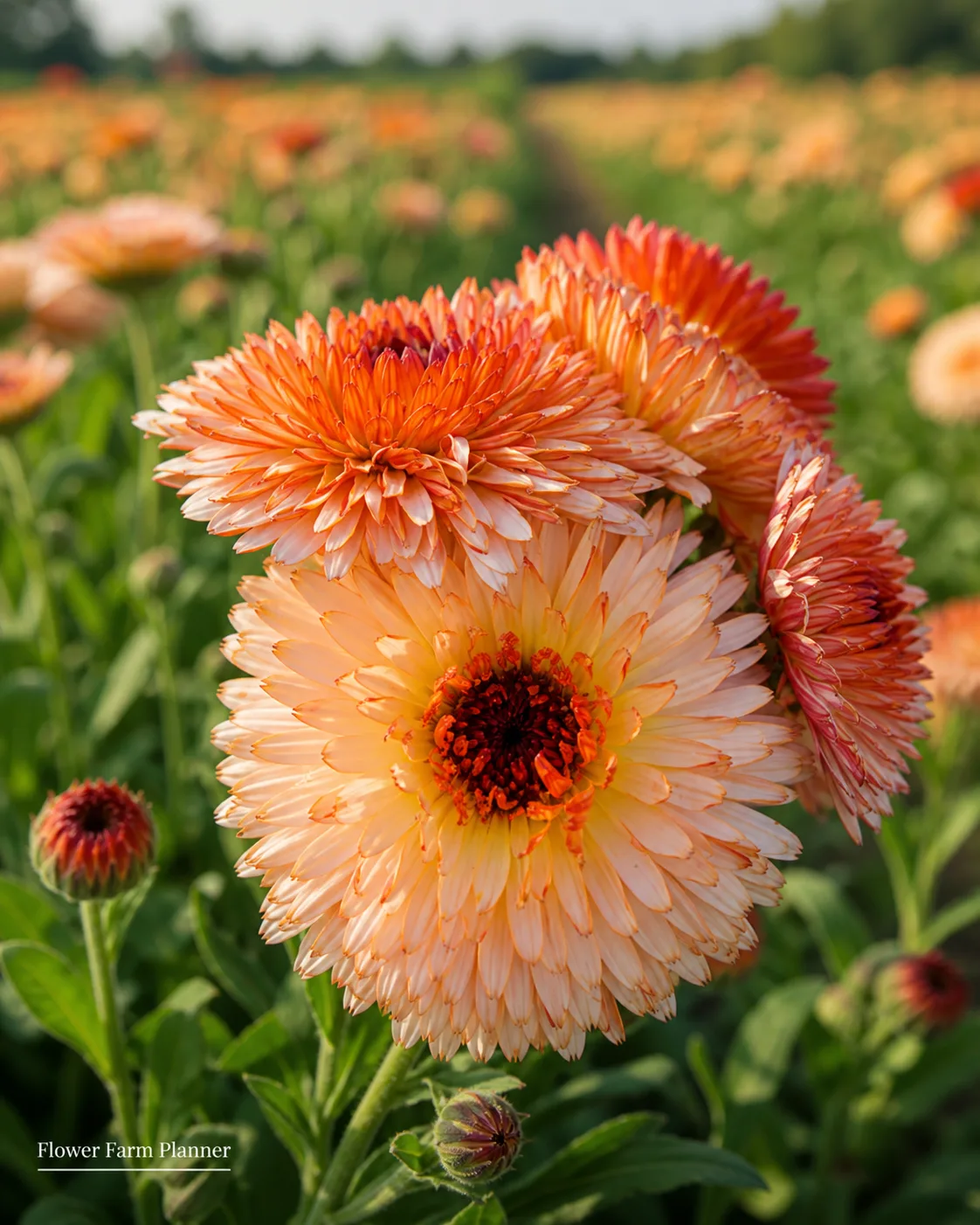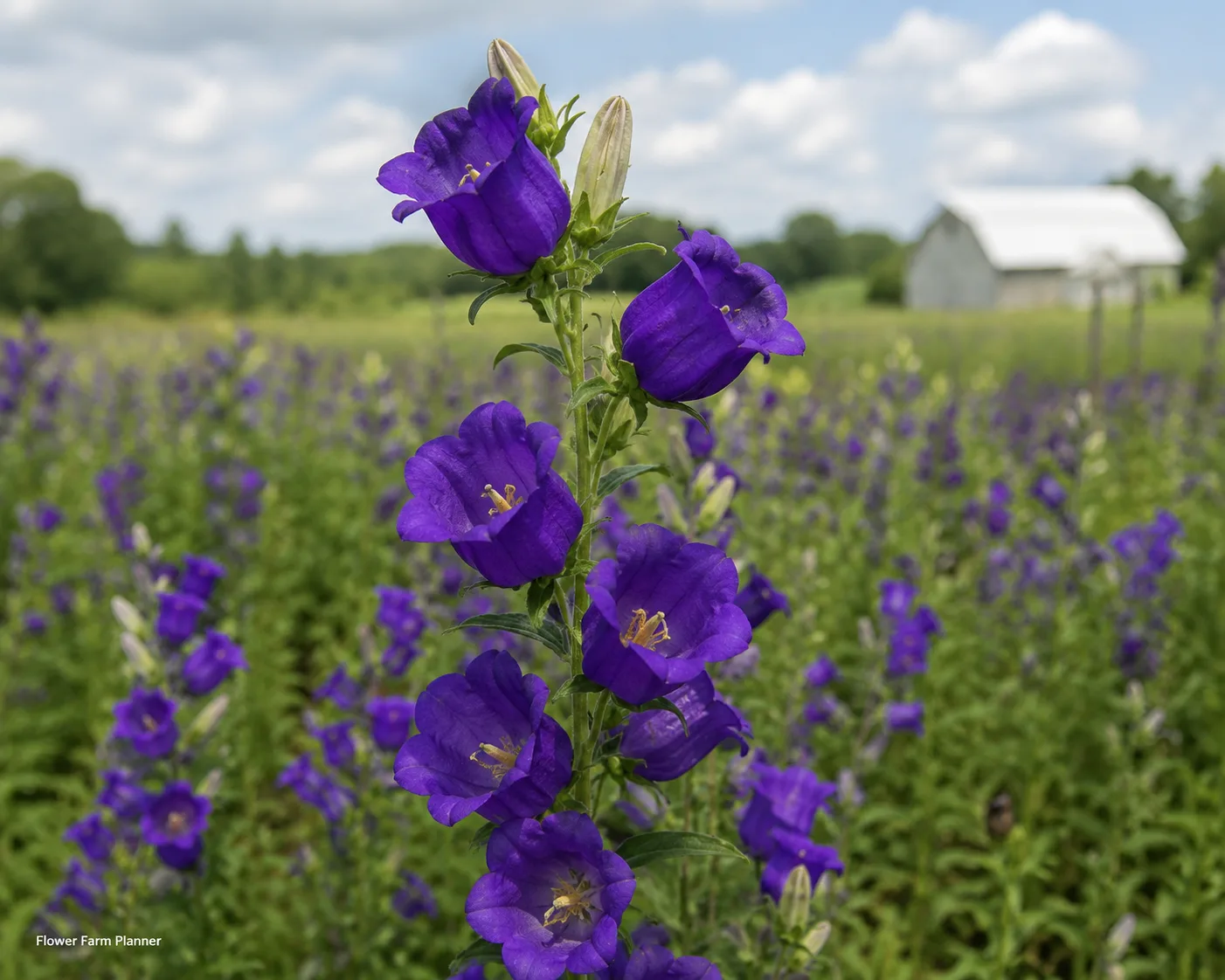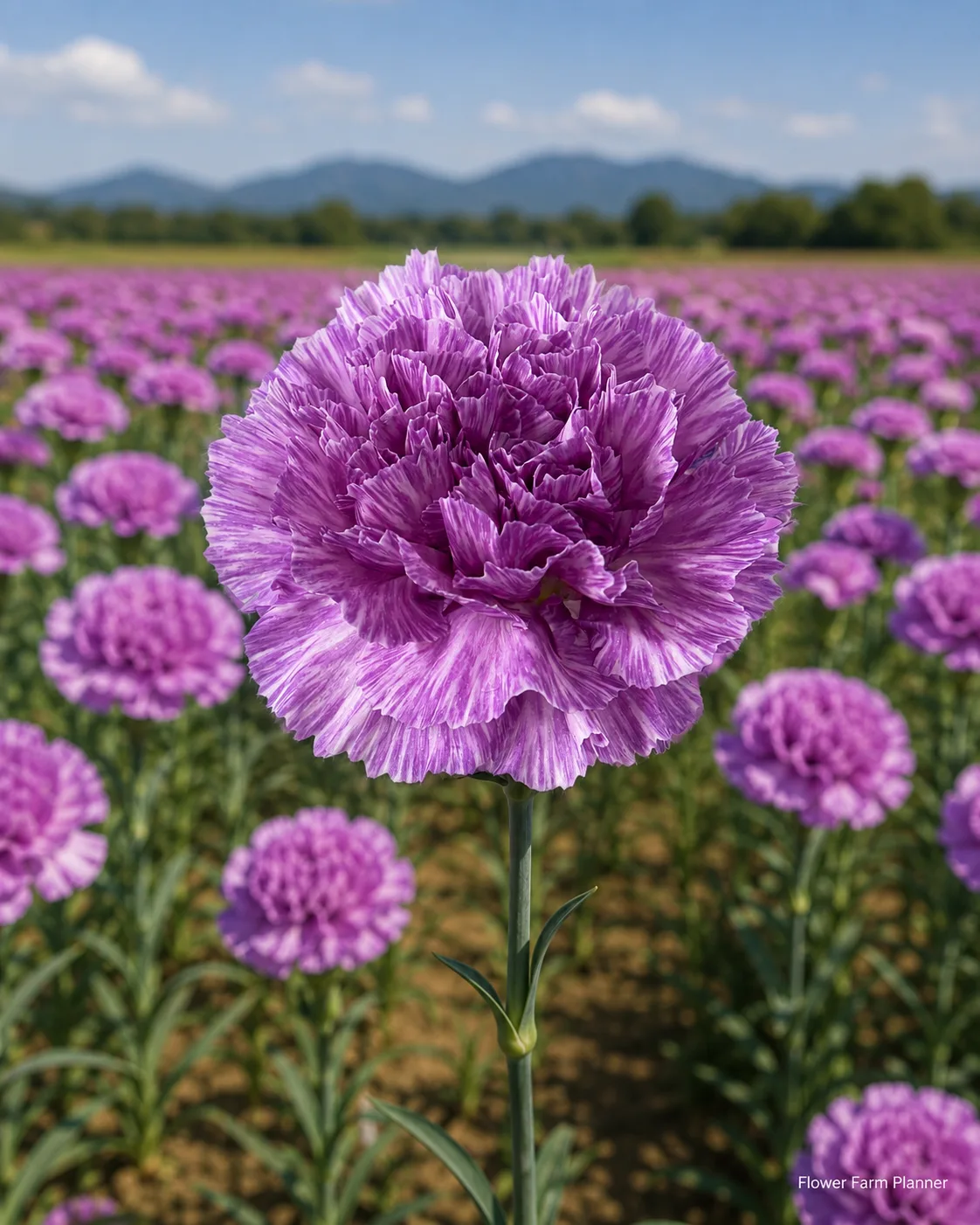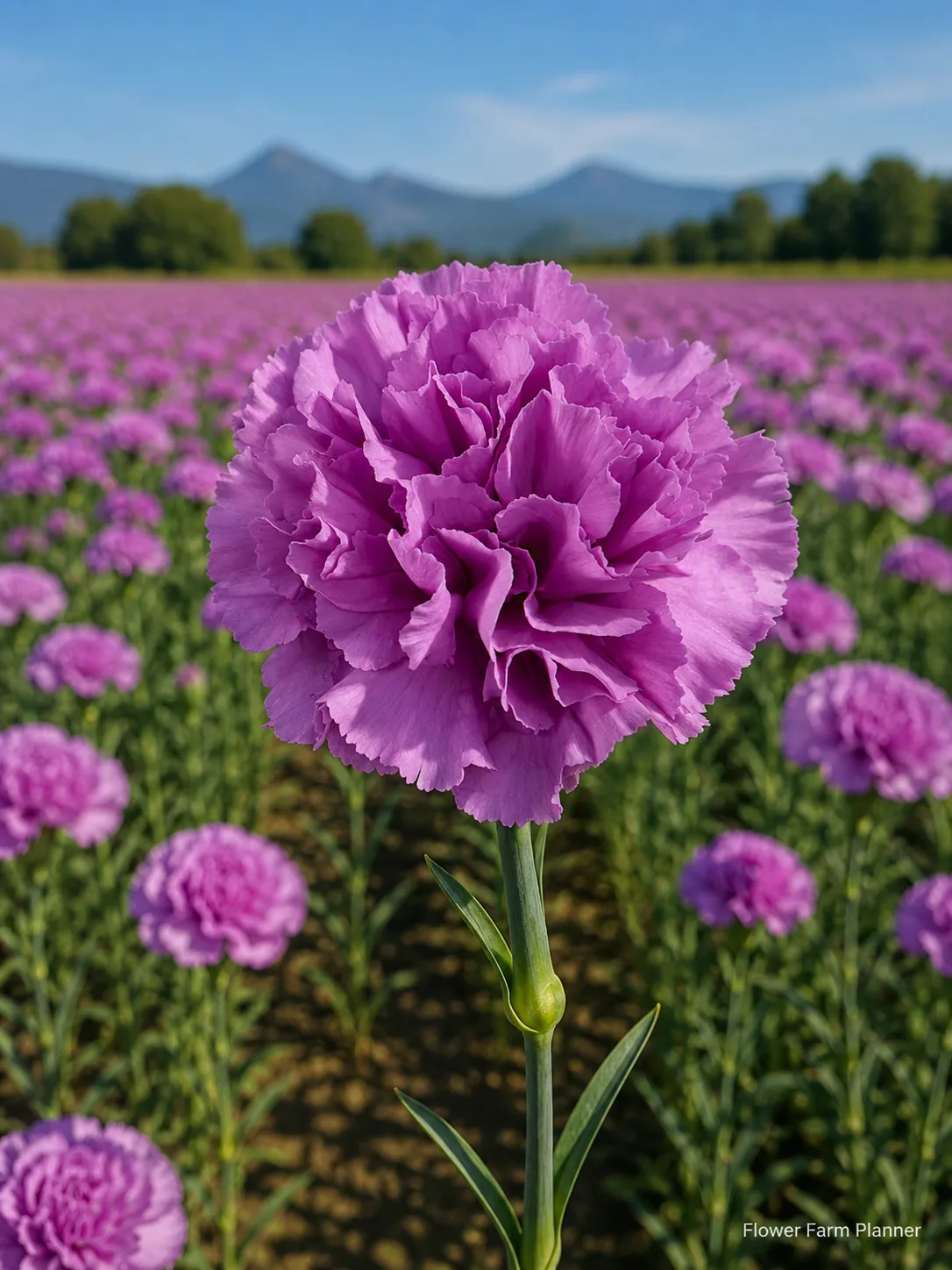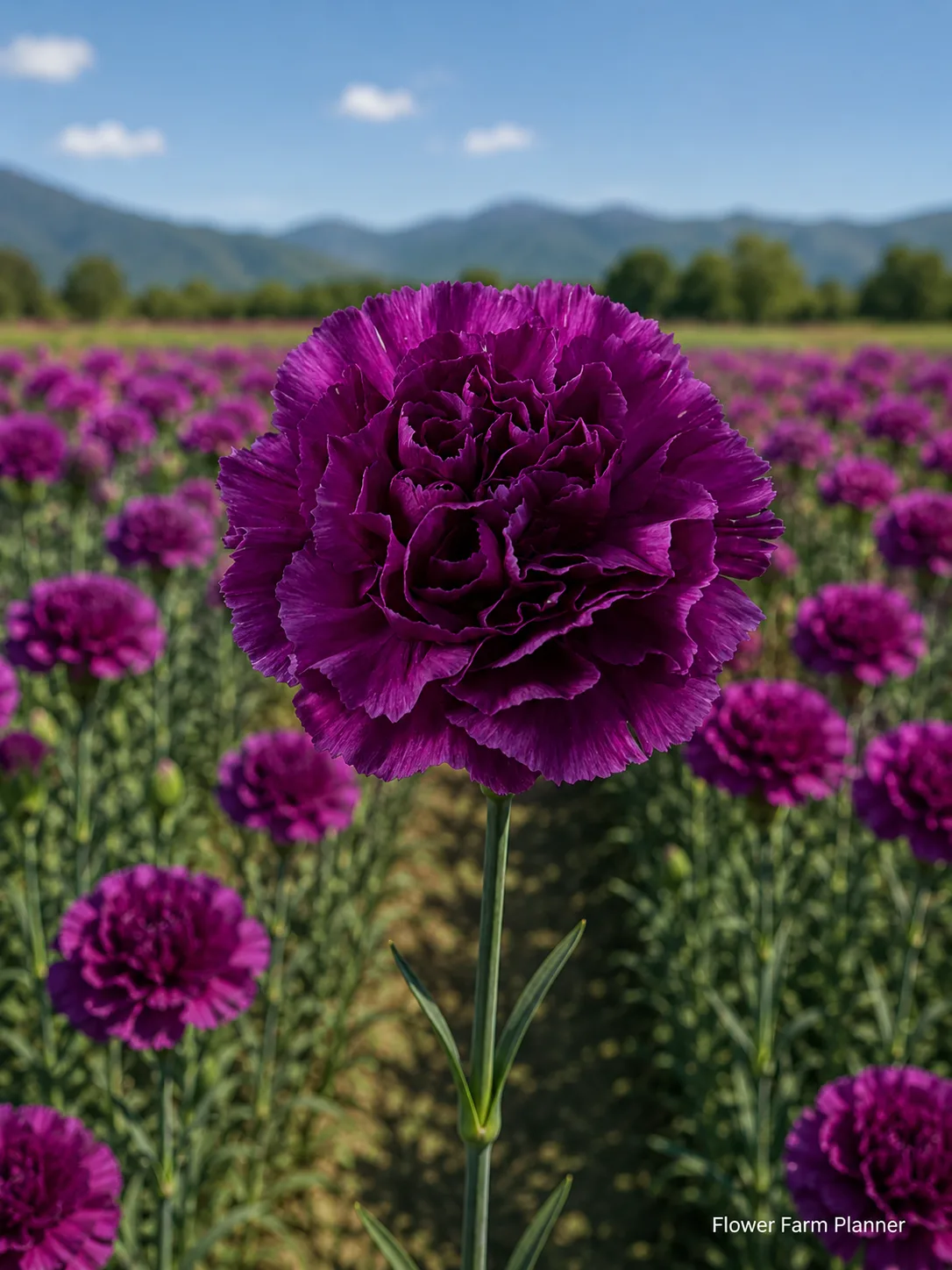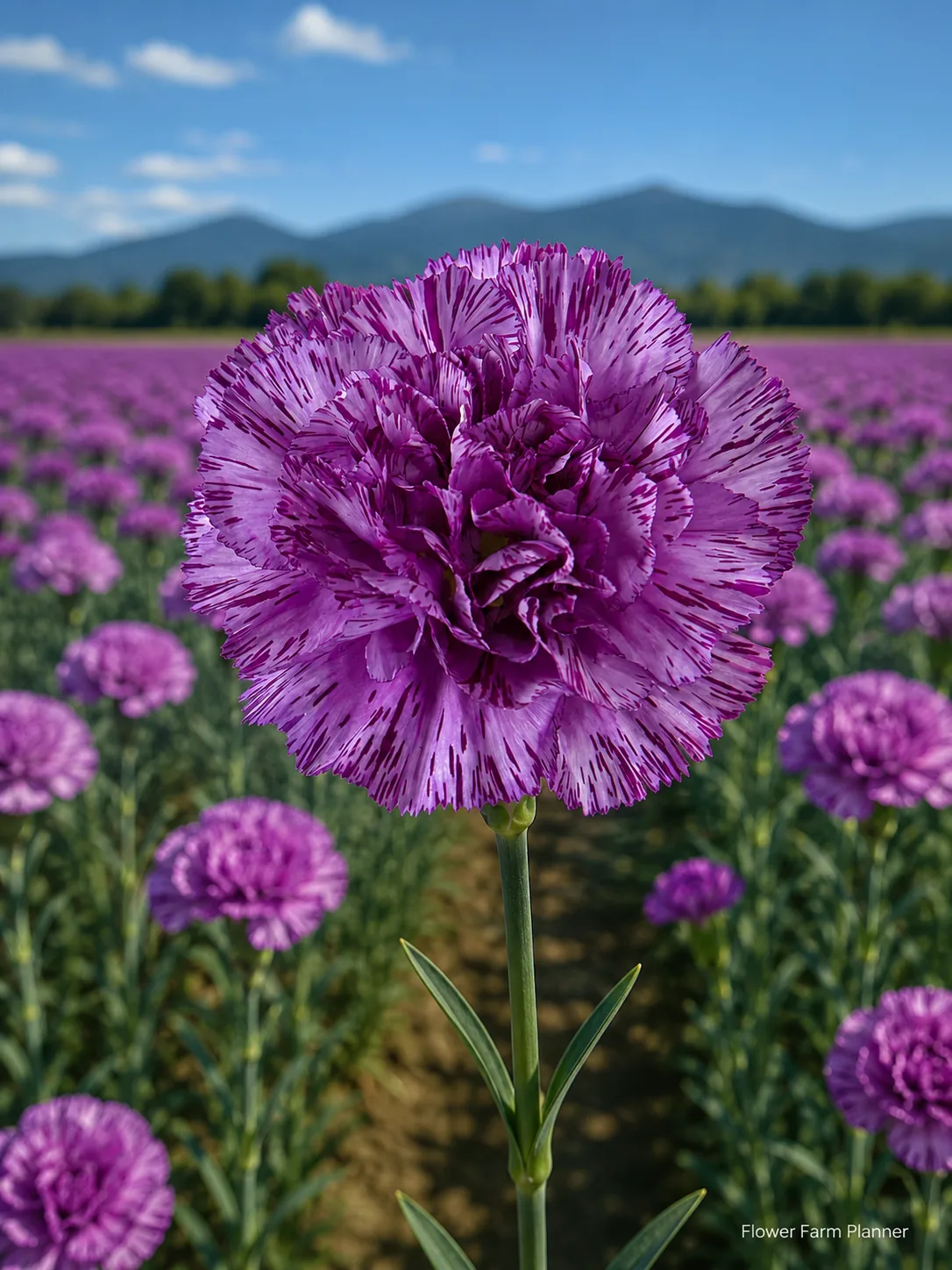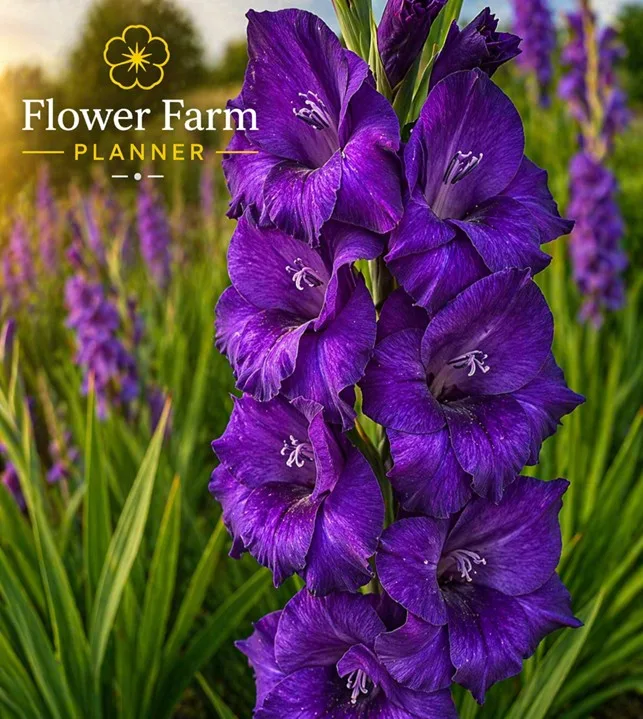
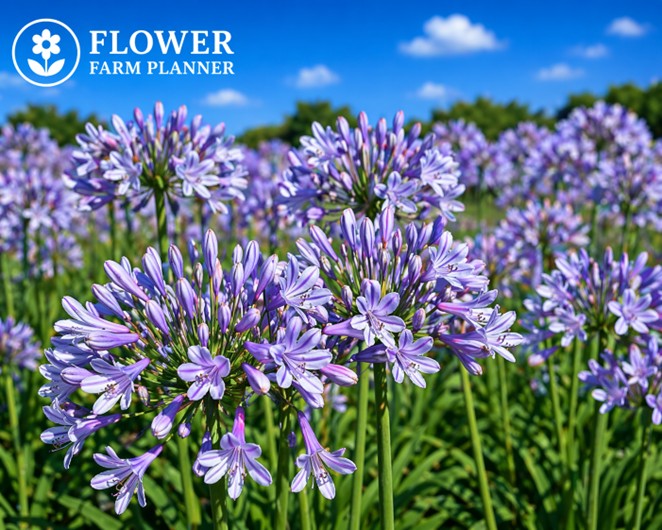
Agapanthus Amethyst
Agapanthus spp. / Agapanthus
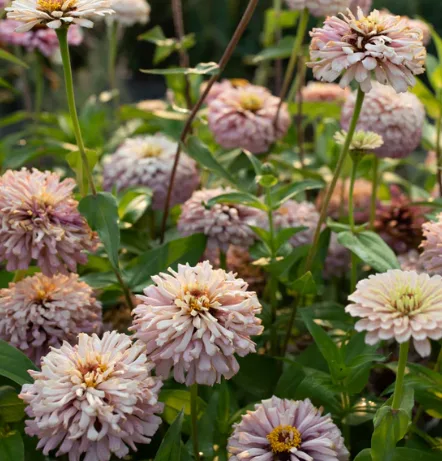
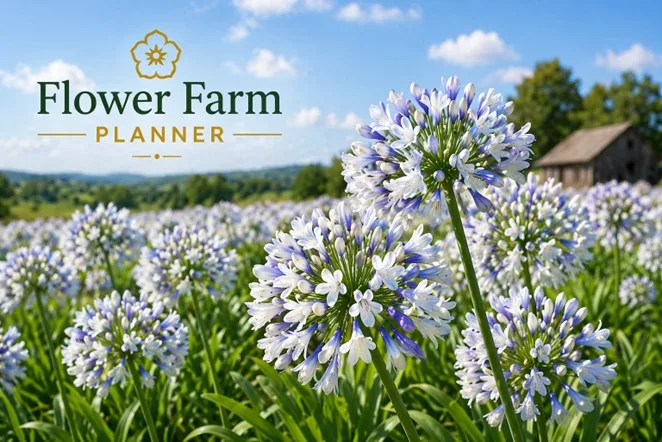
A blue-lilac agapanthus with darker amethyst striping, clean stems, and strong architectural flower heads for fresh bouquets and florist work.
Open varietyBrowse public crop profiles with clearer common names, faster variety browsing, and less digging between parent plants and cultivar pages.
23
public crop profiles
615
varieties linked to those crops
615
cards in this variety view

Agapanthus spp. / Agapanthus
A blue-lilac agapanthus with darker amethyst striping, clean stems, and strong architectural flower heads for fresh bouquets and florist work.
Open variety
Agapanthus spp. / Agapanthus
Agapanthus BlackJack is a modern, compact, award-winning African lily grown for near-black buds that open into velvety black-purple rounded umbels. It is not a cheap bulk crop; it is a premium architectural accent for growers who want a dramatic dark summer stem that florists can recognise instantly. It should be planted from verified licensed stock, given full sun and excellent drainage, and allowed time to build mature crowns before judging productivity. In the right climate it can become a long-term bed crop with strong event value and a memorable marketing story.
Open variety
Agapanthus spp. / Agapanthus
A tall white-and-ice-blue agapanthus with strong stems and rounded flower heads for elegant summer bouquets, wedding work, and premium florist designs.
Open variety
Agapanthus spp. / Agapanthus
A tall pale violet-blue agapanthus with darker floret ribs and rounded summer flower heads for elegant bouquets, wedding work, and premium florist designs.
Open variety
Agapanthus spp. / Agapanthus
A dark-stemmed violet-blue agapanthus with sturdy 80 cm stems and rounded umbels for premium summer bouquets and florist designs.
Open variety
Agapanthus spp. / Agapanthus
A rare compact green-white agapanthus with emerald-based florets for premium white-and-green bouquets, weddings, and florist work.
Open variety
Agapanthus spp. / Agapanthus
A tall dark violet-blue agapanthus with large nodding umbels and strong architectural summer stems for florists and flower farmers.
Open variety
Agapanthus spp. / Agapanthus
Large blue-and-white bicolour agapanthus with tall stems and elegant rounded flower heads for premium summer bouquets and event designs.
Open variety
Agapanthus spp. / Agapanthus
Pale grey-blue evergreen agapanthus with soft rounded flower heads and clean stems for summer bouquets and florist design.
Open variety
Agapanthus spp. / Agapanthus
Agapanthus ‘Twister’ is a bicolour African lily grown from fleshy rhizomatous crowns and valued as a clean, architectural summer stem. It produces rounded umbels of white funnel-shaped florets with a dark violet-blue throat, carried above strong strap-like foliage. For a flower farm it should be treated as a premium perennial crop that earns its place through wedding value, florist novelty, and long-term clump productivity rather than fast annual turnover. It needs sun, drainage, patience, and careful postharvest handling because agapanthus is ethylene sensitive and does not store for long as a dry cut stem.
Open variety
Allium spp. / Allium
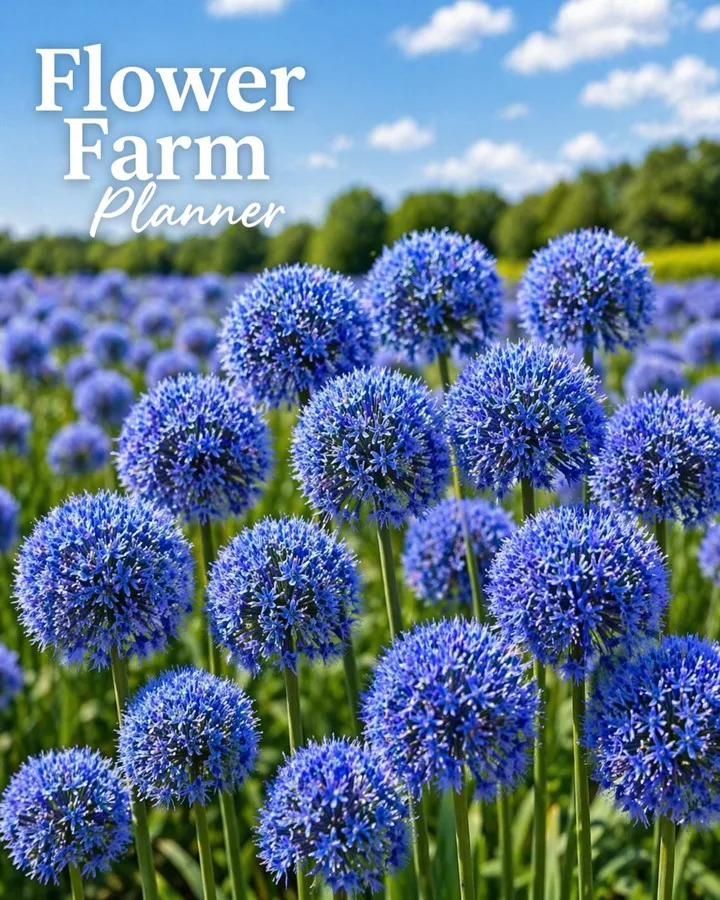
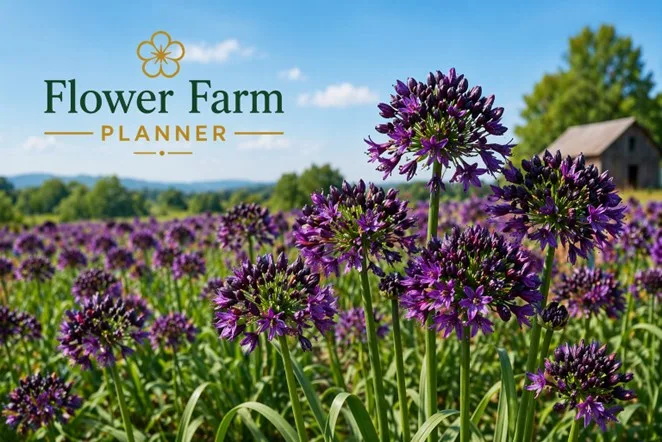
This is the blue globe allium form most growers will encounter in bulb catalogues. It is beautiful, small, and very blue, but it must be treated as a niche specialty stem with trial data behind it rather than a guaranteed florist staple.
Open variety
Allium spp. / Allium
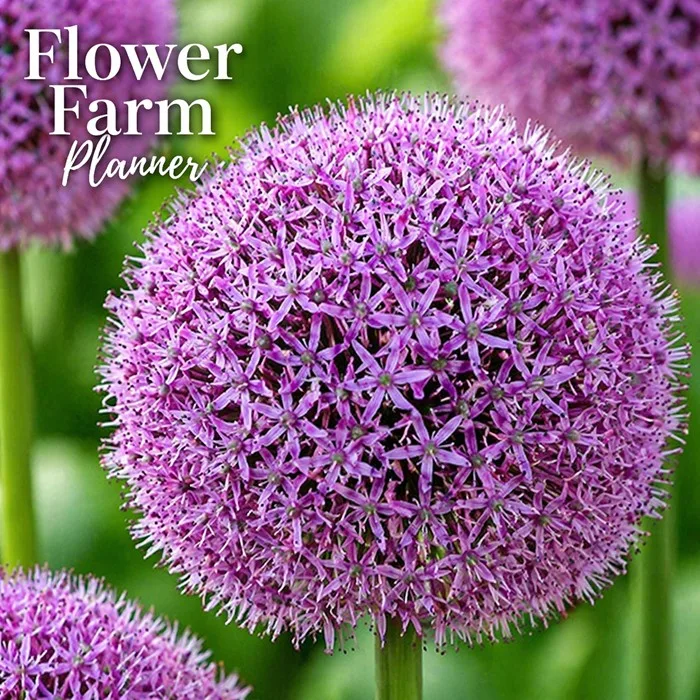
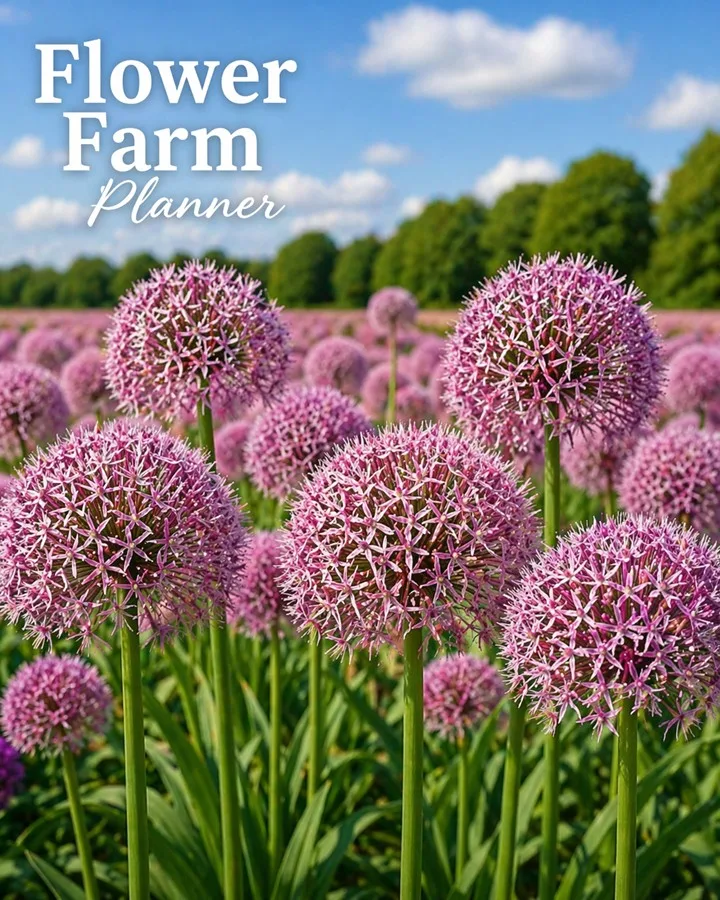
Allium 'Gladiator' is one of the classic giant purple alliums for farms that want bold spring stems with immediate florist appeal. It produces tall, straight scapes topped with large lilac-purple globes and is best planned as a premium one-stem-per-bulb crop. The crop is relatively simple in the field, but profitability depends on buying good bulb grades, planting in sharply drained soil, harvesting in a narrow window, and selling into markets that value large sculptural stems.
Open variety
Allium spp. / Allium
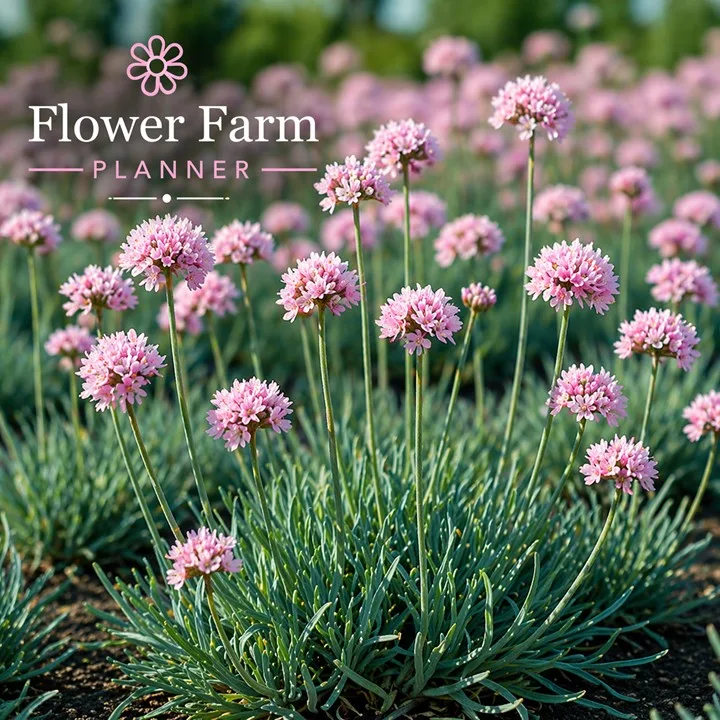
Allium senescens ‘Glaucum’ is a compact, blue-green, corkscrew-foliaged perennial allium for growers who want a distinctive small botanical crop rather than a tall production allium. Its lilac-pink umbels are useful for bud vases, local bouquets, herb-garden designs, pollinator plantings, and dried detail work, but its short stems mean it should be trialed carefully before it receives serious cut-flower bed space.
Open variety
Allium spp. / Allium
Allium ‘Globemaster’ is a premium giant ornamental allium grown from large fall-planted bulbs for huge lavender-purple spherical heads. It is one of the most florist-friendly statement alliums because a single stem can create scale, structure, and luxury in spring arrangements. The crop is simple once planted, but success depends on excellent drainage, correct bulb sourcing, winter chilling, careful harvest timing, and a market that will pay for large architectural stems.
Open variety
Allium spp. / Allium
Allium ‘Mars’ is the named dark-purple tall globe allium to use when a grower wants a more dramatic purple architectural stem than the smaller common alliums. It should be bought as quality bulbs, planted in autumn, harvested in late spring, and sold to customers who pay for form and seasonality.
Open variety
Allium spp. / Allium
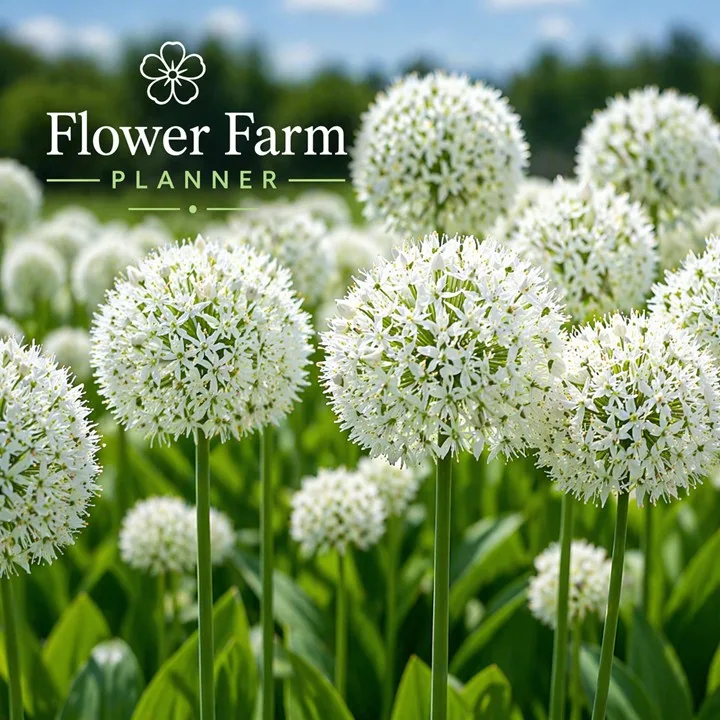
Allium ‘Mt. Everest’ is a premium white globe allium grown from autumn-planted bulbs for tall, clean, sculptural stems in late spring to early summer. It offers a crisp white alternative to purple alliums and has excellent value for wedding and event floristry, especially in white-and-green palettes. The crop should be planned conservatively as one saleable stem per flowering bulb, with extra allowance for blind bulbs, short stems, and blemished white heads. It is best trialled first in warm-winter or humid regions, because bulb chill, drainage, and post-flowering dormancy strongly affect performance.
Open variety
Allium spp. / Allium
Allium 'Purple Sensation' is a classic named ornamental allium for cut-flower growers who want a spring stem with strong purple color, excellent round form, and broad florist appeal. It is planted as a bulb in autumn, flowers in late spring to early summer, and provides one premium stem per flowering bulb.
Open variety
Allium spp. / Allium
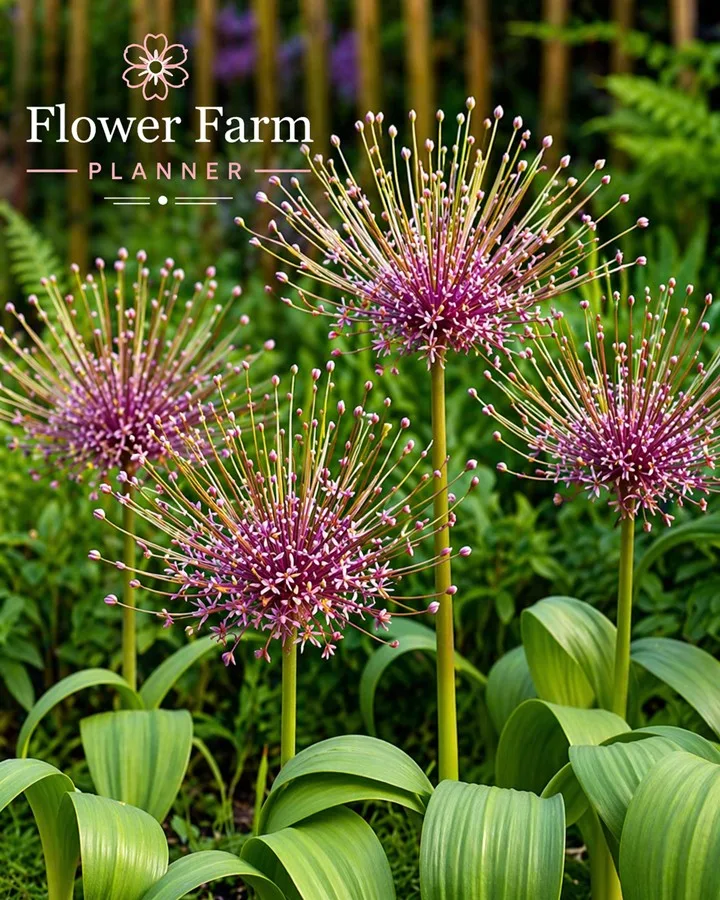
The commercial straight species form of Allium christophii is the version most growers will buy as dry dormant bulbs. It should be planned as a niche, high-impact bulb crop: each bulb normally gives one wide, metallic lavender starburst head on a relatively short stem. It is especially useful where the farm wants a memorable local florist stem or a dried botanical product rather than a high-volume long-stem allium.
Open variety
Allium spp. / Allium
The straight-species trade form is the practical version most growers will buy. It should be trialed as a premium novelty allium with strong dried value, not as a commodity stem crop.
Open variety
Allium spp. / Allium
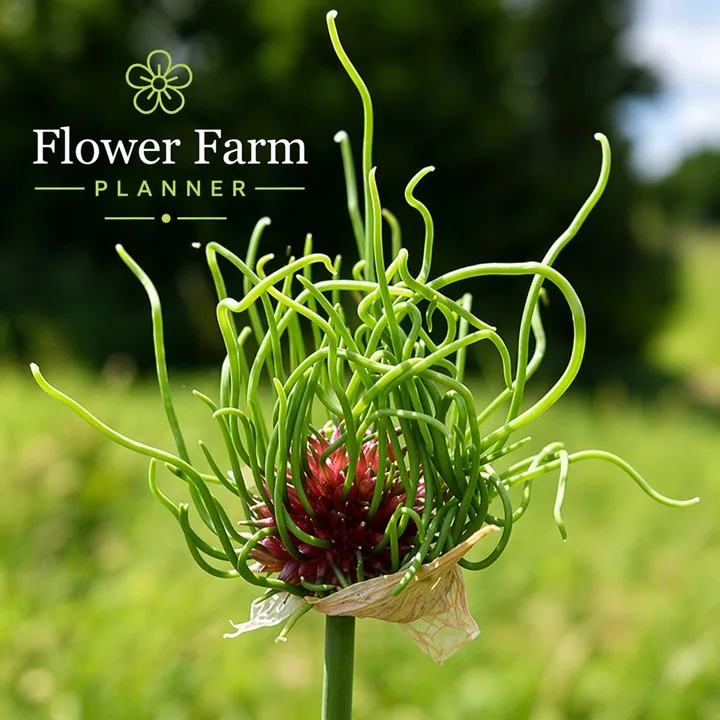
Allium vineale is a hardy perennial wild allium with hollow garlic-scented leaves and small terminal heads of green to reddish-purple bulbils, sometimes mixed with tiny white, pink, or greenish flowers. It can provide unusual botanical texture for local florists and dried work, but it is not a polished commercial cut flower and must be managed carefully because it can spread by bulbils, bulblets, and soil movement.
Open variety
Allium spp. / Allium
Allium stipitatum 'White Giant' is a premium white ornamental allium grown from large bulbs for tall, clean, spherical flower heads in late spring to early summer. It is one of the more florist-friendly white alliums because it gives a strong vertical line, a bold round form, and a color that fits weddings and modern event work. It should be grown as a high-value seasonal stem, not as a cheap mixed-bouquet filler.
Open variety
Amaranthus spp. / Amaranthus
Warm cream, green, bronze, copper, and orange-brown upright amaranth plumes for textural summer and autumn cutting.
Open variety
Amaranthus spp. / Amaranthus
'Autumn’s Touch' is a warm-season upright amaranth grown for muted green, bronze and copper plumes that feel very different from bright red or lime-green amaranths. It is especially useful when a farm wants a late-summer/autumn texture crop for dahlias, zinnias, celosia, grasses, subscriptions and florist orders. It should be positioned as a design crop: not a main focal flower, but a stem that gives bouquets depth, movement and a modern seasonal palette.
Open variety
Amaranthus spp. / Amaranthus
Dusty coral-pink trailing amaranth with cascading tassels for dramatic fresh and dried floral design.
Open variety
Amaranthus spp. / Amaranthus
Dusty magenta-burgundy trailing amaranth with cascading tassels for dramatic fresh and dried floral design.
Open variety
Amaranthus spp. / Amaranthus
Amaranthus 'Elephant Head' is a bold warm-season annual grown for dense, dark burgundy, upright flower heads with a sculptural, almost cockscomb-like presence. It is not a soft filler; it is a statement texture crop for growers who want dramatic autumn stems, moody florist material, dried botanicals, and unusual market-bouquet ingredients. The crop is easy enough to grow in heat, but it needs warm soil, full sun, clean harvest handling, and careful market testing because the form is distinctive and can become coarse if grown too large.
Open variety
Amaranthus spp. / Amaranthus
Emerald Tassels is best treated as a green trailing love-lies-bleeding amaranth for warm-season cut-flower production. It gives bouquets movement, texture and a soft botanical green that is difficult to replace with ordinary foliage. It is valuable for farm bouquets, florist work, installations, late-summer wedding designs and dried work, but it should be trialed separately from Green Tails and Green Cascade because supplier naming in green trailing amaranths can be inconsistent.
Open variety
Amaranthus spp. / Amaranthus
Tall golden-orange upright amaranth with large grain plumes for bold fresh and dried floral texture.
Open variety
Amaranthus spp. / Amaranthus
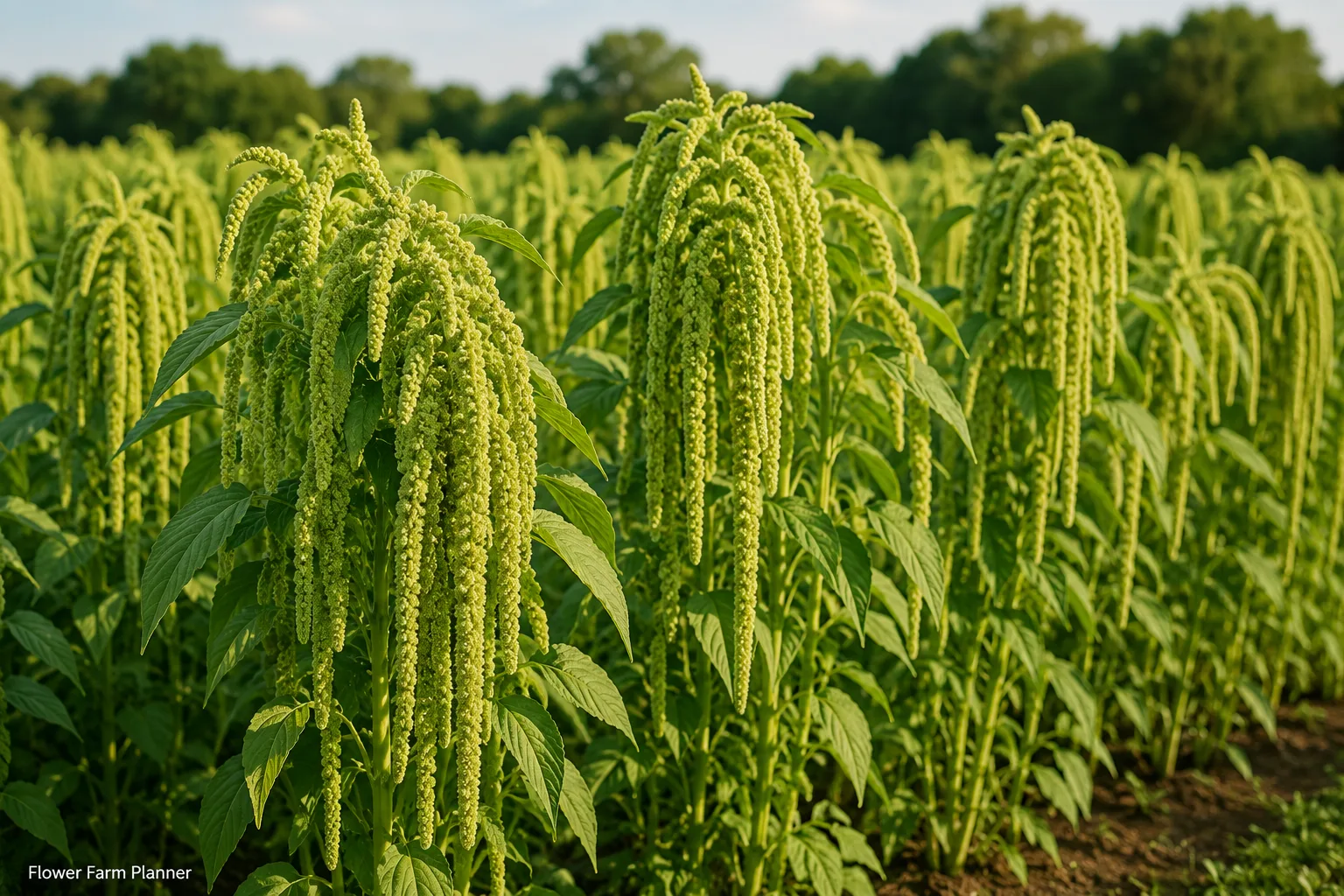
Amaranthus caudatus is a warm-season annual grown for long pendulous tassels that bring movement, texture and drama to fresh bouquets, installations and dried arrangements. It is easy compared with premium cuts, but requires warmth, sun, support, correct harvest stage and quick hydration.
Open variety
Amaranthus spp. / Amaranthus
Amaranthus 'Green Giant' is best handled as a tall, vigorous green upright amaranth for bold texture stems. It can be useful where growers need height, chartreuse-green structure and dried material, but it should be trialed before scaling because the name is not as consistently documented as some other amaranth cultivars.
Open variety
Amaranthus spp. / Amaranthus
‘Green Tails’ is the bright green trailing form of Amaranthus caudatus, grown for long pendant tassels that add movement, texture, and a fresh botanical colour to bouquets. It is a warm-season annual, quick from seed, and especially valuable for growers who sell to florists because it gives drama without the darkness of red love-lies-bleeding.
Open varietyAmaranthus spp. / Amaranthus
'Green Thumb' is a compact green upright amaranth grown for fresh chartreuse-green plume texture. It gives bouquet makers a green, botanical, feathery ingredient without the long ropes of trailing amaranth. It is easy to grow once warm, dries well, and is best for local bouquets, subscriptions and small florist work rather than long-stem commodity wholesale.
Open variety
Amaranthus spp. / Amaranthus
Hopi Red Dye is a warm-season heirloom amaranth grown for intense crimson-red pigment, upright plumes and a strong botanical story. It can work beautifully in autumn bouquets, farmers market bunches, dried arrangements and florist texture buckets, but it should be handled as a specialty crop because it can stain hands and surfaces and may be less uniform than modern cut-flower selections.
Open variety
Amaranthus spp. / Amaranthus
Bronze to chestnut upright amaranth with feathery plumes for warm-toned fresh and dried floral design.
Open variety
Amaranthus spp. / Amaranthus
Amaranthus caudatus 'Love Lies Bleeding' is the classic red trailing amaranth: a fast, heat-loving annual with long crimson tassels that hang from strong stems and bring instant drama to bouquets, installations, and dried flower work. It is simple to raise from seed once the weather is warm, but it should not be treated casually in production. The crop needs full sun, warm soil, modest fertility, steady establishment moisture, support netting in exposed sites, and careful harvest handling so the heavy tassels do not tangle, bruise, or bend. For a flower farmer, its value is not in being a high-volume everyday filler; its value is in giving arrangements a shape and movement that few other annuals can provide.
Open variety
Amaranthus spp. / Amaranthus
Mira is a warm-season trailing amaranthus grown from seed for long, draping, bicolour tassels that move from soft green into rose, mauve, lilac, and purple tones. It is not a quiet filler; it is a dramatic texture crop for bouquets, events, installations, and drying. Grow it after frost danger in full sun, keep fertility moderate, support it before it gets heavy, and harvest before the tassels become overmature and seed-shedding.
Open variety
Amaranthus spp. / Amaranthus
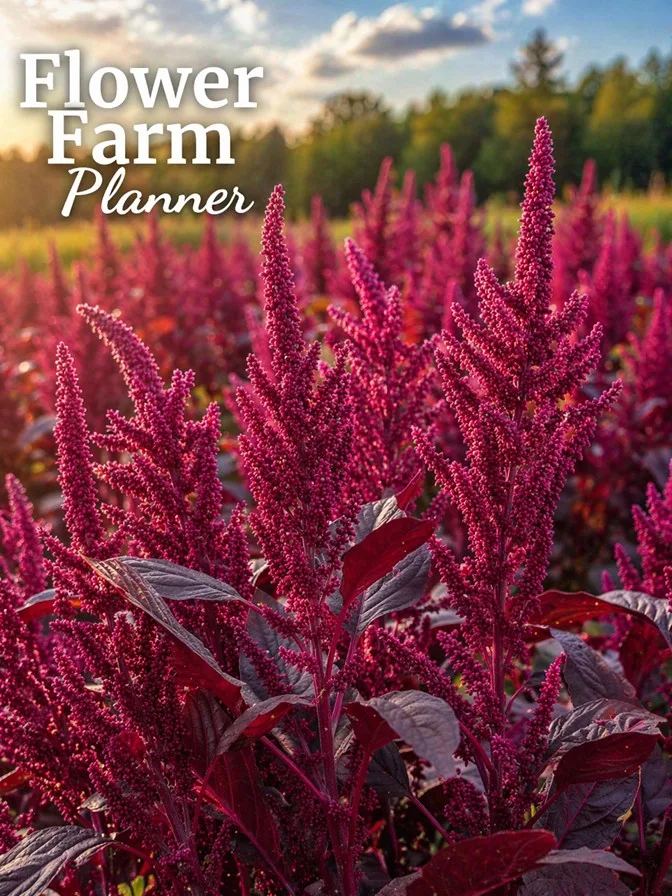
Upright dark scarlet-burgundy amaranth with rich plumes for dramatic fresh and dried summer-to-autumn designs.
Open variety
Amaranthus spp. / Amaranthus
Tall Mexican amaranth with burgundy wine-red plumes and bronze-plum foliage for dramatic fresh and dried summer-to-autumn designs.
Open variety
Amaranthus spp. / Amaranthus
'Pygmy Torch' is a compact burgundy prince's feather amaranth for growers who want the amaranth look without committing to very tall, bulky plants. It brings dark maroon plumes and purple-toned foliage into small bouquets, autumn subscriptions, dried bunches and container-scale cutting beds. Its main caution is commercial scale: it is short, so it should be tested with your actual bouquet sizes, bunch standards and customer expectations before assigning it prime production space.
Open variety
Amaranthus spp. / Amaranthus
'Red Army' is an upright red amaranth for growers who want strong crimson plume texture, late-summer drama and dried-flower value from a warm-season annual. It should be handled as a field-grown seed crop with moderate fertility, full sun, airflow and timely support. Its value is strongest in mixed bouquets, florist bunches, autumn subscriptions, moody wedding palettes and dried products where saturated red texture makes arrangements look fuller and more intentional.
Open variety
Amaranthus spp. / Amaranthus
Amaranthus 'Torch' is a warm-season upright amaranth grown for bold crimson-red plume stems that bring instant autumn texture to bouquets, bunches and dried designs. It is not a soft, delicate flower; it is a strong structural crop with visual weight, useful when the farm needs dramatic line, color depth and late-season abundance. Grow it in full sun, warm soil and well-drained beds, support it before stems stretch, and harvest when the plumes are open enough to hold their form but not so old that they shed seed or become brittle.
Open variety
Amaranthus spp. / Amaranthus
Upright crimson-burgundy amaranth with red-purple foliage and velvety plumes for fresh and dried summer-to-autumn designs.
Open variety
Anemone spp. / Anemone
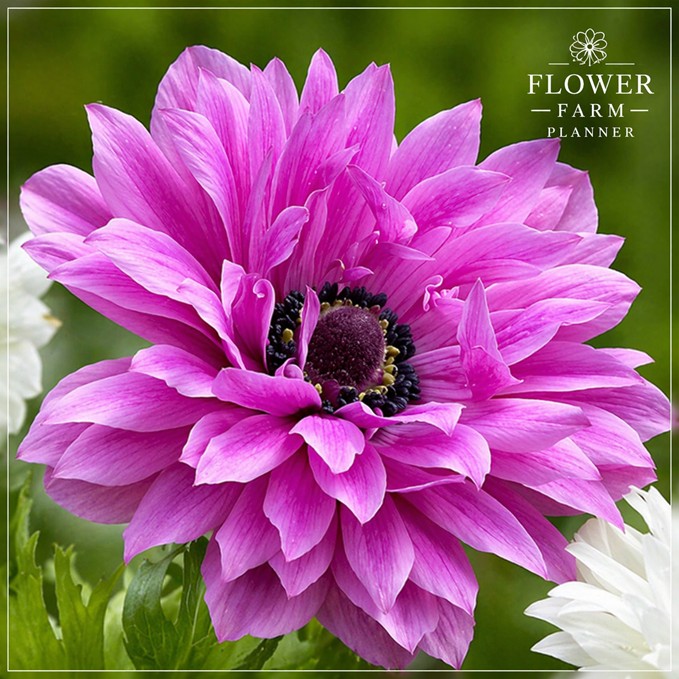
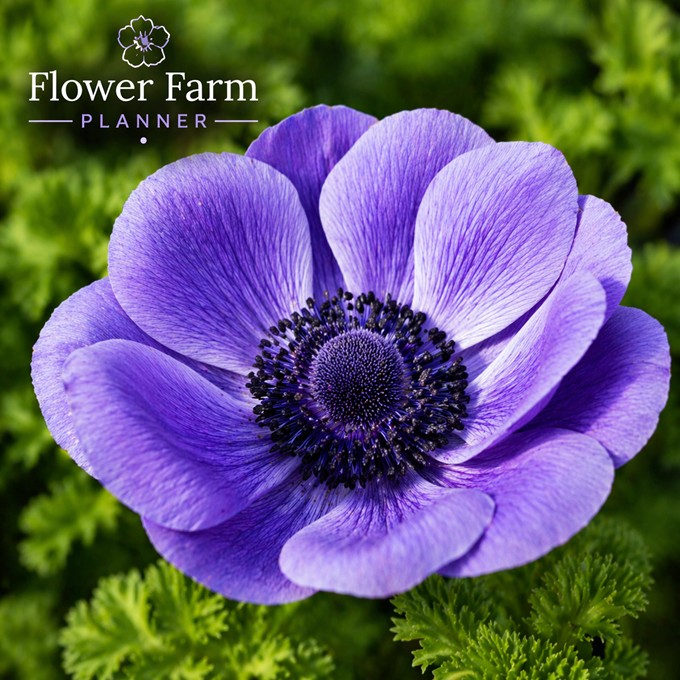
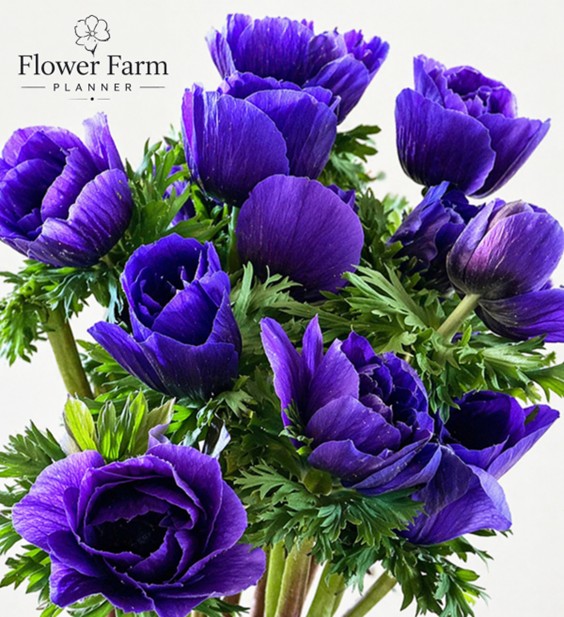
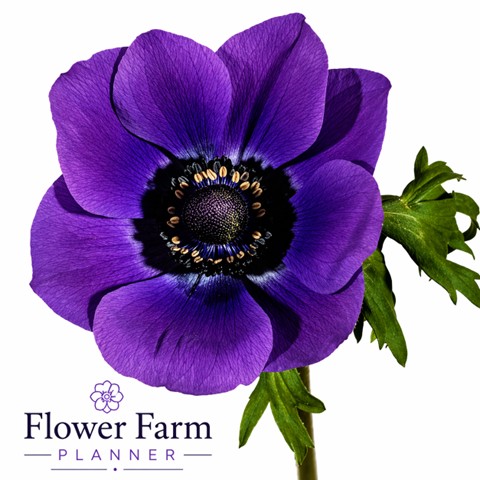
A violet-purple double anemone with a dark eye, grown for premium cool-season bouquets and florist work.
Open variety

Anemone spp. / Anemone
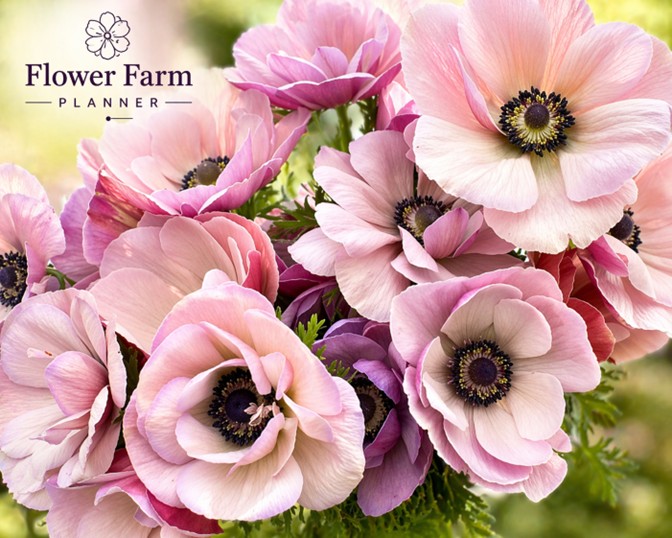
A soft pastel pink florist anemone with a dark eye, grown for romantic cool-season bouquets and wedding work.
Open variety
Anemone spp. / Anemone
A brilliant blue Galilee-series anemone with a dark eye, grown for premium cool-season bouquets, weddings, and florist work.
Open variety
Anemone spp. / Anemone
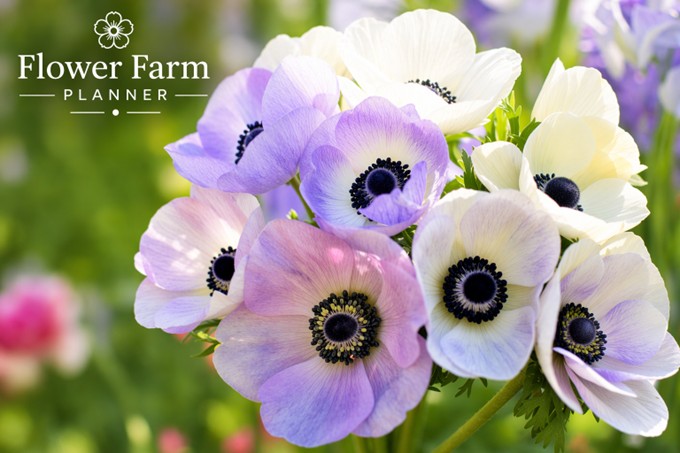
A romantic pastel and bicolor Galilee-series anemone mix with white, blush, pink, lavender, violet, and cherry-brushed blooms for premium cool-season bouquets and wedding work.
Open variety
Anemone spp. / Anemone
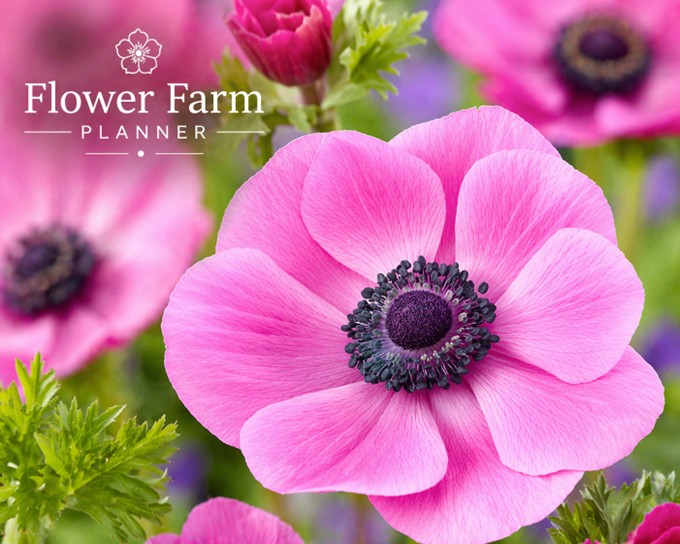
A vivid orchid-pink Galilee-series anemone with a dark eye, grown for premium cool-season bouquets, weddings, and florist work.
Open variety
Anemone spp. / Anemone
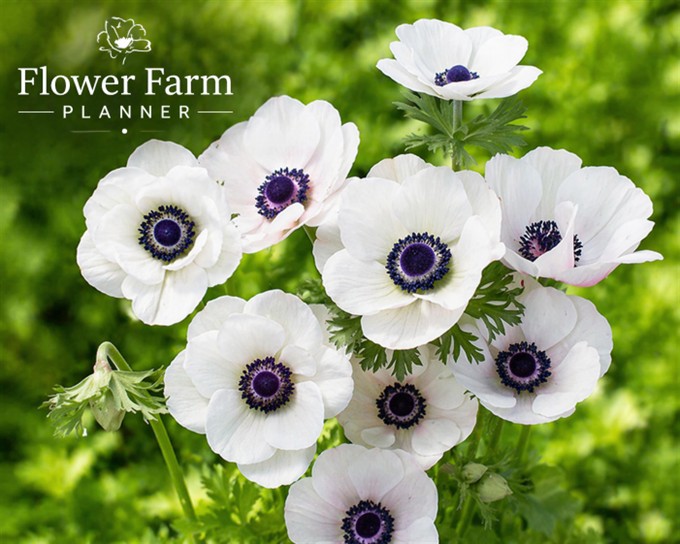
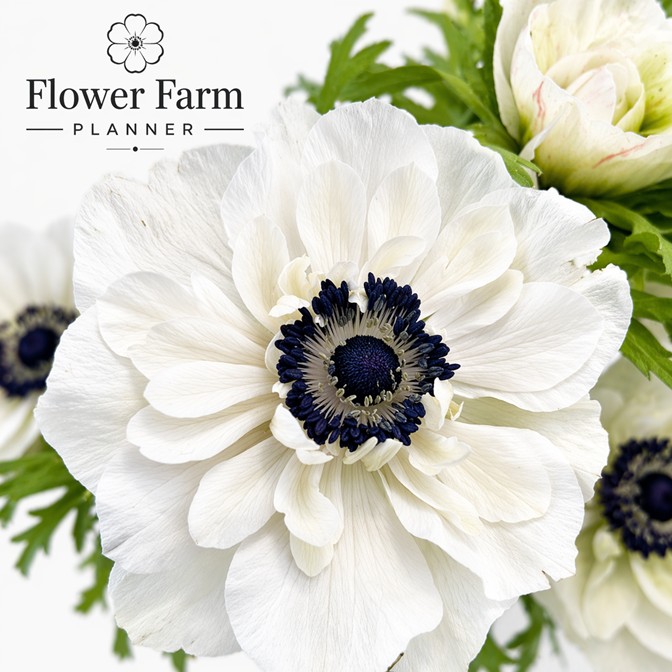
A crisp white Galilee-series anemone with a bold dark eye, grown for premium cool-season bouquets, weddings, and florist work.
Open variety
Anemone spp. / Anemone
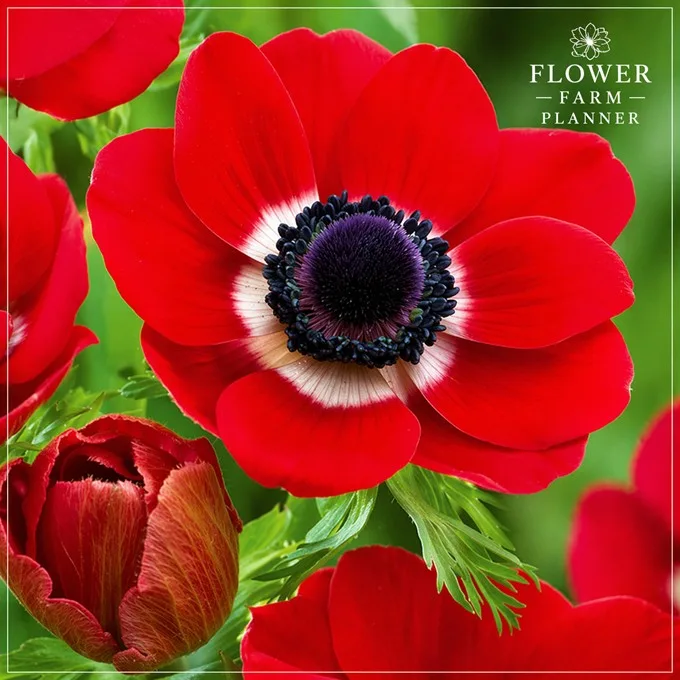
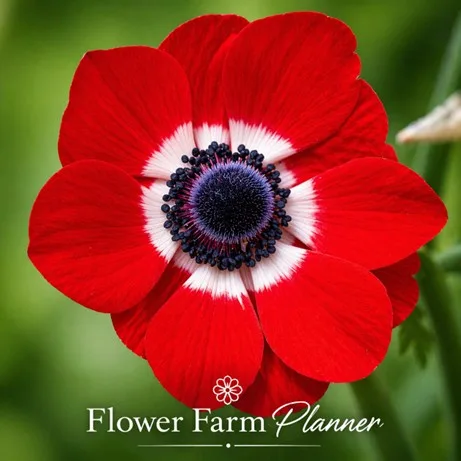
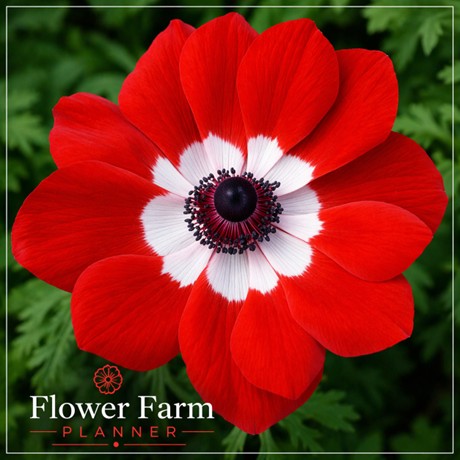
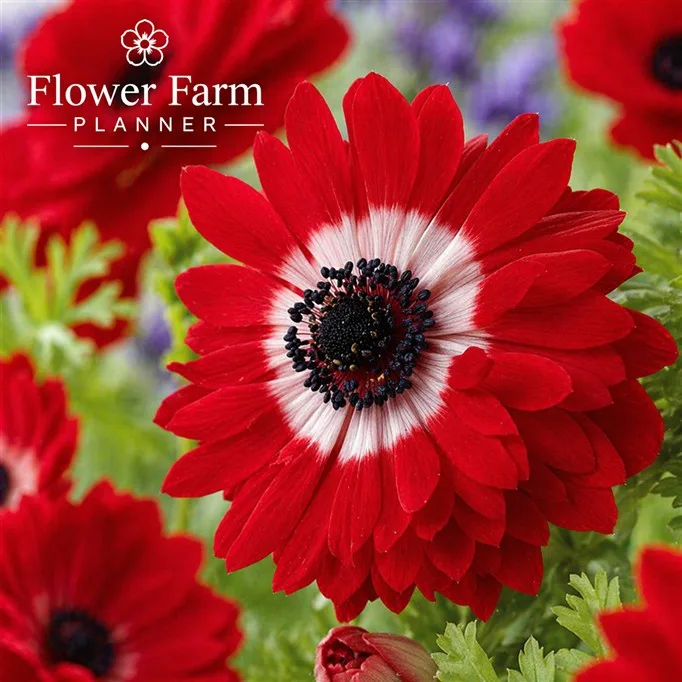
A classic red De Caen anemone with scarlet petals and a dark center, grown for bold cool-season bouquets and florist color.
Open variety
Anemone spp. / Anemone
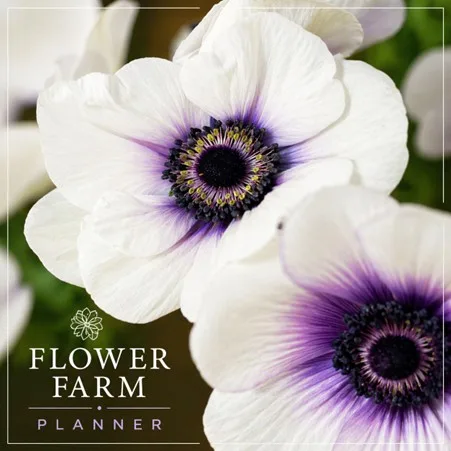
A specialty blue-white Jerusalem anemone with watercolor lavender-white petals and a dark center, grown for premium cool-season bouquets and wedding work.
Open variety
Anemone spp. / Anemone
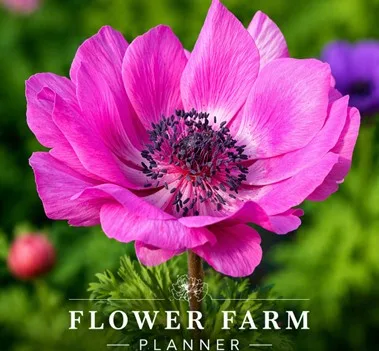
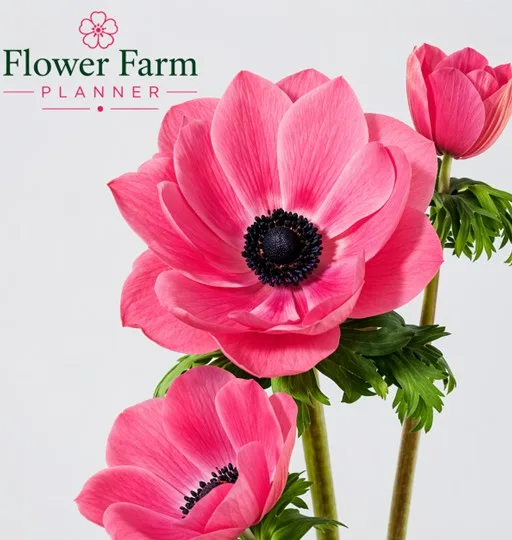
A vivid hot-pink Jerusalem anemone with a dark center, grown for premium cool-season bouquets, florist bunches, and wedding work.
Open variety%20'Lord%20Lieutenant'%20-%20Flower%20Farm%20Planner.jpg)
Anemone spp. / Anemone
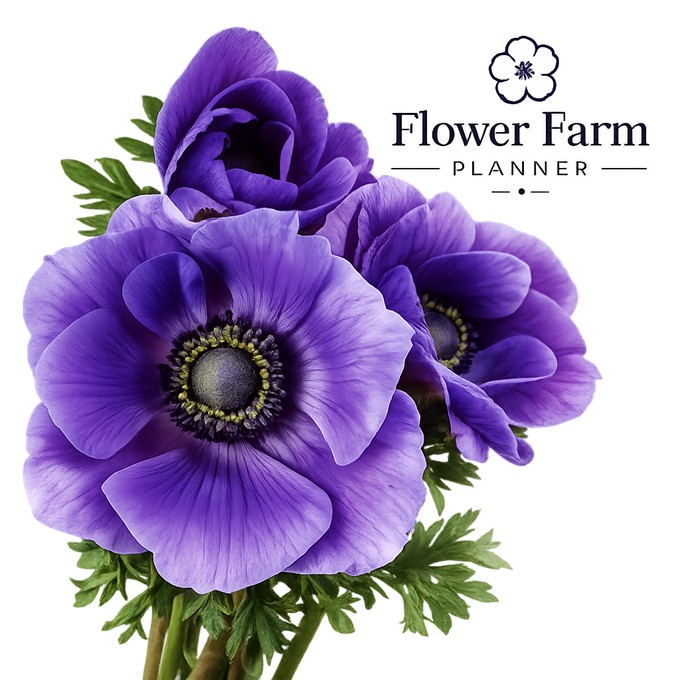
A classic double blue-purple St Brigid anemone with ruffled petals and a dark center, grown for textured cool-season bouquets and florist color.
Open variety
Anemone spp. / Anemone
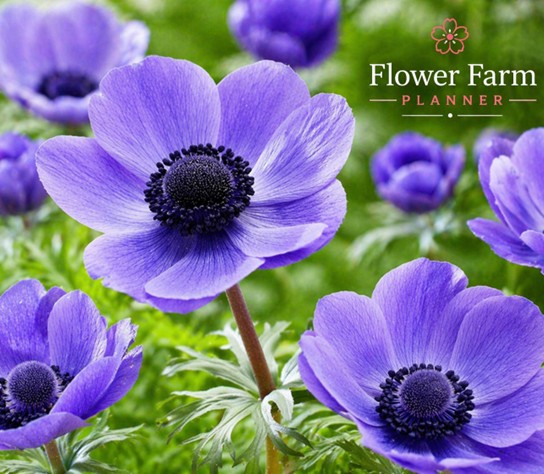
A premium Meron-type blue anemone with deep periwinkle-purple petals, a dark center, strong stems, and excellent cool-season florist appeal.
Open variety
Anemone spp. / Anemone
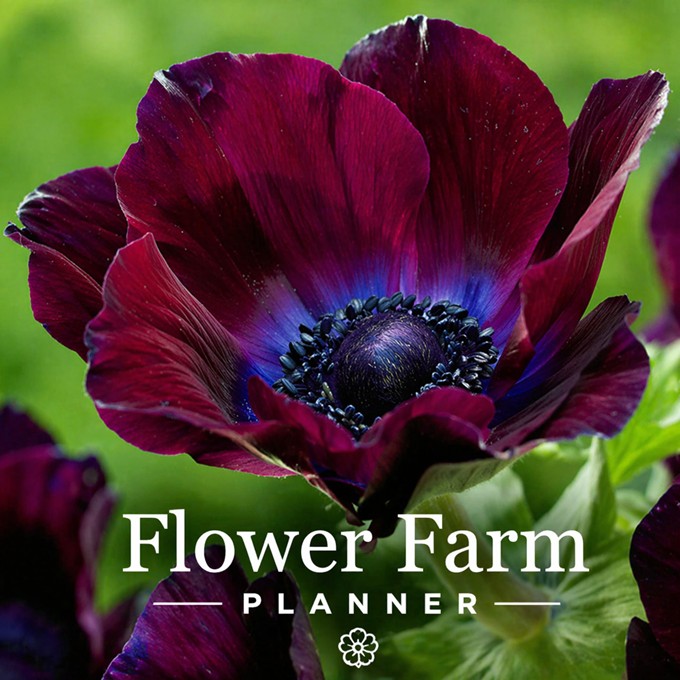
A premium Meron-type burgundy anemone with velvety maroon-purple petals, a dark center, strong stems, and excellent cool-season florist appeal.
Open variety
Anemone spp. / Anemone
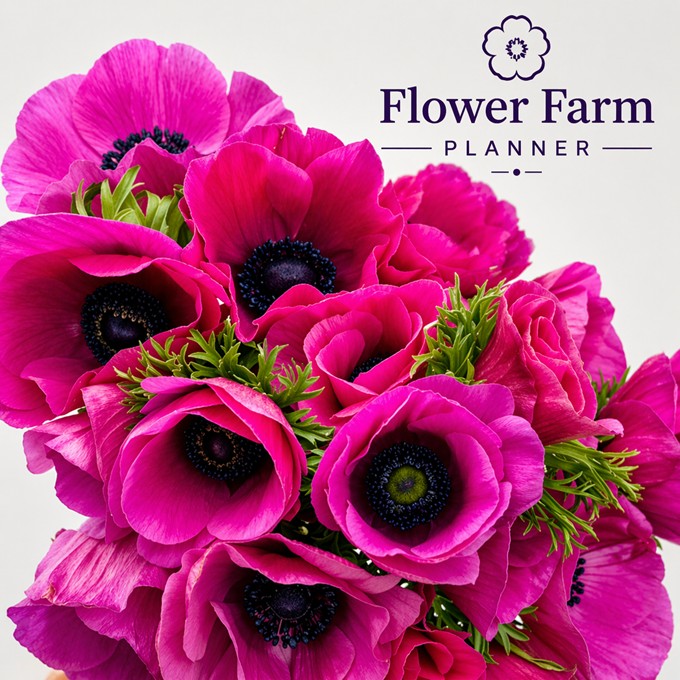
A premium Meron-type pink anemone with bright orchid-pink petals, a dark center, strong stems, and excellent cool-season florist appeal.
Open variety
Anemone spp. / Anemone
A classic blue-violet De Caen anemone with poppy-like flowers and a dark center, grown for cool-season bouquets and florist color.
Open variety
Anemone spp. / Anemone
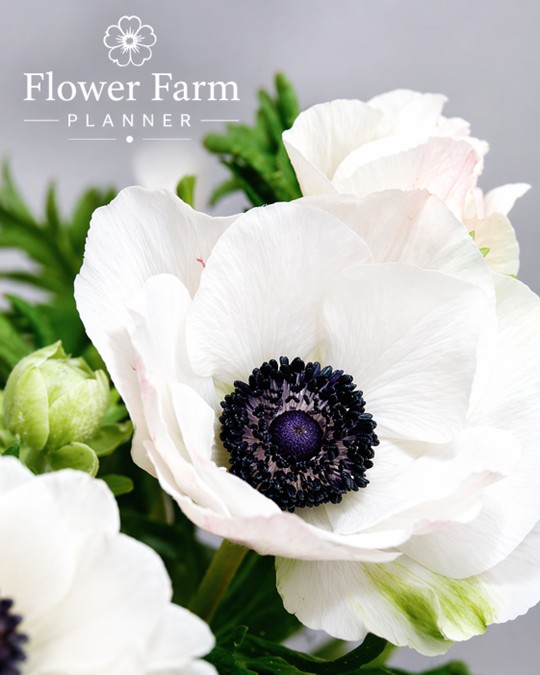
A striking Italian Mistral anemone with white petals and a dark black centre, grown for premium cool-season bouquets and wedding work.
Open variety
Anemone spp. / Anemone
A premium Italian Mistral anemone with blue to lilac-violet flowers, dark centers, tall stems, and strong cool-season florist appeal.
Open variety
Anemone spp. / Anemone
A striking Italian Mistral Plus anemone with large white petals, a black center, strong stems, and premium wedding/florist appeal.
Open variety
Anemone spp. / Anemone
A rare Italian Mistral anemone with pearly blush-lavender, mauve, lilac, and soft pink tones, dark centers, strong stems, and luxury florist appeal.
Open variety
Anemone spp. / Anemone
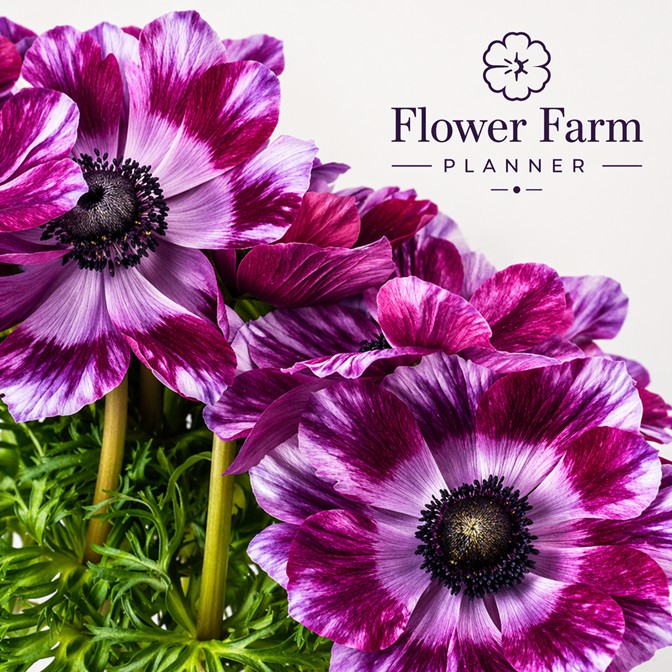
A dramatic Italian Mistral anemone with deep wine-red striped petals, dark centers, strong stems, and luxury florist appeal.
Open variety
Anemone spp. / Anemone
A professional Mona Lisa F1 anemone with large deep blue flowers, dark centers, sturdy stems, and strong cool-season florist appeal.
Open variety
Anemone spp. / Anemone
Mona Lisa Orchid is a cool-season, seed-raised florist anemone with orchid-pink to lavender-pink blooms and a dramatic dark eye. It belongs in protected beds, tunnels, or mild winter field systems where temperatures stay cool enough to build strong stems and clean flowers. For the grower, its value is not bulk production alone but premium timing: it can produce a high-value focal flower before warm-season focal crops are ready. It should be grown deliberately, harvested often, hydrated immediately, and sold into florists, wedding designers, subscriptions, and premium local bouquets that can pay for protected space.
Open variety
Anemone spp. / Anemone
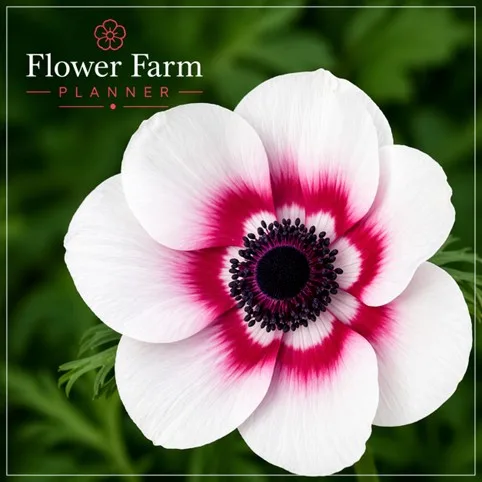
A professional Mona Lisa F1 anemone with large wine-red and white bicolor flowers, dark centers, sturdy stems, and strong cool-season florist appeal.
Open variety
Anemone spp. / Anemone
A professional Mona Lisa F1 anemone with large scarlet-red flowers, dark centers, sturdy stems, and strong cool-season florist appeal.
Open variety
Anemone spp. / Anemone
A professional Mona Lisa F1 anemone with large wine-red and white bicolor flowers, dark centers, sturdy stems, and strong cool-season florist appeal.
Open variety
Anemone spp. / Anemone
A classic double white St Brigid anemone with ruffled petals and green centers, grown for cool-season weddings, spring bouquets, and florist bunches.
Open variety
Anemone spp. / Anemone
A rose-pink florist anemone with a dark center, grown for cool-season weddings, spring bouquets, Valentine work, and florist bunches.
Open variety
Anemone spp. / Anemone
A classic white De Caen florist anemone with a fresh green centre, grown for wedding bouquets, white-and-green palettes, and cool-season spring bunches.
Open variety
Anemone spp. / Anemone
‘The Governor’ is a dramatic red double Anemone coronaria with a dark centre and strong florist appeal. It belongs in a premium spring crop plan, especially where the farm wants bold red stems before summer annuals begin. It should be grown from corms, planted in the cool season, harvested at coloured bud to partly open stage, and moved quickly through a cold, clean postharvest chain.
Open variety
Nicandra physalodes / Apple of Peru
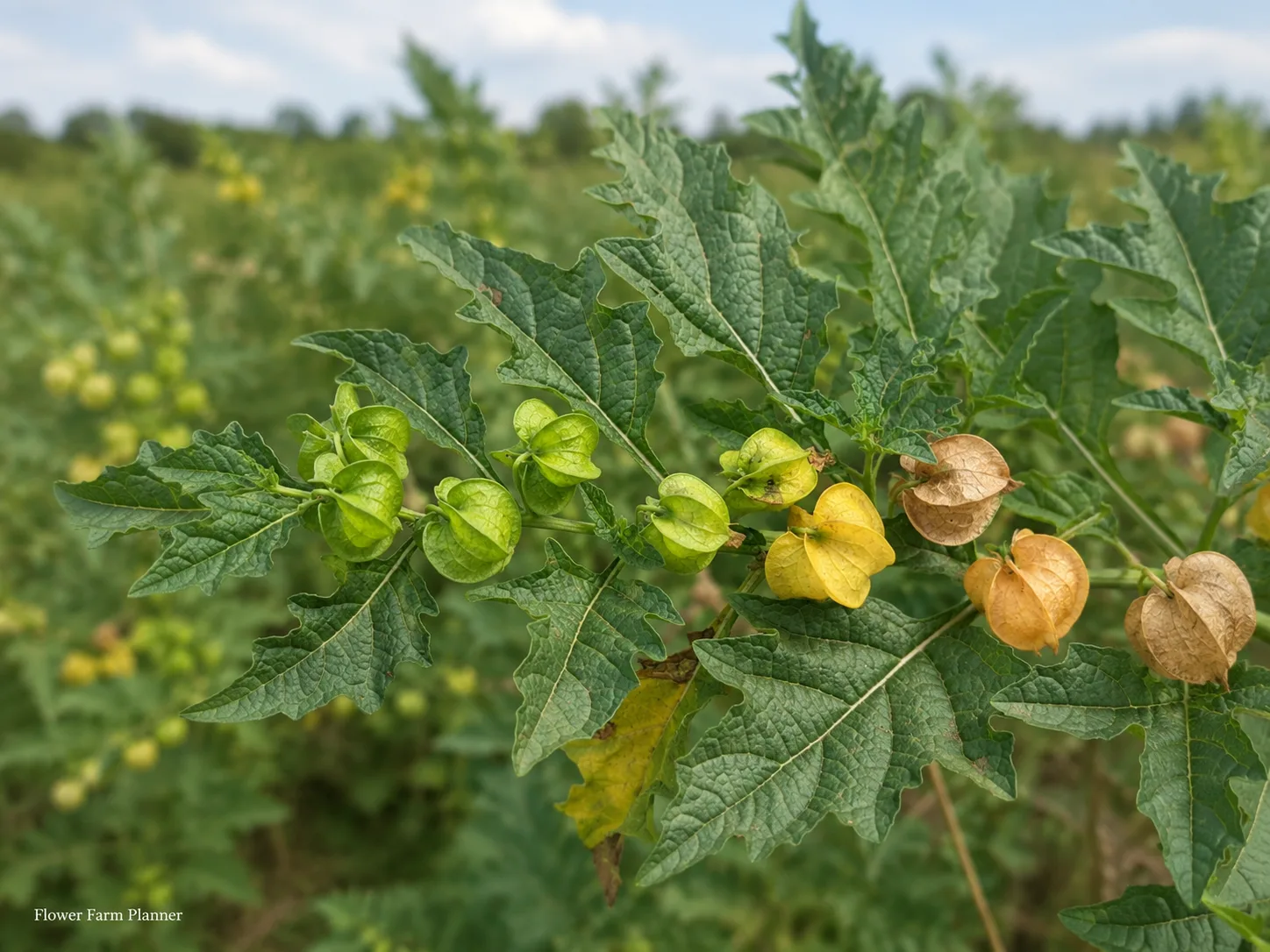
Unusual annual with pale blue flowers and decorative papery pods for fresh or dried designs.
Open variety
Gypsophila paniculata / Baby's Breath
Not applicable / not specified for this crop.
Open variety
Gypsophila paniculata / Baby's Breath
Gypsophila paniculata ‘Bristol Fairy’ is the classic double white perennial baby’s breath: a soft, airy, cloudlike filler used in bouquets, wedding work and dried arrangements. It prefers full sun, high light, alkaline calcium-rich soil and excellent drainage. It is best planned as a dedicated perennial filler crop rather than a quick annual succession. Stems should be harvested according to market distance: more open for local use and drying, less open for shipping or storage. The crop is highly sensitive to poor postharvest handling, ethylene and Botrytis, so clean buckets, rapid hydration and cool storage are essential.
Open variety
Gypsophila paniculata / Baby's Breath
Gypsophila elegans 'Covent Garden' is a fast, airy, white annual baby's breath grown from seed for bouquets, weddings, subscriptions, and dried filler. It is not the heavy perennial florist baby's breath used in imported bunches; it is lighter, quicker, more seasonal, and better suited to local garden-style design. The crop is valuable because it can make mixed bouquets feel fuller and more professional without taking as long as perennials or shrubs. It prefers full sun, well-drained neutral to alkaline soil, moderate moisture while establishing, and good airflow at flowering. For best results, sow successions rather than relying on one planting, harvest when around half to two-thirds of the flowers are open, and cool or condition immediately.
Open variety
Gypsophila paniculata / Baby's Breath
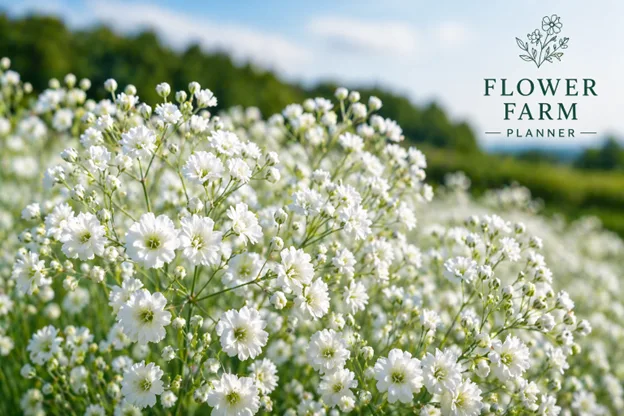
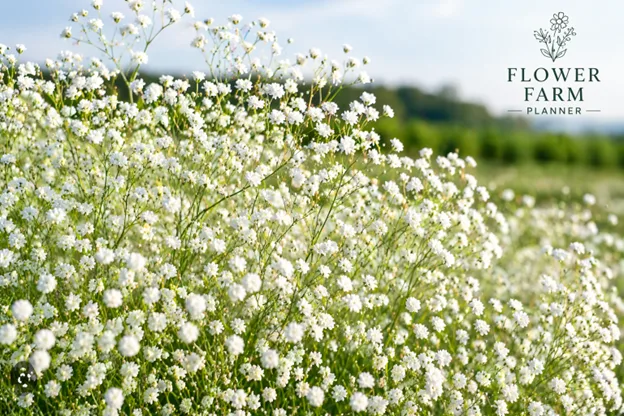
Gypsophila paniculata is the classic perennial baby's breath used by florists as a soft white filler. It is not a casual filler crop when grown commercially: the best stems come from well-drained, high-light plantings with support netting, clean water management, good airflow, and careful harvest timing. It can be excellent for weddings, dried work, florist bunches, and bouquet volume, but it becomes risky in wet, humid conditions where Botrytis and flower browning can destroy market quality.
Open variety
Gypsophila paniculata / Baby's Breath
Festival Star® is a compact, long-blooming, sterile hardy baby’s breath that produces clouds of small white flowers on tidy gray-green plants. It is best used as a local bouquet filler, wedding texture, dried flower, and perennial border crop. Its main planning warning is stem length: it is shorter than classic commercial gypsophila, so it should be sold by bunch, bouquet recipe, or dried bundle rather than as a direct replacement for tall imported stems.
Open variety
Gypsophila paniculata / Baby's Breath
A soft double pink baby’s breath for romantic filler, wedding work, dried flowers, and pastel bouquets.
Open variety
Gypsophila paniculata / Baby's Breath
Million Stars is a refined commercial baby’s breath grown for clouds of tiny clean white florets on branching stems. It is best used as a high-demand florist filler rather than a casual garden perennial. For flower farms, its value is strongest where there is wedding, florist, subscription, or wholesale demand for reliable white texture. It needs excellent drainage, full sun, clean planting stock, long days for strong flowering, and careful postharvest sanitation. It can be profitable, but it is not a forgiving beginner crop in wet or humid conditions.
Open variety
Gypsophila paniculata / Baby's Breath
Gypsophila paniculata ‘New Love’ is a white florist baby’s breath selected for clean, airy filler stems used in bouquets, weddings, installations and dried work. It should be grown like perennial baby’s breath: full sun, excellent drainage, neutral-to-alkaline calcium-rich soil, generous airflow and careful postharvest hygiene. It is a familiar, sellable crop, but local growers must compete with imported gyp, so quality, freshness, bunch consistency and wedding timing matter.
Open variety
Gypsophila paniculata / Baby's Breath
Gypsophila paniculata ‘Perfecta’ is a vigorous, large-flowered, double white perennial baby’s breath used as a florist and wedding filler. It prefers full sun, high light, neutral to alkaline calcium-rich soil and excellent drainage. Compared with older ‘Bristol Fairy’, it is generally treated as larger and more vigorous, with broader white sprays, but modern commercial growers may choose newer cultivars for easier handling or shorter crop times. Stems should be harvested according to market distance: more open for local use and drying, less open for shipping or storage. The crop is highly sensitive to poor postharvest handling, ethylene and Botrytis, so clean buckets, rapid hydration and cool storage are essential.
Open variety
Gypsophila paniculata / Baby's Breath
Gypsophila paniculata ‘Snowflake’ is a hardy perennial baby’s breath grown for clouds of pure white, double to semi-double flowers on branching stems. It is useful for fresh cuts, dried bunches, bouquet recipes and wedding work, especially for small growers who want a seed-accessible perennial gypsophila rather than relying only on imported commodity stems. It needs full sun, excellent drainage, neutral to alkaline calcium-rich soil and careful postharvest handling. The main caution is uniformity: seed strains may not produce 100% fully double plants, so growers should trial, grade and select the best plants before scaling up.
Open variety
Centaurea cyanus / Bachelor's Button
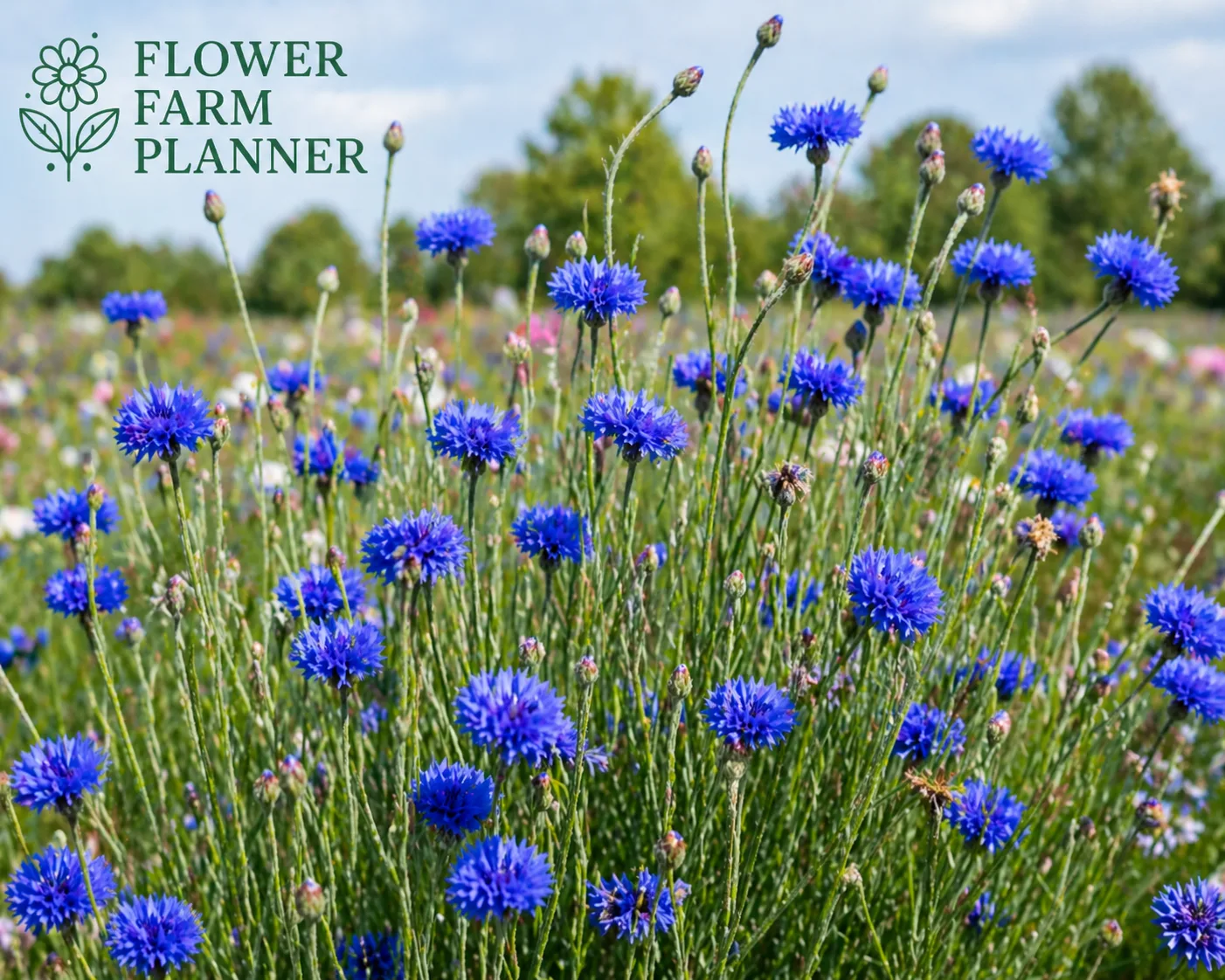
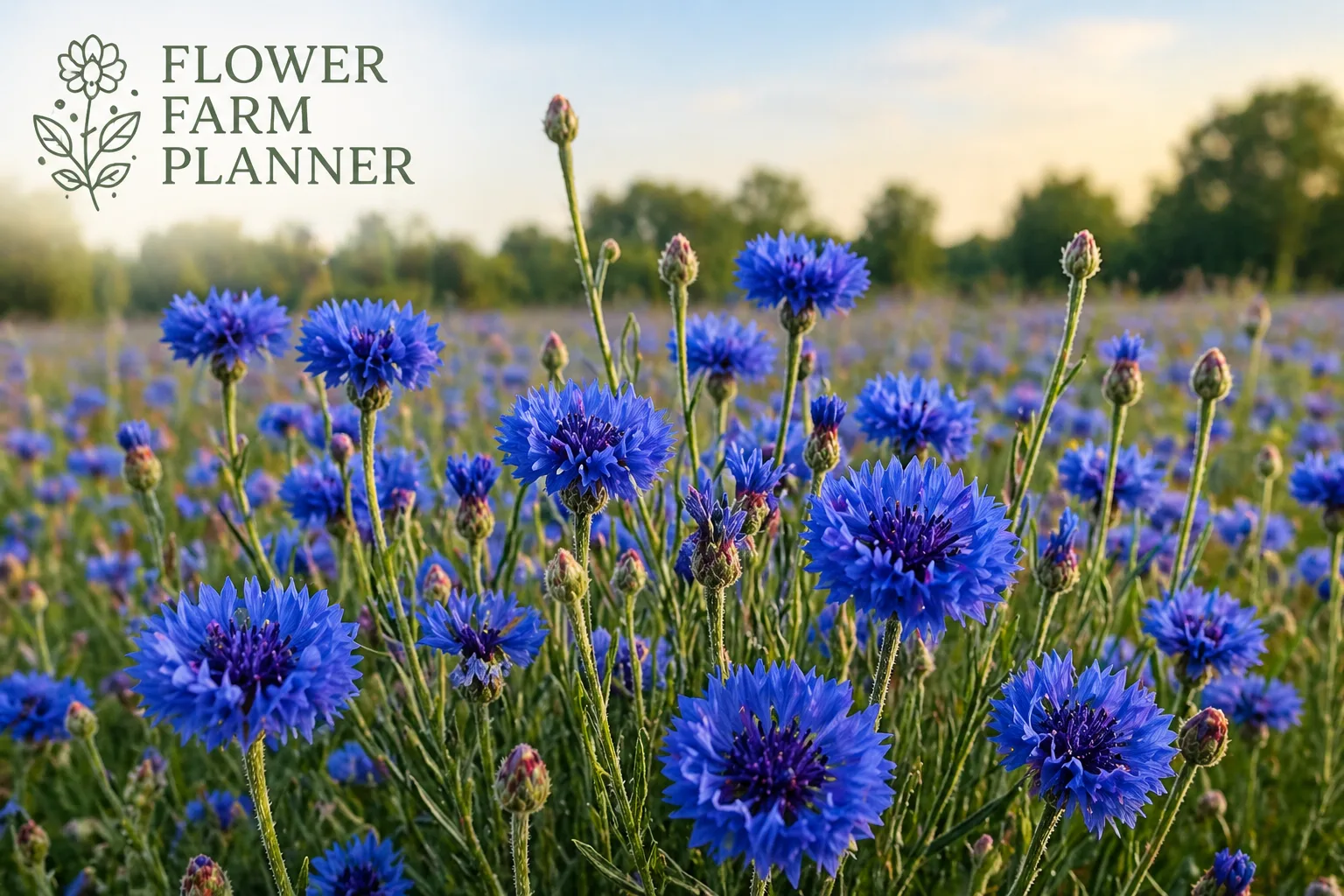
Bachelor’s button is a fast, cool-season hardy annual that gives flower farms one of the rarest and most useful bouquet colors: natural blue. It is simple to grow from seed, attractive to pollinators, useful fresh or dried, and easy to fit into cottage-style bouquets. Its limitation is not beauty but labor and price; stems are small, branched, and often slower to cut than higher-value focal crops. The best farm use is as a controlled accent crop planted in modest successions for blue color, edible petals, dried flowers, and natural confetti.
Open variety
Centaurea cyanus / Bachelor's Button
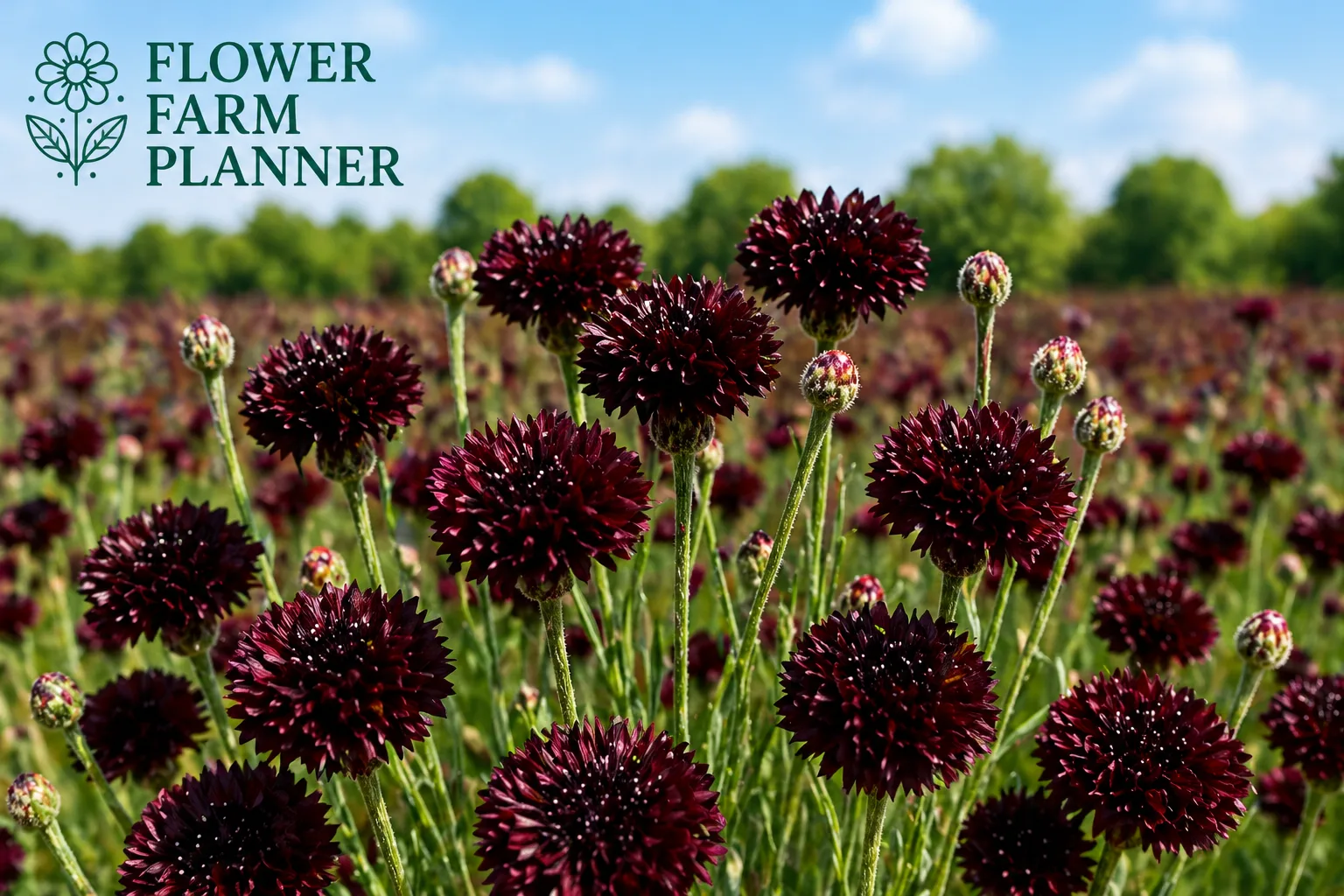
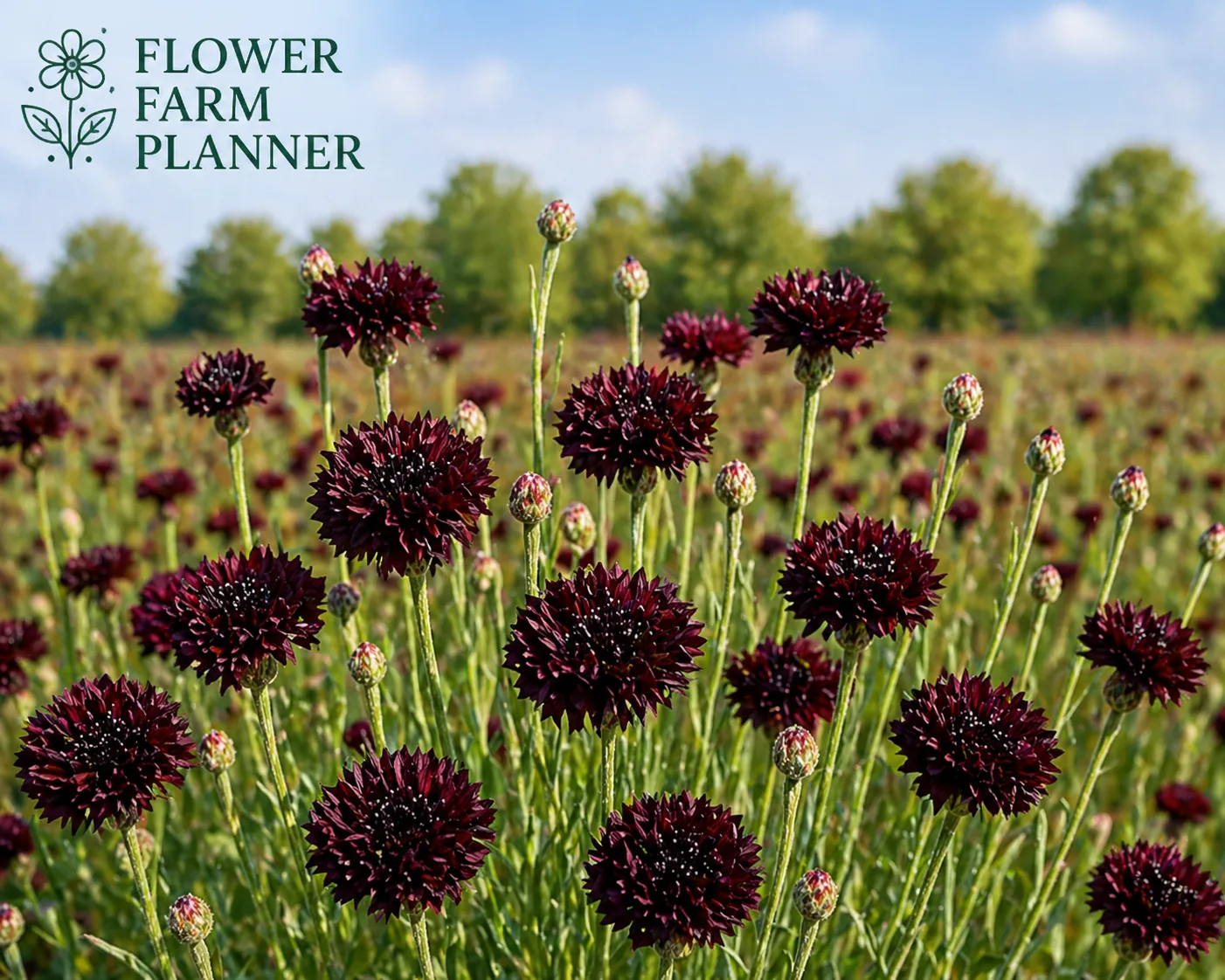
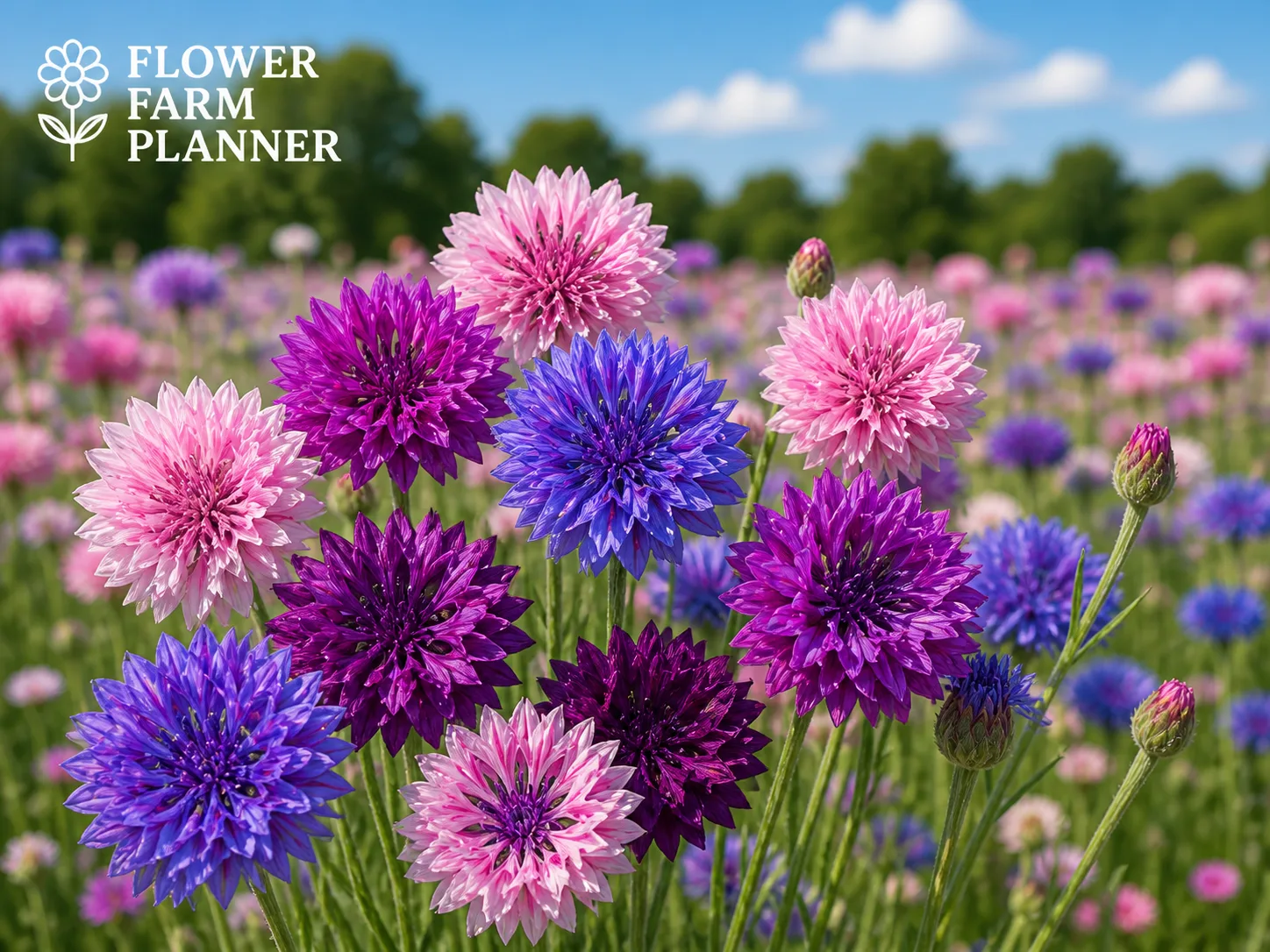
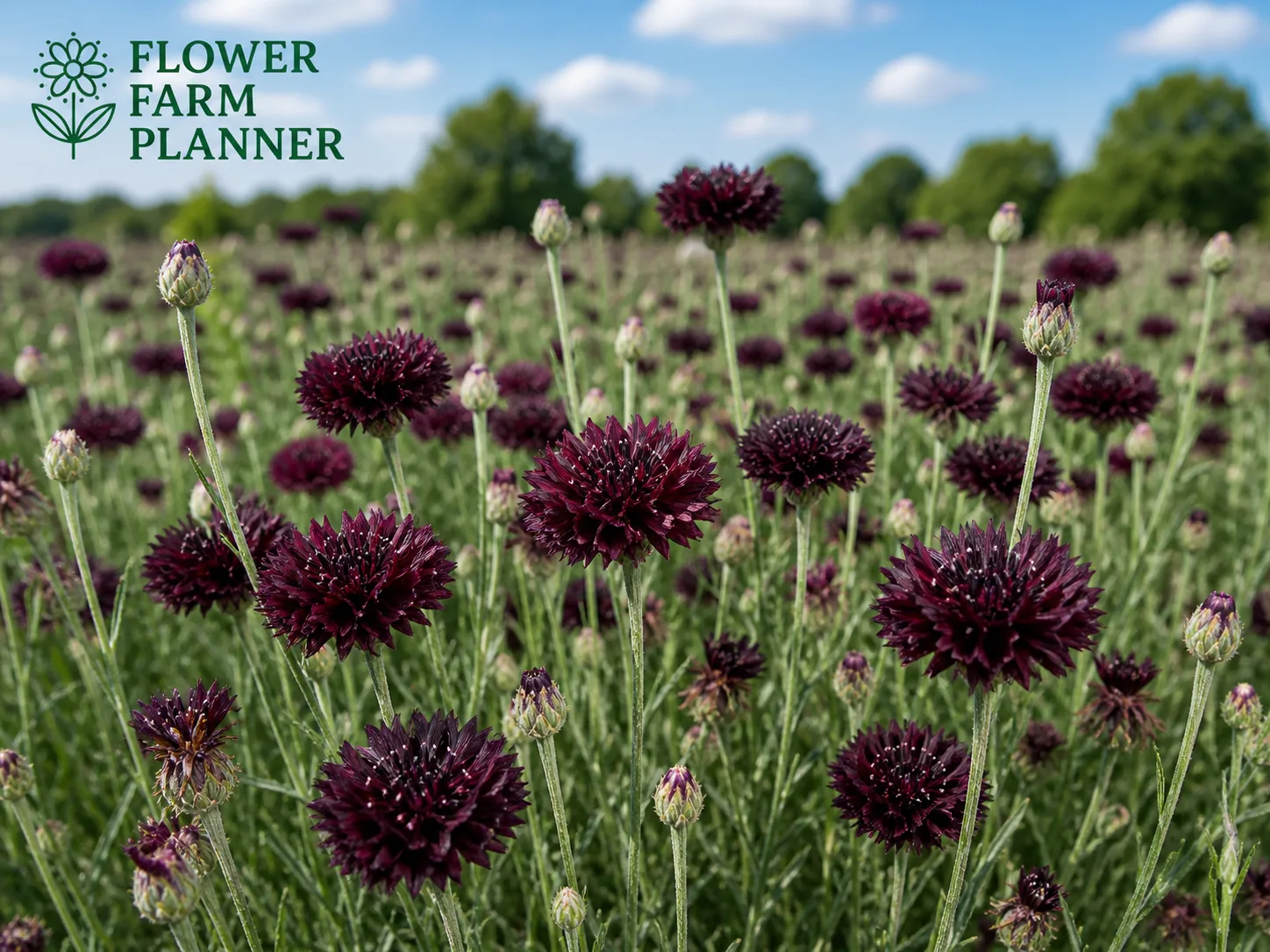
Old tall double bachelor’s button with deep maroon, almost black blooms for moody bouquets, wildflower bunches, edible petals, and dried accents.
Open variety
Centaurea cyanus / Bachelor's Button
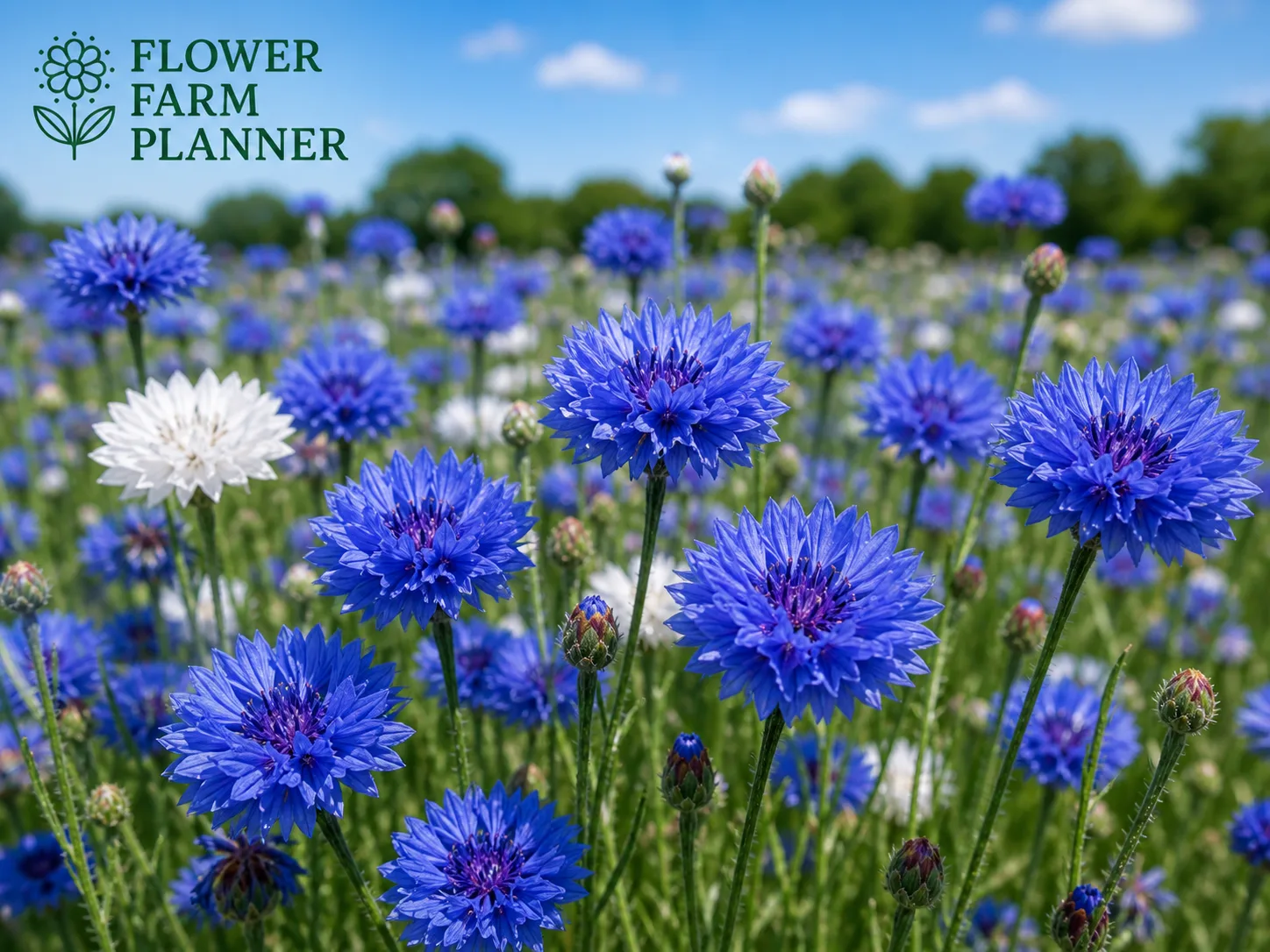
Classic double cornflower-blue bachelor’s button for airy bouquet texture, edible petals, pollinator flowers, and dried accents.
Open variety
Centaurea cyanus / Bachelor's Button
Classic tall double blue bachelor’s button for airy bouquet texture, edible petals, pollinator flowers, and dried accents.
Open variety
Centaurea cyanus / Bachelor's Button
Tall royal-blue double bachelor’s button for long-stemmed cut flowers, edible petals, pollinator plantings, dried accents, and cottage-style bouquets.
Open variety
Centaurea cyanus / Bachelor's Button
True-blue double bachelor’s button with violet centres for cut flowers, edible petals, pollinator plantings, dried accents, and cottage bouquets.
Open variety
Centaurea cyanus / Bachelor's Button
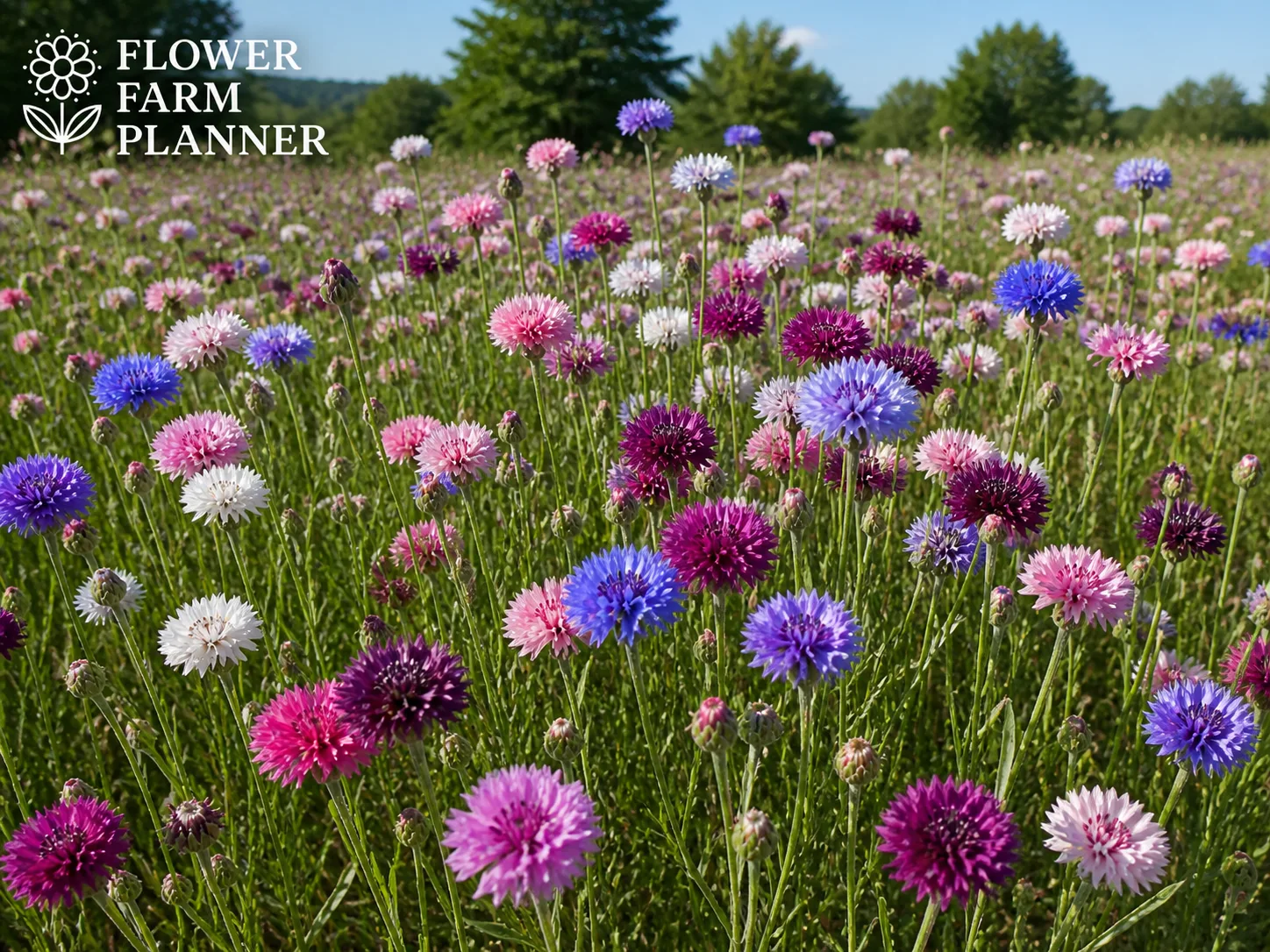
Burgundy, violet, lavender, dusty rose, and bicolor bachelor’s button mix for cut flowers, edible petals, pollinator plantings, dried accents, and romantic cottage bouquets.
Open variety
Centaurea cyanus / Bachelor's Button
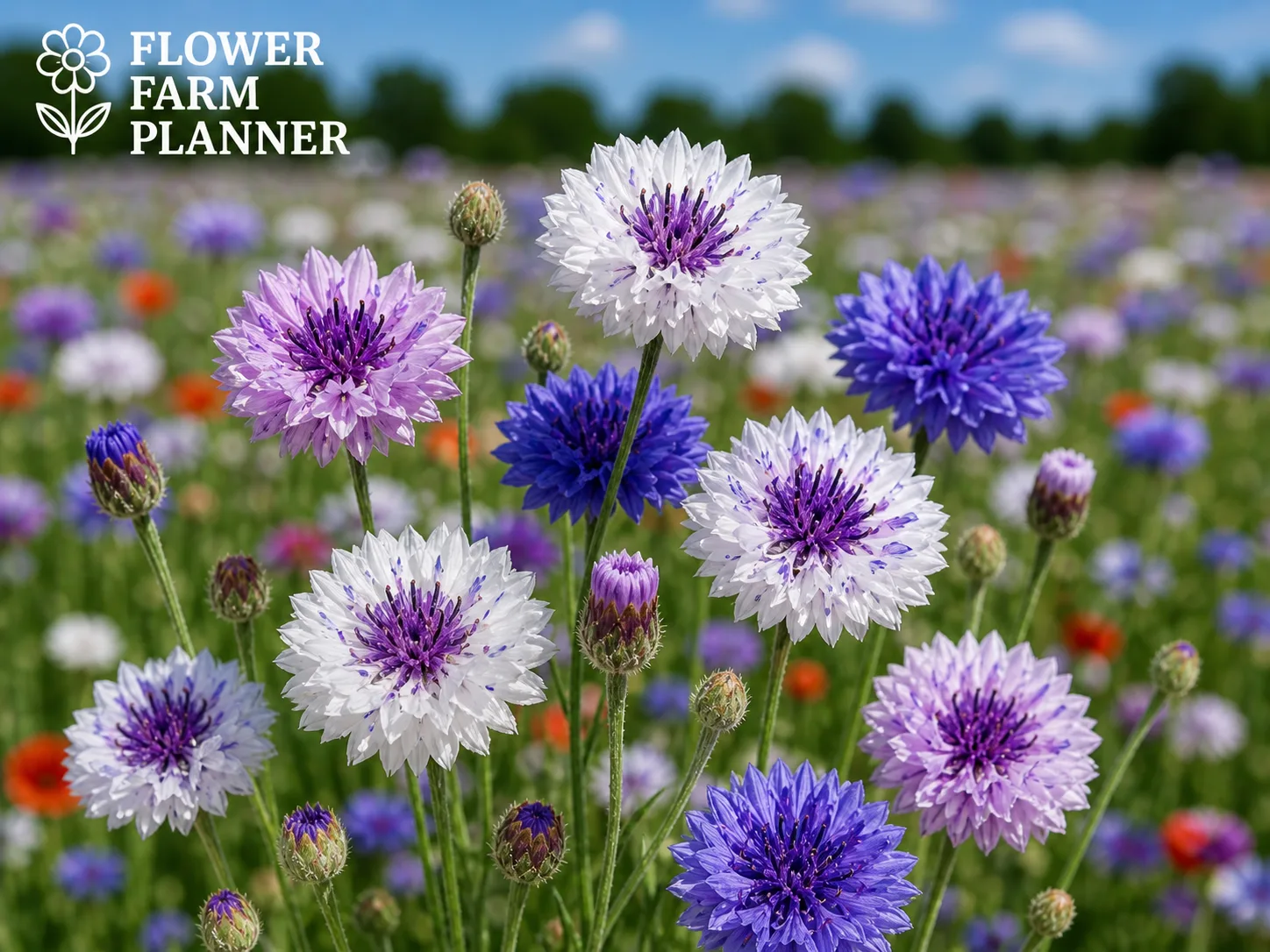
Frosted sapphire, pale blue, dark blue, and blue-white bicolor bachelor’s button mix for cut flowers, edible petals, pollinators, wedding accents, and cottage bouquets.
Open variety
Centaurea cyanus / Bachelor's Button
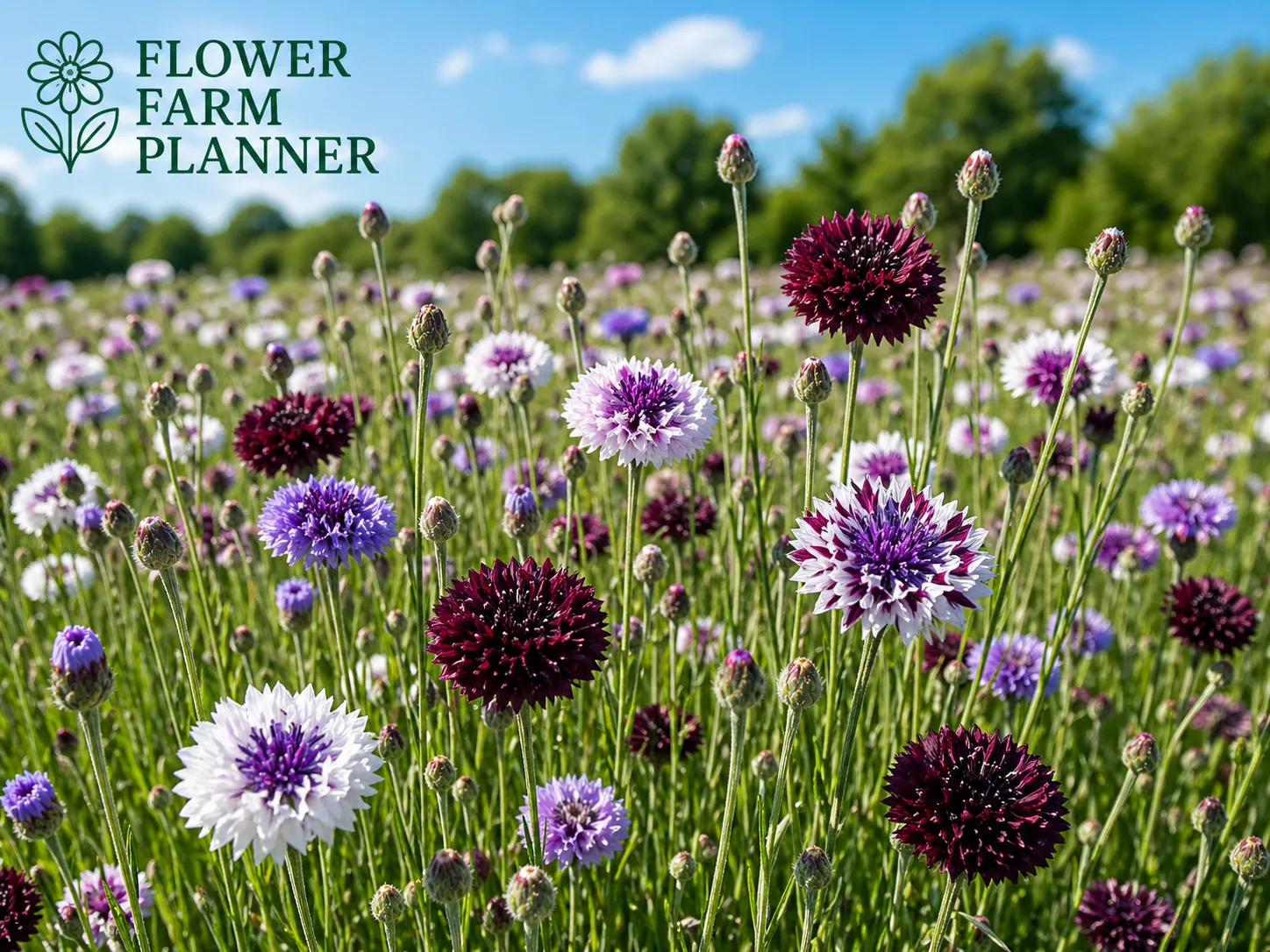
Black, deep plum, purple, lavender, white, and purple-white bicolor bachelor’s button mix for cut flowers, edible petals, pollinators, wedding accents, and cottage bouquets.
Open variety
Centaurea cyanus / Bachelor's Button
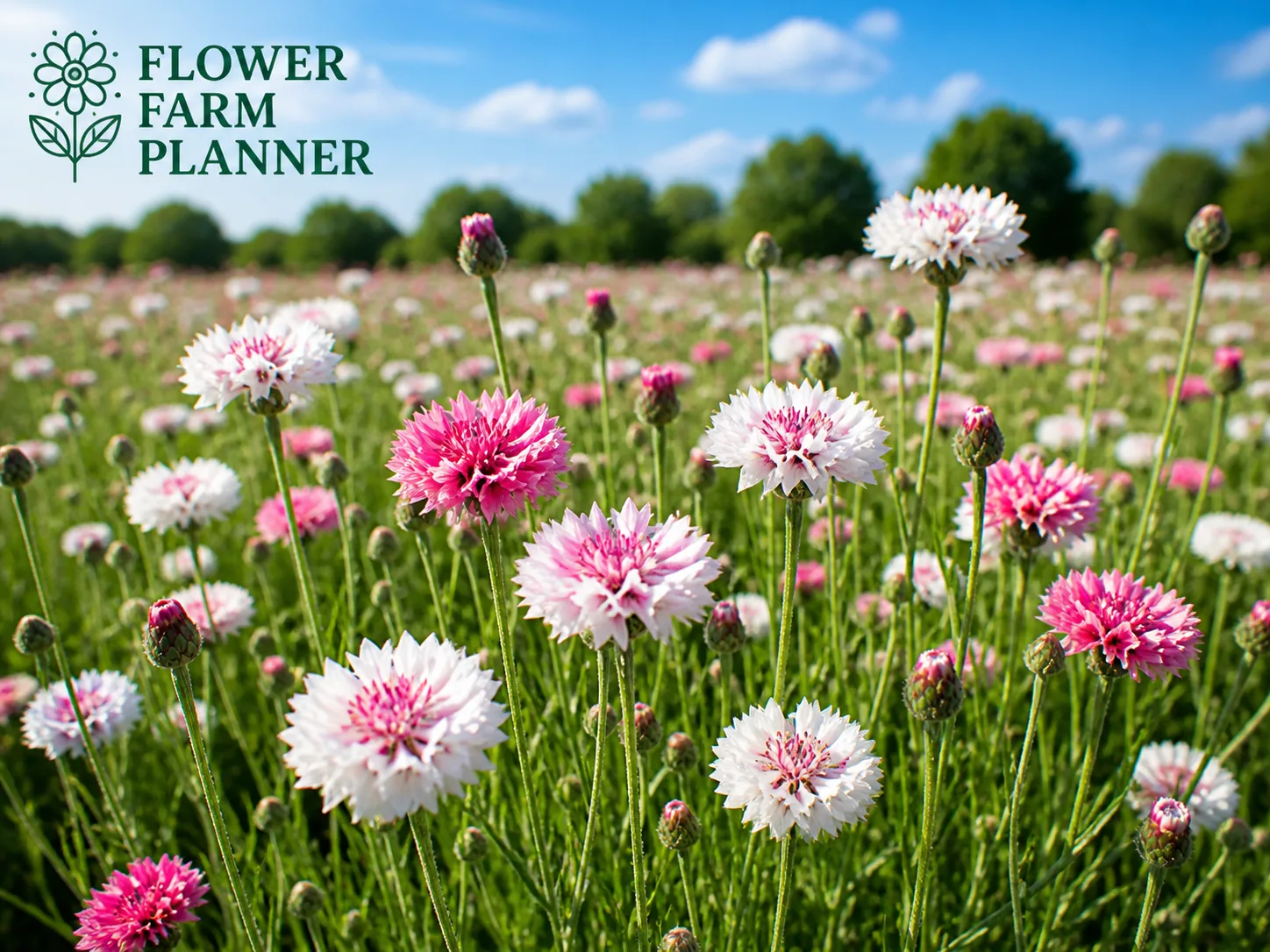
Blush, pink, white, ivory, magenta, and soft bicolor bachelor’s button mix for cut flowers, edible petals, pollinators, wedding accents, and cottage bouquets.
Open variety
Centaurea cyanus / Bachelor's Button
Compact rich-blue dwarf cornflower for containers, borders, edible petals, pollinators, mini bouquets, pressed flowers, and short-stem local posies.
Open variety
Centaurea cyanus / Bachelor's Button
Frosted bicolor bachelor’s button mix with blue, pink, red, purple, lavender, burgundy, and white-tipped blooms for cutting, edible petals, pollinators, cottage bouquets, and pressed flowers.
Open variety
Centaurea cyanus / Bachelor's Button
Compact bright-blue double cornflower for containers, borders, edible petals, pollinators, mini bouquets, pressed flowers, and short-stem local posies.
Open variety
Centaurea cyanus / Bachelor's Button
Lavender-to-mauve bachelor’s button with strong upright stems for fresh and dried bouquets, edible petals, pollinators, meadows, and romantic garden-style design.
Open variety
Centaurea cyanus / Bachelor's Button
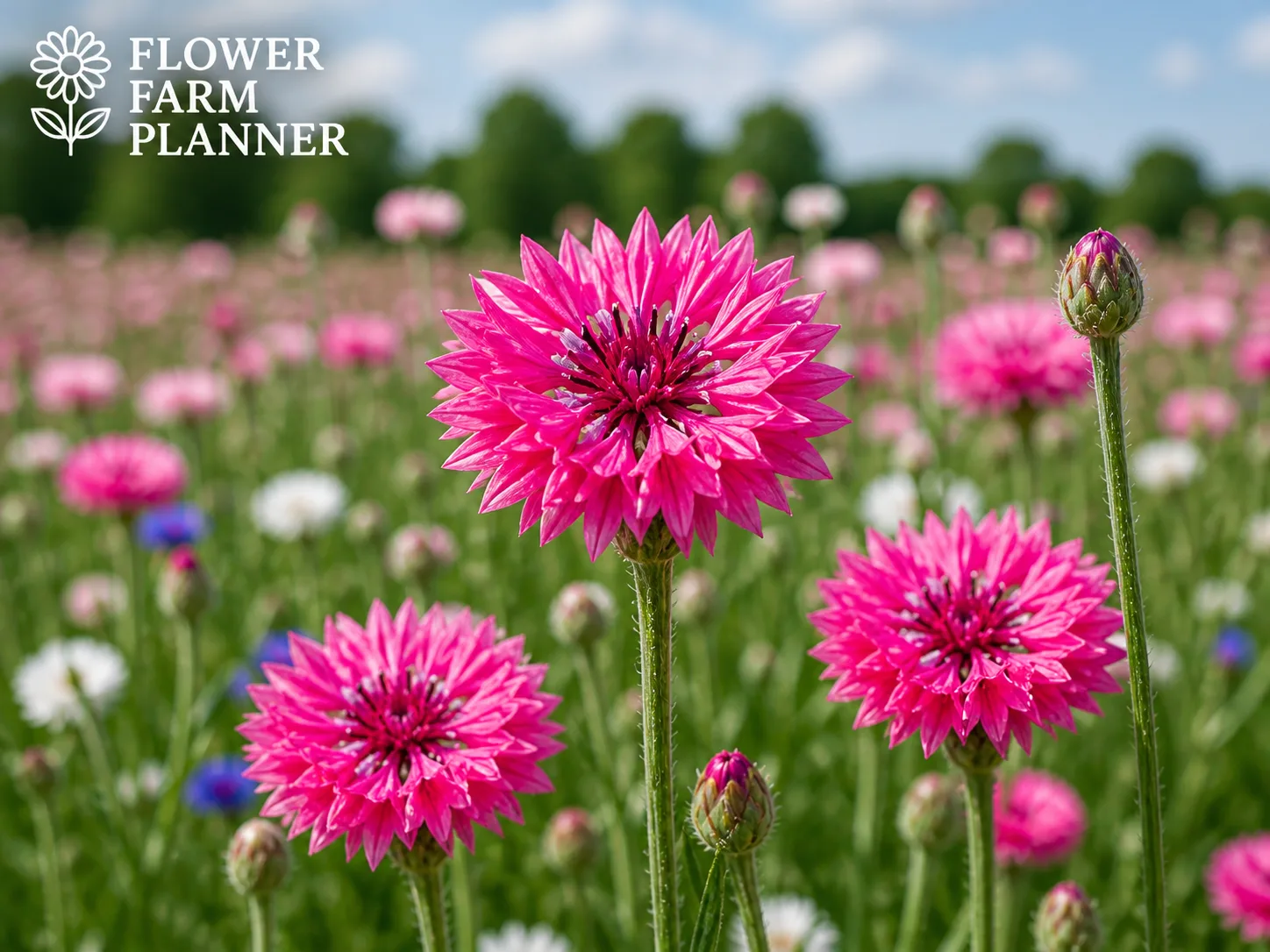
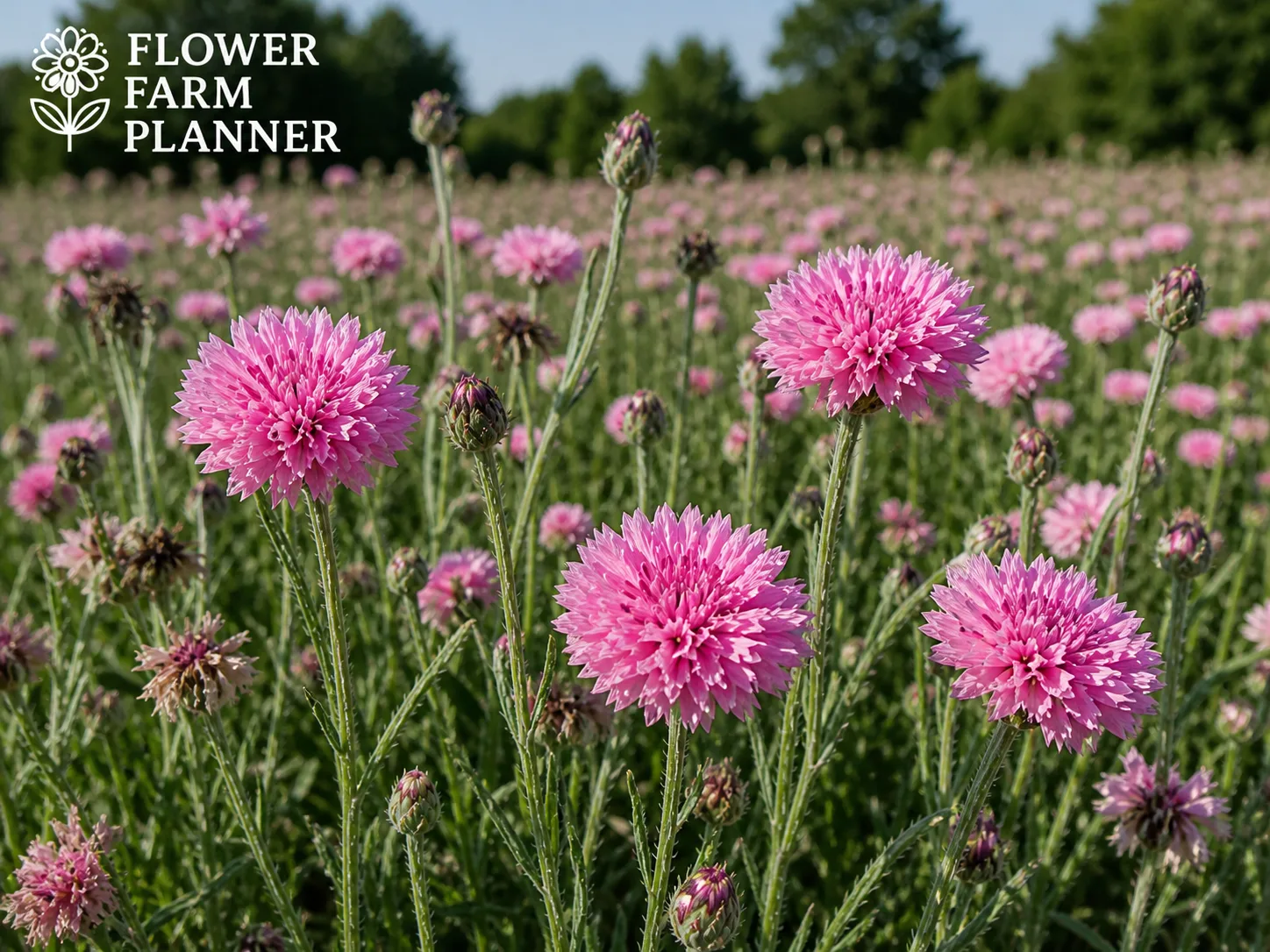
Rose-pink bachelor’s button with branching stems and double fringed blooms for fresh bouquets, dried flowers, edible petals, pollinators, meadows, and romantic garden-style design.
Open variety
Centaurea cyanus / Bachelor's Button
Compact blue Polka Dot cornflower for containers, borders, edible petals, pollinators, mini bouquets, pressed flowers, and short-stem local posies.
Open variety
Centaurea cyanus / Bachelor's Button
Compact mixed Polka Dot cornflower for containers, borders, edible petals, pollinators, mini bouquets, pressed flowers, and short-stem local posies.
Open variety
Centaurea cyanus / Bachelor's Button
Compact soft-pink Polka Dot cornflower for containers, borders, edible petals, pollinators, mini bouquets, pressed flowers, and short-stem romantic posies.
Open variety
Centaurea cyanus / Bachelor's Button
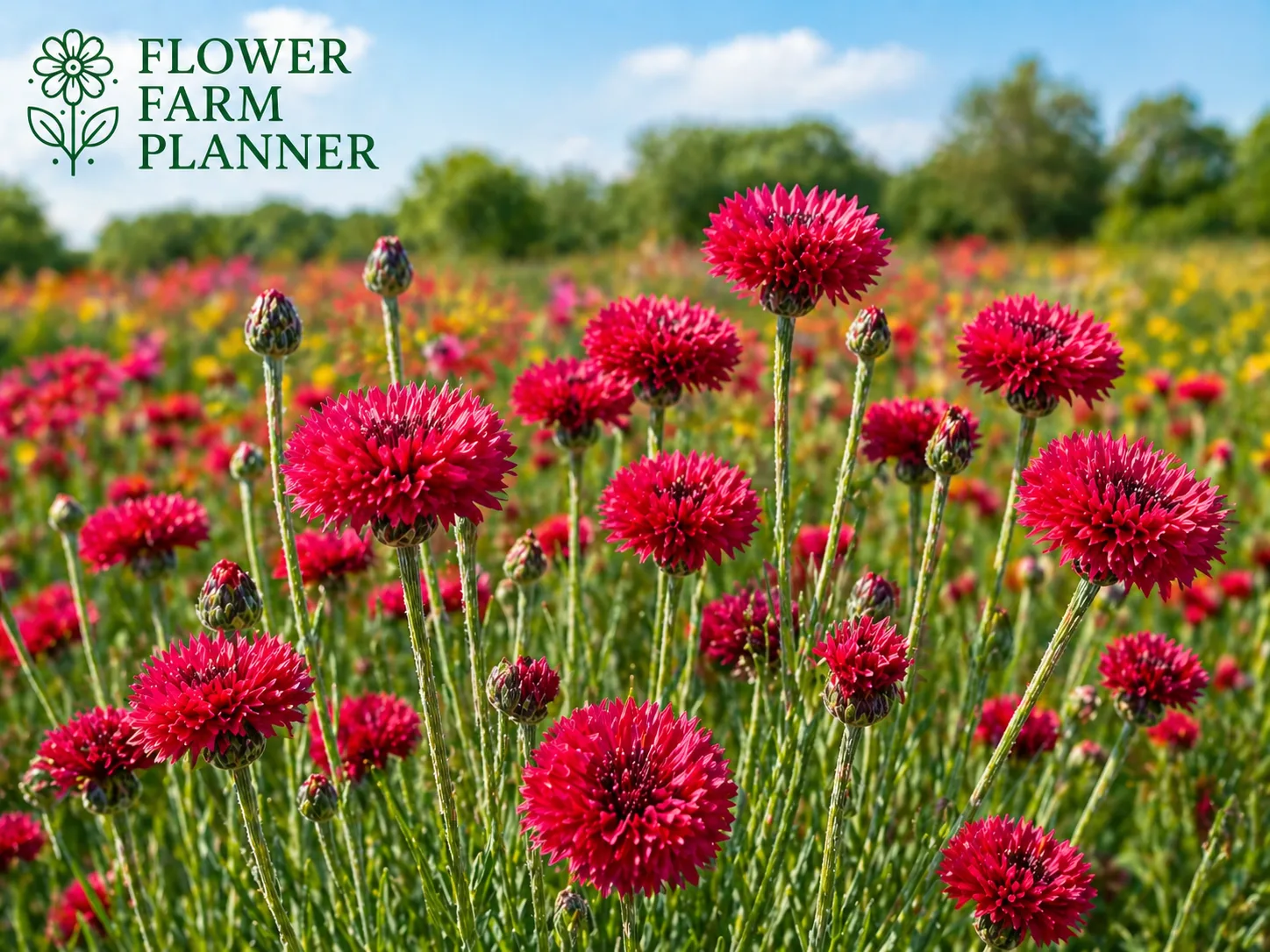
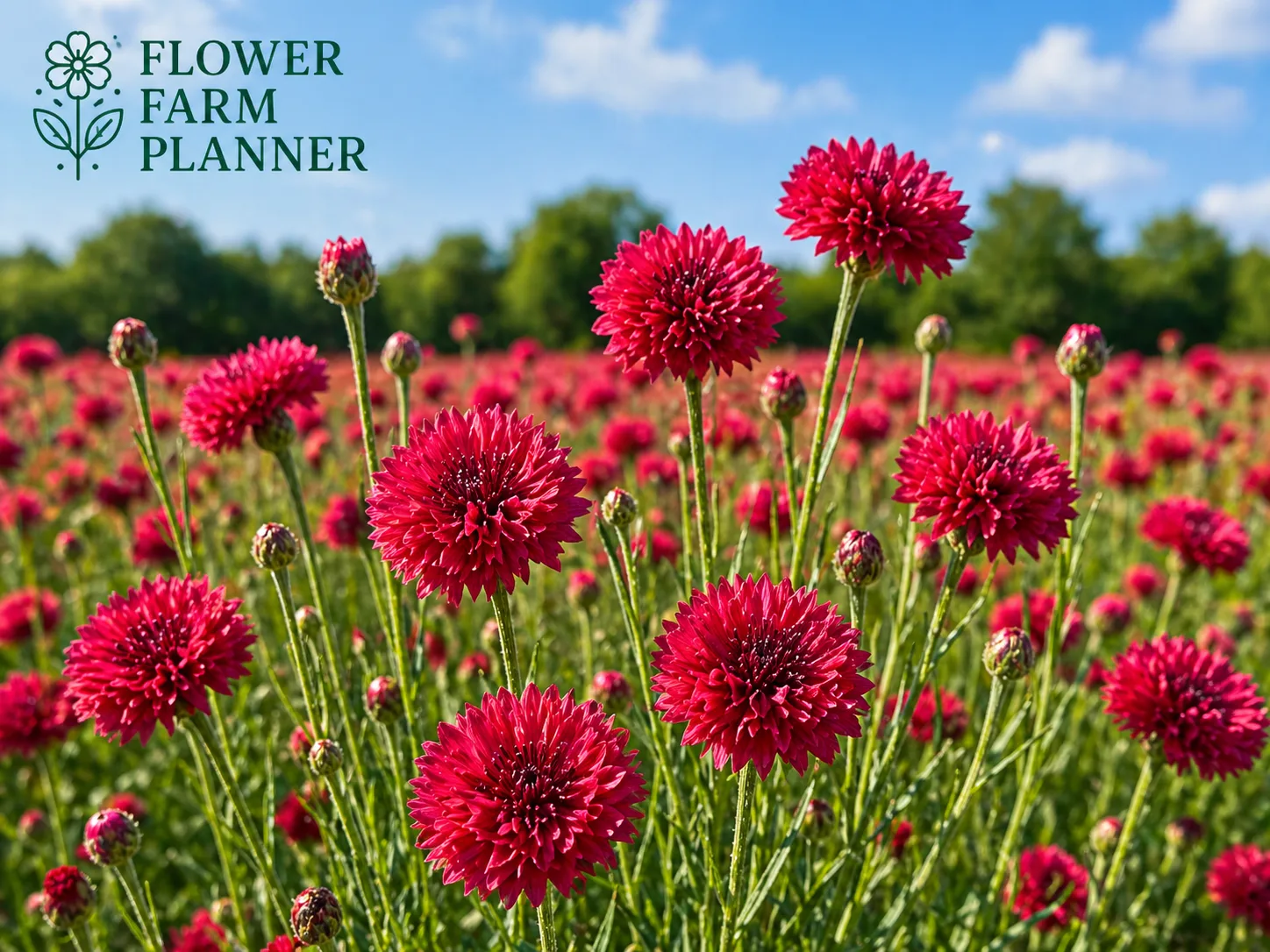
Rosy-red tall double bachelor’s button with branching stems and fringed blooms for fresh bouquets, dried flowers, edible petals, pollinators, and warm cottage-garden design.
Open variety
Centaurea cyanus / Bachelor's Button
Rosy-red tall double bachelor’s button with branching stems and fringed blooms for fresh bouquets, dried flowers, edible petals, pollinators, and warm cottage-garden design.
Open variety
Centaurea cyanus / Bachelor's Button
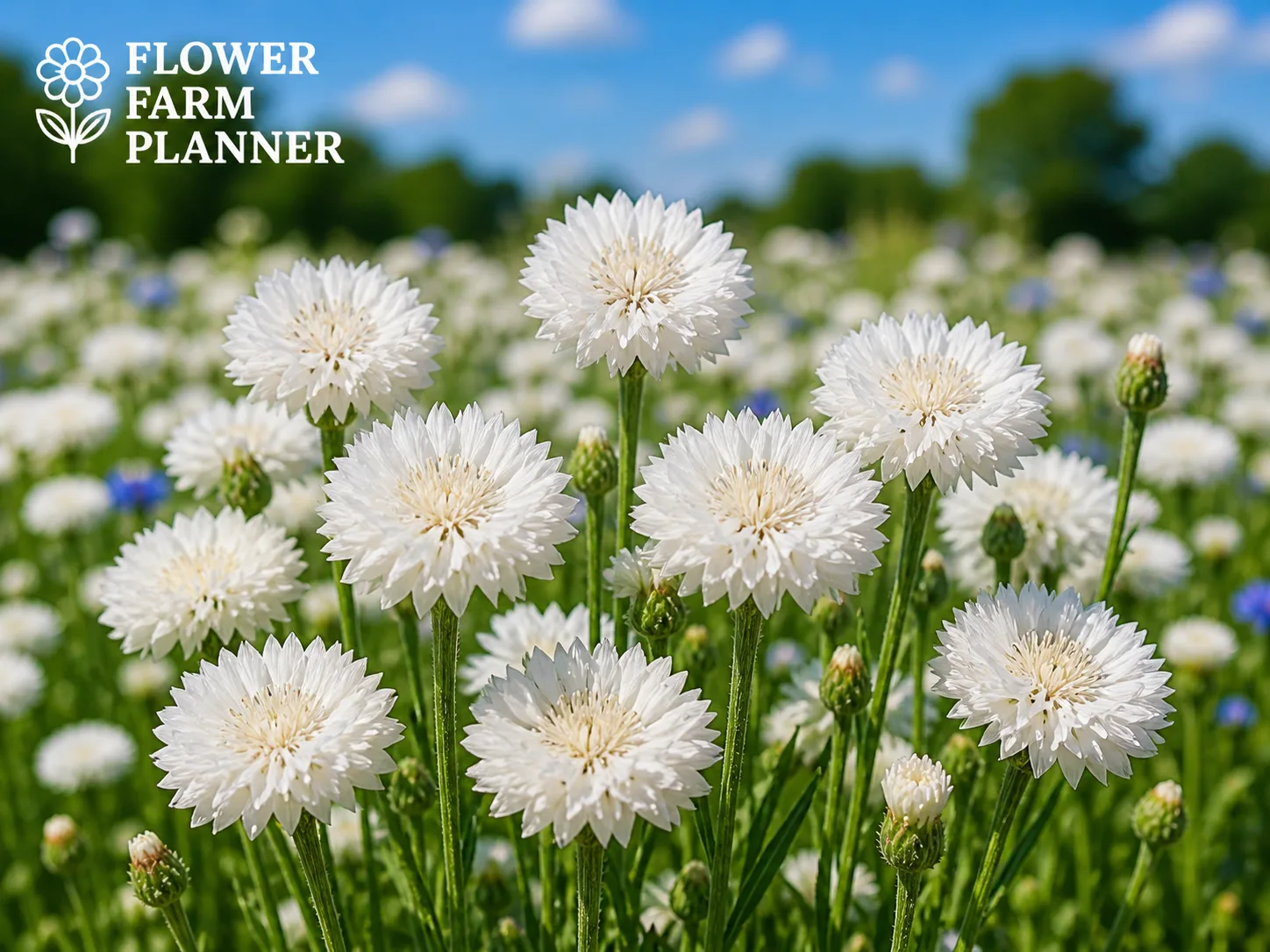
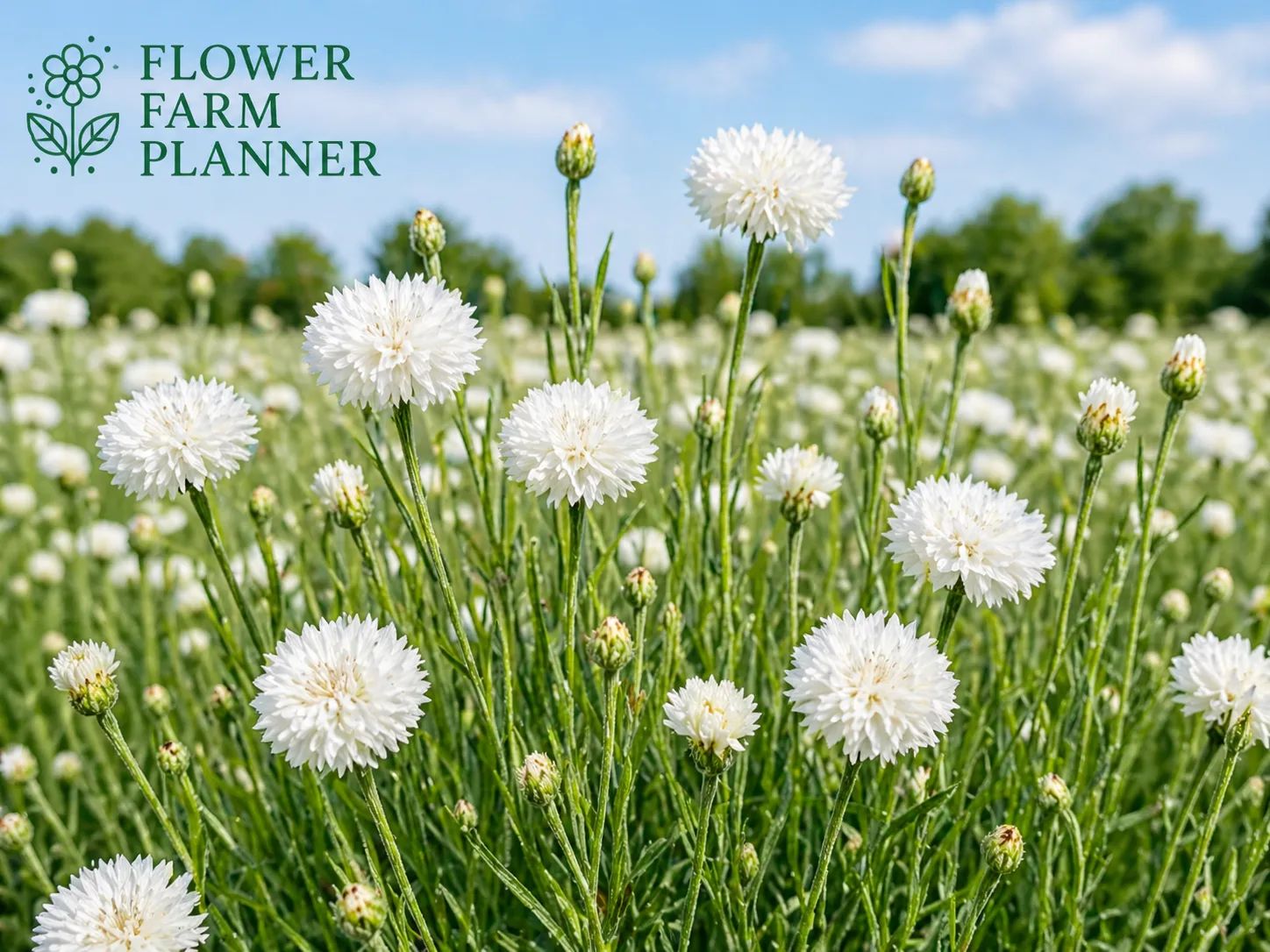
Clean white double bachelor’s button with branching stems and fringed blooms for fresh bouquets, wedding whites, edible petals, dried flowers, and soft cottage-garden design.
Open variety
Centaurea cyanus / Bachelor's Button
Tall double near-black bachelor’s button with deep claret-burgundy fringed blooms for dramatic bouquet texture, edible petals, pollinators, and dried flowers.
Open variety
Centaurea cyanus / Bachelor's Button
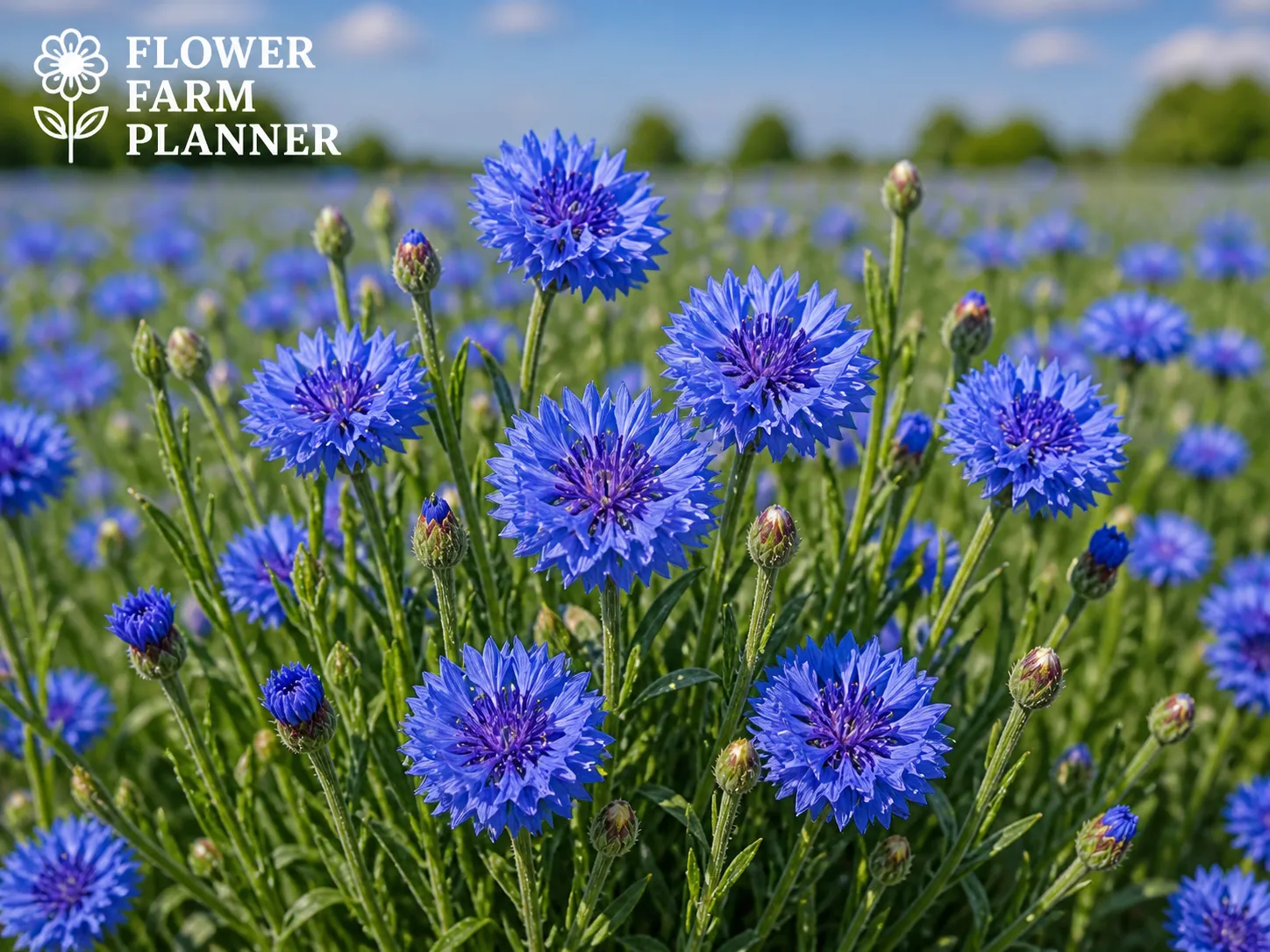
Tall double blue bachelor’s button with clear cornflower-blue fringed blooms for classic bouquet texture, edible petals, pollinators, and dried flowers.
Open variety
Centaurea cyanus / Bachelor's Button
Tall mixed double bachelor’s button with blue, pink, rose, red, burgundy, purple, and white fringed blooms for cottage bouquets, edible petals, pollinators, and dried flowers.
Open variety
Centaurea cyanus / Bachelor's Button
Tall double pink bachelor’s button with rose-pink fringed blooms for romantic bouquet texture, edible petals, pollinators, and dried flowers.
Open variety%20White%20Ball%20-%20Flower%20Farm%20Planner.png)
Centaurea cyanus / Bachelor's Button
Tall white double cornflower with ruffled blooms for wedding bouquets, cottage arrangements, edible petals, and dried flowers.
Open variety
Centaurea cyanus / Bachelor's Button
Double white bachelor’s button with clean white fringed blooms for bridal bouquet texture, edible petals, pollinators, and dried flowers.
Open variety
Ocimum basilicum / Basil
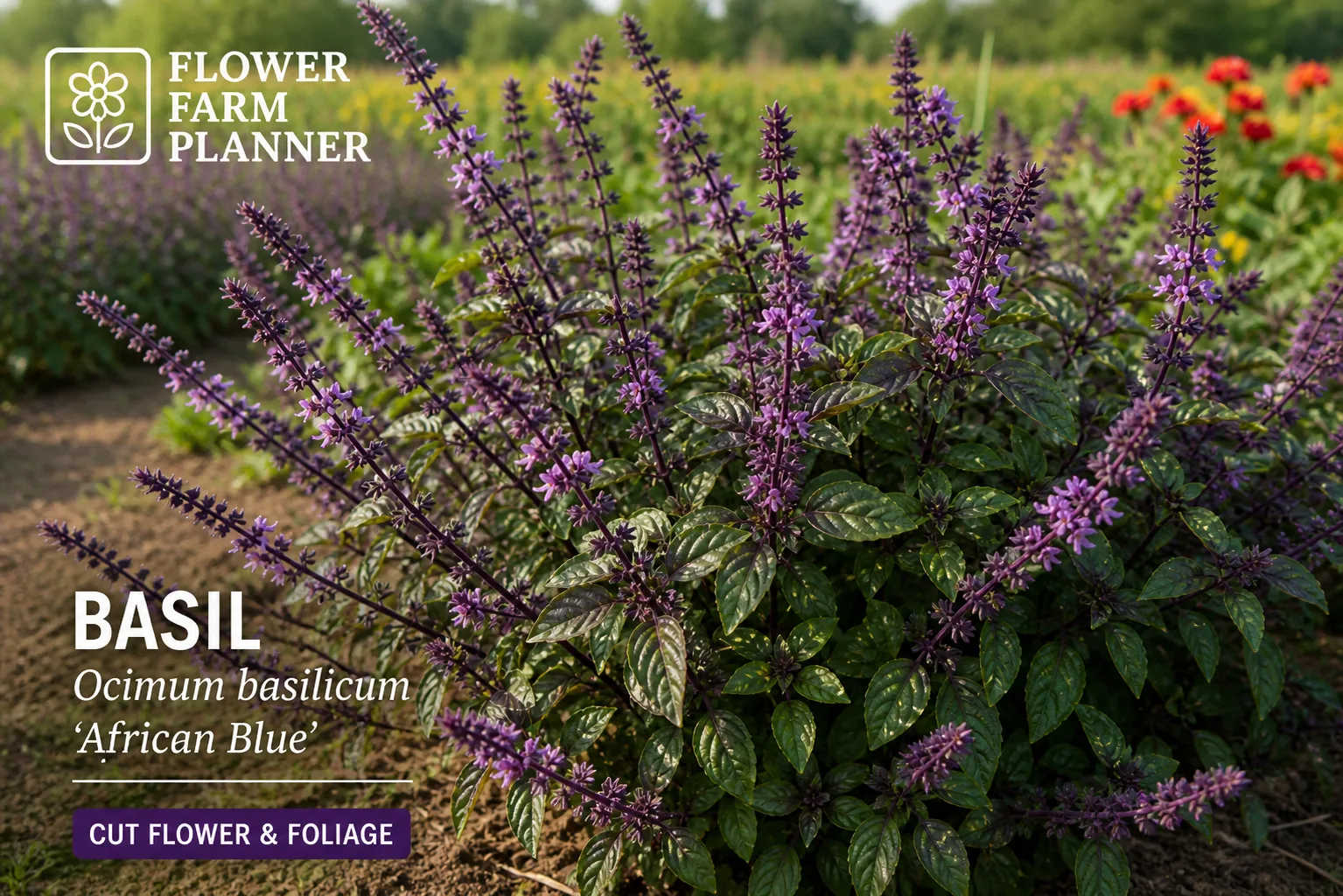
African Blue Basil is a large, aromatic, purple-flowered basil that behaves more like a tender perennial pollinator shrub than a normal seed basil. For flower farms it is most valuable as a fresh scented filler with lavender-purple spikes, dark calyces, and local-season personality. It should be planned from rooted cuttings or live plants, not seed, and handled after harvest with basil-safe temperatures rather than standard cold flower storage.
Open variety
Ocimum basilicum / Basil
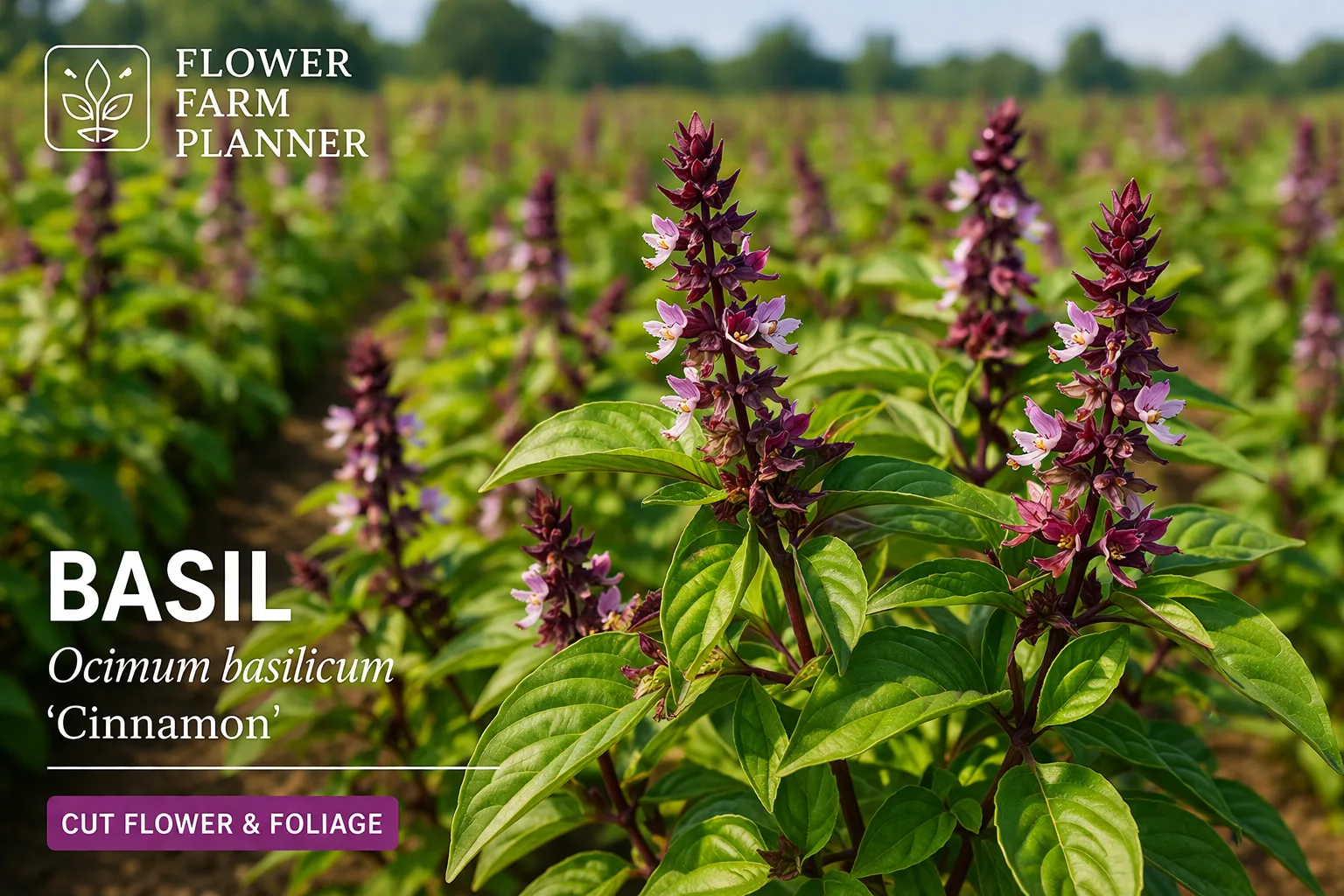
Cinnamon basil is one of the most useful fragrant summer fillers for small flower farms because it grows quickly from seed, branches after pinching, produces generous aromatic stems, and brings a warm herbal scent that ordinary foliage cannot provide. Its glossy green leaves, purple-brown stems, and pink-lavender flower spikes make it more floral and decorative than standard culinary basil. The crop is simple to grow in warm weather, but it is not careless: it needs warm soil, steady water, good airflow, and careful postharvest handling. The biggest planning rule is that basil must be treated as a warm-sensitive herb stem, not as a normal cold-storage cut flower.
Open variety
Ocimum basilicum / Basil
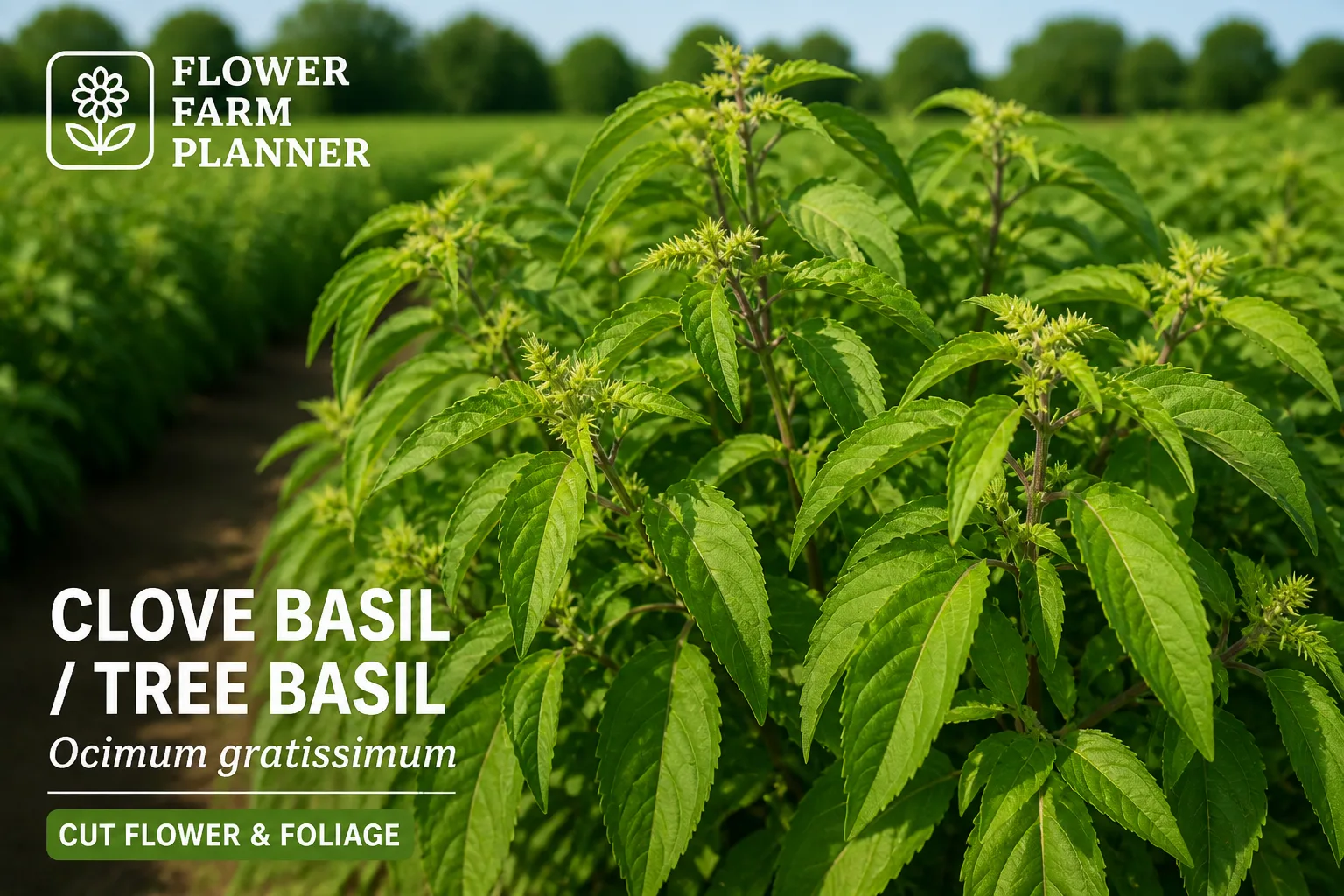
Clove Basil is a warm-season, strongly fragrant basil grown for green aromatic foliage, edible herb bunches, pollinator value, and scented bouquet stems. It is most useful for farms that sell locally and can explain its clove-like scent to customers. It should be planted after frost, cut regularly, kept well hydrated, and handled outside the near-freezing flower cooler because basil foliage can blacken when chilled.
Open variety
Ocimum basilicum / Basil
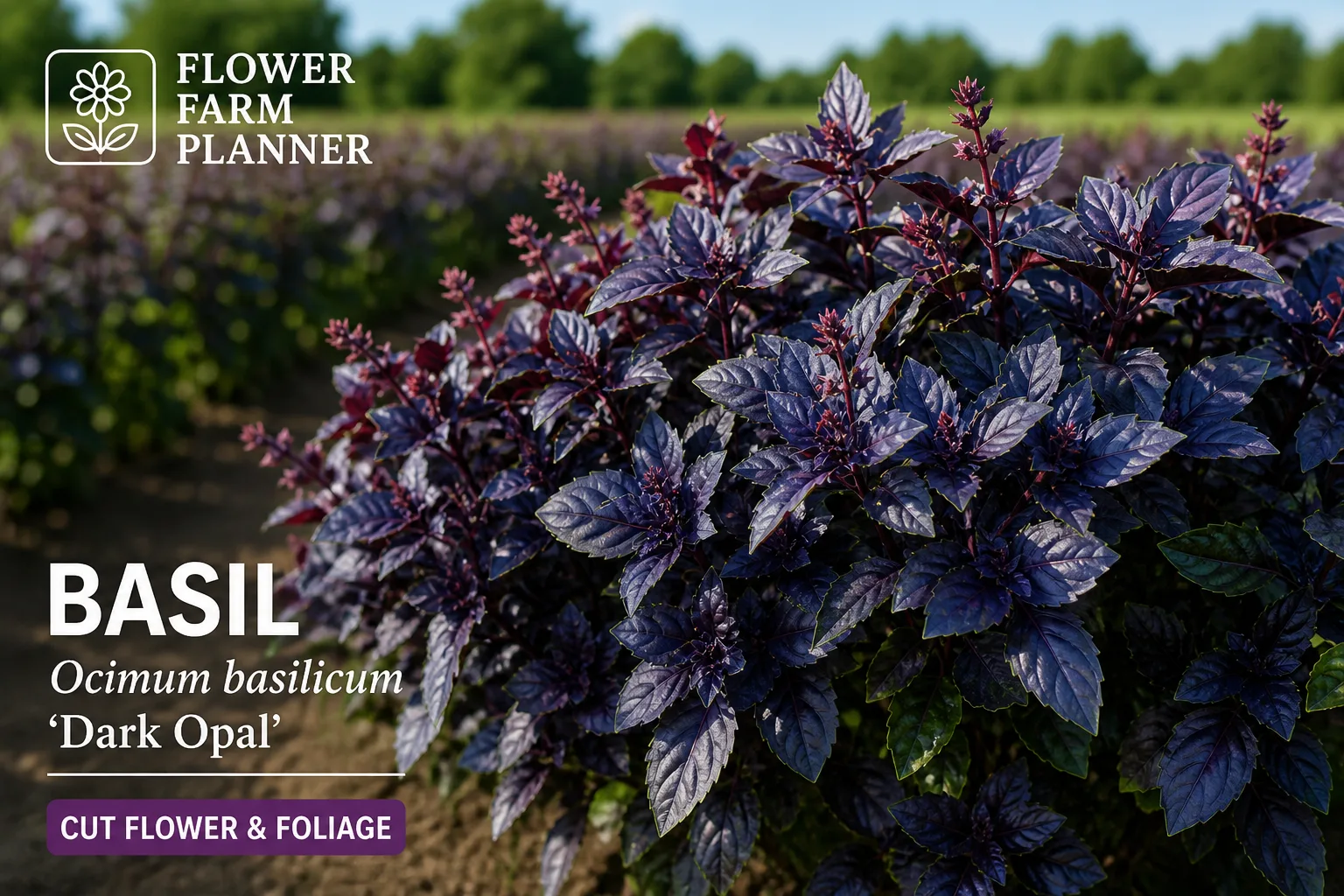
‘Dark Opal’ basil is a fast, warm-season annual herb that gives flower farmers dramatic dark purple foliage, clove-like fragrance, edible bunch potential, and strong contrast in summer bouquet work. It is easy to start from seed, responds well to pinching and repeated cutting, and can produce many small bunches from a compact bed. Its main planning weakness is not production but handling: harvested basil wilts, bruises, blackens under cold storage, and can decay quickly if wet or crushed. Grow it for close-to-harvest sales, subscriptions, restaurants, culinary bunches, and fragrant mixed bouquets rather than for long-distance cold-chain wholesale.
Open variety
Ocimum basilicum / Basil
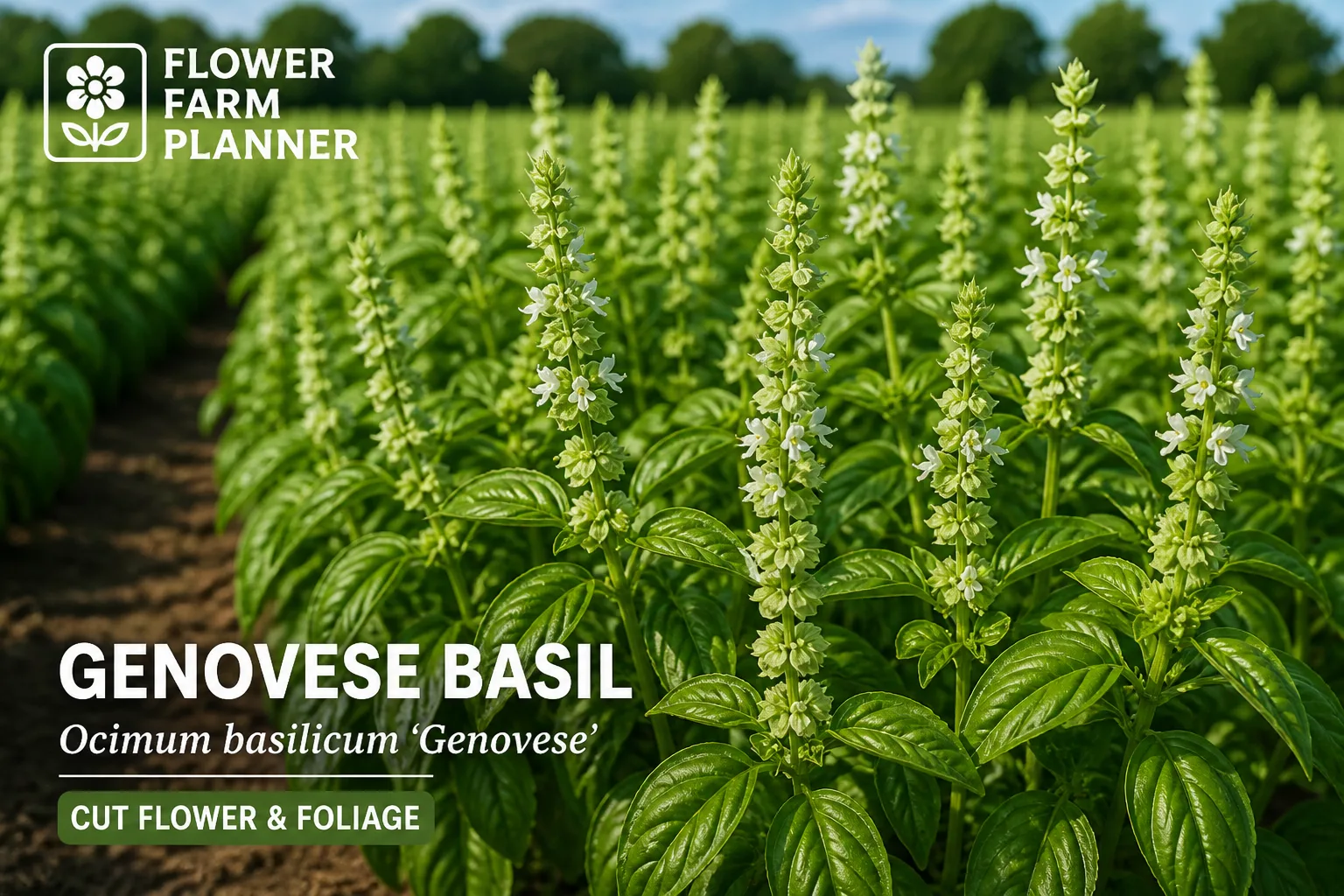
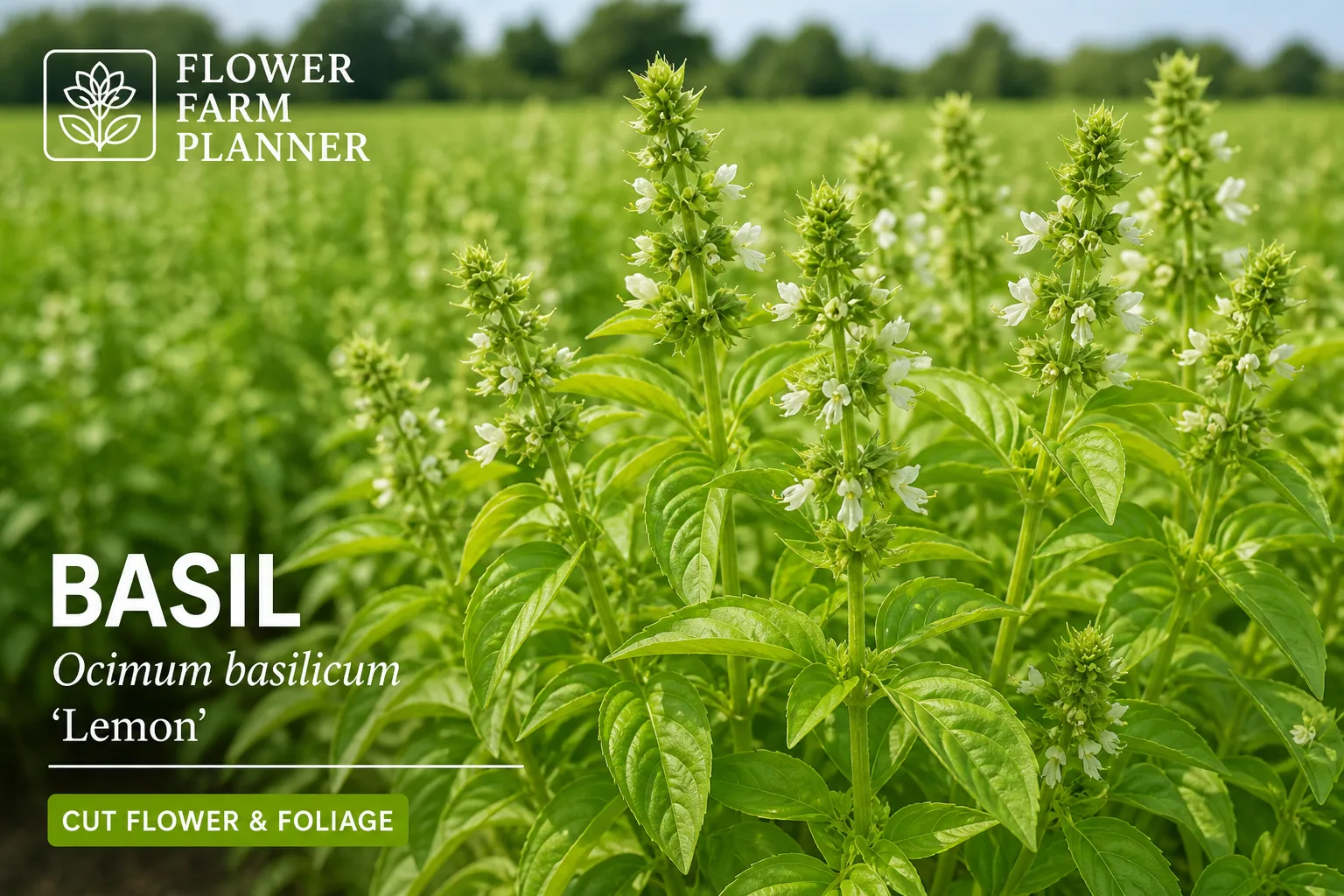
Basil is a warm-season annual herb that can also function as a fragrant cut-foliage and filler crop. It is fast from seed, easy to establish when weather is warm, and highly useful for farms that sell local bouquets, edible herb bunches, subscriptions, and farm-to-table flowers. Its strength is fragrance and repeat cutting; its weakness is postharvest sensitivity. Basil should be grown as a quick, local, fresh crop rather than a long-chain refrigerated florist commodity.
Open variety
Ocimum basilicum / Basil
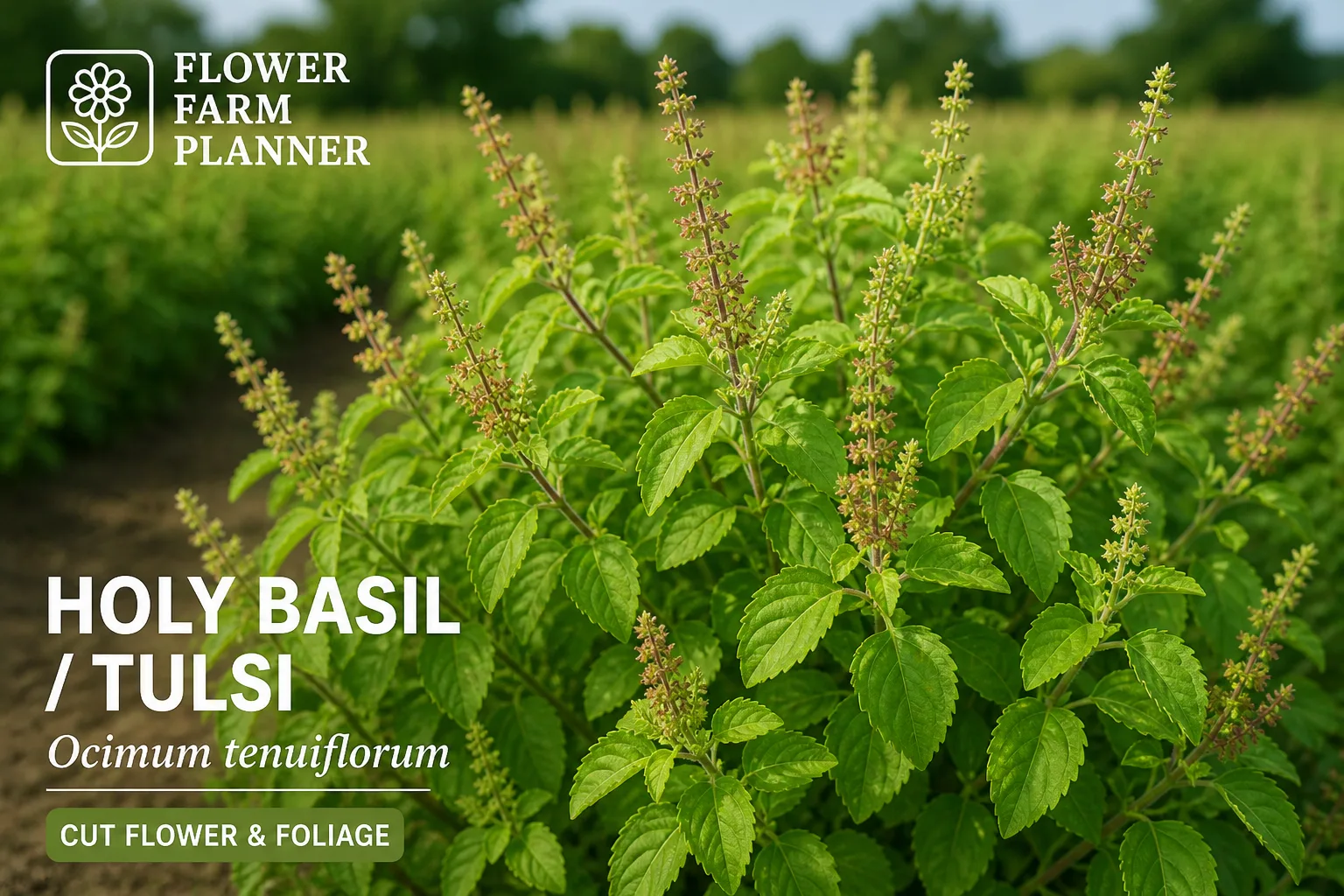
Holy Basil is a distinctive tulsi crop for growers who want a scented, edible, pollinator-friendly summer filler. It should be marketed as an aromatic herb foliage and tea/cut-stem crop rather than as a long-stem premium flower. It shines in subscriptions, farmers markets, herbal wedding work, farm dinners, and culinary accounts where fragrance and story matter.
Open variety
Ocimum basilicum / Basil
Basil is a warm-season annual herb that can also function as a fragrant cut-foliage and filler crop. It is fast from seed, easy to establish when weather is warm, and highly useful for farms that sell local bouquets, edible herb bunches, subscriptions, and farm-to-table flowers. Its strength is fragrance and repeat cutting; its weakness is postharvest sensitivity. Basil should be grown as a quick, local, fresh crop rather than a long-chain refrigerated florist commodity.
Open variety
Ocimum basilicum / Basil
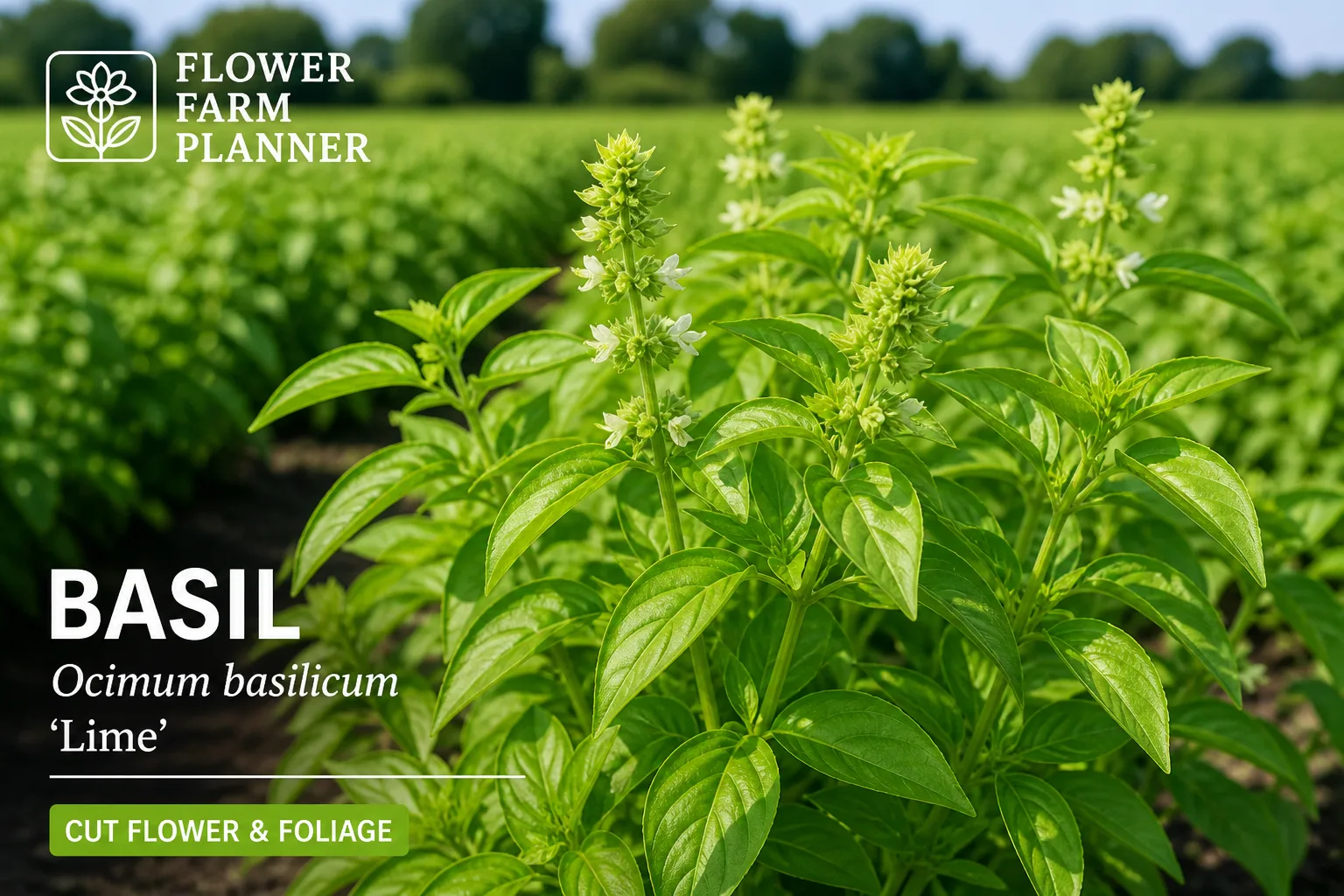
Bright green lime-scented basil for fragrant summer bouquets, herb bunches, and edible floral work.
Open variety
Ocimum basilicum / Basil
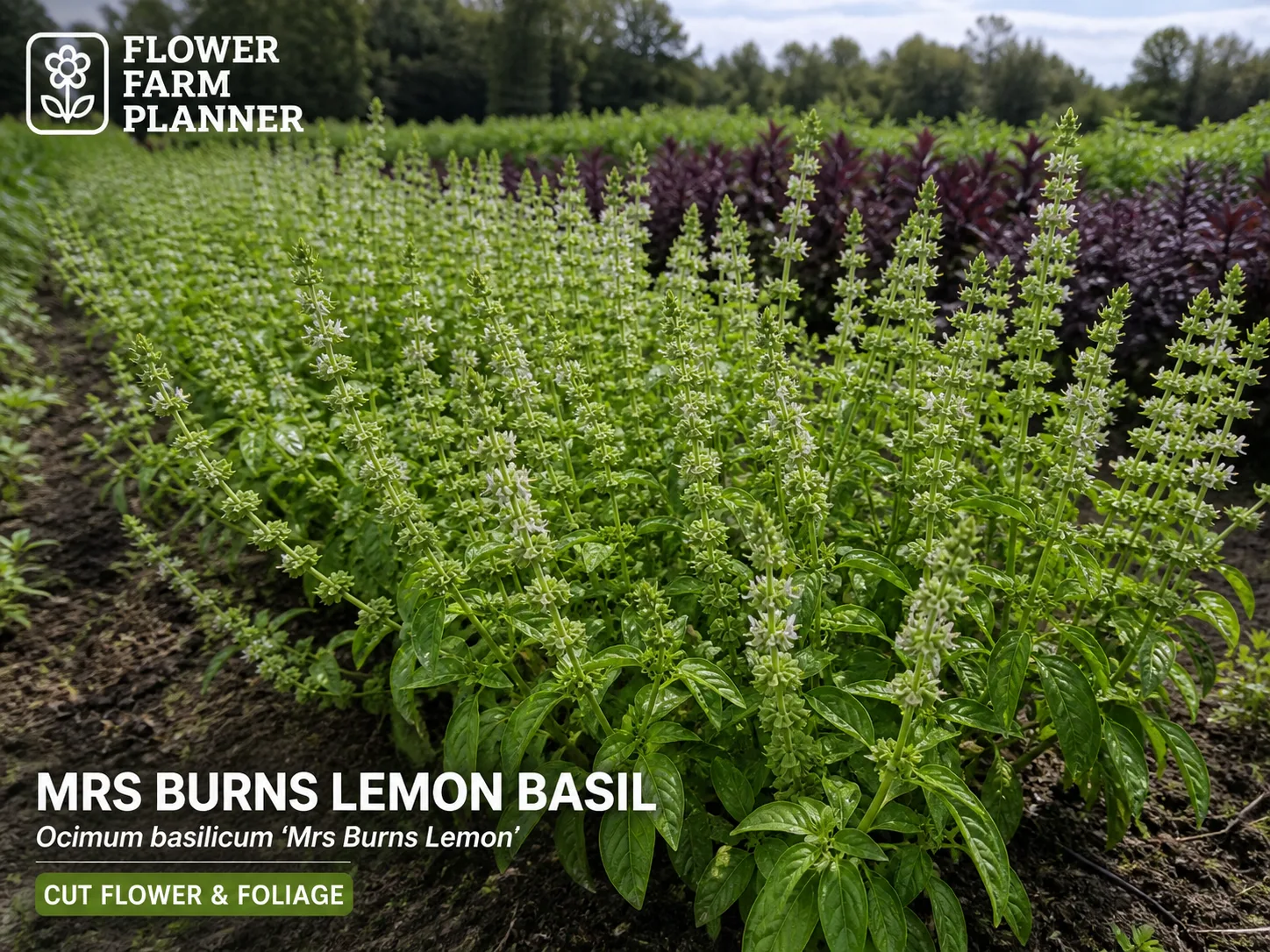
‘Mrs. Burns’ Lemon’ basil is a warm-season, lemon-scented basil that gives flower farms a useful bridge between culinary herbs and bouquet foliage. It is not grown for dramatic flower colour; it earns its place through fragrance, fresh green texture, edible value, and fast summer production from seed. For local sales, it can make bouquets feel more alive because customers can smell the citrus note before they even notice the foliage. The crop is easy to start and quick to harvest, but it must be handled carefully after cutting because basil wilts in heat and blackens if refrigerated too cold.
Open variety
Ocimum basilicum / Basil
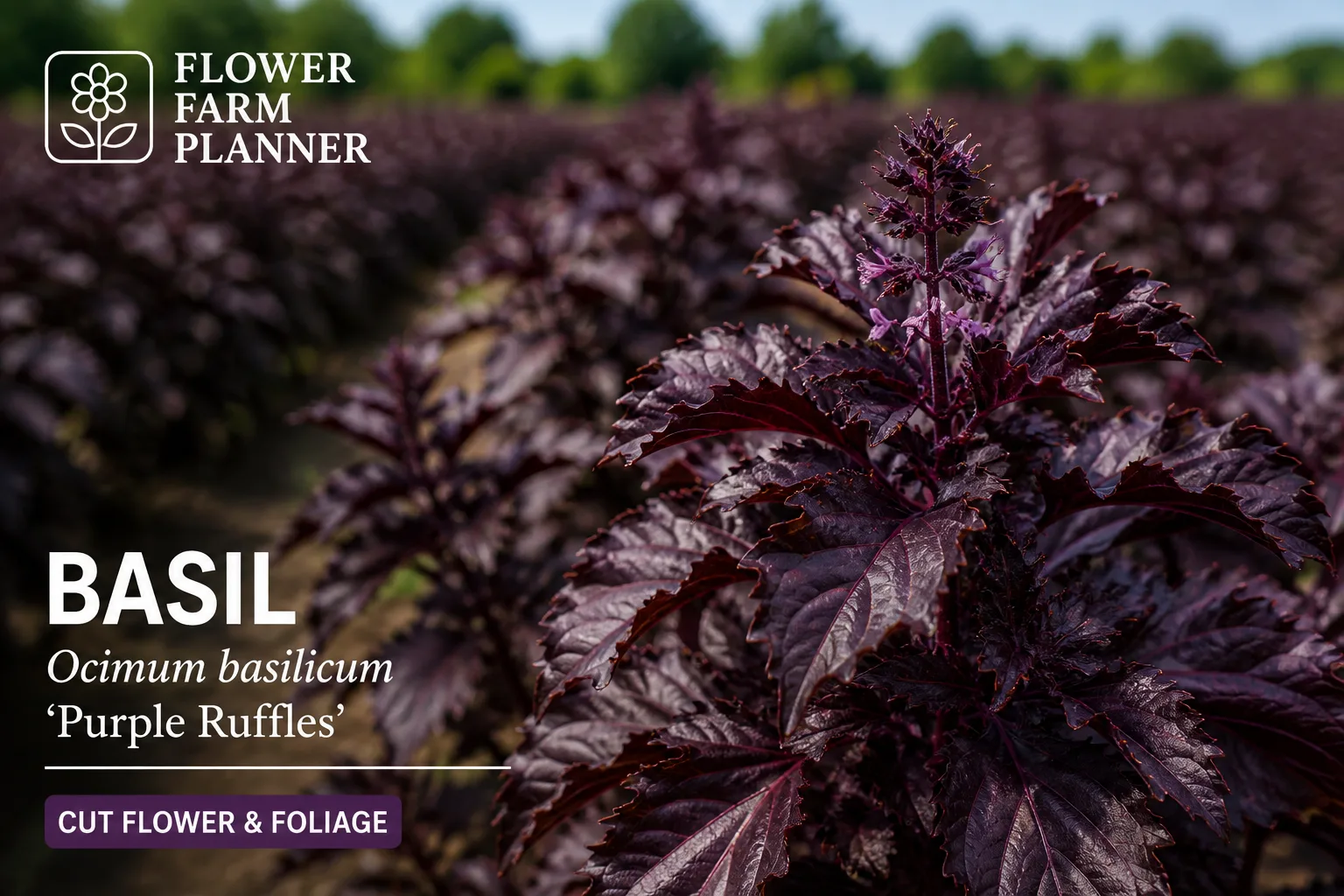
‘Purple Ruffles’ basil is a warm-season, dark purple, aromatic foliage crop with deeply crinkled leaves that can make summer bouquets feel richer, more edible, and more modern. It is not a long cold-chain florist crop; its value is strongest when grown locally, harvested fresh, and sold quickly into bouquets, herb bunches, farm dinners, and subscriptions.
Open variety
Ocimum basilicum / Basil
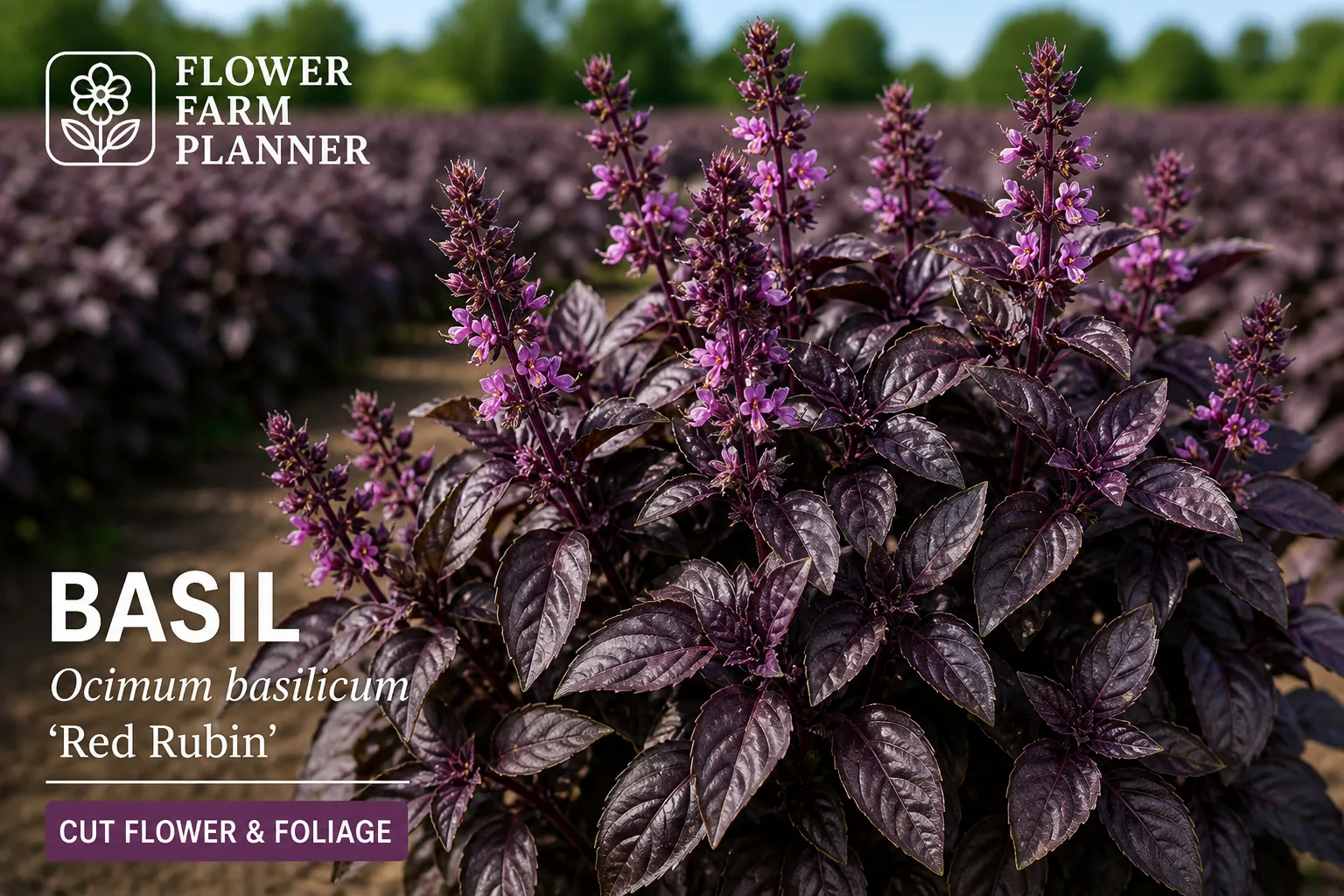
Red Rubin basil is a warm-season purple basil grown for glossy burgundy foliage, strong basil fragrance, and mauve-lavender flower spikes. For flower farmers it works best as a local, repeat-cut foliage and scented filler crop rather than a commodity cut stem. It brings dark color and edible-herb storytelling to bouquets, but it must be harvested cool, hydrated fast, and kept out of ordinary cold flower storage.
Open variety
Ocimum basilicum / Basil
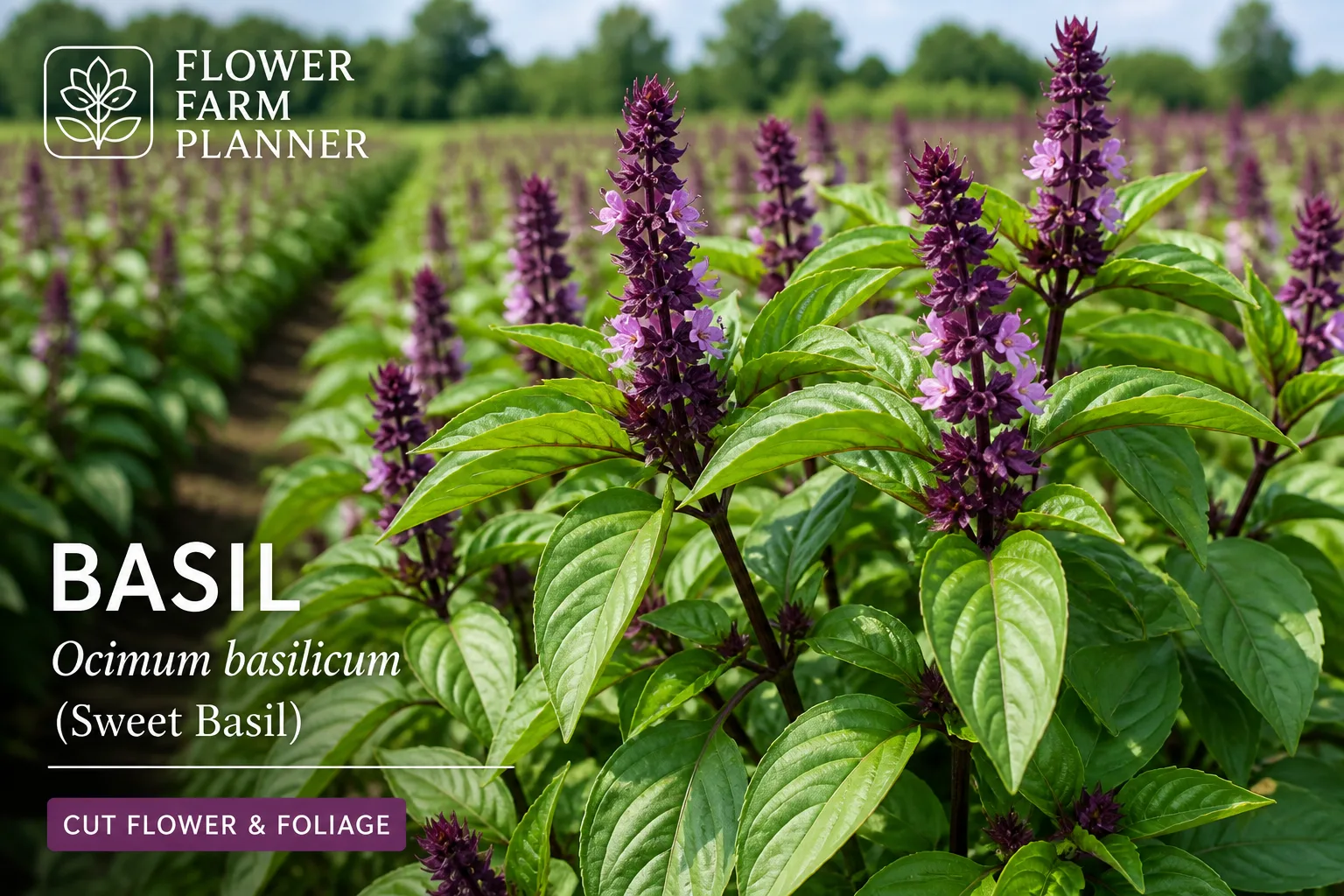
Sweet basil is a fast, warm-season annual herb that can give flower farmers an aromatic green foliage crop, edible bunch crop, and useful herb bouquet ingredient through the summer. It is easy to start from seed, responds well to pinching and repeated cutting, and can produce many small bunches from a compact bed. Its main planning weakness is not production but handling: harvested basil wilts, bruises, blackens under cold storage, and can decay quickly if wet or crushed. Grow it for close-to-harvest sales, subscriptions, restaurants, and fragrant mixed bouquets rather than for long-distance cold-chain wholesale.
Open variety
Ocimum basilicum / Basil
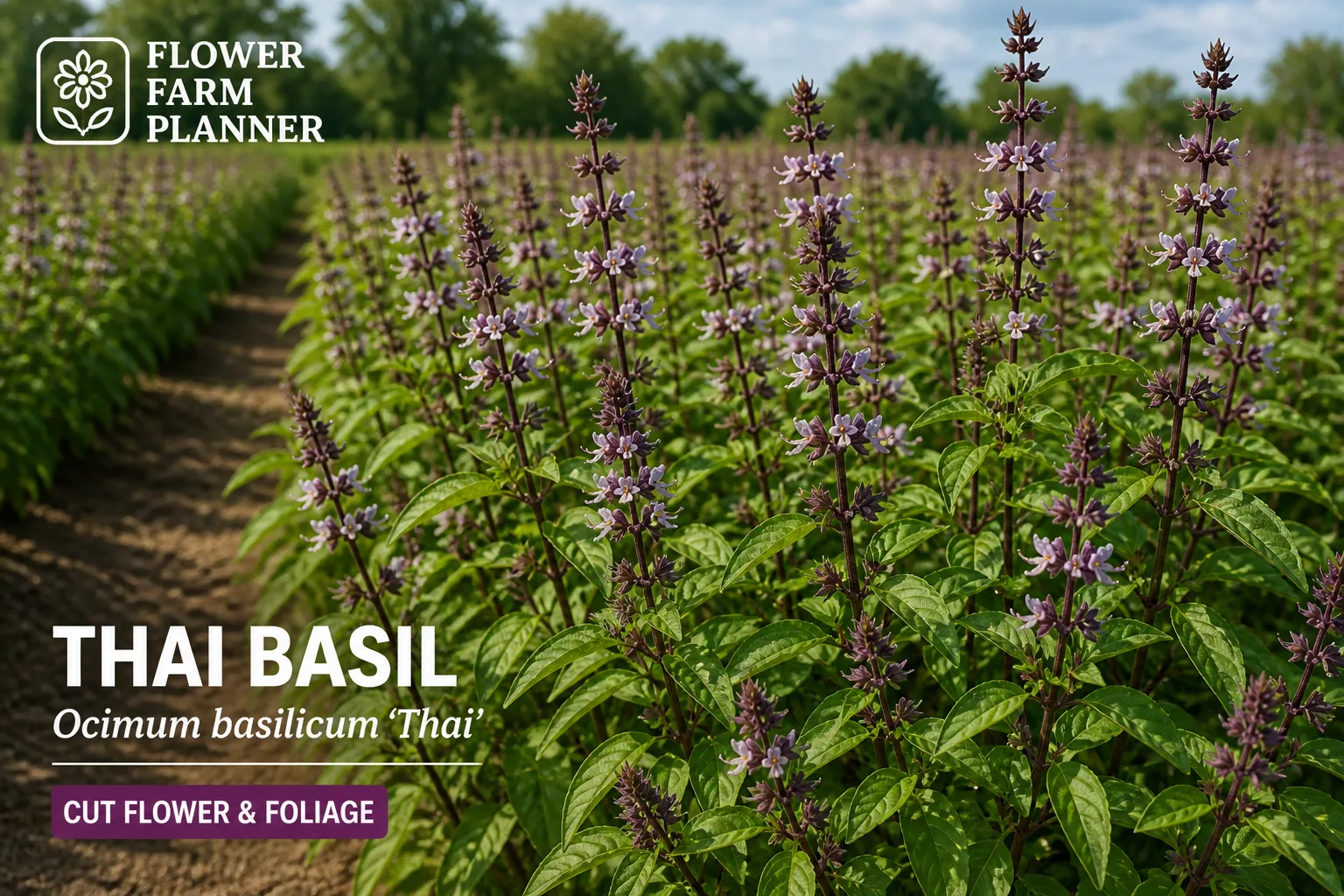
Thai basil is a warm-season aromatic basil grown for glossy green foliage, purple stems, anise-clove fragrance, and edible lavender-purple flower spikes. For flower farmers it works best as a local, repeat-cut foliage and scented filler crop rather than a commodity cut stem. It brings fragrance, movement, and culinary character to summer bouquets, herb bunches, subscriptions, and farm-to-table events, but it must be kept out of normal cold flower storage.
Open variety
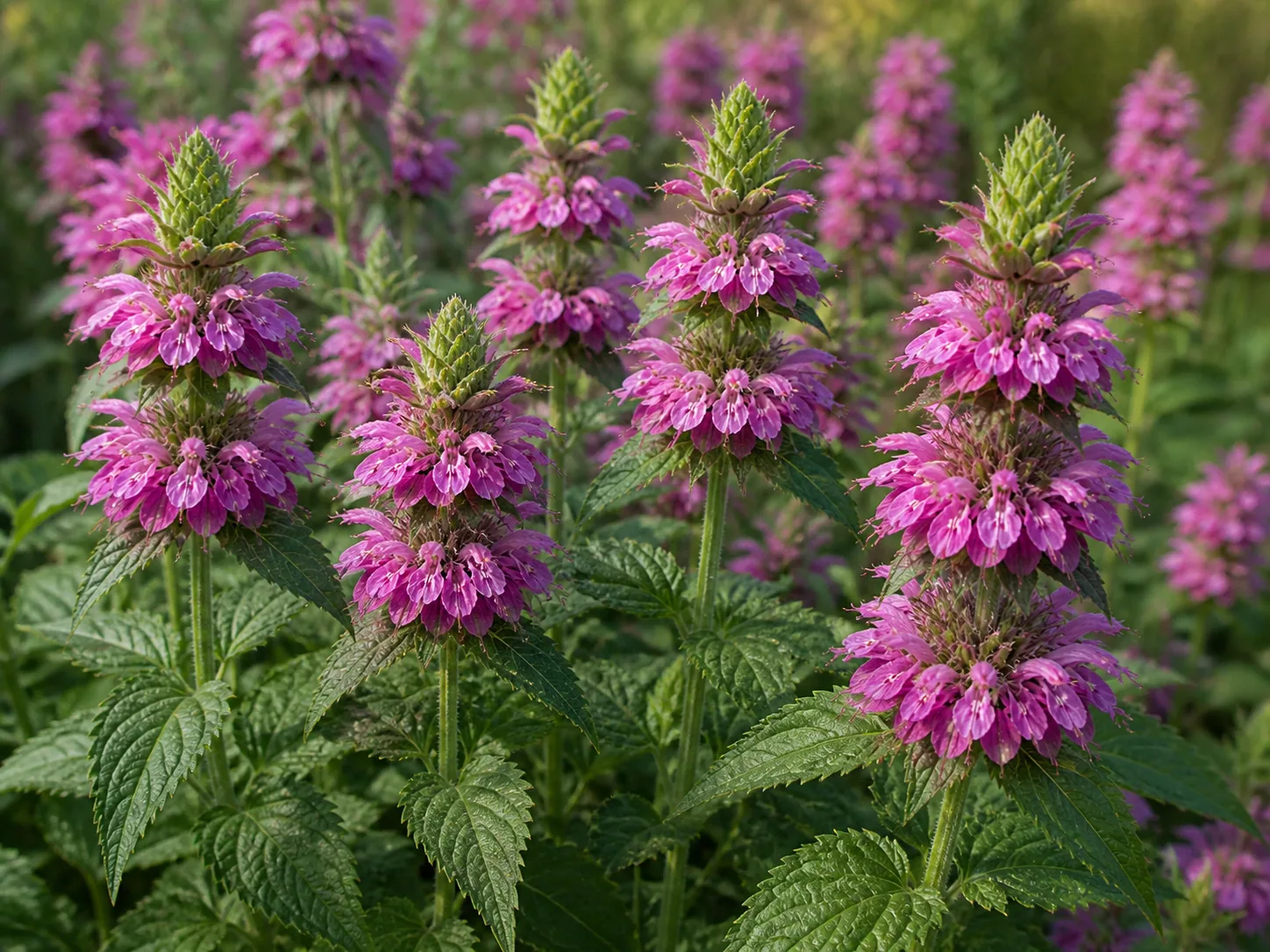
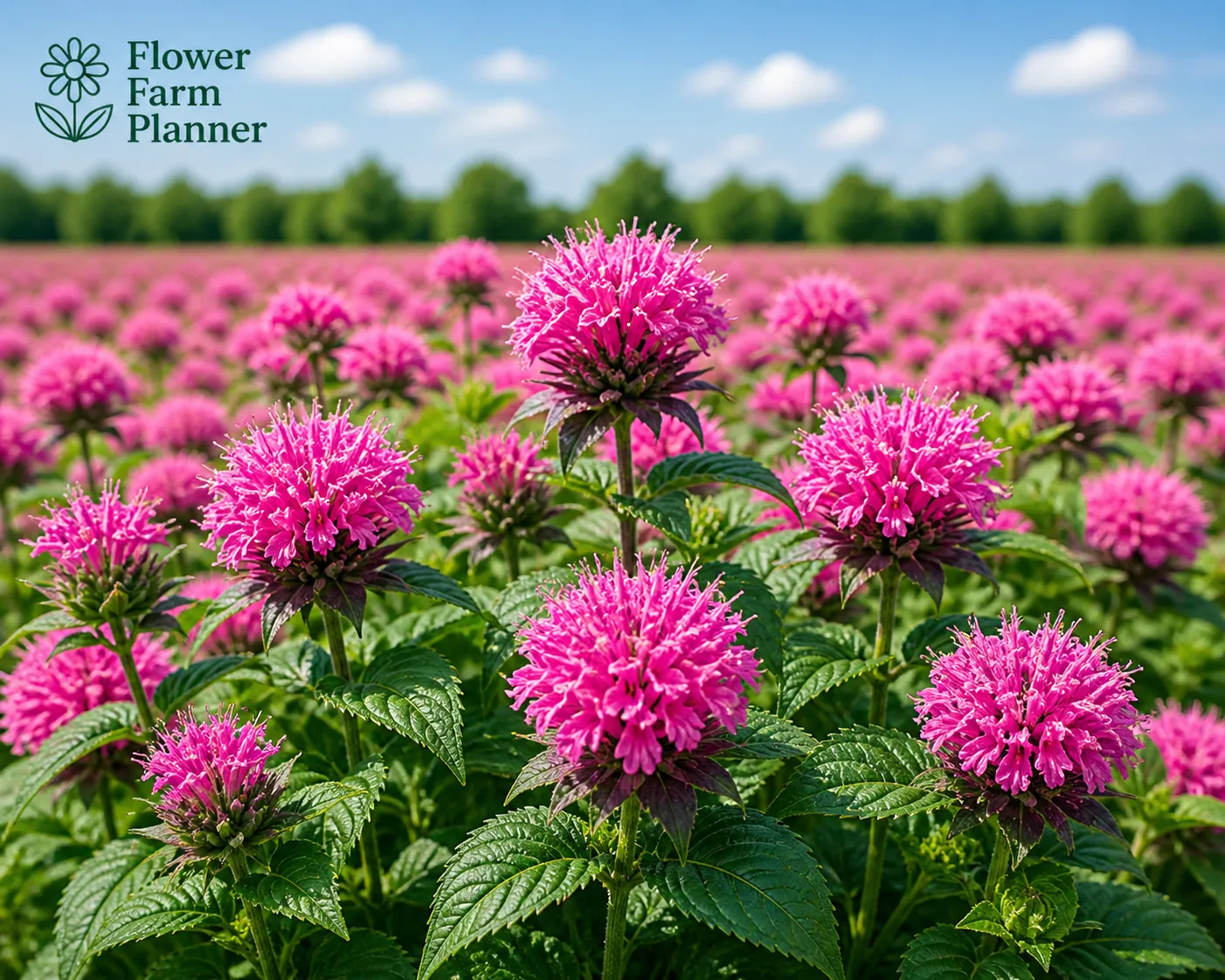
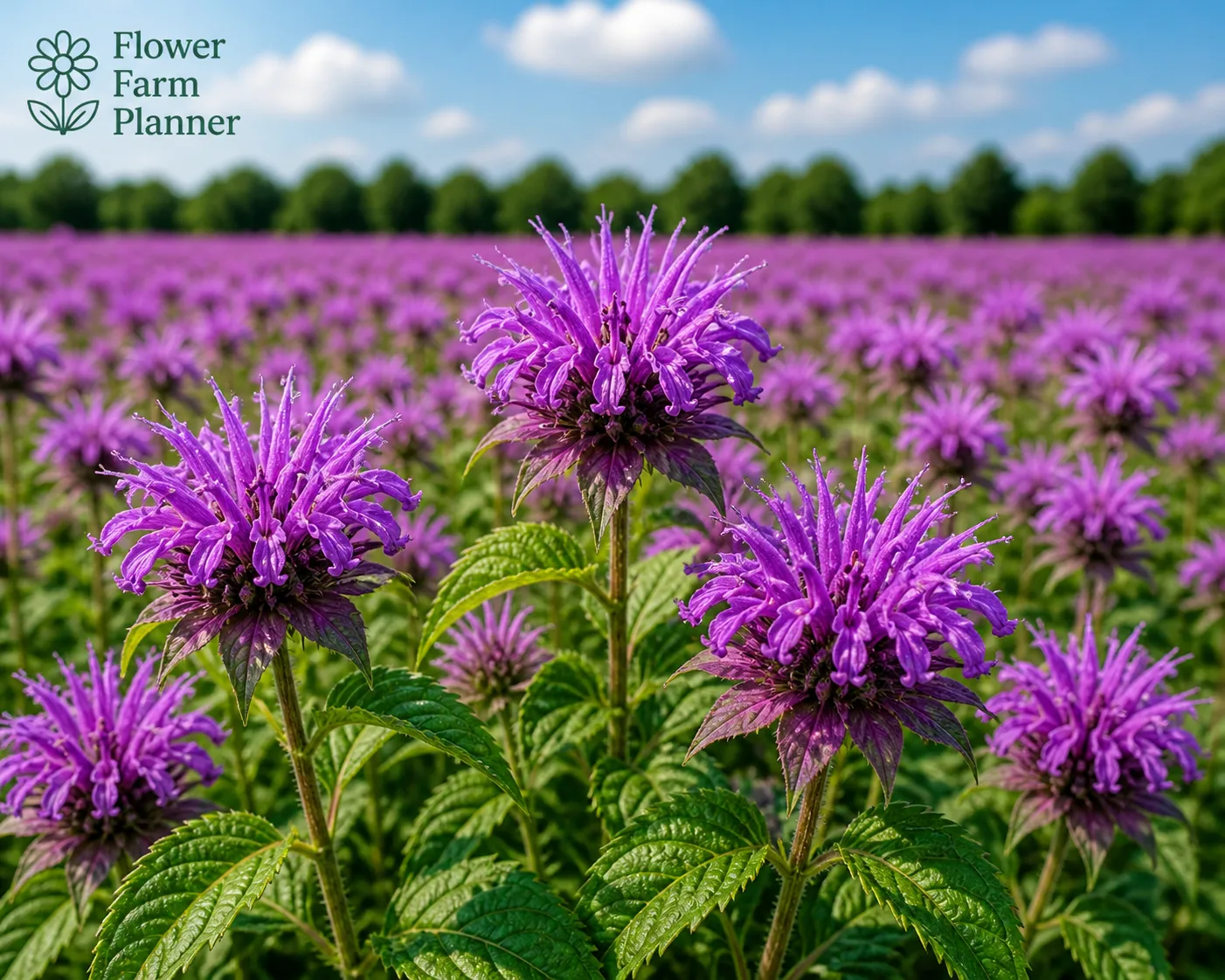
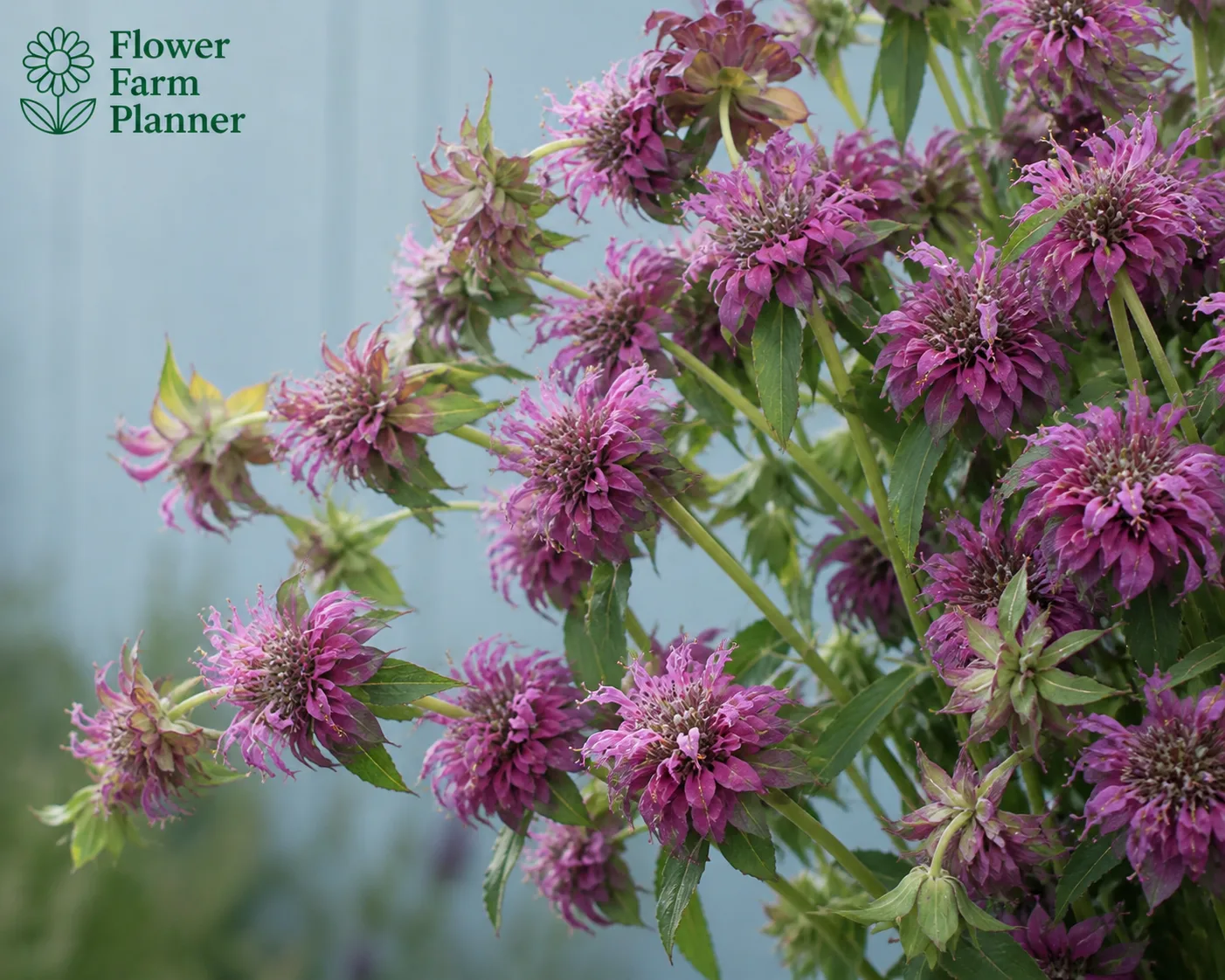
Monarda spp. / Bee Balm
‘Balmy Purple’ is a compact purple bee balm in the Balmy™ series, useful for growers who want a tidy, pollinator-friendly perennial with aromatic foliage and bright summer color. It is best treated as a short-stem specialty crop, plant-sale perennial, and local bouquet accent rather than a high-volume cut flower. The crop’s success depends on clean foliage, airflow, drip irrigation, and honest market positioning around its dwarf habit.
Open variety
Monarda spp. / Bee Balm
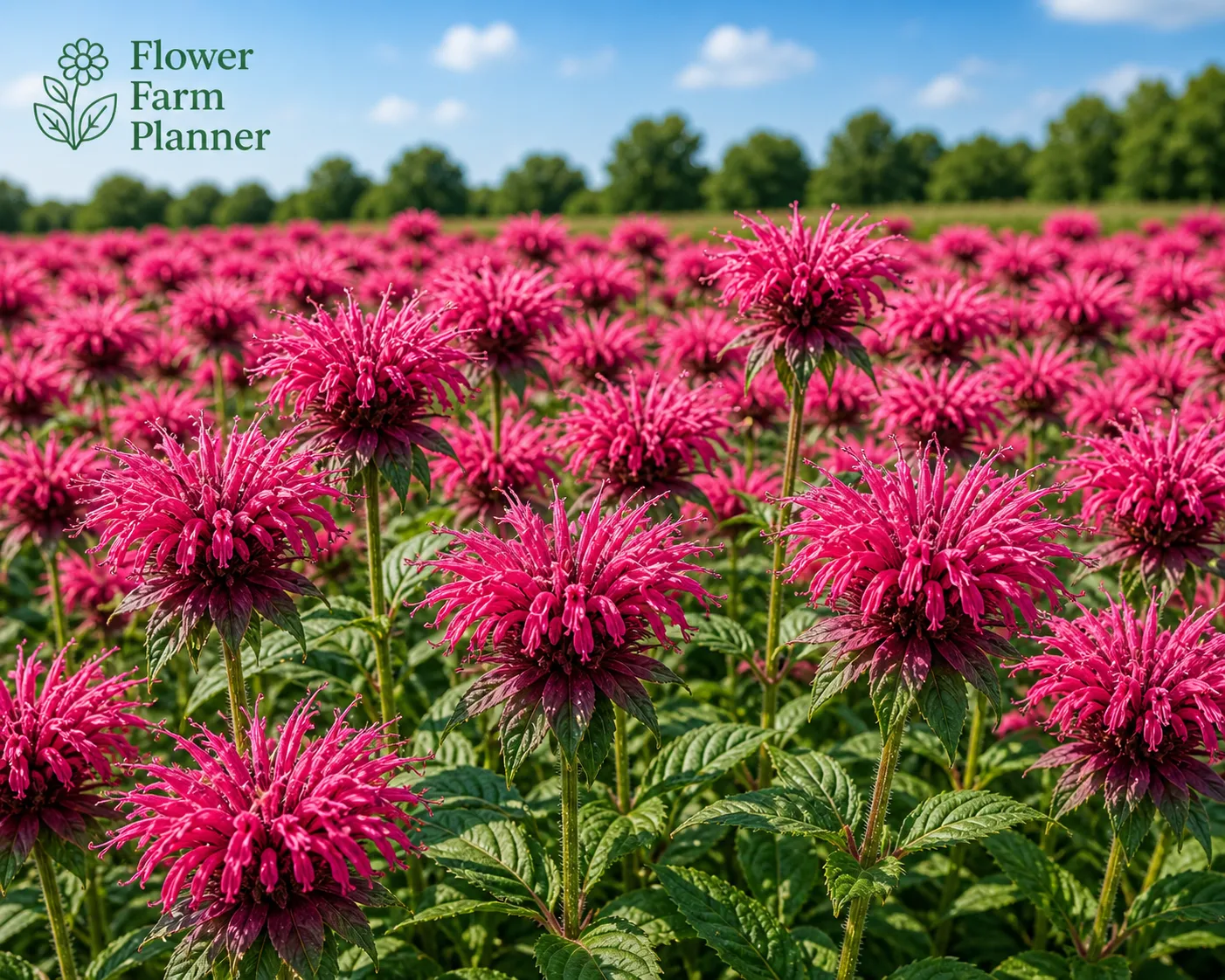
Bee Balm ‘Cambridge Scarlet’ is a vivid scarlet-red Monarda for growers who want a fragrant, pollinator-rich, garden-style perennial stem. It brings energy, movement, and a distinctive whorled shape to summer bouquets. The crop is best planted from plugs or divisions, spaced generously, and sold locally while fresh. Its biggest management issue is powdery mildew, so clean foliage, airflow, and clump renewal matter more than squeezing plants tightly into the bed.
Open variety
Monarda spp. / Bee Balm
‘Croftway Pink’ bee balm is a clear rose-pink, aromatic perennial that gives a flower farm a romantic summer Monarda option with pollinator energy, fragrance, and distinctive whorled texture. It is best treated as a local fresh-cut crop in a semi-permanent perennial bed. Its success depends on moisture, airflow, mildew prevention, timely harvest, and a market that appreciates scented garden flowers. Use it in small to medium blocks until local stem length, mildew pressure, and buyer response are proven.
Open variety
Monarda spp. / Bee Balm
‘Gardenview Scarlet’ is a vivid scarlet-red bee balm that can act as a bold summer accent in local bouquets and a strong pollinator plant in perennial beds. It is best for growers who want dramatic red, aromatic foliage, and cottage-garden character, not for growers needing perfectly straight, long-stemmed wholesale flowers. Manage it as a vigorous perennial clump with extra attention to mildew, airflow, and harvest timing.
Open variety
Monarda spp. / Bee Balm
‘Jacob Cline’ bee balm is a bold, scarlet-red, aromatic perennial that gives a flower farm a distinctive summer stem with pollinator energy, scent, and strong local-flower identity. It is not a low-maintenance commodity crop; its success depends on moisture, airflow, mildew prevention, timely harvest, and a market that appreciates garden-style texture. Use it as a permanent or semi-permanent bed crop, harvest fresh for local customers, and divide clumps every few years to keep production strong.
Open variety
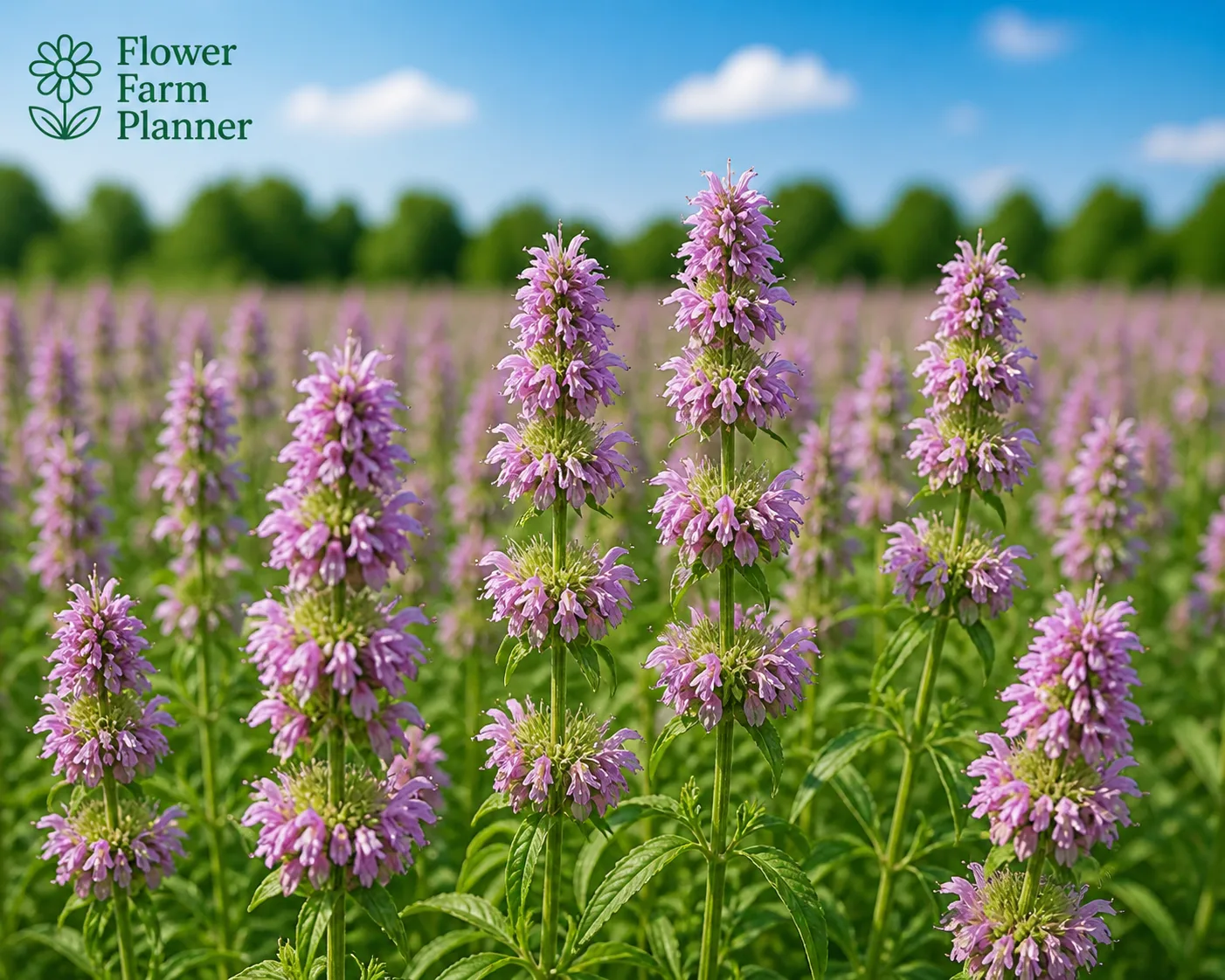
Monarda spp. / Bee Balm
‘Lambada’ is a distinctive annual bee balm grown from seed for lavender-pink, whorled filler stems with an oregano-like herbal scent. It is a good candidate for subscription bouquets, farmstand bunches, and naturalistic wedding work because it adds a tiered texture that few common annuals provide. Plan it as a specialty filler rather than a main crop: start plugs early, space for airflow, harvest while the whorls are fresh, and remove or succession the crop when mildew or age reduces quality.
Open variety
Monarda spp. / Bee Balm
Bee Balm ‘Lemon Balm’ is best understood as lemon-scented Monarda citriodora: a seed-grown, aromatic, pollinator-friendly annual or short-lived biennial that produces stacked whorls of lavender-pink flowers and pale bracts on square stems. It is a useful specialty filler for growers who want fragrance, movement, herbal character, and a wildflower look in bouquets. It is not a commodity cut flower and should not be planned like a tall perennial bee balm cultivar; instead, treat it as a seasonal filler crop that earns its place through uniqueness, scent, drying value, and local storytelling.
Open variety
Monarda spp. / Bee Balm
Bee Balm ‘Petite Delight’ is a dwarf lavender-pink Monarda for growers who want a fragrant, pollinator-rich perennial accent without the height and lodging of older bee balms. It is compact, aromatic, and visually charming, but it should be planned honestly as a short-stem bouquet and posy crop. The best farm use is local: subscriptions, jars, small mixed bouquets, farm shop bunches, and potted perennial sales. Its greatest production risk is not plant survival, but clean marketable foliage during humid summer weather.
Open variety
Monarda spp. / Bee Balm
‘Prairie Night’ is a tall purple bee balm with strong cottage-garden character and better cut potential than short bedding monardas. It brings a moody violet-purple accent, aromatic foliage, and an obvious pollinator story to summer bouquets. It should be grown as a specialty perennial stem rather than as a commodity crop, with clean foliage and mildew management treated as the main quality controls.
Open variety
Monarda spp. / Bee Balm
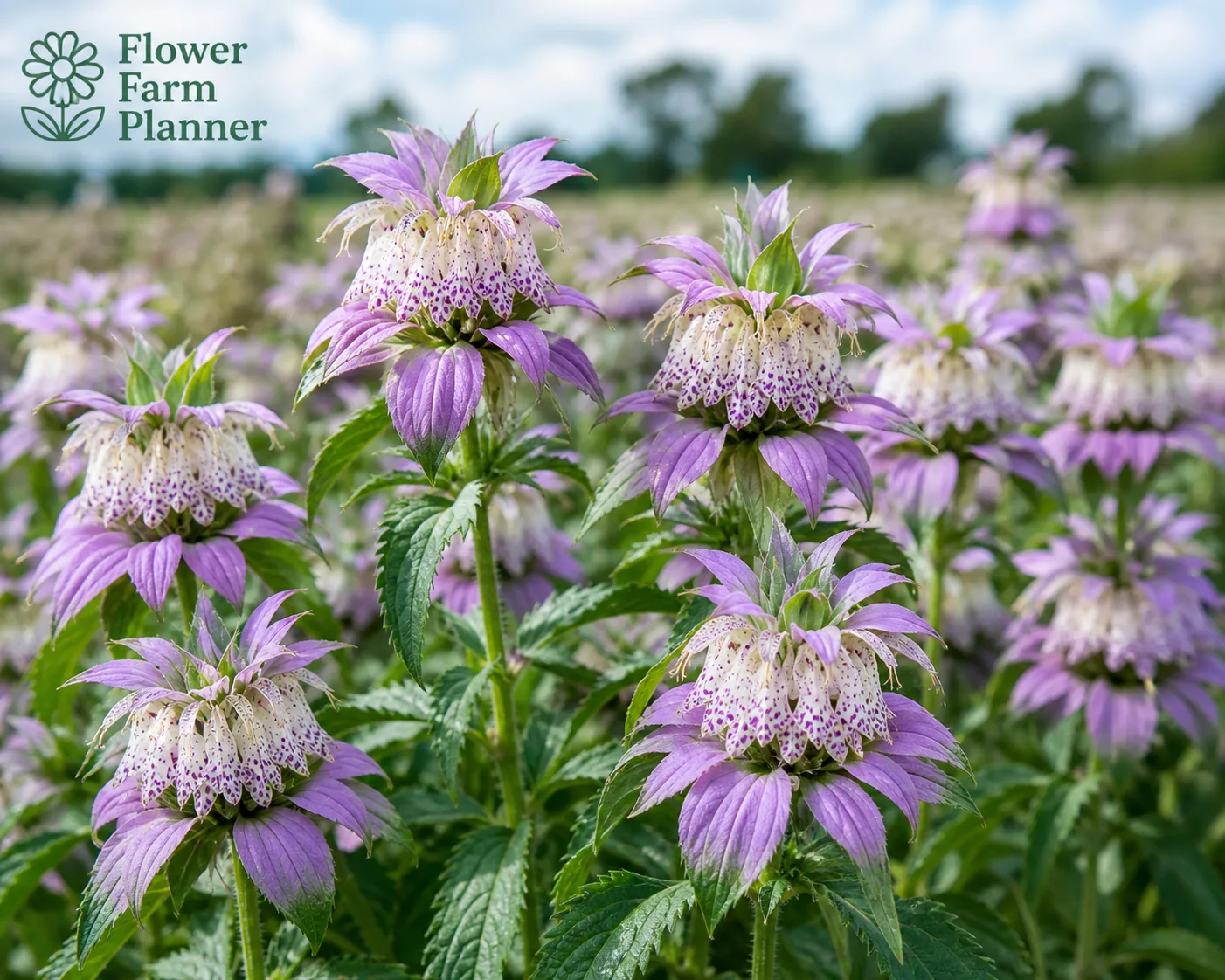
Monarda punctata is a quirky, aromatic, native bee balm grown for stacked whorls of spotted flowers and soft pink to lavender bracts. It is more drought-tolerant and sand-loving than classic red bee balm, and it fits best as a specialty local stem for growers who want pollinator story, unusual texture, and native-style bouquet material. It is not a uniform commodity flower, but in the right market it can become a memorable late-summer accent.
Open variety
Monarda spp. / Bee Balm
‘Raspberry Wine’ is a deep wine-red bee balm selected for rich color and better powdery mildew resistance. It is a strong candidate for growers wanting a perennial summer stem that feels romantic, native-inspired, fragrant, and pollinator-friendly. Grow it in a labelled clonal block, cut during cool hours, and sell it through local bouquet, florist, and wedding channels where its scent and color can be appreciated.
Open variety
Monarda spp. / Bee Balm
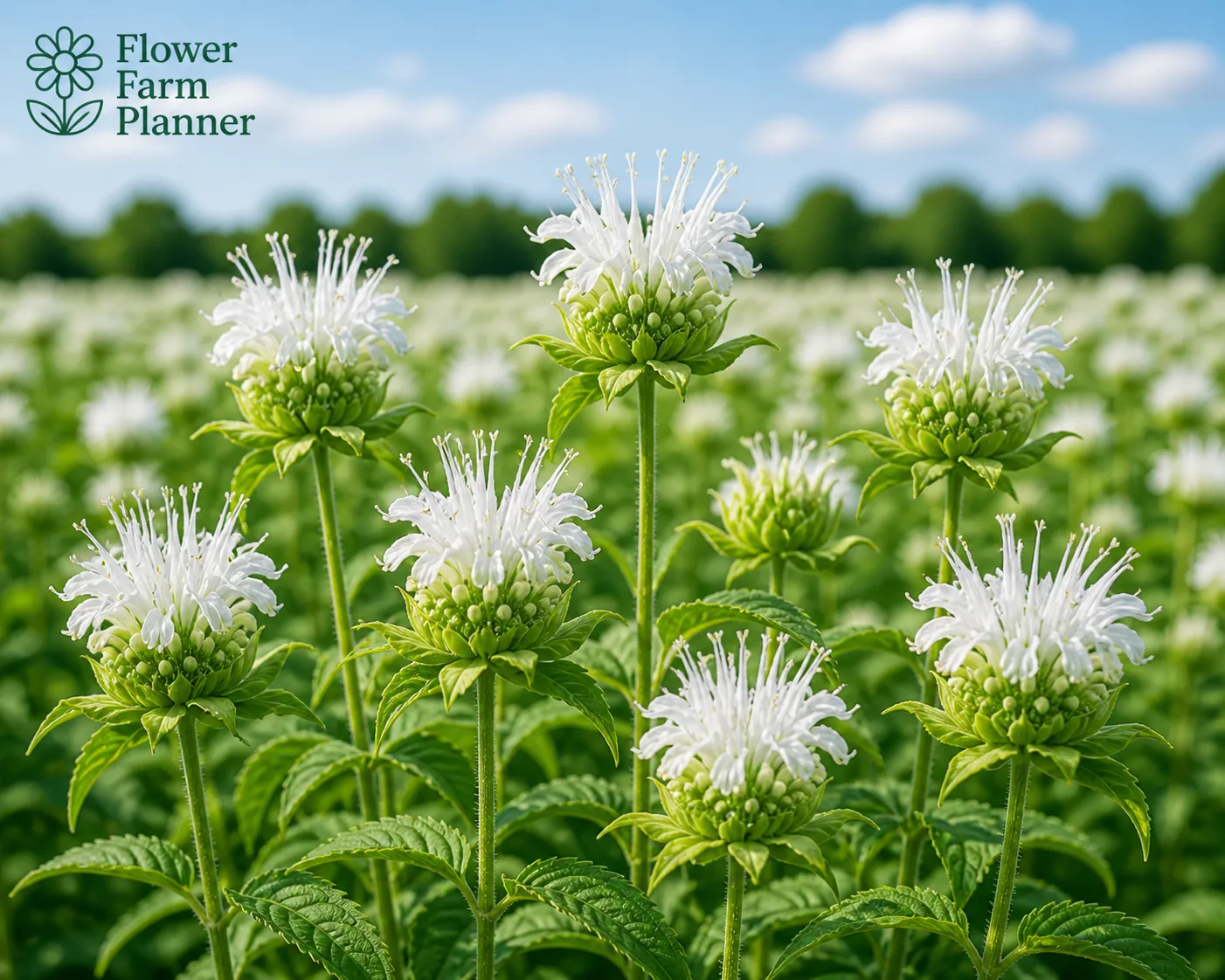
‘Schneewittchen’ is the white bee balm option for growers who want a scented, pollinator-friendly perennial that adds clean white texture to summer bouquets. It is not a high-volume commodity stem, but it can be very useful in local, garden-style floristry because the whorled flowers and aromatic foliage feel fresh, seasonal, and different from standard fillers. Grow it in an open, moist, well-drained perennial bed, keep the clumps divided, and treat mildew prevention as part of the crop plan from the start.
Open variety
Monarda spp. / Bee Balm
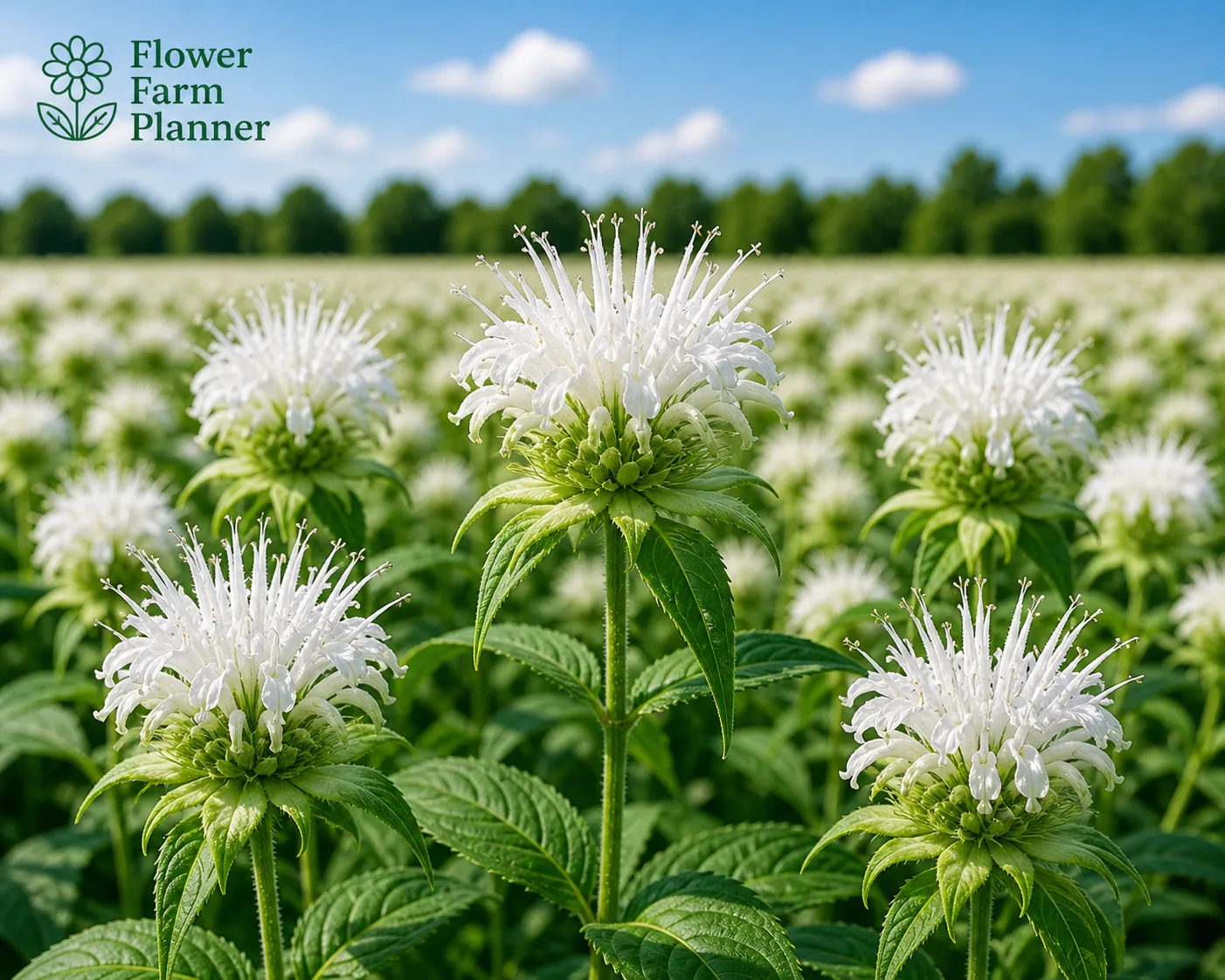
Bee balm ‘Snow White’ is a white-flowered Monarda cultivar for growers who want pollinator-rich, scented, garden-style summer stems. Its value is in texture, freshness, and the unusual availability of a white bee balm for local bouquets and weddings. It is not a low-maintenance commodity cut: it needs airflow, clean foliage, immediate hydration, and realistic vase-life expectations.
Open variety
Monarda spp. / Bee Balm
Monarda fistulosa, commonly called wild bergamot, is the more native-meadow, lavender-toned side of bee balm. For flower farmers it is useful as a pollinator-rich perennial accent with scented foliage, loose natural movement, and soft purple colour that fits cottage, rustic, native, and subscription bouquets. It should be treated as a local fresh crop rather than a long-distance florist commodity, because clean foliage and hydration are central to its value.
Open variety
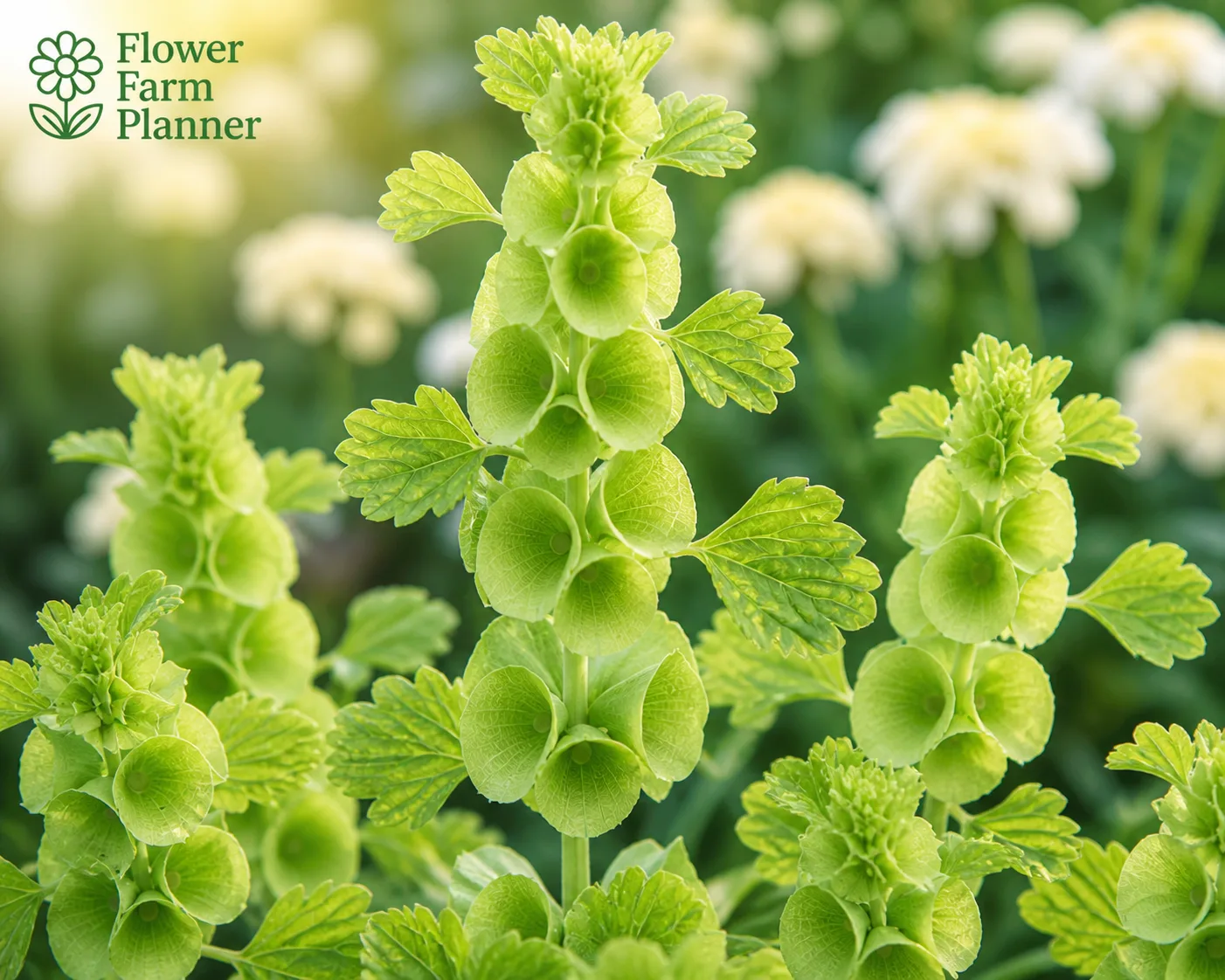
Moluccella laevis / Bells of Ireland
Bells of Ireland is a distinctive annual cut flower grown for tall, fresh green spikes of bell-shaped calyces rather than showy petals. It is one of the best natural green line flowers for adding height, rhythm, and architecture to bouquets and event work. The crop is not difficult once established, but it is famously uneven from seed, so growers should pre-chill seed, sow extra, and avoid hot sowing windows. It is most valuable when harvested cool, hydrated quickly, and sold as clean straight stems for florists, weddings, subscriptions, or dried design.
Open variety
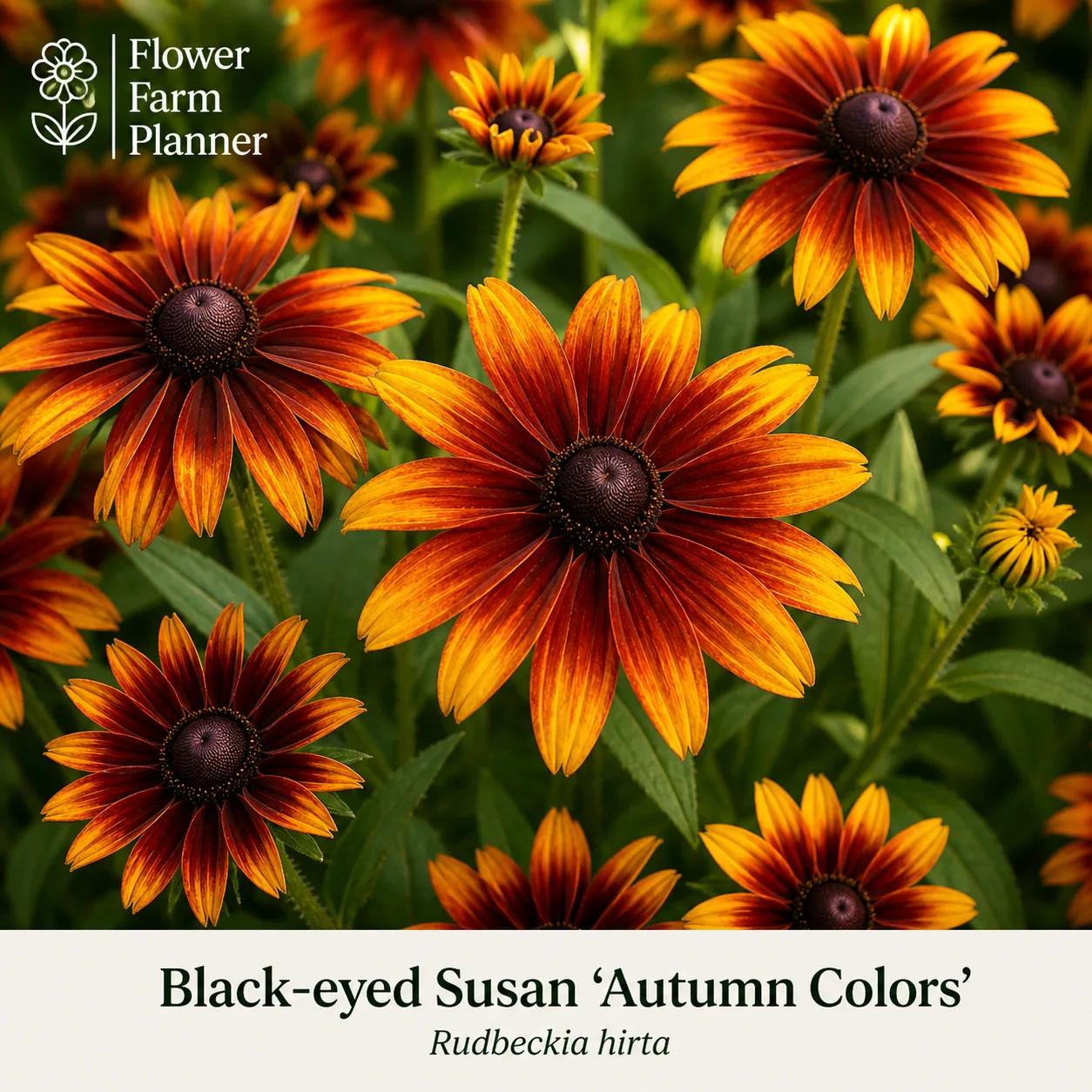
Rudbeckia hirta / Black-eyed Susan
‘Autumn Colors’ is a warm-toned Rudbeckia hirta cultivar for growers who want easy summer-to-autumn colour with a strong seasonal story. It is not the longest-stemmed rudbeckia, but it gives excellent visual value in farm bouquets because every bunch can include gold, orange, bronze, mahogany, and bicolour faces. Grow it from plugs for reliability, give it sun and airflow, harvest promptly at mature open stage, and sell it fresh through local channels.
Open variety
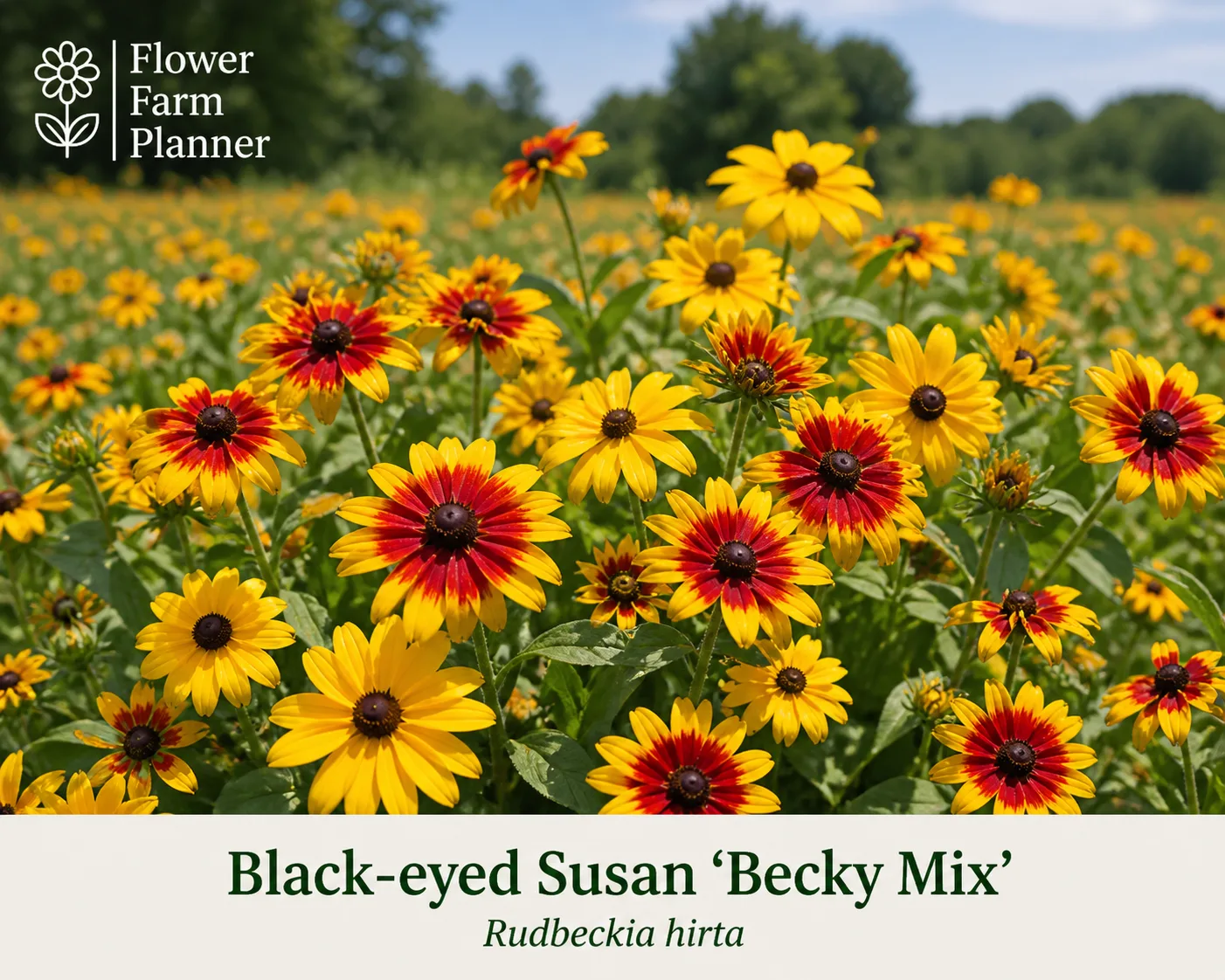
Rudbeckia hirta / Black-eyed Susan
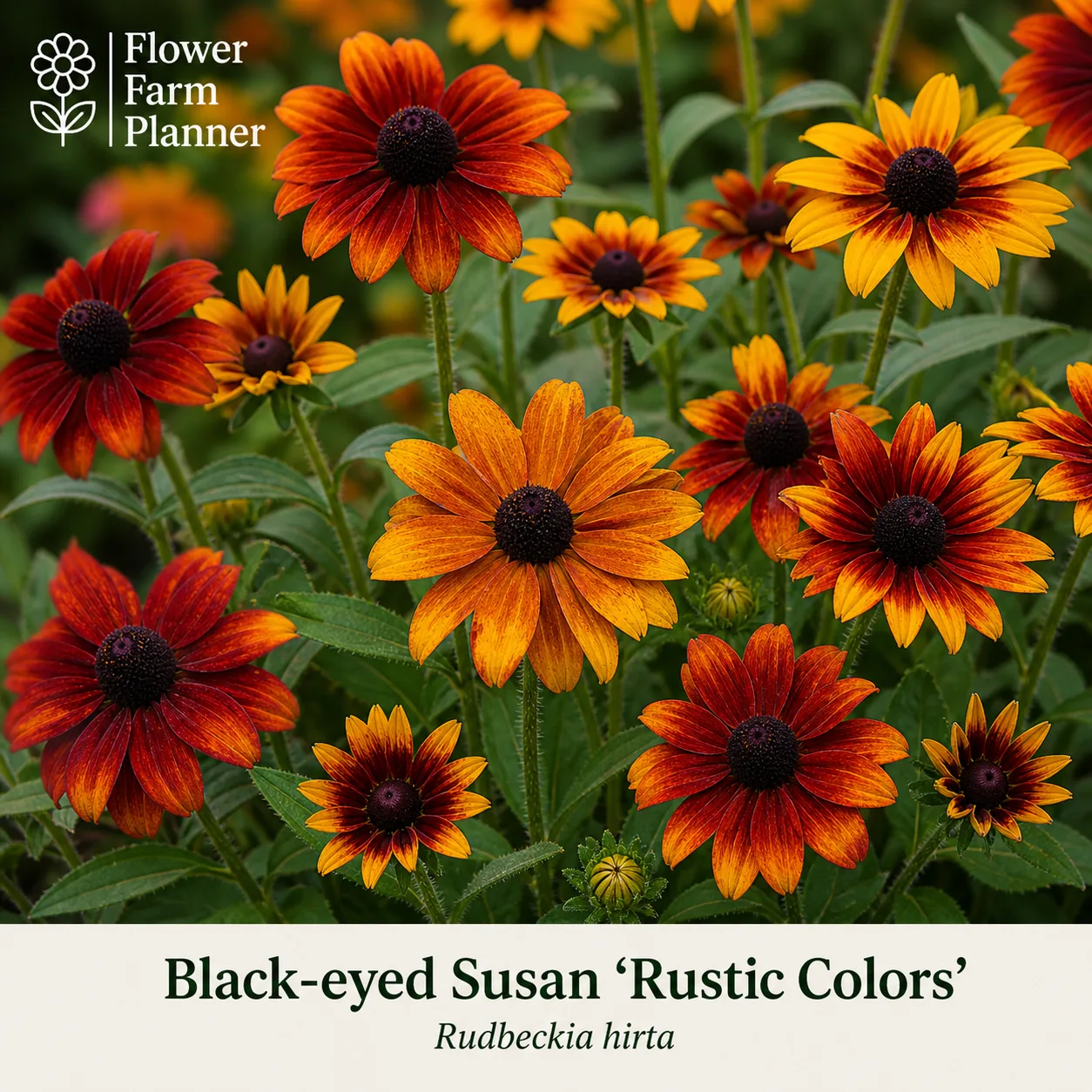
‘Becky Mix’ is a compact, large-flowered black-eyed Susan for growers who want cheerful warm color rather than maximum stem length. It produces bright yellow, orange, cinnamon, bronze, and bronzy-red daisy flowers with dark cones, bringing a strong late-summer and autumn feeling to bouquets. Plan it as a seed-grown annual cut flower for local markets, subscriptions, and rustic event work. Start early, grow in full sun, avoid overfeeding, harvest when flowers are opening rather than tight buds, and sell it fresh where its warm, pollinator-friendly look is part of the story.
Open variety
Rudbeckia hirta / Black-eyed Susan
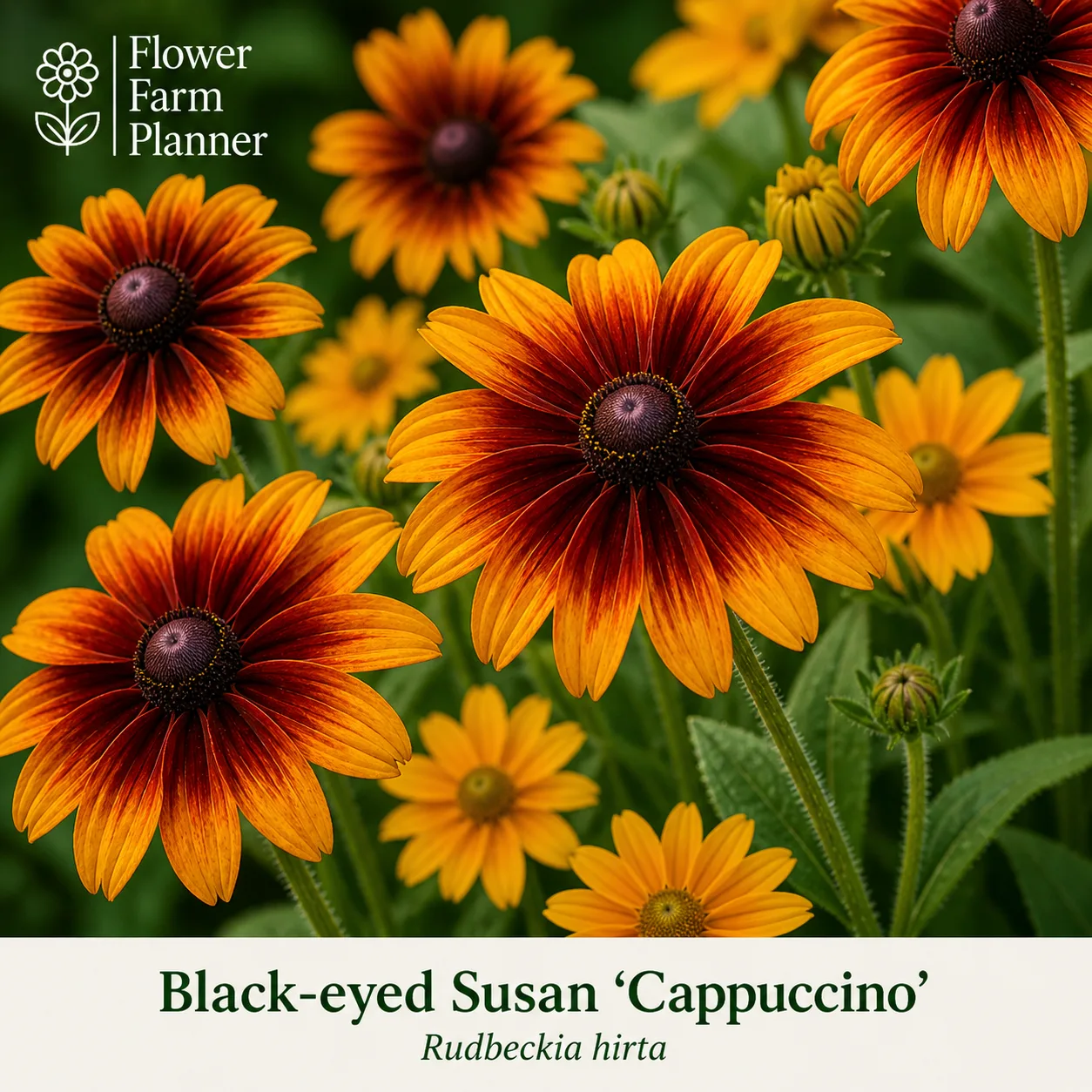
‘Cappuccino’ is a warm, coffee-toned black-eyed Susan with large bronze, burnt-orange, gold and mahogany daisy flowers around a dark chocolate cone. It gives flower farms a more modern and autumn-friendly Rudbeckia option than plain yellow forms, while still offering the toughness, pollinator appeal, and direct-market familiarity of black-eyed Susan. It is best planned as a local summer-to-autumn cut flower for mixed bouquets, subscriptions, farm stands and rustic event work, with dried cone value after the fresh petals are finished.
Open variety
Rudbeckia hirta / Black-eyed Susan
‘Cherokee Sunset’ is the warm, dramatic version of black-eyed Susan for growers who want more than standard yellow. Its semi-double and double flowers bring gold, orange, rust, bronze, mahogany, and chocolate tones into one crop, making it especially valuable for autumn weddings, farmstand bouquets, subscriptions, and earthy florist palettes. It is not the most weatherproof flower in humid rain, but when grown with good airflow and sold fresh, it delivers a high-impact seasonal look that customers immediately understand.
Open variety
Rudbeckia hirta / Black-eyed Susan
‘Cherry Brandy’ is a red-wine Rudbeckia hirta grown from seed for summer and autumn cut flowers. It gives growers the familiar black-eyed Susan shape with a much richer cherry, burgundy and mahogany palette than standard yellow forms. It is best planned as an annual, started in plugs for uniformity, planted in full sun with airflow, and harvested open rather than in tight bud. Its main caution is that compact height, wet-weather petal marking and cold-storage dulling can reduce premium grade, so the first planting should be treated as a colour and stem-length trial before scaling up.
Open variety
Rudbeckia hirta / Black-eyed Susan
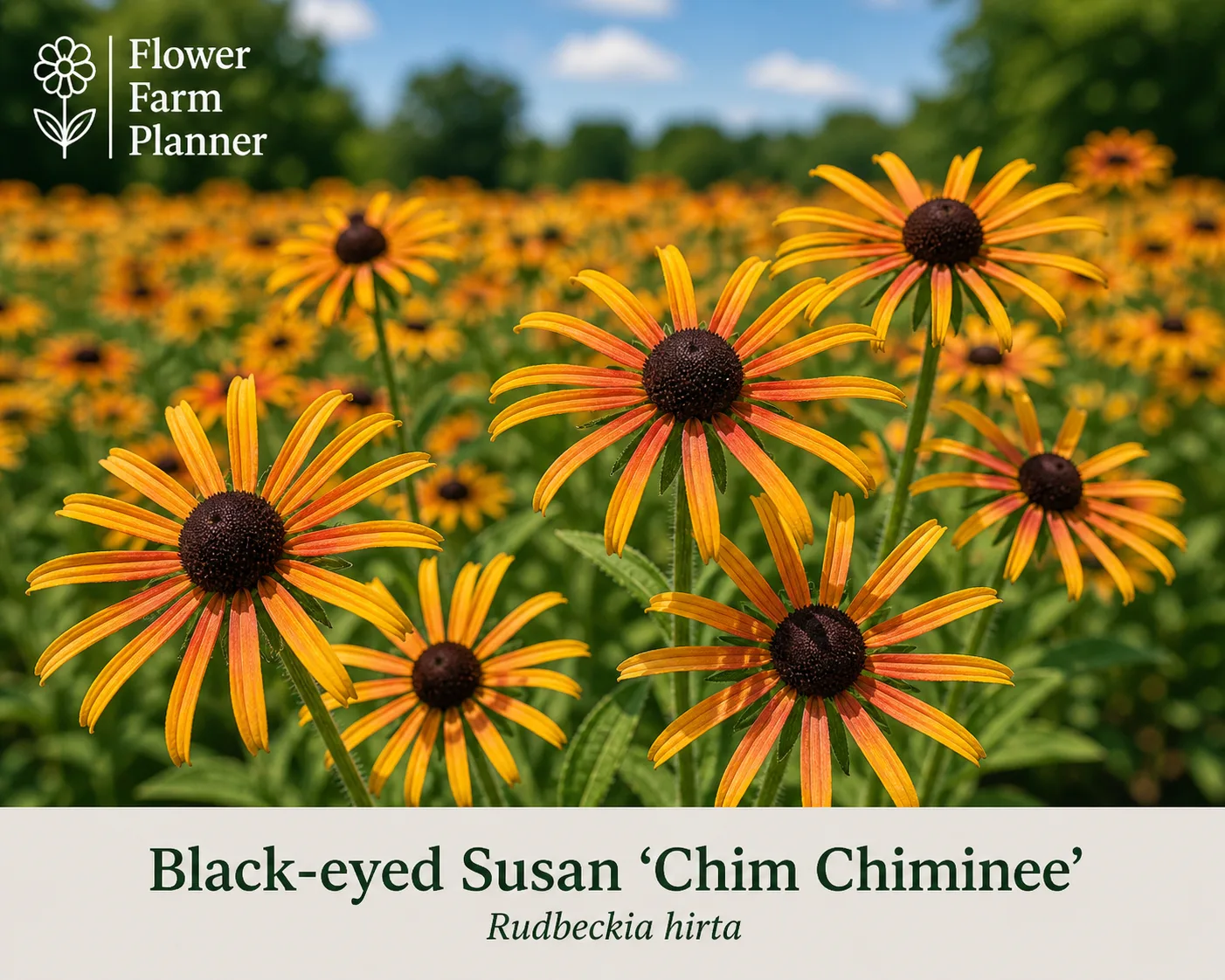
‘Chim Chiminee’ is a distinctive black-eyed Susan for growers who want something more textured and memorable than a standard yellow daisy. It produces warm gold, bronze, orange, mahogany, and brown-toned blooms with narrow quilled or spidery petals around a dark cone. Plan it as a seed-grown summer-to-autumn cut flower, start early for good stems, harvest before blooms are over-open, and sell it where customers appreciate local, rustic, pollinator-friendly flowers.
Open variety
Rudbeckia hirta / Black-eyed Susan
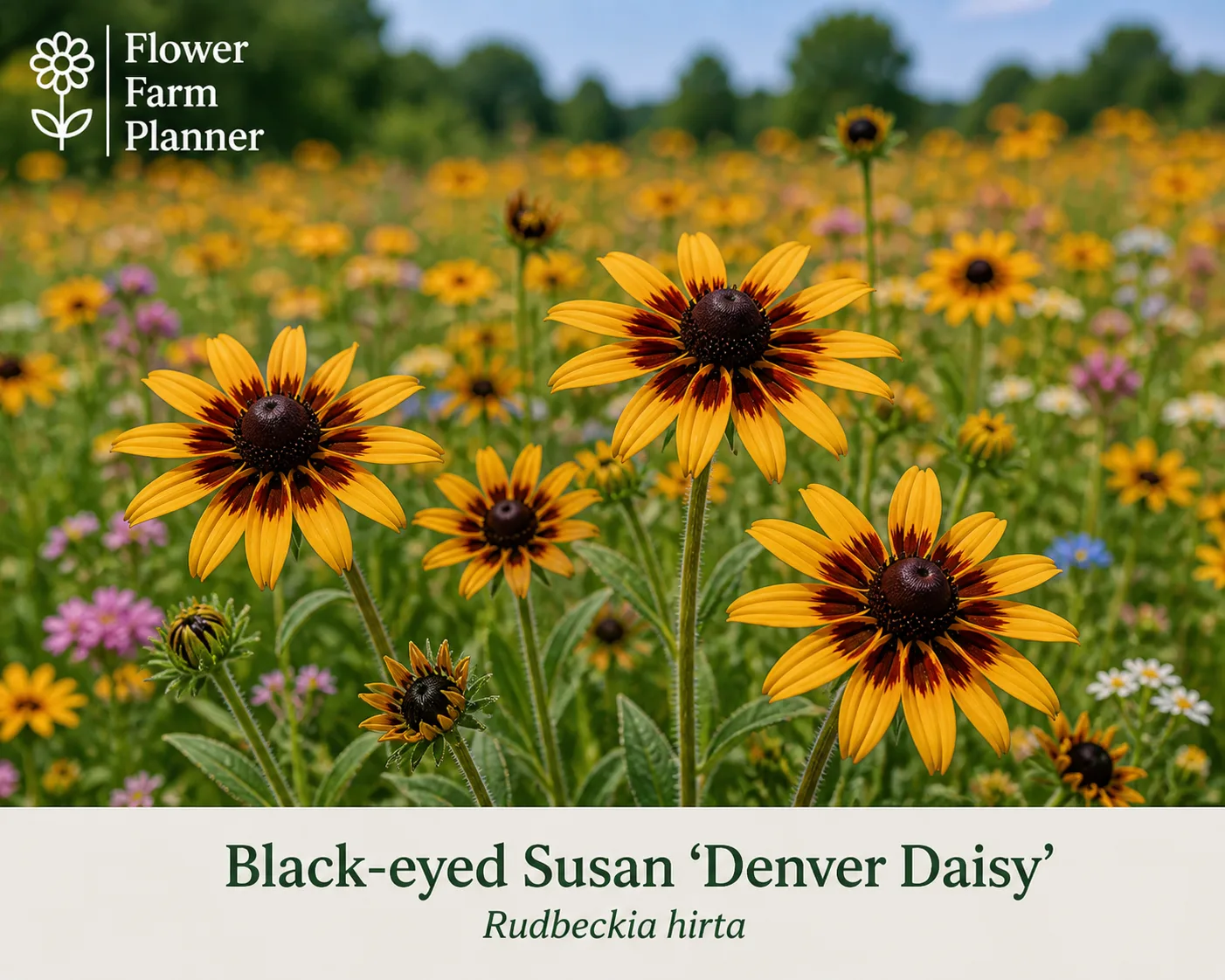
‘Denver Daisy’ is a compact, high-impact black-eyed Susan with large golden-yellow flowers marked by a dramatic dark red-brown ring around the cone. It is not the longest-stemmed rudbeckia for wholesale bunches, but it is valuable for farm bouquets, container-friendly production, pollinator displays, and local summer/autumn arrangements where bold colour and recognisable seasonal character matter.
Open variety
Rudbeckia hirta / Black-eyed Susan
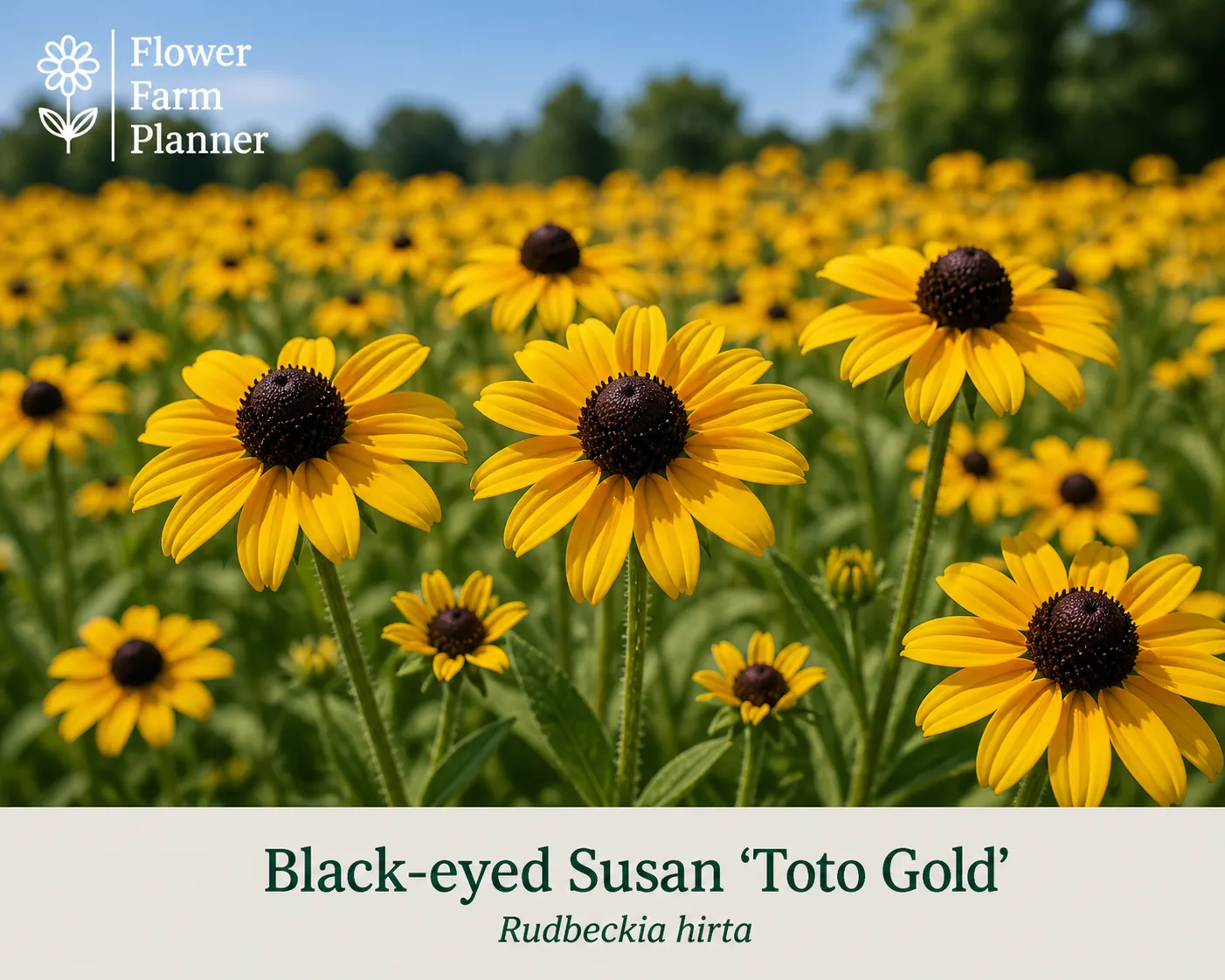
Very large golden-yellow black-eyed Susan flowers with dark centres for bold summer and autumn bouquets.
Open variety
Rudbeckia hirta / Black-eyed Susan
Tall spray Rudbeckia with miniature golden blooms and dark cones for sunny, meadow-style summer bouquets.
Open variety
Rudbeckia hirta / Black-eyed Susan
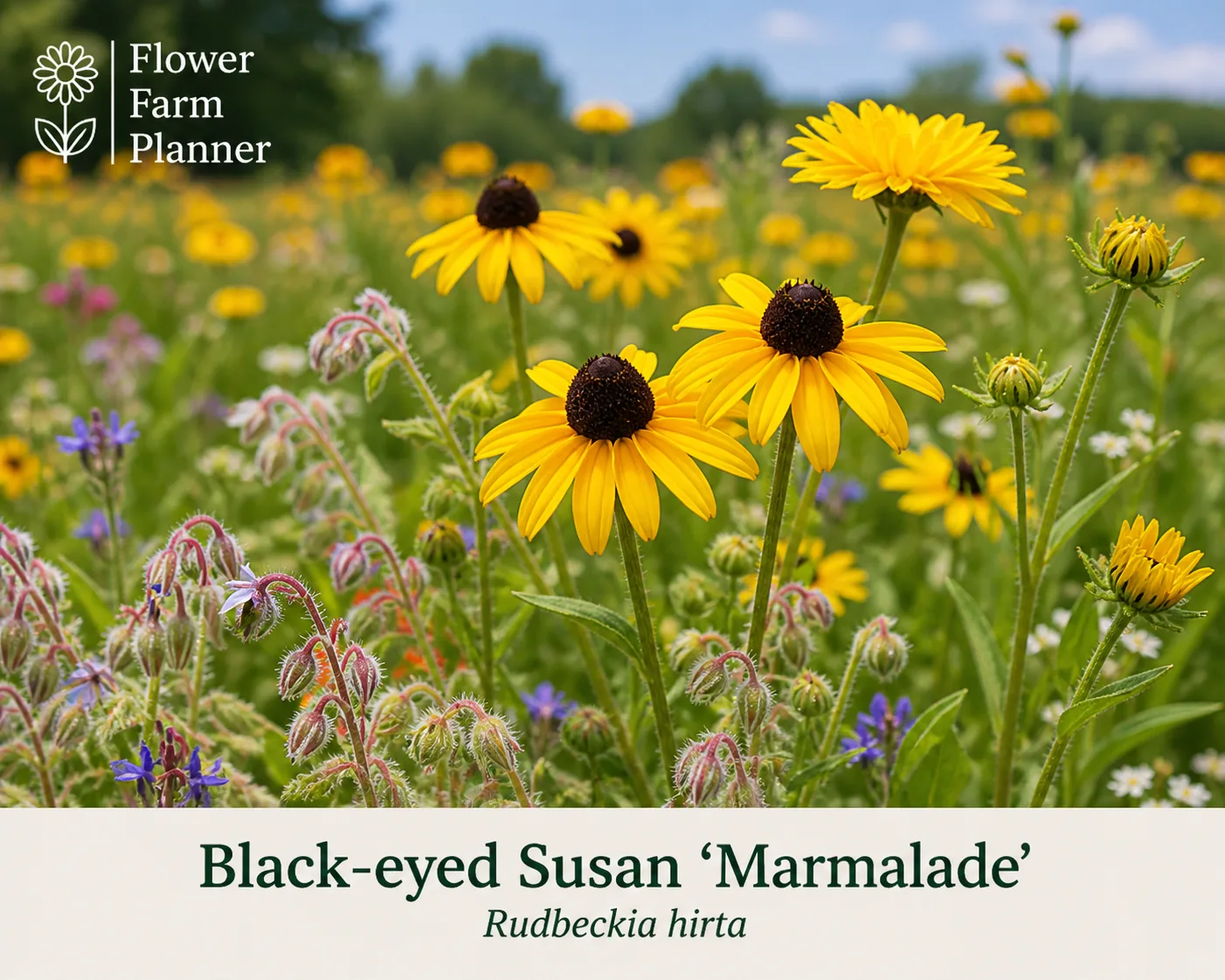
‘Marmalade’ is a warm, golden-orange Black-eyed Susan grown mainly as a first-year flowering annual for summer and autumn cuts. It gives growers an easy, recognisable daisy form with a dark centre and strong seasonal personality. It is best used where cheerful colour, rustic texture, and local freshness matter more than formal perfection. The crop is generally straightforward, but saleable quality depends on clean foliage, firm stems, good airflow, and harvesting flowers when they are opening rather than too tight or rain-damaged.
Open variety
Rudbeckia hirta / Black-eyed Susan
Large bicolour yellow flowers with primrose tips and apple-green centres for bright summer bouquets.
Open variety
Rudbeckia hirta / Black-eyed Susan
Warm bronze, gold, rust, mahogany and yellow Rudbeckia blooms for rustic summer and autumn bouquets.
Open variety
Rudbeckia hirta / Black-eyed Susan
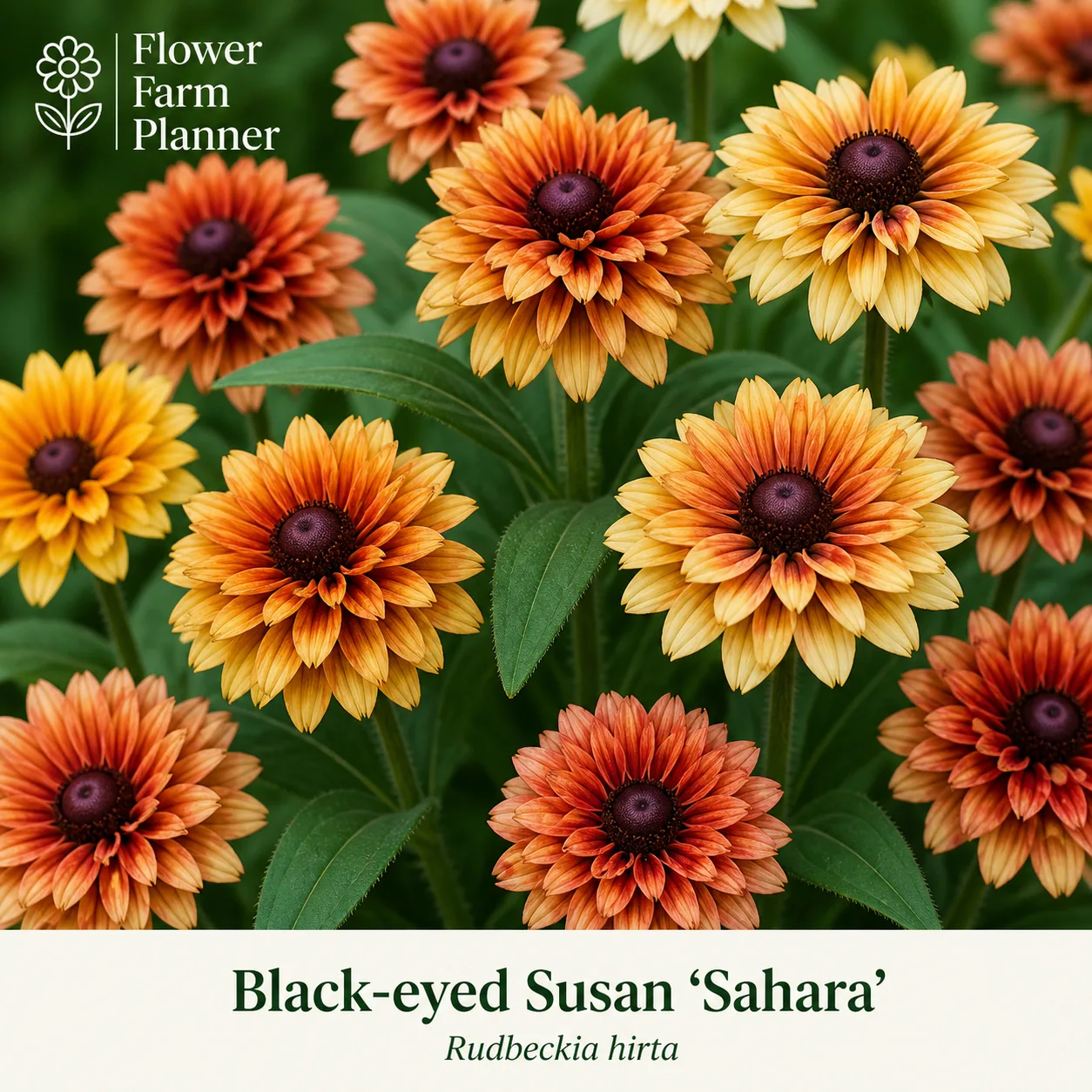
Soft vintage Rudbeckia blooms in dusty rose, copper, lemon, chocolate and merlot for romantic summer and autumn bouquets.
Open variety
Rudbeckia hirta / Black-eyed Susan
Compact golden Rudbeckia with many small yellow blooms for containers, mini bouquets and cheerful short-stem arrangements.
Open variety
Papaver somniferum / Breadseed Poppy
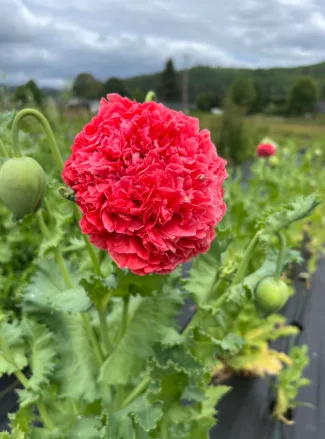
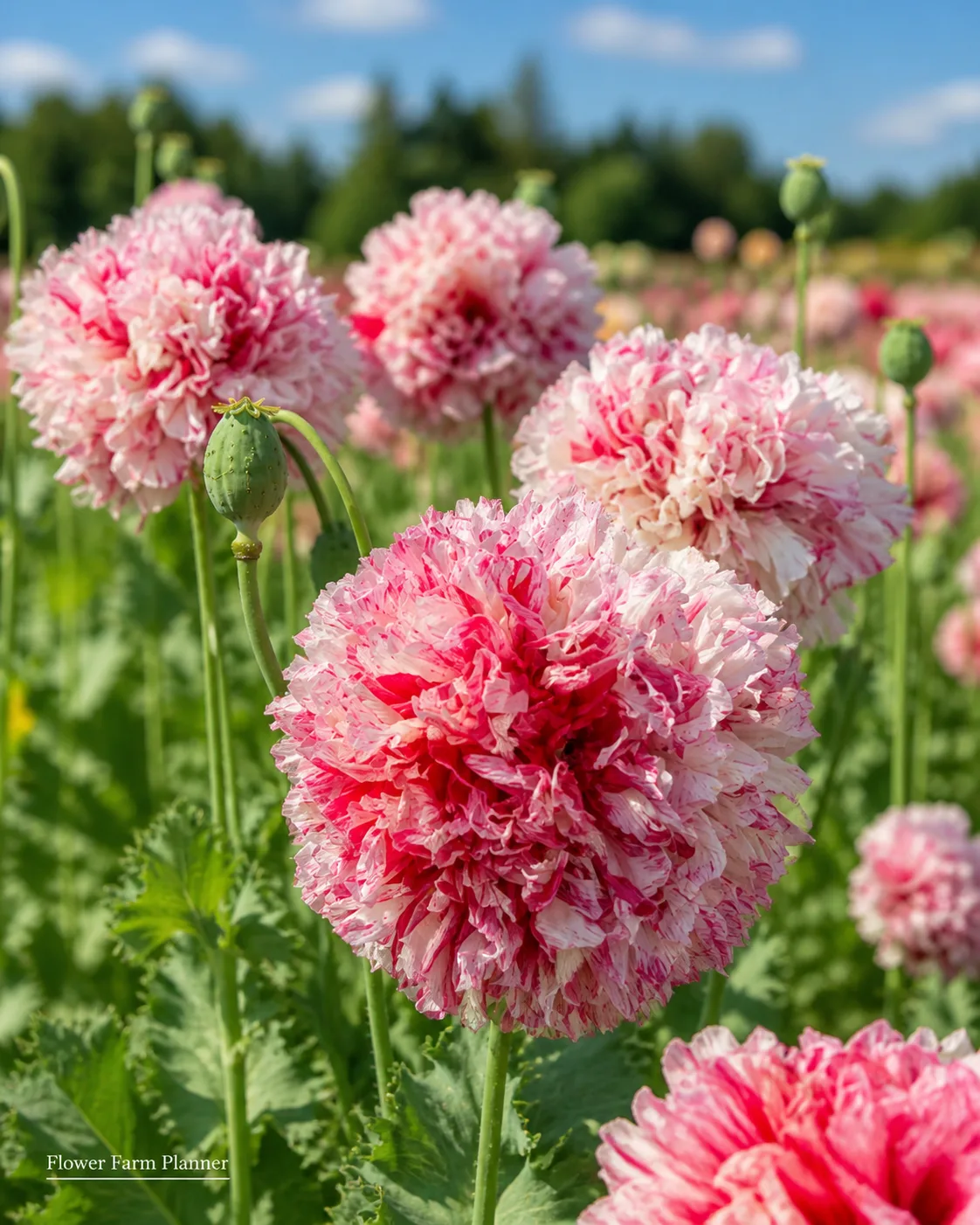
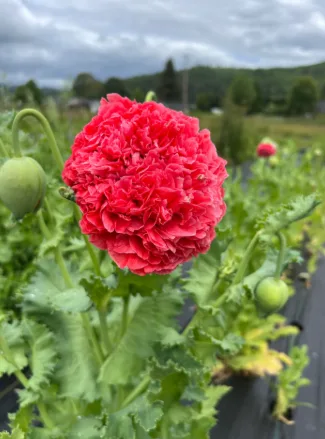
A romantic salmon-pink breadseed poppy with huge double blooms and decorative pods for fresh, dried, and textural floral design.
Open variety
Papaver somniferum / Breadseed Poppy
Breadseed Poppy ‘Black Beauty’ is a dramatic hardy annual grown mainly for its almost black, double peony-form flowers and its sculptural seed capsules. It is not a dependable long-vase-life fresh flower, but it can be valuable for local design work and is much more useful as a green or dried pod crop. Direct sow it into cool, well-drained soil, thin early, avoid root disturbance, and plan it as a short-season specialty crop rather than a repeat cutting workhorse.
Open variety
Papaver somniferum / Breadseed Poppy
‘Black Cloud’ breadseed poppy is a dramatic cool-season annual grown for dark, ruffled, near-black burgundy flowers and valuable ornamental seed pods. Its fresh flowers are beautiful but fragile and short-lived, so the strongest farm use is as a pod crop for dried design, moody bouquets, autumn texture, and florist novelty stems. Direct sow it shallowly in cool weather, thin early, keep the bed well drained, and harvest pods before wet weather damages their finish.
Open variety
Papaver somniferum / Breadseed Poppy
‘Black Swan’ is a dramatic feathered breadseed poppy with dark burgundy to near-black, deeply fringed double blooms that look almost like shredded silk or black lace. The flowers are breathtaking but brief, so the crop should not be planned as a dependable long-vase-life bouquet staple. Its stronger business value is as a seasonal attention-grabber and as a decorative pod crop for dried bunches, wreaths and sculptural floral work.
Open variety
Papaver somniferum / Breadseed Poppy
‘Drama Queen’ is a dramatic, dark, fringed breadseed poppy for growers who want mood, texture, and botanical storytelling. Its fresh flowers are breathtaking but fleeting, so the strongest commercial use is as a local specialty bloom for immediate design work and as a green or dried pod crop for florists, wreath makers, and market customers.
Open variety
Papaver somniferum / Breadseed Poppy
‘Flemish Antique’ is a romantic, antique-toned breadseed poppy for growers who want painterly flowers and useful pods from one crop. Its fresh flowers are breathtaking but fleeting, so the strongest commercial use is as a local specialty bloom for immediate design work and as a green or dried pod crop for florists, wreath makers, workshops, and market customers.
Open variety
Papaver somniferum / Breadseed Poppy
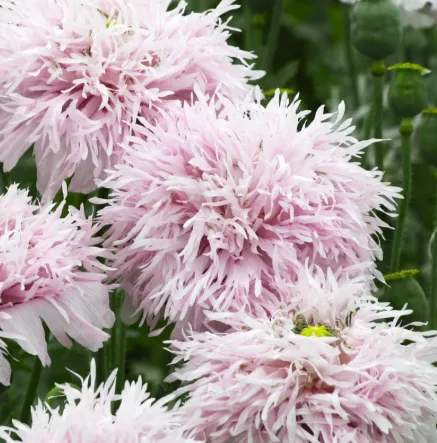
‘Frosted Salmon’ is a romantic peony-flowered breadseed poppy with large, fully double salmon-peach blooms edged in pale cream. The flowers are breathtaking but brief, so the crop should not be planned as a dependable long-vase-life bouquet staple. Its stronger business value is as a seasonal attention-grabber and as a decorative pod crop for dried bunches, wreaths and sculptural floral work.
Open variety
Papaver somniferum / Breadseed Poppy
‘Hens and Chickens’ breadseed poppy is an heirloom ornamental pod poppy grown for one of the most distinctive seed heads in cut-flower production. After the lavender to mauve flowers fade, the plant forms a larger central capsule surrounded by many smaller satellite capsules, creating the look of a mother hen with chicks. It is more useful as a green or dried pod crop than as a fresh flower crop, and it belongs in the app as a compliance-aware, cool-season, direct-sown botanical texture crop.
Open variety
Papaver somniferum / Breadseed Poppy
‘Lauren’s Grape’ is a dramatic grape-purple breadseed poppy grown for a fleeting but memorable bloom and, more reliably, for decorative green or dried pods. It is best direct sown in cool weather, left undisturbed, and harvested with realistic expectations: the flowers are short-lived and local-only, while the pods are the stronger commercial material.
Open variety
Papaver somniferum / Breadseed Poppy
‘Lilac Peony’ is a soft lavender-lilac, fully double breadseed poppy with a romantic peony-like bloom and useful decorative pods. It is best treated as a small-batch specialty crop for local design, photography, wedding buckets, and dried-pod work rather than a high-volume fresh cut flower.
Open variety
Papaver somniferum / Breadseed Poppy
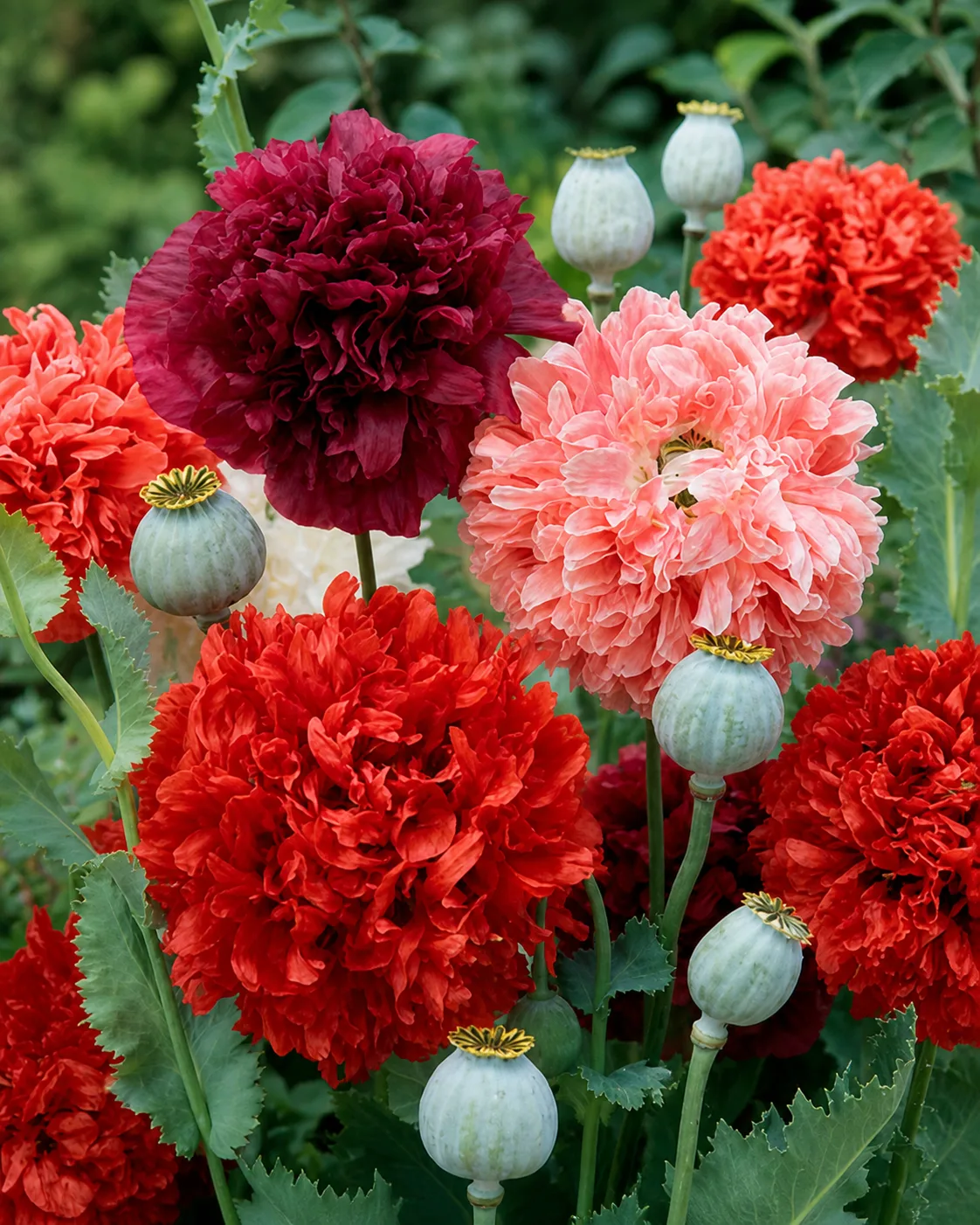
‘Peony Flowered Mix’ is the lush, double, romantic form of breadseed poppy. It gives the farm a spectacular spring/early-summer moment and produces pods that can be sold fresh green or dried. It should be grown as a specialty crop, not a dependable staple, because the fresh flowers are short-lived and the legal status must be checked.
Open variety
Papaver somniferum / Breadseed Poppy
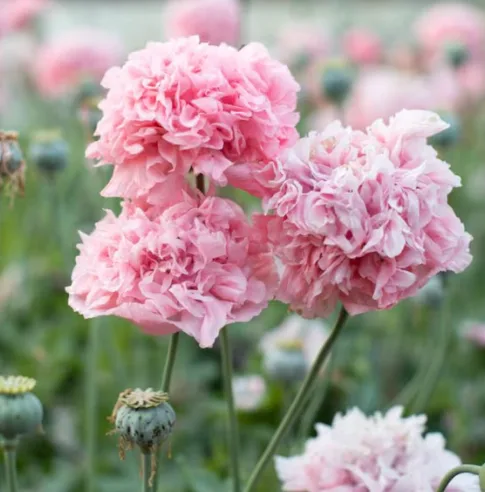
‘Pink Peony’ breadseed poppy is a soft, romantic, double-flowered poppy grown for ruffled pink blooms and decorative pods. It is visually much richer than single breadseed poppies, but it remains a short-lived fresh flower. Its best farm value comes from combining strong marketing photographs, limited local fresh sales, and durable dried pod harvests.
Open variety
Papaver somniferum / Breadseed Poppy
Breadseed Poppy ‘Rattle Poppy’ is a hardy annual grown mainly for its unusual closed seed capsules rather than for long-lasting fresh flowers. The pale flowers are romantic and short-lived, but the pod is the crop: when mature and dry, the seeds stay enclosed and make a soft natural rattle. Direct sow into cool, well-drained soil, thin early, avoid transplant shock, harvest green pods for fresh texture or fully dry pods for rattling dried bunches, and treat it as a legal-caution specialty crop rather than a mainstream cut flower.
Open variety
Papaver somniferum / Breadseed Poppy
Breadseed Poppy ‘The Giant’ is a tall hardy annual grown primarily for oversized decorative seed pods. The flowers are large and attractive, often in soft lilac, pink, white, purple, or mixed pastel tones, but they are too short-lived to be the main commercial product. Grow it as a cool-season direct-sown crop, thin it well for strong stems and large capsules, harvest pods cleanly at the right stage, and use it as a specialty florist, dried-flower, craft, and design crop where local law allows Papaver somniferum cultivation.
Open variety
Papaver somniferum / Breadseed Poppy
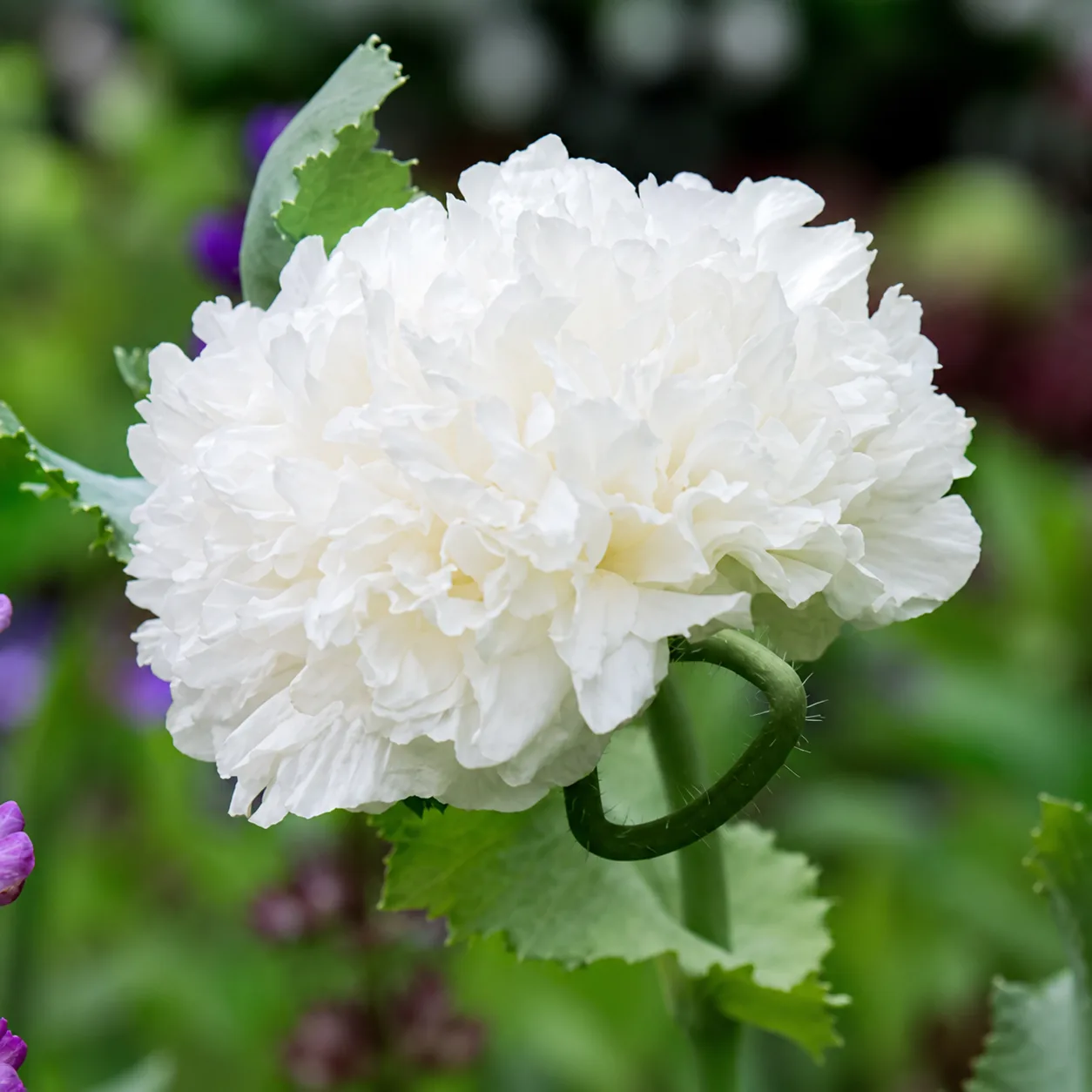
‘White Cloud’ is a dramatic white, double, peony-flowered breadseed poppy grown for a fleeting romantic bloom and, more reliably, for decorative green or dried pods. It is best direct sown in cool weather, left undisturbed, and harvested with realistic expectations: the flowers are beautiful but short-lived, while the pods provide stronger market value and postharvest reliability. This is a specialty crop for growers who want seasonal drama, wedding-white colour, and dried texture, not a dependable long-vase-life production stem.
Open variety
Papaver somniferum / Breadseed Poppy
‘White Frills’ is a luminous white, frilled breadseed poppy with fluffy, shredded-looking petals and attractive seed capsules that persist after bloom. The fresh flowers are breathtaking but fleeting, so it should not be planned as a dependable long-vase-life bouquet staple. Its stronger commercial value is as a highly photogenic seasonal flower and as a clean decorative pod crop for dried bunches, wreaths and sculptural floral work.
Open variety
Bupleurum rotundifolium / Bupleurum
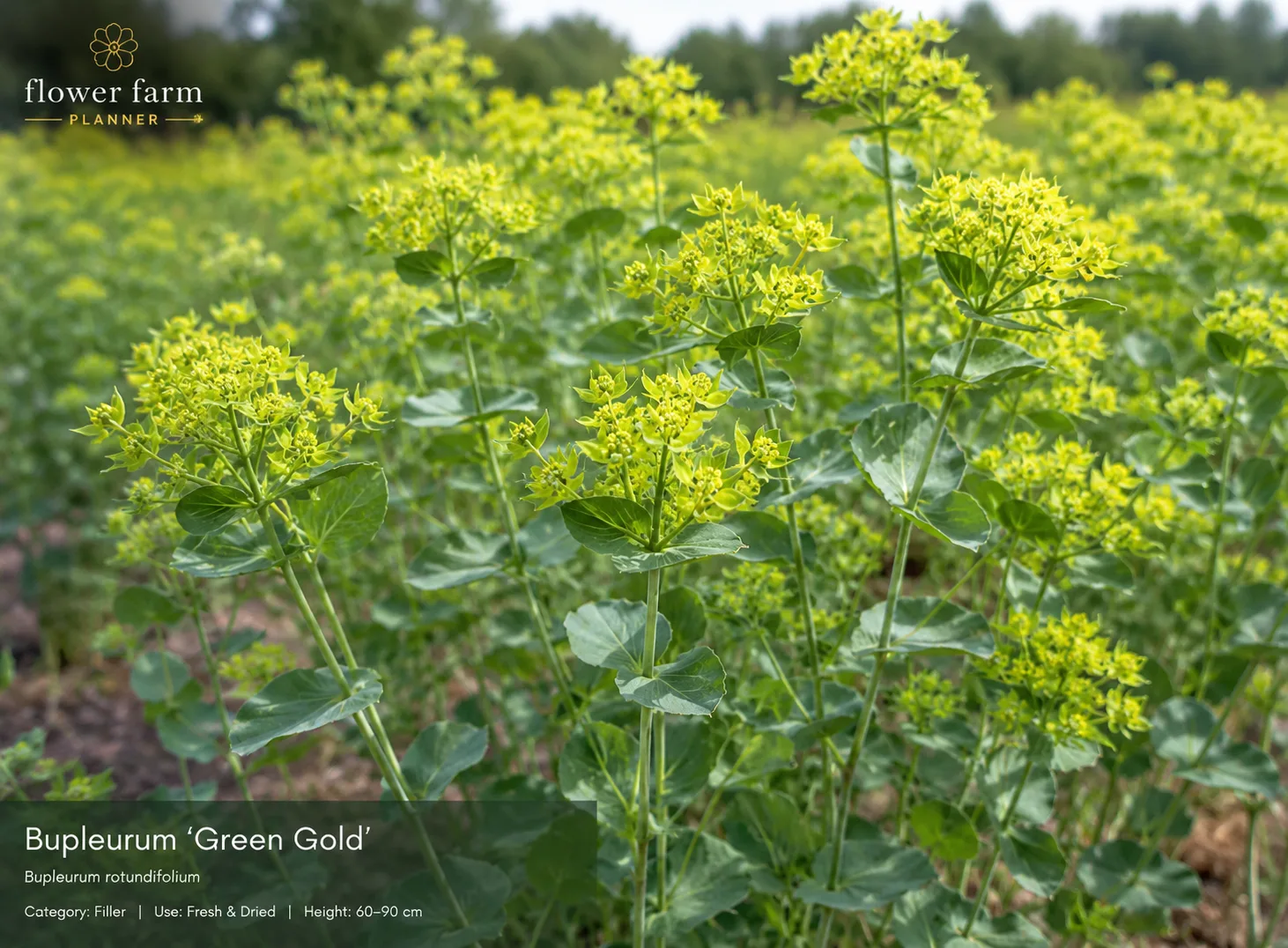
Bupleurum is a cool-season annual filler grown for wiry stems of yellow-green flowers, rounded bracts, and blue-green foliage. It is not flashy on its own, but it is extremely useful in bouquets because it brings light, movement, and a fresh chartreuse bridge between colors that might otherwise fight each other. Grow it from seed in cool conditions, cut only when the flowers are open enough, hydrate immediately, and treat it as a short-window filler crop rather than a long summer workhorse.
Open variety
Calendula officinalis / Calendula
‘Bon Bon Mix’ is a compact, early calendula mix that gives bright yellow, orange, apricot, and soft yellow flowers in cool weather. It is easy to grow from seed, good for edible petals and cheerful local bouquets, and especially useful for farms that want quick warm colour without managing separate calendula varieties. It should be planned as a short-chain local crop because the stems are usually shorter than taller cut-flower calendulas.
Open variety
Calendula officinalis / Calendula
Calendula ‘Bronze Beauty’ is a fast, cool-season annual that gives flower farmers a soft antique version of pot marigold: warm bronze, apricot, copper, peach, cream and buff tones on cheerful daisy-like flowers. It is easy from seed, inexpensive to trial and very useful in local bouquets where the grower wants a warm-neutral color that feels modern, rustic and seasonal. The crop is best cut frequently, kept out of sustained heat and sold quickly through local channels because vase life is moderate rather than long.
Open variety
Calendula officinalis / Calendula
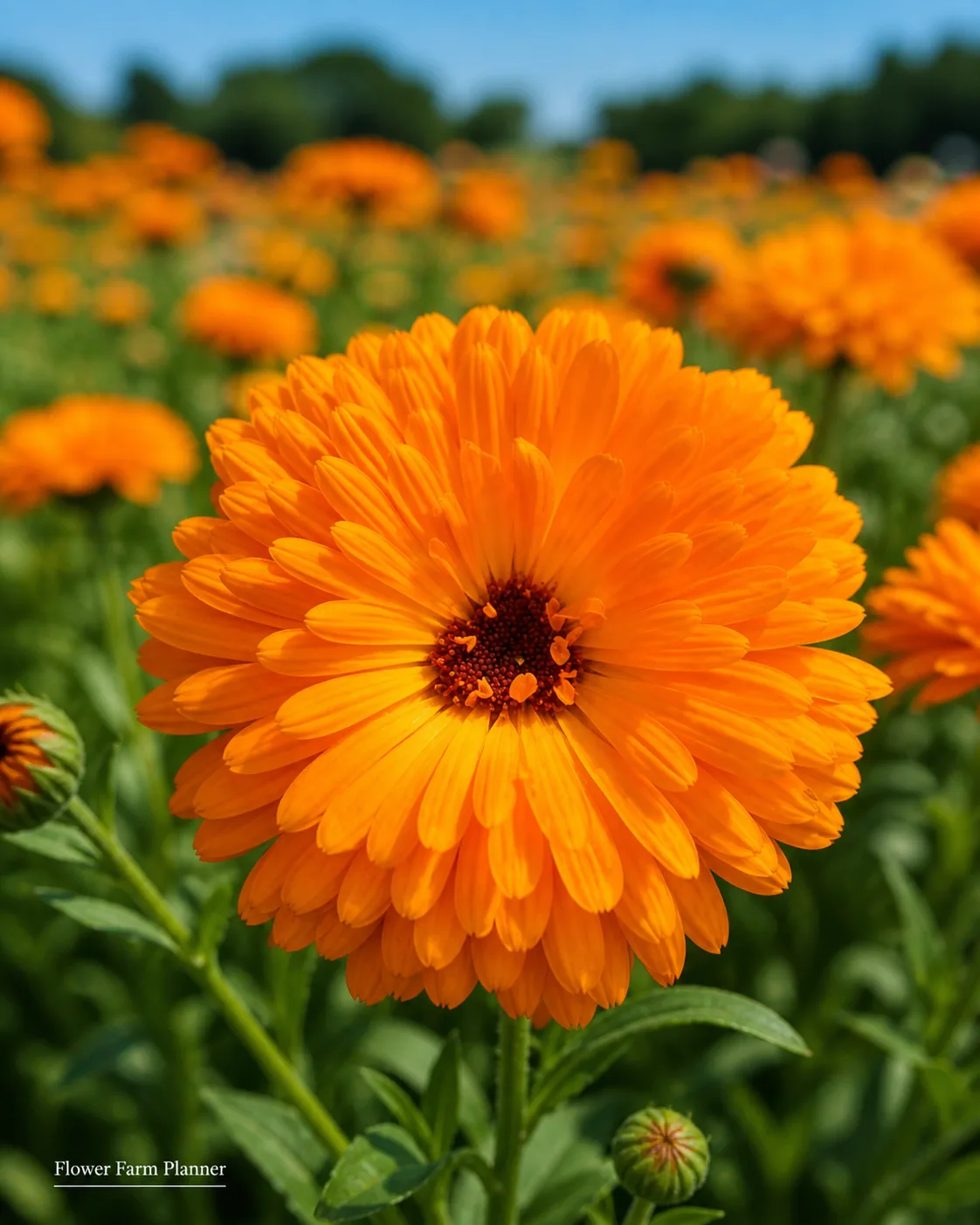
‘Flashback Mix’ is a warm, expressive calendula strain for growers who want more than plain orange pot marigolds. It brings a blend of orange, apricot, peach, vanilla, yellow, gold and cream tones, often with burgundy to maroon petal backs that show when flowers tilt or close. It is easy from seed, quick to flower, edible, pollinator-friendly, and useful in local bouquets, but it should be treated as a cool-season crop and sold fresh rather than pushed as a long-distance florist stem.
Open variety
Calendula officinalis / Calendula
Calendula ‘Greenheart Orange’ is a quick, cool-season annual with bright orange petals and a distinctive green center. It gives growers a low-cost crop with a fresh novelty look for local bouquets, edible petals, garden-style florists and farmstand bunches. It is easy enough for beginners, but professional results still depend on cool-season timing, clean centers, dry harvest, frequent cutting and strict grading because soft calendula blooms do not handle long storage or rough shipping.
Open variety
Calendula officinalis / Calendula
Calendula officinalis ‘Greenheart Yellow’ is a modern pot marigold selected for florist appeal: large, double, golden-yellow blooms with a distinctive green centre that gives the flower a fresh, botanical, almost zinnia-like novelty. It is best treated as a cool-season, fast-turning hardy annual for fresh cut stems, edible petals, pollinator-friendly production, and small-scale seed saving. For flower-farm planning it should be scheduled as a spring and autumn crop in warm climates, or as a main summer crop in cooler regions, because calendula quality drops when plants are pushed through hot, humid weather.
Open variety
Calendula officinalis / Calendula
Calendula 'Indian Prince' is a hardy annual pot marigold grown for glowing deep orange-gold flowers with mahogany-red backs and a dark central eye. It is quick, cheerful, edible, and useful in local mixed bouquets, especially where growers want warm seasonal colour without a complicated crop. It is not a long-storage luxury stem, but it earns its space as a low-cost, pollinator-friendly, cut-and-come-again accent flower when grown in cool weather and harvested often.
Open variety
Calendula officinalis / Calendula
Calendula officinalis ‘Ivory Princess’ is a soft, creamy, designer-friendly pot marigold selected for cut-flower growers who want calendula’s easy cool-season productivity without the usual strong orange colour. The flowers are double to semi-double, usually creamy white to pale butter-yellow, often with a dark centre that gives the bloom a vintage, daisy-like contrast. It is best treated as a fast-turning hardy annual for local fresh stems, edible petals, pollinator-friendly production, and small-scale seed saving. For flower-farm planning it should be scheduled as a spring and autumn crop in warm climates, or as a main summer crop in cooler regions, because calendula quality drops when plants are pushed through hot, humid weather.
Open variety
Calendula officinalis / Calendula
Calendula ‘Lemon Queen’ is a cool-season, seed-grown annual calendula selected for soft lemon to golden-yellow daisy-like blooms on upright, branching plants. It is best treated as a quick annual crop for local bouquets, edible-flower sales, pollinator-friendly gardens, and cheerful spring or autumn bunching rather than as a premium shipped florist stem. For planning, treat this crop as a direct-sown or plug-started hardy annual that prefers cool, bright conditions, even moisture, and regular harvesting. In warm climates it should be scheduled into the cooler shoulders of the season because heat shortens stems, accelerates flowering, increases pest pressure, and reduces market quality.
Open variety
Calendula officinalis / Calendula
Calendula 'Neon' is a richly coloured, double orange pot marigold with burgundy or burnt-umber accents that works best as a cool-season annual for local bouquets, edible petals, and warm seasonal colour. It is easy to start from seed, forgiving in the field, and useful for spring, autumn, and mild-winter production. Its main limits are soft stems, moderate vase life, heat sensitivity, aphids, and petal marking in wet weather, so it should be cut fresh, sold quickly, and not treated like a long-distance premium florist stem.
Open variety
Calendula officinalis / Calendula
Calendula ‘Orange King’ is a bright, easy, cool-season annual that gives growers fast orange flowers from inexpensive seed. It is best for local bouquet color, edible petals, farmstand bunches and pollinator-friendly plantings rather than long-distance wholesale. The crop is forgiving enough for beginners, but professional quality still depends on cool-season scheduling, clean harvesting, dry blooms, good airflow and frequent picking.
Open variety
Calendula officinalis / Calendula
‘Pacific Apricot Beauty’ is the most design-friendly calendula option for growers who want the easy production of pot marigold without the harsh brightness of standard orange strains. It brings a soft peach-apricot tone into spring and autumn bouquets, works beautifully with cream, blush, butter yellow, copper, and fresh green, and adds edible-flower value for farm-to-table sales.
Open variety
Calendula officinalis / Calendula
‘Pacific Beauty Mix’ is a warm, cheerful calendula mix for quick cool-season colour. It is easy to grow, useful in local bouquets, edible flower packs, and pollinator plantings, and especially valuable when the farm wants orange and yellow abundance without managing many separate calendula colours.
Open variety
Calendula officinalis / Calendula
Calendula 'Pacific Orange Beauty' is a hardy annual pot marigold grown for clear, bright orange, semi-double to double flowers on useful medium stems. It is quick, edible, pollinator-friendly, and useful in local mixed bouquets, subscriptions, and farm stand bunches. It is not a long-storage luxury stem, but it earns its space as a cheerful, low-cost, cut-and-come-again shoulder-season crop when grown in cool weather and harvested frequently.
Open variety
Calendula officinalis / Calendula
Pacific Yellow Beauty is a clear yellow calendula for cool-season local flower production. It is easy from seed, quick to bloom, pollinator-friendly and useful for farmstand bouquets, edible petals, subscription bunches and cottage-style design. It should be planned as a fresh local crop with moderate vase life, not as a long-distance wholesale staple.
Open variety
Calendula officinalis / Calendula
Soft peach-pink calendula with double blooms for local bouquets, edible petals, and cool-season flower production.
Open variety
Calendula officinalis / Calendula
Calendula ‘Radio’ is a distinctive orange calendula with rolled, quilled petals that make it feel more textural and unusual than standard pot marigolds. It is easy from seed, quick, edible, pollinator-friendly, and best grown for cool-season local bouquets, edible flower work, farm-stand bunches, and warm rustic designs. Its biggest value is not long vase life; its value is fast production, low cost, unusual texture, and a bright vintage orange colour that customers recognize immediately.
Open variety
Calendula officinalis / Calendula
Calendula ‘Resina’ is a practical, low-input, cool-season annual selected for resin-rich blooms used in herbal oils, salves, edible petals, natural color, and cheerful local bouquets. It is not the most refined long-stem florist calendula, but it gives a small farm several saleable outputs from one easy crop: stems, flower heads, petals, pollinator value, seed, and workshop-friendly herbal material.
Open variety
Calendula officinalis / Calendula
Calendula ‘Sherbet Fizz’ is a quick, cool-season calendula with unusually soft buff, cream, peach, and apricot petals backed by raspberry-red to rusty-red undersides. It gives flower farms a more modern and romantic alternative to standard orange calendula, especially for edible flower sales, local subscriptions, farm dinners, and cottage-style bouquets. Grow it as a fresh local crop, harvest frequently, and do not rely on it for long storage or hot midsummer performance.
Open variety
Calendula officinalis / Calendula
Calendula ‘Snow Princess’ is a quick, cool-season annual with creamy white to pale primrose flowers and either a dark or yellow eye. It gives growers a low-cost, pollinator-friendly crop with a softer and more wedding-friendly look than ordinary orange calendula. It is easy enough for beginners, but professional growers should still plan it carefully because pale petals show rain, insect and handling damage quickly. Its best use is fresh local bouquets, edible petals, spring and autumn subscriptions, cottage-style events and small florist buckets where a relaxed, pale, garden-grown flower is wanted.
Open variety
Calendula officinalis / Calendula
Calendula ‘Solar Flashback’ is a soft, unusual, open-pollinated calendula strain for growers who want something more refined than standard orange pot marigold. It brings pale yellow, cream, apricot, pink-blond, and red-backed flowers into cool-season bouquets, edible flower sales, and garden-style event work. Grow it as a quick annual, cut it fresh, and expect variation rather than factory uniformity.
Open variety
Calendula officinalis / Calendula
Calendula 'Strawberry Blonde' is a soft-coloured pot marigold grown for edible petals, local bouquets, subscription bunches, and romantic cottage-garden design. Its flowers move through yellow, apricot, peach, cream, blush, and strawberry-pink tones, giving growers a warmer and more modern alternative to standard orange calendula. It is quick and easy from seed, tolerant of cool weather, and productive when harvested often. Its limits are moderate vase life, variable stem length, heat sensitivity, aphids, mildew, and petal damage in wet weather, so it should be sold fresh and scheduled for the cooler part of the season.
Open variety
Calendula officinalis / Calendula
‘Touch of Red Buff’ is the calendula to choose when standard orange feels too bright. It gives the farm a soft antique buff flower with a surprise crimson-red reverse, making it much easier to use in modern florist palettes. It is easy to grow from seed, generous in cool weather, and useful for local bouquets, edible flowers, subscriptions and warm-toned event work. Its limitations are the normal calendula limitations: short to medium vase life, quick flower aging, sticky foliage, heat sensitivity, and the need for frequent picking.
Open variety
Calendula officinalis / Calendula
Calendula 'Zeolights' is a specialty pot marigold with fully double bronze-orange flowers that soften toward apricot and light pink, usually with a yellow base and maroon reverse. It works best as a cool-season annual for local bouquets, edible petals, subscription bunches, and warm garden-style design. It is easy to start from seed and forgiving in the field, but its market value depends on clean petals, frequent harvesting, and fast local sales. Its main limits are soft stems, moderate vase life, heat sensitivity, aphids, powdery mildew, and petal marking in wet weather.
Open variety
Campanula spp. / Campanula
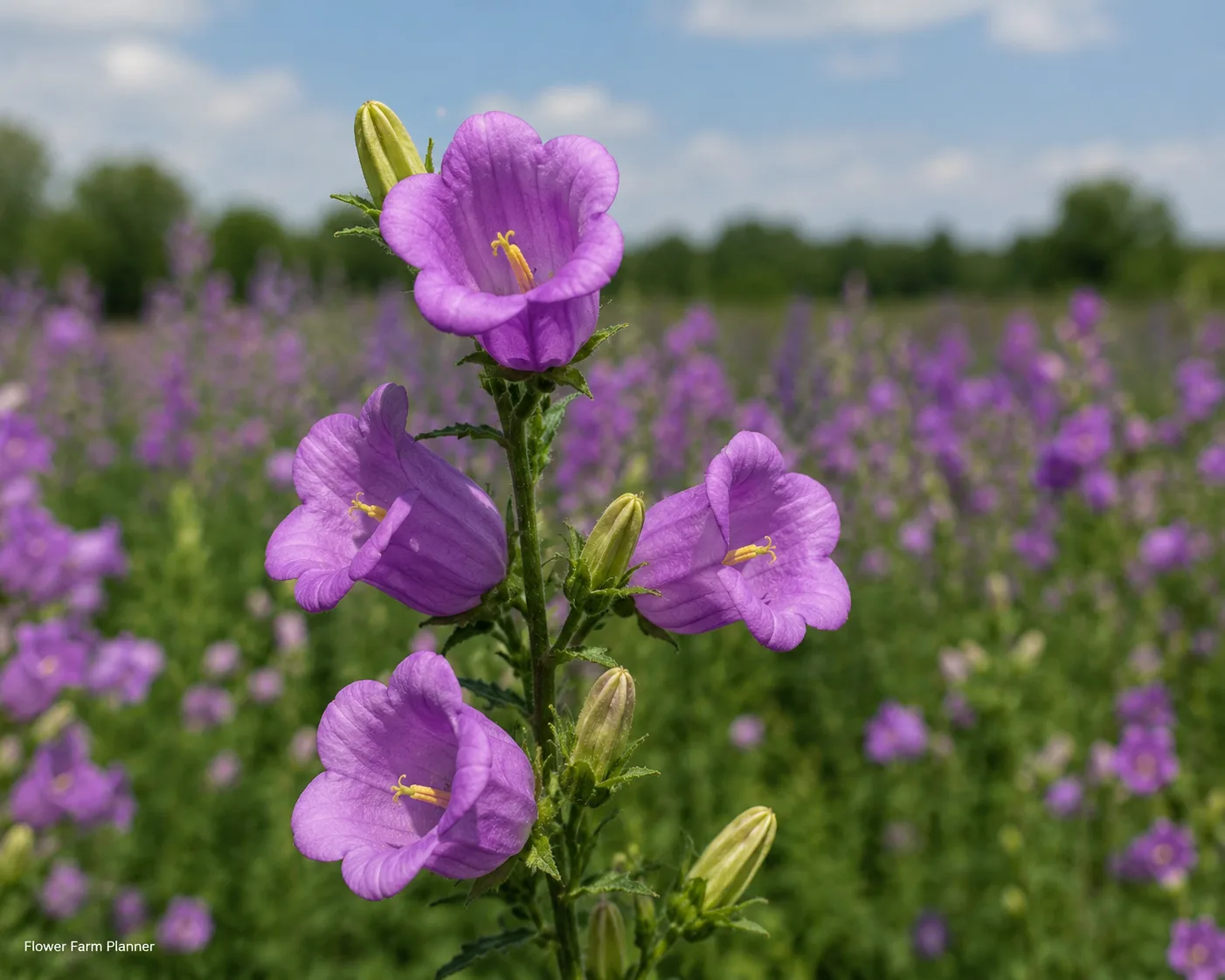
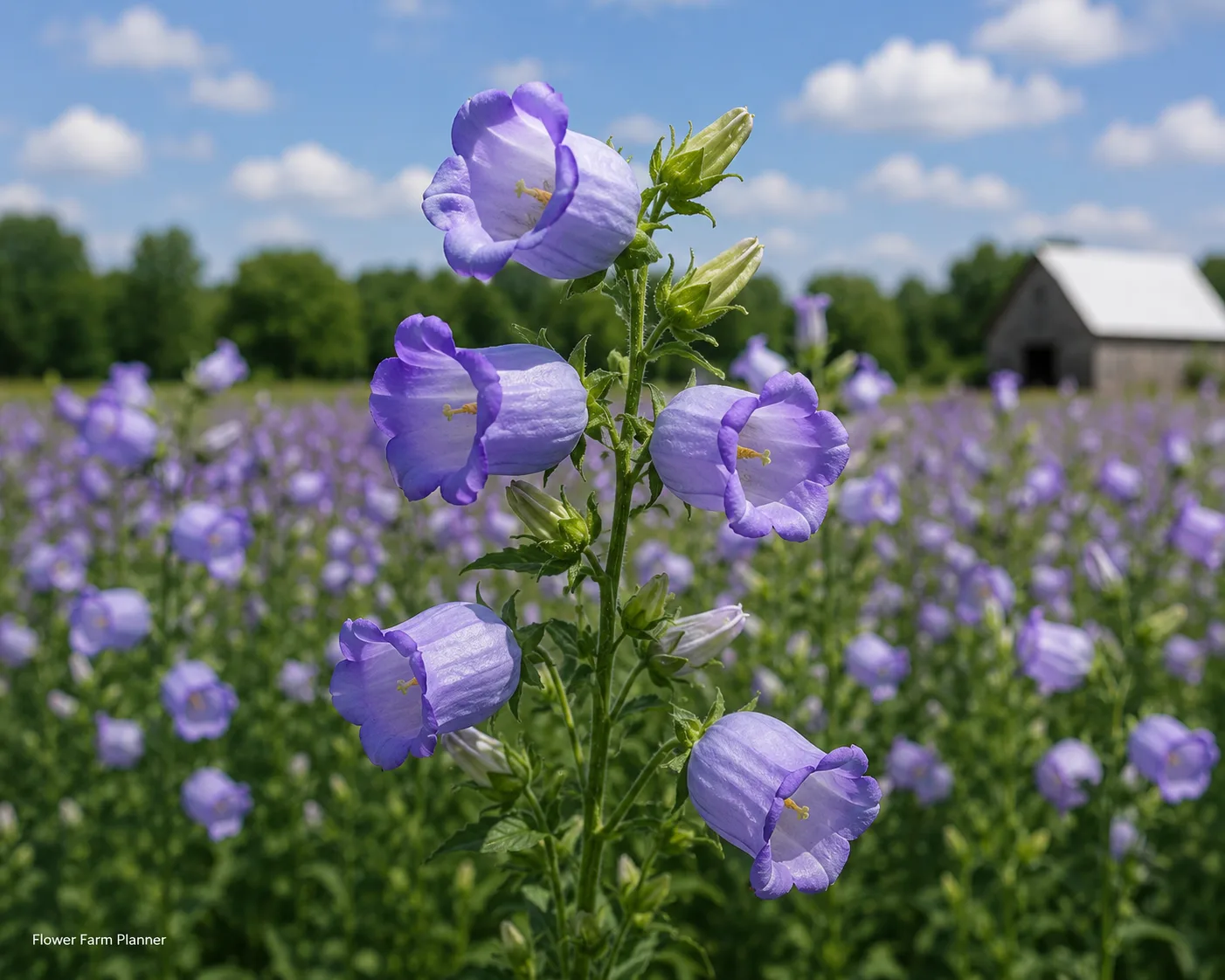
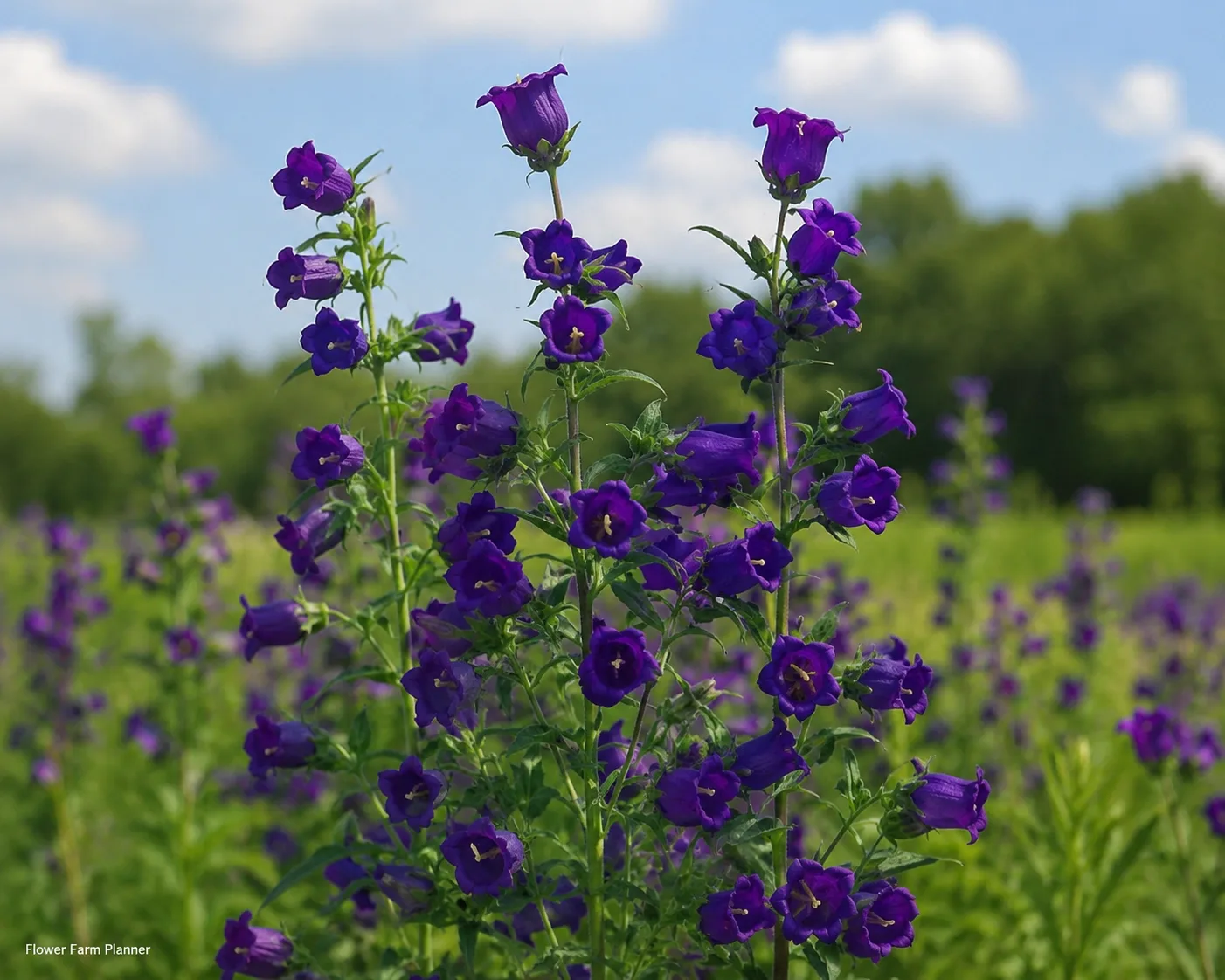
Campana Deep Blue is a professional cut-flower Campanula medium selected for uniformity, strong stems, good foliage, and a reliable top-flowering habit. It is best planned as a cool-season or protected-production crop from pelleted seed or plugs, with a short harvest window and strong florist appeal. The grower should focus on plug quality, cool establishment, airflow, disease prevention, support netting, and precise harvest stage.
Open variety
Campanula spp. / Campanula
Campanula Campana Lilac is a professional cut-flower cultivar of Campanula medium, commonly sold as bellflower or Canterbury bells. It is grown for upright stems carrying large, open, bell-shaped lilac flowers above rounded green foliage. The Campana series is positioned as a low-energy, seed-raised cut-flower series suitable for programmed cool-season, winter, spring, and protected production where daylength and moisture are managed well. For planning purposes this profile should be treated as a cultivar-level record that can inherit broad Campanula medium crop defaults while keeping its own variety name, lilac color, market fit, and supplier details.
Open variety
Campanula spp. / Campanula
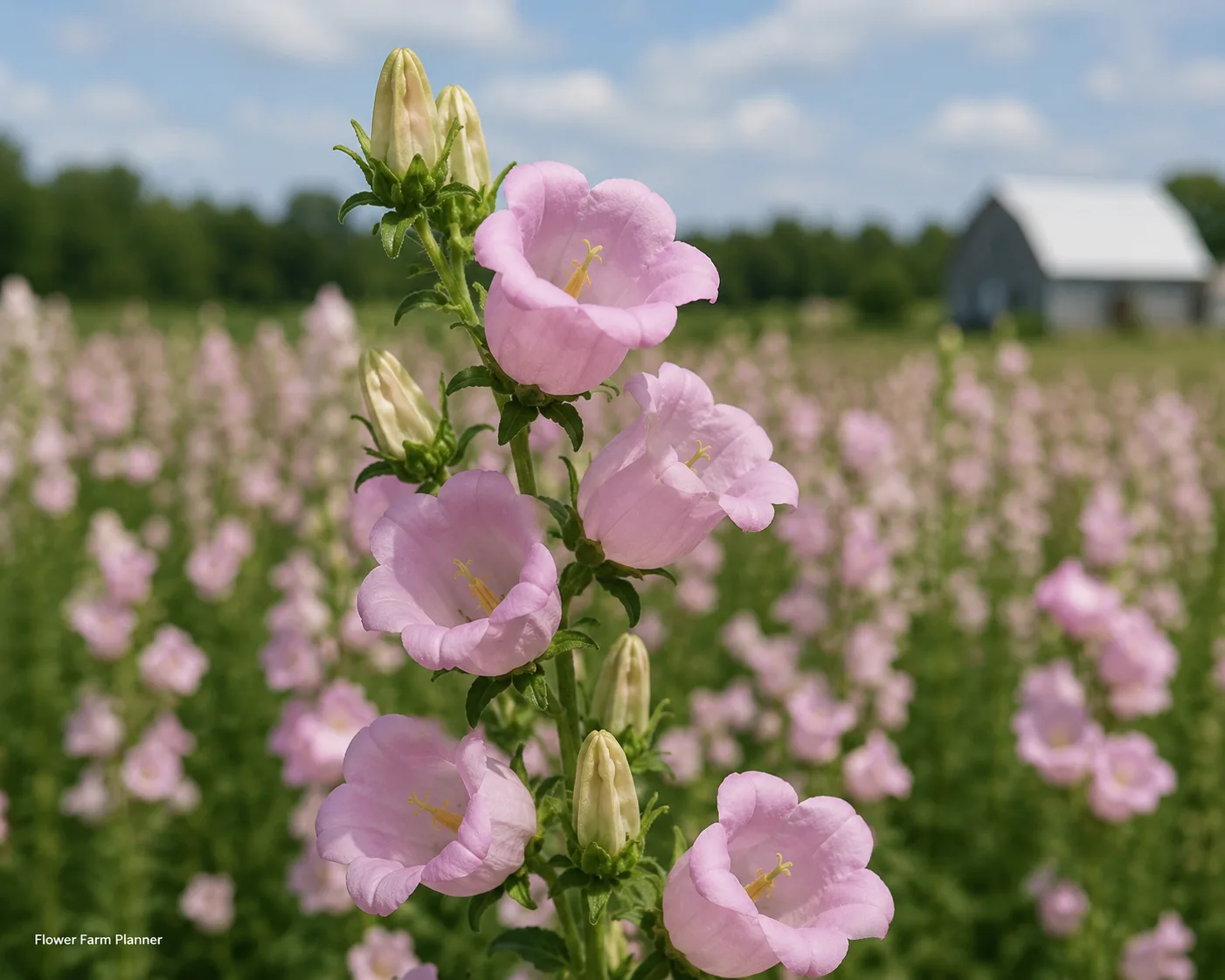
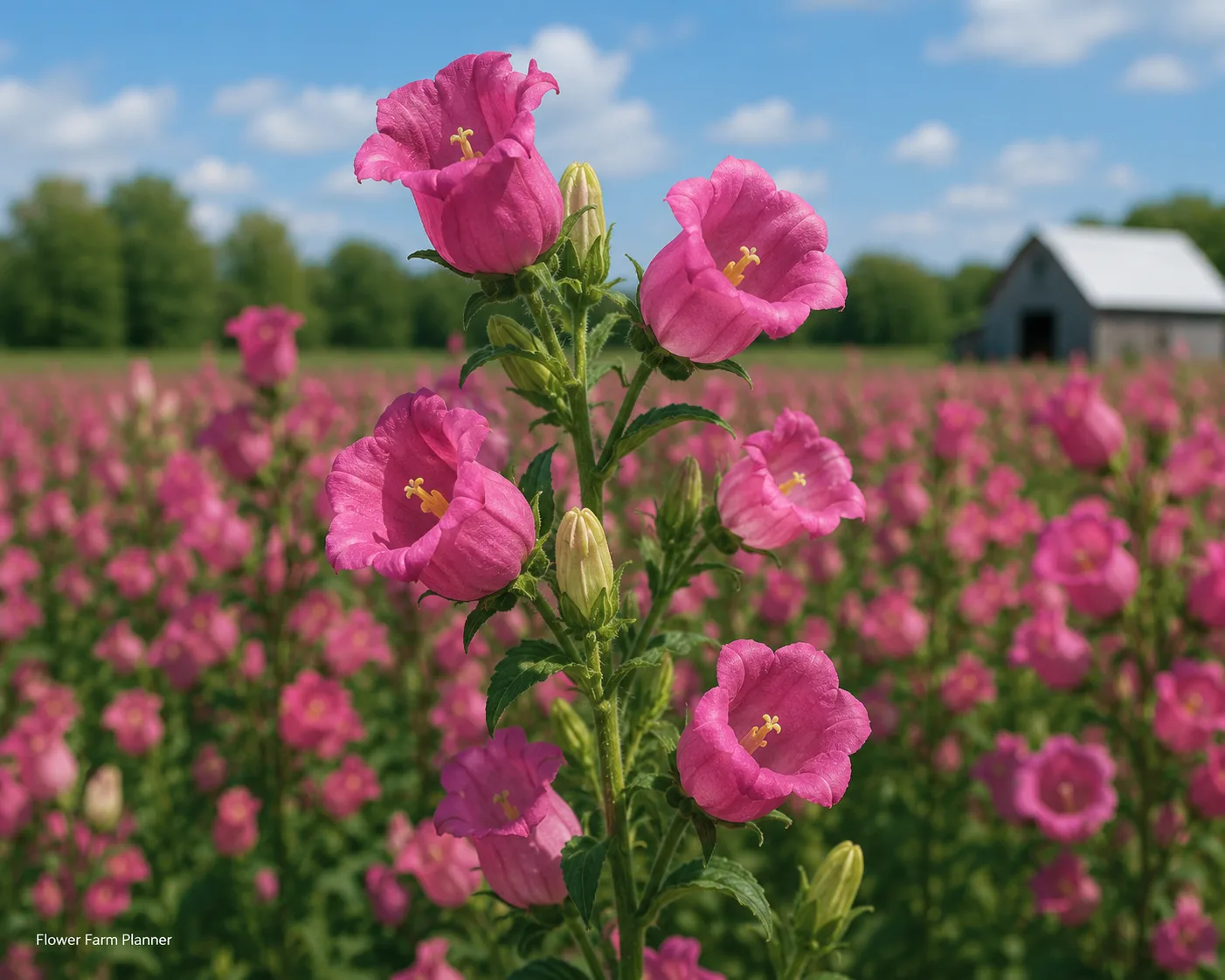
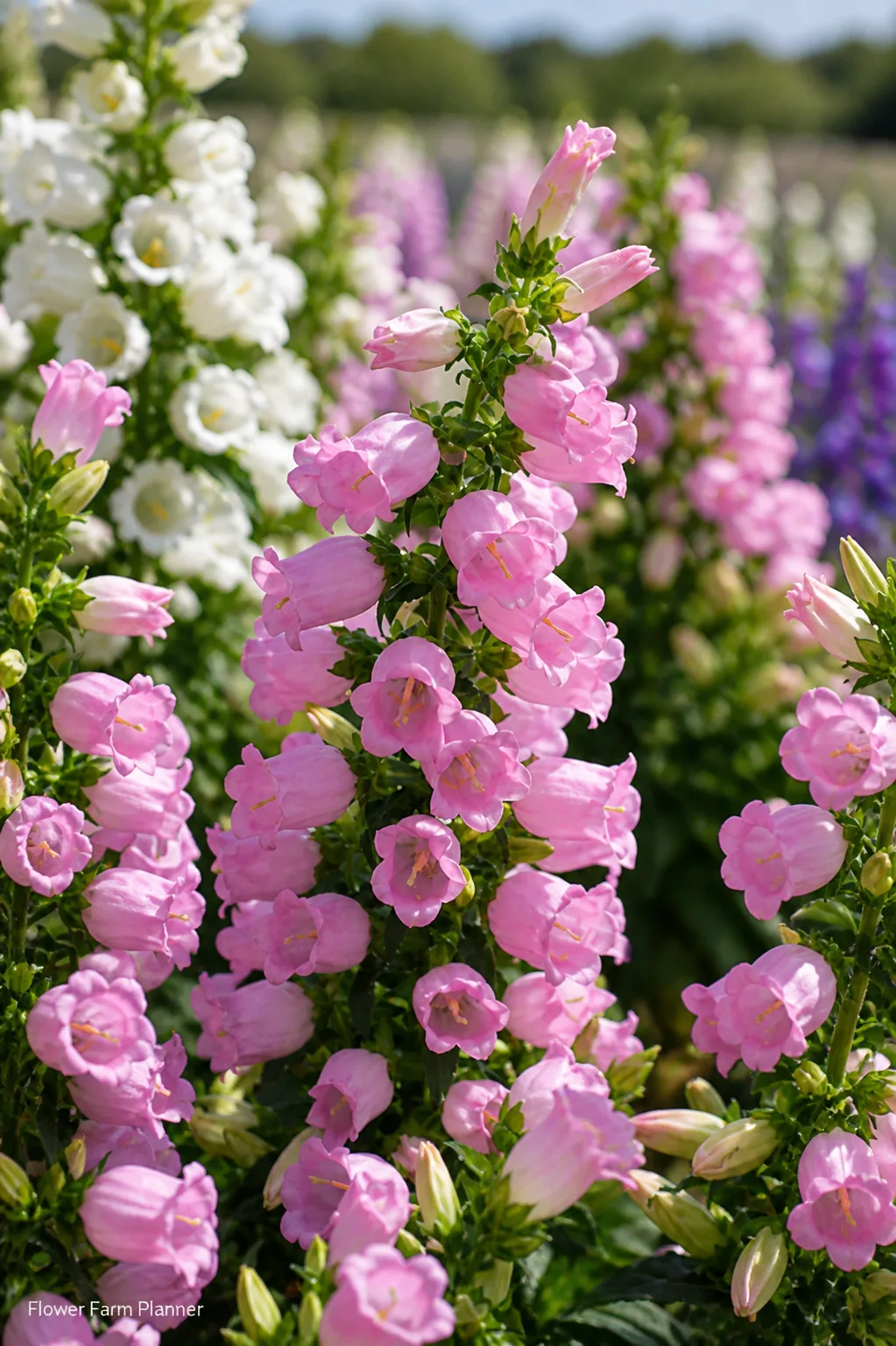
Campana Pink is a soft pink Canterbury bells type for growers who want upright, romantic bell-shaped stems during the cool-season and spring gap. It should be raised from pelleted seed or purchased plugs, established cool, supported early and harvested as the first bells open. The crop rewards careful timing and protected culture, but it is not forgiving of heat, stagnant humidity or delayed harvest.
Open variety
Campanula spp. / Campanula
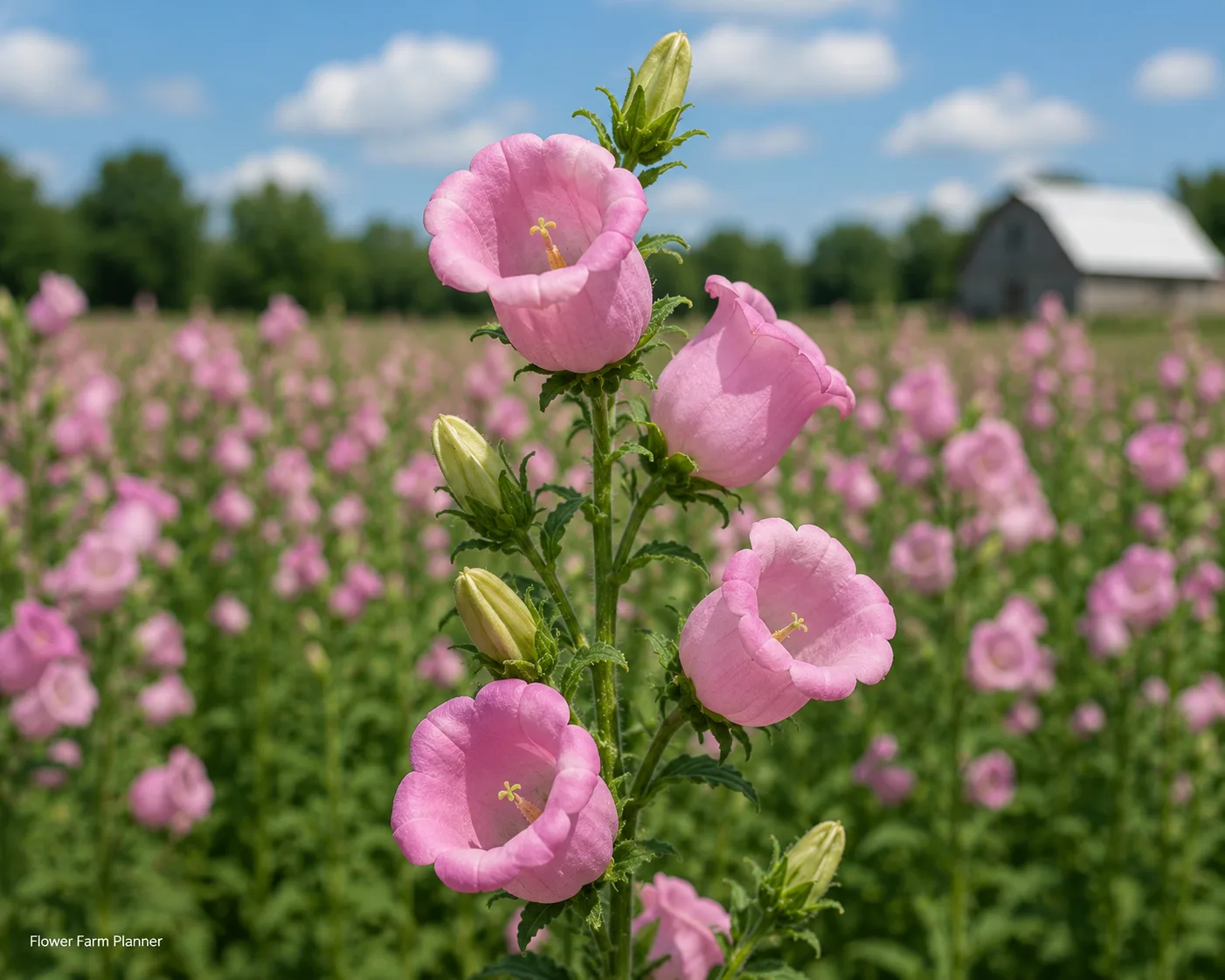
Campana Pink Improved is a professional pink Canterbury bells cut flower for growers who can provide cool, bright, well-ventilated production and careful postharvest handling. It offers tall, straight stems in the 76 to 86 cm range, a soft pink colour that is easy to sell into wedding and florist work, and a distinctive bell form that gives bouquets height and movement. It should be scheduled from seed or plugs, supported early, harvested when the first bells open and cooled quickly. It is an excellent specialty crop, but it should not be treated like a heat-loving summer annual.
Open variety
Campanula spp. / Campanula
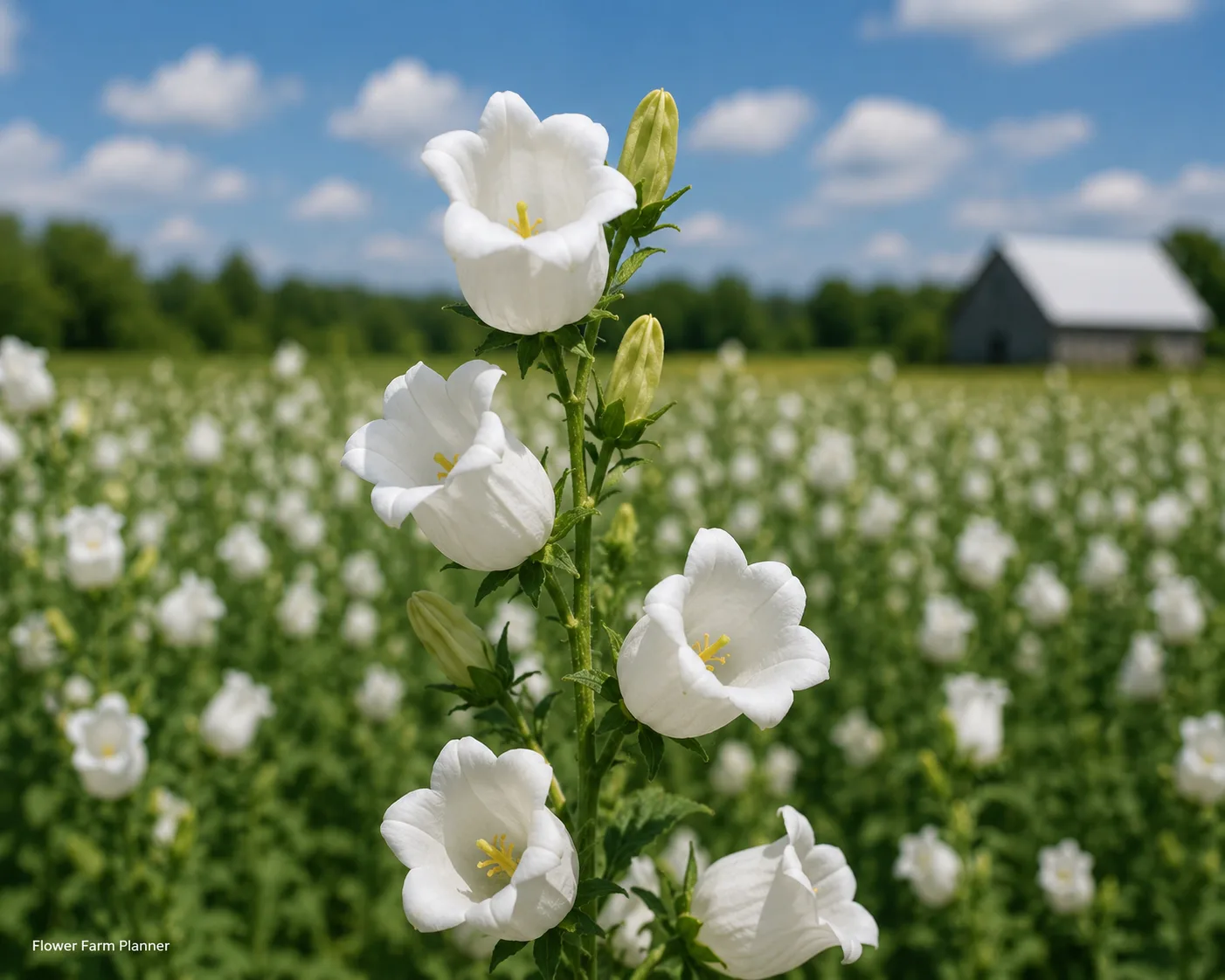
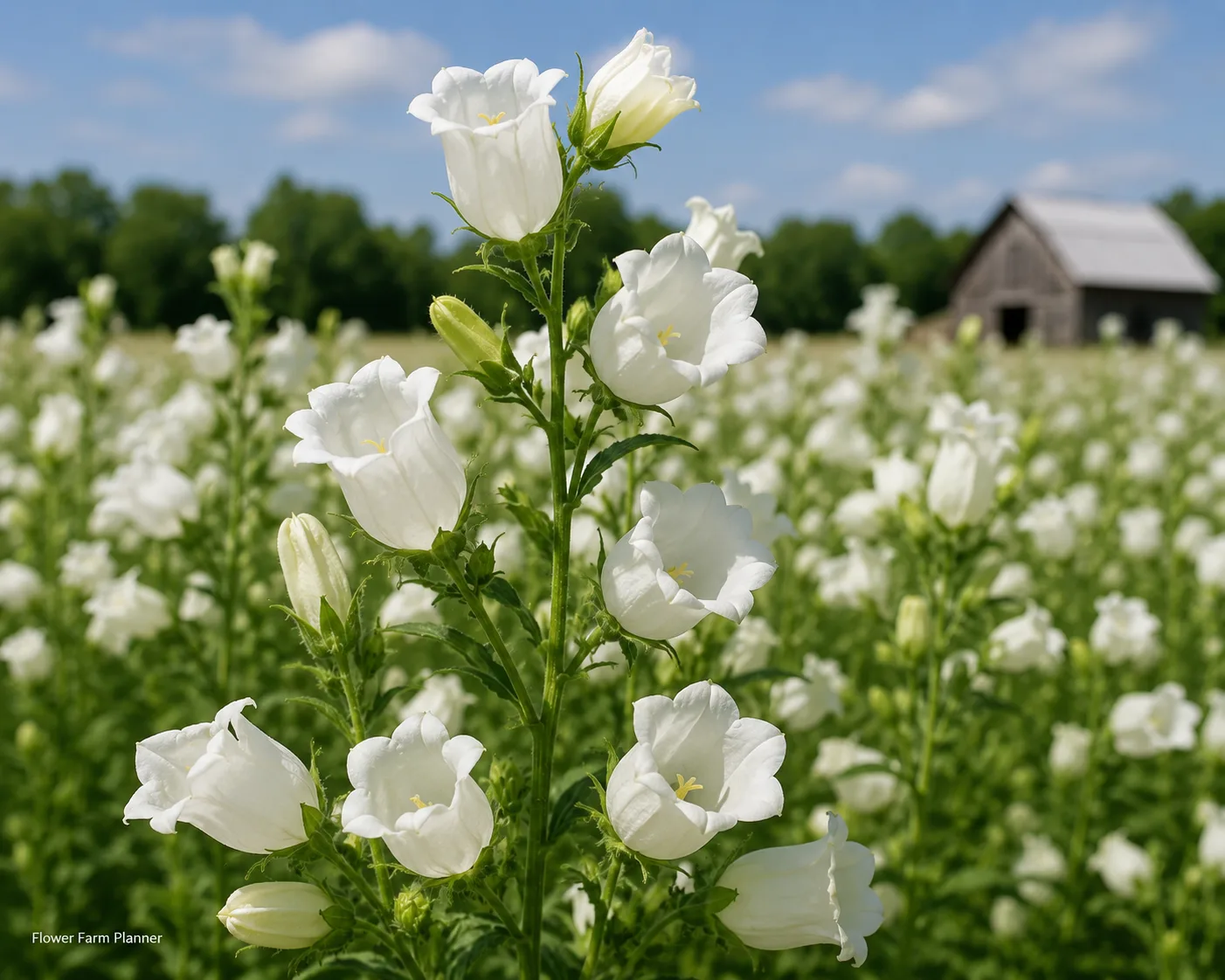
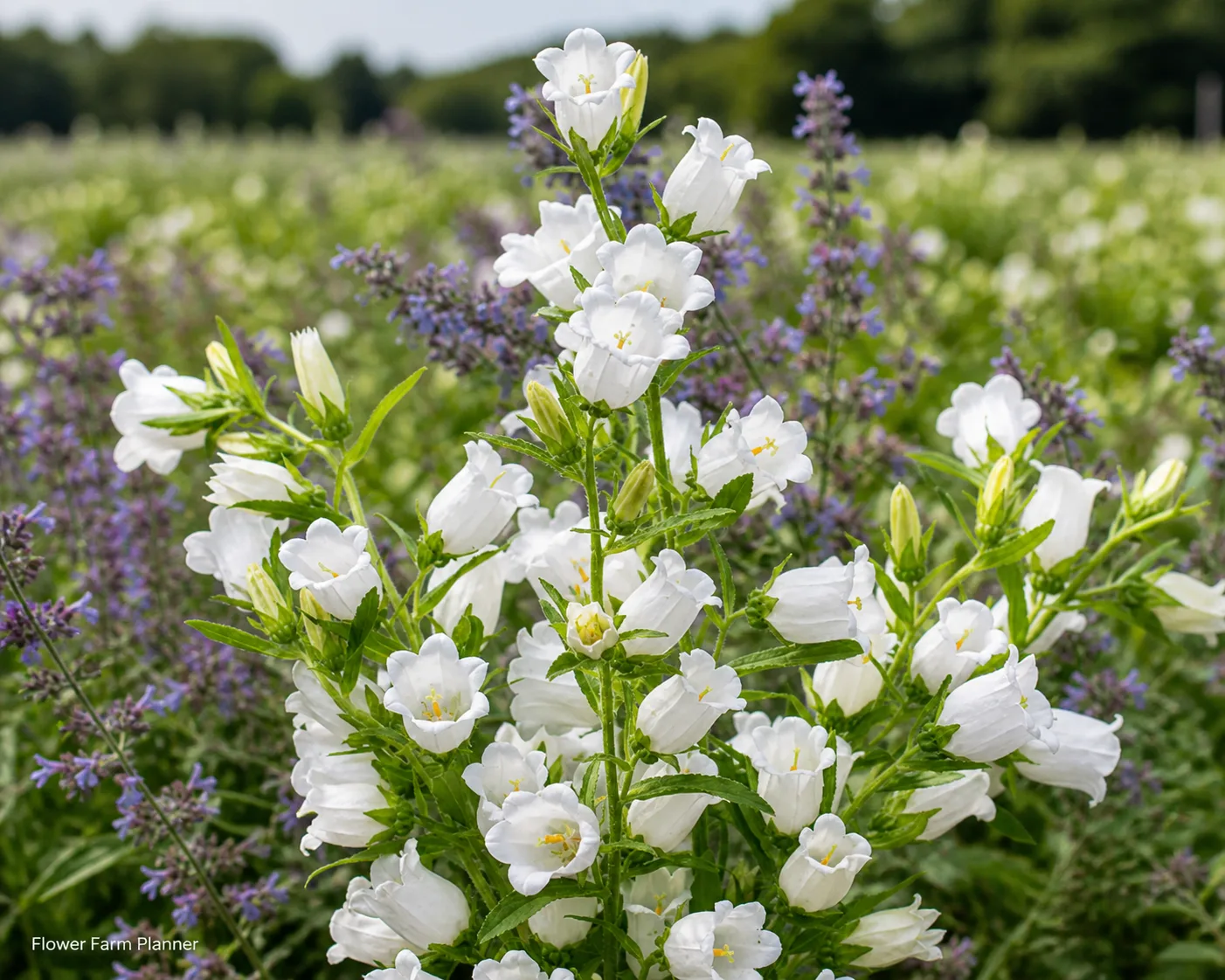
Campanula 'Campana White' is a professional white Canterbury bells cut flower grown from pelleted seed or plugs for upright stems of crisp white, bell-shaped blooms. It is a refined, high-value line flower for florists and weddings, best produced in cool, bright, well-ventilated greenhouse or tunnel conditions. It should be planned as a scheduled transplant crop with support netting, moderate fertility, careful disease prevention, and harvest when the first bells are opening.
Open variety
Campanula spp. / Campanula
‘Champion Blue’ is the professional cut-flower version of Canterbury Bells for growers who want blue bell-shaped stems without waiting for a traditional biennial cycle. It can flower from seed in roughly 130–150 days under managed conditions and is valued for uniform stems, strong colour, and florist appeal.
Open variety
Campanula spp. / Campanula
Elegant perennial producing graceful bell-shaped flowers with excellent vase life and florist appeal.
Open variety
Campanula spp. / Campanula
Campanula Champion II Lilac is a professional cut-flower Canterbury bell grown for tall, upright stems of soft lilac, upward-facing bell flowers. It is a cool-season, daylength-sensitive crop that rewards careful scheduling with elegant spring stems, but it can disappoint if grown too hot, too dry, too late, or without support. Plan it as a premium seasonal crop, not as a casual summer annual.
Open variety
Campanula spp. / Campanula
Campanula Champion II Pink is a professional pink Canterbury bells cut flower bred for uniform, upward-facing bells, long vase life, and a more reliable flowering window than older campanula strains. It is best grown from pelleted seed or plugs, established cool, supported with netting, and harvested when several bells have opened but the stem is still firm and transportable.
Open variety
Campanula spp. / Campanula
Champion II Rose is a professional annual-flowering Canterbury bells cut flower with warm rose-pink, upward-facing bells on upright stems. It is valuable for spring, wedding and florist work because it gives a soft garden character that few other line flowers provide. The crop is not difficult when grown cool, clean and supported, but it is sensitive to daylength mistakes, heat, wet crowns, poor airflow and overmature harvest. Plan it as a scheduled seed-to-plug-to-stem crop, not as a casual perennial bed flower.
Open variety
Campanula spp. / Campanula
Campanula 'Champion II White' is a professional white Canterbury bells cut flower grown from pelleted seed or plugs for tall, upright stems carrying large white, upward-facing bells. It is a premium cool-season line flower for florists, weddings, and mixed bouquets, best produced in a bright, cool, well-ventilated greenhouse or tunnel with support netting and careful harvest timing. The crop is more schedule-sensitive than many annuals, but it rewards good plug handling, moderate fertility, clean airflow, and quick postharvest cooling with elegant white stems and strong vase performance.
Open variety
Campanula spp. / Campanula
Campanula medium 'Champion Lavender' is a premium cool-season Canterbury bells bred for professional cut-flower production. It produces upright stems carrying large lavender bell-shaped flowers that look delicate but can be surprisingly strong when grown cool, harvested at the correct stage, and handled upright in clean water. The crop is best planned from plugs or high-quality seed, with a defined schedule, support netting, careful airflow, and daylength awareness. For small farms, it is most valuable as a seasonal florist and wedding crop rather than a rough bulk bouquet filler.
Open variety
Campanula spp. / Campanula
Campanula medium ‘Champion Mix’ is a production-focused Canterbury bells mix for growers who want the old-fashioned bellflower look in a more scheduleable cut-flower crop. It produces upright stems with large bells in a mixed palette of blue, lavender, pink, and white tones. The crop is best treated as a premium cool-season stem, especially for florists, weddings, and subscriptions. It should be grown from uniform plugs, kept cool and ventilated, supported before elongation, and harvested when only a few bells are open. The mix is beautiful but not color-predictable, so it is strongest for mixed bouquets and design buckets rather than exact single-color wedding recipes.
Open variety
Campanula spp. / Campanula
‘Champion Pink’ is the pink, florist-friendly Canterbury bells crop to choose when the farm wants a soft spring line flower with premium wedding appeal. It is more scheduled and technical than easy annuals, but it can produce beautiful upright stems when started early, grown cool, supported well, and sold quickly through florist or event channels.
Open variety
Campanula spp. / Campanula
Champion Pro Deep Blue is a premium seed-grown Campanula medium cut flower with saturated blue-violet bells, more blooms per stem than standard Champion types, and a faster, more transport-friendly production profile. It rewards careful scheduling: grow cool, transplant plugs before they become root bound, provide short days early for vegetative strength, then allow long days or lighting for flowering. It is best for growers who can manage plugs, support netting, and careful postharvest handling.
Open variety
Campanula spp. / Campanula
Campanula medium ‘Champion White’ is a professional cut-flower Canterbury bells selection in the Champion series, grown for upright stems carrying large, pure white, bell-shaped flowers with a clean cottage-garden look. Unlike older Canterbury bells that behave as biennials and often need a long juvenile period, the Champion series was bred for annual cut-flower production under managed temperatures and photoperiod. For a flower farm, it is best treated as a cool-season, high-value spike and line flower for late winter, spring, and early-summer production in mild climates or protected structures. It is not a rugged heat crop; quality is highest when plants establish cool, grow steadily, receive support, and are harvested just as the lower bells begin to open.
Open variety
Iberis umbellata / Candytuft
Candytuft ‘Fairy Mixed’ is a compact, quick annual that produces soft domed clusters in pink, lavender, rose, purple and white. It is easy and inexpensive to grow, valuable for cottage-style bouquets and pollinator plantings, and best planned as a short seasonal accent rather than a main florist crop.
Open variety
Iberis umbellata / Candytuft
Candytuft ‘Pinnacle White’ is a cool-season annual filler grown for tall white sprays and attractive green seedpods. It is quick, elegant, and useful, but it should be planned as a short-window specialty crop rather than a backbone crop. It shines when harvested young for airy white texture or allowed to move into fresh/dried seedpod material.
Open variety
Iberis umbellata / Candytuft
Candytuft Tall Mix is a quick, old-fashioned annual filler with compact clusters of white, pink, lilac, mauve, violet, and purple flowers. It is best grown in cool weather, full sun, and well-drained soil, then sold quickly into local bouquets, posies, subscriptions, and garden-style work. It is inexpensive and charming, but it should not be treated as a premium long-stem crop. Growers should trial a small block first, protect seedlings from flea beetles where needed, and succession sow if they want more than a short spring flush.
Open variety
Dianthus caryophyllus / Carnation
Carnation Standard Altair is a soft blush to light pink standard carnation grown for one large ruffled bloom per stem. It is best treated as a cool, protected, florist-grade crop rather than a casual field flower. For a local flower farm, its value is not novelty alone; its value is dependable vase life, romantic color, strong focal use, and the ability to offer florists a fresh local alternative to imported carnations. The crop requires discipline: start with clean rooted cuttings, support with netting, pinch correctly, disbud standard stems, scout for thrips and Botrytis, and protect every harvest from ethylene.
Open variety
Dianthus caryophyllus / Carnation
Carnation Standard Alvira is a white, extra-tall, large-flowered florist carnation bred for clean modern work and reliable professional production. It is best treated as a protected, netted, vegetatively propagated cut-flower crop rather than a casual seed-grown annual. Its strengths are long stems, excellent stem quality, large white blooms, strong florist usefulness, and long vase life; its weaknesses are technical production requirements and the visibility of every mark on white petals.
Open variety
Dianthus caryophyllus / Carnation
‘Amaral’ is a soft pink commercial spray carnation for growers who want a long-lasting florist stem with gentle romantic colour and strong bouquet utility. It is not a low-input casual annual; it should be grown from clean rooted cuttings or plugs, supported, scouted carefully, and handled with a professional postharvest routine because ethylene and Botrytis can undo otherwise excellent crop quality.
Open variety
Dianthus caryophyllus / Carnation
Ambrose is a premium pink standard carnation for growers who want extra-tall, strong stems and extra-large ruffled flowers in a classic florist color. It is not the fastest carnation and should be planned as a quality stem rather than a quick filler crop. Its high Fusarium resistance is a useful advantage, especially for growers concerned about carnation wilt, but clean stock, drainage, ventilation, pest control, and postharvest discipline remain essential.
Open variety
Dianthus caryophyllus / Carnation
Carnation Standard ‘Antartica’ is a pure white, long-stemmed standard carnation for florist-quality fresh cut stems. It should be grown from clean rooted cuttings or plugs, pinched to build harvestable shoots, disbudded to one large bloom per stem, supported with netting and protected from heat, humidity, thrips, Botrytis and ethylene. It is not a casual seed-grown dianthus; it is a professional cut-flower crop that earns its place by producing clean white stems with excellent florist usefulness, long vase life and broad wedding/sympathy demand.
Open variety
Dianthus caryophyllus / Carnation
Antigua is a premium standard cut carnation with a cream base and purple-lavender markings, bred for professional cut-flower production. The breeder lists it as normal in growth speed, high in productivity, high in Fusarium resistance, extra tall in stem length, strong in stem quality, and extra large in flower brush size. For the farm planner, it should be treated as a long-cycle, protected, netted, disbudded stem crop that can produce valuable vintage bicolor stems if grown cleanly and cooled quickly after harvest.
Open variety
Dianthus caryophyllus / Carnation
Apple Tea is a premium-looking standard carnation with antique cream to pale peach petals marked by soft pink flecks and streaks. It should be planned as a single-bloom carnation for long, strong stems rather than as a spray type. The crop is durable after harvest and very useful for florists, but it requires a more disciplined production system than easy annual cuts: clean rooted cuttings, cool bright growing conditions, support netting, pinching, disbudding, airflow, sanitation and careful ethylene-free postharvest handling.
Open variety
Dianthus caryophyllus / Carnation
Aprilia is planned here as a warm peach-apricot standard carnation with a full ruffled head and coral or salmon edging. It is grown for one large bloom per stem, so it should be produced from rooted cuttings or plugs, pinched to build a productive frame, supported early, and disbudded so that each market stem carries a single quality flower. The crop wants strong light, cool-to-moderate temperatures, excellent drainage, good airflow, disciplined sanitation, and ethylene-aware postharvest handling. Its main farm value is the combination of long vase life, florist familiarity, soft warm color, and a bloom form that can act as an affordable ruffled focal in bouquets and event work.
Open variety
Dianthus caryophyllus / Carnation
Carnation Standard Arandu is a professional standard carnation cultivar from HilverdaFlorist with large, ruffled, purple-and-soft-white bicolour flowers on extra-tall, excellent-quality stems. It is described as relatively fast and highly productive, making it attractive for commercial growers and florist sourcing. In Flower Farm Planner it should be treated as a protected-culture standard carnation or as a sourced florist stem, with all the normal carnation requirements: clean vegetative plant material, support netting, disbudding, careful harvest stage, rapid cooling and strong ethylene protection. It is not a seed crop and should not be planned like a casual annual cutting flower.
Open variety
Dianthus caryophyllus / Carnation
Argos is a red standard carnation bred for commercial cut flower production. It is a florist-staple crop with one large, ruffled red bloom per stem, strong market recognition and excellent vase-life potential. It suits growers who can manage a protected, supported, disbudded carnation crop and who have a channel for red standard stems.
Open variety
Dianthus caryophyllus / Carnation
Carnation Spray Aura is a deep-pink bicolor spray carnation with soft pastel pink tips, branching stems, silvery foliage, and strong vase-life potential. It is best planned as a cool, protected cut-flower crop from plugs or rooted cuttings rather than as an easy direct-seeded annual. The crop earns its place where the grower can provide ventilation, support, sanitation, cold-chain handling, and regular harvest. Its main value is not rarity; it is reliability, romantic color, texture, and consumer-recognized longevity.
Open variety
Dianthus caryophyllus / Carnation
Carnation 'Baby Dolphin' should be treated as a florist-style spray carnation grown from rooted cuttings, not as a quick seed annual. It is a long-occupancy, support-netted crop for growers who can manage cool, bright, well-ventilated production and strict postharvest handling. Its value is not that it is rare in the way a specialty annual may be rare, but that it can give a grower durable, romantic, bunchable stems with excellent vase-life potential when grown cleanly.
Open variety
Dianthus caryophyllus / Carnation
Carnation Standard Bactra is a fancy yellow standard carnation with a warm cream-yellow base and red-pink picotee edging. It is grown for one large ruffled bloom per stem and should be treated as a cool, protected, florist-grade crop rather than a casual field flower. Its value is not that it is rare; its value is that it offers long vase life, strong shipping ability, cheerful bicolor patterning, and reliable focal volume for florists when produced cleanly.
Open variety
Dianthus caryophyllus / Carnation
Carnation Standard 'Baltico' is a clean white, large-flowered standard carnation used for florist, wedding, sympathy, and general white floral work. It is a durable, high-vase-life commercial crop, but it is not a beginner field annual. It should be grown from clean rooted cuttings under protected, well-ventilated conditions, supported with netting, pinched, disbudded, and harvested into a reliable cold chain.
Open variety
Dianthus caryophyllus / Carnation
Carnation Spray Beta is a warm orange, multi-headed spray carnation grown and sold for fresh cut-flower use. It should be planned as a vegetatively propagated, protected, long-cycle crop rather than as a seed annual. For a small flower farm, it is best introduced as a trial in a clean tunnel or greenhouse with support netting, good airflow, drip irrigation, and strict pest monitoring. For most bouquet and florist users, it is also a strong sourced-stem option because the stems are durable, bunch cleanly, and bring a clear orange texture that is hard to replace with many seasonal annuals.
Open variety
Dianthus caryophyllus / Carnation
Big One is a commercial pink standard carnation bred and sold for large single-headed cut stems. It is useful where a grower or florist wants a big ruffled pink bloom with long vase life, strong stems and reliable productivity. It should be planned as a standard carnation rather than a spray type: support it, disbud it, grade it tightly and protect it from heat, humidity, thrips, Botrytis, Fusarium and ethylene. For many small farms, Big One will be more realistic as a florist-sourced stem or protected trial crop than as an open-field seed crop.
Open variety
Dianthus caryophyllus / Carnation
Carnation ‘Bizet’ is a standard, single-flower commercial carnation cultivar of Dianthus caryophyllus bred for tall, firm stems, extra-large cerise blooms and reliable florist handling. It should be treated as a protected, professional cut-flower crop rather than as a casual seed-grown garden dianthus. For Flower Farm Planner it belongs in the standard carnation profile group, with variety-level overrides for colour, stem length, breeder code, productivity, Fusarium resistance and market positioning.
Open variety
Dianthus caryophyllus / Carnation
Carnation Spray Boogie is a modern commercial spray carnation for growers who want a warm, cheerful, long-lasting florist stem with multiple ruffled blooms per spray. It should be planned as a protected plug/rooted-cutting crop, not a direct-seeded annual. The crop rewards good management with durable, saleable stems, but it is not beginner-easy because straight stems, clean petals, and disease-free foliage depend on netting, airflow, sanitation, pest control, and careful postharvest handling.
Open variety
Dianthus caryophyllus / Carnation
Carnation ‘Bouzeron’ is a modern red standard florist carnation with a breeder listing that highlights extra-tall firm stems, large double blooms, consistent red colour, relatively fast growth, very high productivity, superior stem quality, and high Fusarium resistance. In Flower Farm Planner it should be treated as a professional rooted-cutting Dianthus caryophyllus crop for greenhouse or tunnel stem production, not as a seed-grown garden carnation. It is useful for growers who want a durable, long-lasting red focal stem for florists, events, subscriptions, and seasonal red demand, but it must be grown with strong sanitation, ventilation, pest control, and postharvest discipline.
Open variety
Dianthus caryophyllus / Carnation
Brunello is a deep red spray carnation for growers or florists who want long-lasting, florist-grade red stems with multiple ruffled flowers per stem. It should be treated as a vegetatively propagated greenhouse or tunnel crop that rewards cool conditions, clean stock, support netting, and strong postharvest handling. It is not the easiest crop for beginners, but it can be valuable where red and burgundy stems sell well and where imported carnations do not completely control the price.
Open variety
Dianthus caryophyllus / Carnation
Brut is a standard single-head carnation grown and traded as a premium neutral florist stem. It is best understood as a warm cream, pale blush, peach-champagne carnation rather than a bright coloured cultivar. For growers, the crop requires the same professional discipline as other carnations: clean vegetative starts, bright protected growing, support netting, careful disbudding, strong airflow and prevention of Botrytis and Fusarium. For markets, it is valuable because it gives a soft neutral colour with long vase life and good transport strength.
Open variety
Dianthus caryophyllus / Carnation
Bryce+ is planned here as a modern orange-apricot standard carnation with a full ruffled bloom and strong florist usefulness. It should be grown from rooted cuttings or plugs, pinched to build plant architecture, supported with horizontal netting, and disbudded so that each market stem carries one large flower. The crop wants strong light, cool-to-moderate temperatures, excellent drainage, steady moisture, disciplined sanitation, and ethylene-aware postharvest handling. Its main farm value is the combination of long vase life, familiar florist demand, warm modern color, and a full ruffled form that can work as an affordable focal or secondary focal in bouquets and event work.
Open variety
Dianthus caryophyllus / Carnation
‘Carimbo’ is a warm fancy yellow commercial spray carnation with orange-red to burgundy edge contrast, bred for florist-quality stem production and listed with very strong Fusarium oxysporum resistance and high nematode tolerance. It is not a low-input casual annual; it should be grown from clean rooted cuttings or plugs, supported, scouted carefully, harvested at the correct spray stage, and protected from ethylene after harvest. Its strongest value is as a long-lasting, bright, textured bouquet ingredient that can replace imported spray carnations when local quality is high.
Open variety
Dianthus caryophyllus / Carnation
Castillo+ is a white standard carnation for growers who need a clean, classic, long-lasting florist stem. It should be grown as a supported, pinched, disbudded crop from rooted cuttings or plugs, preferably under greenhouse or well-ventilated tunnel conditions. The variety is best planned for wedding, sympathy, florist retail, and wholesale channels where a reliable white mass flower is useful. It is not a low-maintenance field annual; profitability depends on stem grade, low blemish rate, disease control, and disciplined postharvest handling.
Open variety
Dianthus caryophyllus / Carnation
Cecilia is a deep burgundy spray carnation for fresh cut-stem production, best treated as a professional florist crop rather than an easy cottage-garden annual. It offers strong market value because each stem carries multiple ruffled wine-coloured blooms and buds, giving bouquets texture, depth, and long vase life. The crop rewards clean protected production, cool conditions, strong netting, and careful postharvest handling, but it can disappoint quickly where heat, humidity, Fusarium, Botrytis, or poor young-plant quality are not controlled.
Open variety
Dianthus caryophyllus / Carnation
Celine is a modern purple spray carnation bred for florist use, with tall stems, strong stem quality, an extra-large flower brush, distinctive star-shaped blooms, high productivity, and documented high Fusarium resistance. It is a good candidate for growers who want a durable purple filler/secondary flower for florists, weddings, sympathy work, and subscription bouquets, but it should be planned as a protected clonal crop rather than a casual field annual.
Open variety
Dianthus caryophyllus / Carnation
Carnation Standard Celtic is a vivid green standard carnation for growers and florists who need a durable, high-impact novelty focal that behaves like a professional commercial carnation rather than a casual garden flower. It is especially useful where the market wants chartreuse, lime, botanical, or green-and-white palettes. For growers, the main value is not just the unusual color but the combination of rigid stems, commercial standard form, long vase life, and breeder-listed Fusarium resistance. It should be grown from clean vegetative stock, supported with netting, disbudded for one large bloom per stem, and handled through a cold, clean postharvest chain.
Open variety
Dianthus caryophyllus / Carnation
Cerise Amelie is a vivid cerise-pink spray carnation in the Amelie group, grown for branched stems carrying multiple ruffled blooms. It is best planned from rooted cuttings or plugs, not seed, and should be grown with strong light, cool-to-moderate temperatures, excellent drainage, support netting, and disciplined sanitation. Its strongest farm value is long vase life, recognizable florist demand, and bright color for bouquets, subscriptions, and events.
Open variety
Dianthus caryophyllus / Carnation
Carnation Standard Cervantes is a hot-pink, single-headed florist carnation grown for one large ruffled bloom per stem. It belongs in the app as a professional cut-flower crop rather than a casual garden annual. The value is its saturated pink color, long vase life, sturdy standard form, and strong florist familiarity, but it needs clean planting stock, support, disbudding, pest control, ventilation, and disciplined postharvest handling to produce saleable stems.
Open variety
Dianthus caryophyllus / Carnation
Chabaud Aurora is a fragrant, seed-grown carnation with soft salmon-pink to sugary pink double blooms and a nostalgic clove scent. It is a strong choice for growers who want a romantic, heirloom-style carnation that can be raised from seed and sold as a premium local flower rather than as a commodity carnation. It needs early sowing, cool growing conditions, good drainage, support netting and frequent harvest to deliver clean, saleable stems.
Open variety
Dianthus caryophyllus / Carnation
Carnation Chabaud Giants Benigna is a seed-grown, old-fashioned florist carnation with creamy white double fringed flowers marked by raspberry, garnet or plum-red stitched edges. It is grown mainly for fresh cuts, fragrance and vintage patterning. Start it early, grow it cool and bright, pinch once, support it with netting, and harvest frequently at a partly open stage. It is not the fastest annual, but it earns space where scent, vase life and distinctive detail matter.
Open variety
Dianthus caryophyllus / Carnation
Carnation 'Chabaud Giants Nero' is a fragrant, seed-grown, heirloom-style carnation with double deep claret-red flowers on slender stems. It is best treated as a specialty cut flower crop for growers who can provide early sowing, cool bright growth, good drainage, support netting, and careful grading. Its strongest value is not bulk uniformity but the combination of scent, dark colour, vintage form, and local freshness.
Open variety
Dianthus caryophyllus / Carnation
Carnation 'Chabaud Jeanne Dionis' is a fragrant, seed-grown, heirloom-style carnation with double pure white to creamy white flowers on slender grey-green stems. It is best treated as a specialty cut flower crop for growers who can provide early sowing, cool bright growth, good drainage, support netting, and careful grading. Its strongest value is not bulk uniformity but the combination of scent, clean white colour, frilled vintage form, and local freshness.
Open variety
Dianthus caryophyllus / Carnation
Chabaud La France is a classic seed-grown carnation with soft shell-pink, frilled double flowers and a strong clove fragrance. It is best grown from early indoor sowing, transplanted into a sunny, free-draining bed, pinched young, supported before stems stretch, and harvested regularly when the first flowers on a spray open. It is a romantic, fragrant, old-fashioned crop rather than a commodity greenhouse carnation, so its best value is in local specialty bouquets and soft event work.
Open variety
Dianthus caryophyllus / Carnation
‘Chabaud Orange Sherbet’ is a fragrant, old-fashioned seed-grown carnation for growers who want something more distinctive than commodity carnations. It offers warm sherbet colouring, ruffled petals, clove scent and long vase life, but it needs cool establishment, support, good drainage and regular harvest. It is best approached as a specialty annual cut crop with a trial row before scaling.
Open variety
Dianthus caryophyllus / Carnation
Carnation Standard Charisma is a light pink standard carnation bred by SB Talee and listed in professional catalogues with Floricode 130215. It is a florist-oriented cultivar with soft romantic colour, useful stem length classes, medium Fusarium resistance, and broad market compatibility. For production, it should be managed as a technical standard carnation crop with clean vegetative stock, support netting, disbudding, good airflow, balanced nutrition, vigilant thrips and Botrytis prevention, and a disciplined cold chain.
Open variety
Dianthus caryophyllus / Carnation
Cheesy+ is planned here as a soft yellow spray carnation for florist-grade fresh cuts. It is valuable because it gives multiple small ruffled flowers on each stem, strong vase life, and a cheerful color that works well in subscriptions, retail bouquets, and light event palettes. It is not a simple beginner field annual; it needs clean rooted cuttings, support netting, cool bright growing conditions, careful humidity management, and strong postharvest discipline.
Open variety
Dianthus caryophyllus / Carnation
Carnation Spray Cherry Blossom is best treated as a vivid cherry-pink spray carnation for growers who want a durable, florist-recognized stem with strong color and excellent vase-life potential. It is not a low-maintenance field annual; its value comes from protected production, clean stock, careful pinching, netting, disease prevention, and professional postharvest handling. The crop is especially useful where local florists want reliable pink/red spray stems for bouquets, events, and subscriptions.
Open variety
Dianthus caryophyllus / Carnation
Cherry Damascus+ is a commercial standard carnation from the Damascus group, bred for single large cerise-pink blooms on florist stems. Its strongest planning advantages are saturated colour, very high productivity, fast growth, very long vase-life potential and very strong Fusarium oxysporum resistance. For Flower Farm Planner, it should behave as a protected, long-cycle, disbudded stem crop grown from clean rooted cuttings, with support netting, sanitation, cool bright conditions and careful postharvest handling. It is a strong candidate for florist supply, bright event work, Valentine’s palettes and subscription bouquets, but it should be trialled before large bed allocation in hot or humid climates.
Open variety
Dianthus caryophyllus / Carnation
Carnation Spray Cherry Marvel is a coral-and-white bicolor spray carnation for growers who want long-lasting, florist-friendly stems with multiple ruffled blooms per stem. Public trade data describes it as a spray type with tall, superior stems, large flower brush size, relatively fast growth, and high productivity. It is best planned as a protected crop from clean rooted cuttings rather than seed. Cherry Marvel has strong bouquet usefulness because one stem adds several small ruffled flowers, but premium quality depends on support netting, clean stock, good airflow, thrips control, correct harvest stage, and a reliable cold chain.
Open variety
Dianthus caryophyllus / Carnation
Spray Carnation Cherry Tessino is a commercial mini/spray carnation valued for its cream-to-ivory flowers marked with cherry-red to deep rose-pink. It gives a florist a long-lasting, patterned accent stem with several blooms and buds on each spray, making it useful for bouquets, buttonholes, wedding recipes, subscriptions, and retail bunches. For a grower, it should be treated as a protected, vegetatively propagated carnation crop that needs clean planting stock, support netting, pinching, regular pest and disease scouting, disciplined grading, and careful cold-chain handling.
Open variety
Dianthus caryophyllus / Carnation
Coralie is a modern fancy standard carnation with a white to ivory base and red/pink peppermint edging and striping. It should be grown from clean rooted cuttings or plugs, pinched to build plant architecture, supported with horizontal netting, and disbudded so that each market stem carries one large flower. Breeder information describes it as a strong, very productive commercial variety with very strong Fusarium oxysporum resistance. Its main farm value is the combination of long vase life, familiar florist demand, strong patterned color, and the ability to provide a decorative ruffled flower for holidays, subscriptions, and event work.
Open variety
Dianthus caryophyllus / Carnation
Cortes is an intense-red standard cut carnation from Dümmen Orange’s Standard series, identified by code 17020. It is a florist-style single-headed carnation bred for full flowers, strong high-quality plants, high productivity, and very strong resistance to Fusarium oxysporum. For the grower, it should be planned as a protected, supported, pinched, disbudded crop that rewards disciplined management with durable red stems and long vase life. It is not a casual seed annual; it belongs in a professional stem-production workflow with clean planting stock, support netting, sanitation, and a reliable cold chain.
Open variety
Dianthus caryophyllus / Carnation
Carnation Cristallo is a white standard carnation intended for clean, refined florist work where neutral colour, long vase life, and dependable structure matter. It should be grown as a protected, netted, vegetatively propagated cut-flower crop with disbudding to produce one large bloom per stem. Its strengths are a versatile white colour, formal ruffled flower form, strong florist usefulness, and excellent keeping quality. Its weaknesses are technical crop management, visible petal marking, and the need for disciplined sanitation and postharvest handling.
Open variety
Dianthus caryophyllus / Carnation
Carnation Standard Dafne is best treated as a premium, soft apricot-peach standard carnation for growers who can provide protected culture, support netting, clean propagation stock, and disciplined postharvest handling. It is not a low-input field annual, but it has strong business value because carnations are long lasting, recognizable to florists, easy to transport, and useful in both everyday and event work. Dafne’s color gives it a more modern design role than older commodity carnations: it can sit beautifully in peach, champagne, blush, cream, melon, and vintage wedding palettes while still offering the durability customers expect from carnations.
Open variety
Dianthus caryophyllus / Carnation
Carnation Standard 'Damascus' is a premium bicolor standard carnation selected for one large, ruffled bloom per stem. Its pale blush-white petals with purple-magenta edging and feathering give it a distinctive florist look that can work beautifully in romantic, vintage, and berry-toned palettes. It is best planned as a protected or carefully managed cut-flower crop, because the pale petals show damage quickly and the standard carnation crop requires support, disbudding, disease prevention, and reliable postharvest cooling.
Open variety
Dianthus caryophyllus / Carnation
‘Damien+’ is a fancy white commercial spray carnation with red striping, flecking and picotee-style edge detail, bred for florist-quality stem production and listed by Dümmen Orange with high productivity, excellent vase life, fast growth and very strong Fusarium oxysporum resistance. It is not a low-input casual annual; it should be grown from clean rooted cuttings or plugs, supported, scouted carefully, harvested at the correct spray stage and protected from ethylene after harvest. Its strongest value is as a long-lasting, patterned, red-and-white bouquet ingredient that can replace imported spray carnations when local quality is high.
Open variety
Dianthus caryophyllus / Carnation
Carnation Standard Delicia is a clean white, single-headed florist carnation for growers who want a durable, neutral, long-lasting focal flower. It is best planned as a protected or greenhouse crop from clean rooted cuttings, not seed. The crop rewards careful growers with strong stems and excellent vase life, but it is not a low-input field crop. White blooms demand high sanitation, thrips prevention, Botrytis control, support netting, careful disbudding, and an uninterrupted cold chain.
Open variety
Dianthus caryophyllus / Carnation
Carnation Standard Diego is a high-impact bicolour standard carnation with a warm orange-yellow base and strong red edging or brush marks. It is bred for professional cut-flower production and is described as fast, very productive, tall, strong-stemmed, extra-large flowered, and highly resistant to Fusarium oxysporum. For a flower farm, Diego is best treated as a premium florist stem that rewards good greenhouse or tunnel management rather than casual low-input field culture.
Open variety
Dianthus caryophyllus / Carnation
Carnation Spray Doobadoo is a professional pink spray carnation from the HilverdaFlorist commercial assortment. It is listed as a high-productivity, fast variety with extra-tall stems, excellent stem quality, an extra-large flower brush, pink colour, breeder code HILDOOBAD, VBN 124895, and medium Fusarium oxysporum resistance. For flower farms, it should be planned as a protected, netted, vegetatively propagated crop rather than a seed-grown field annual. Its strongest value is long-lasting soft pink ruffled volume for bouquets, florists, subscriptions, and weddings.
Open variety
Dianthus caryophyllus / Carnation
Enigma is a modern commercial spray carnation with a high-impact bicolor violet appearance, rich magenta-violet centers and pale pink-white margins. It is bred for the cut carnation market, listed as a spray type with commercial variety status and very strong Fusarium oxysporum resistance. For growers, it should be treated as a professional protected-culture crop rather than a casual seed annual: start from clean rooted cuttings, grow cool and bright, support well, pinch correctly, manage thrips and Botrytis carefully, and keep a disciplined cold chain. Its biggest farm value is the combination of distinctive florist color, good transportability, multiple blooms per stem and strong vase-life reputation.
Open variety
Dianthus caryophyllus / Carnation
Eskimo is a premium red standard carnation for growers who want a bold, long-lasting florist stem with one extra-large ruffled bloom per stem. It is not a casual seed-grown garden carnation; it should be produced from clean young plants or rooted cuttings, grown under bright cool protected conditions, supported with netting, and managed for strong stems, disbudding, sanitation, and postharvest ethylene protection. Its commercial strengths are very high productivity, excellent stem quality, tall stems, and extra-large red flowers, but it still needs careful disease prevention because Fusarium resistance is only medium.
Open variety
Dianthus caryophyllus / Carnation
Fancy Amelie is a commercial Amelie-group spray carnation with a soft cream-to-blush base and fine coral-red or rose-pink flecking and edging. It is grown for branched stems carrying several ruffled blooms, and it should be planned from rooted cuttings or plugs rather than from seed. The crop wants strong light, cool-to-moderate temperatures, excellent drainage, early support netting, good airflow, and disciplined sanitation. Its main farm value is a combination of long vase life, florist familiarity, gentle wedding-friendly color, and decorative bicolor detail.
Open variety
Dianthus caryophyllus / Carnation
Carnation 'Farida Pink' is a pink-purple standard florist carnation traded as Farida. It should be handled as a named commercial carnation cultivar rather than a seed-grown garden pink. Its value is a durable, long-lasting, ruffled standard bloom in a cool pink-to-lavender-pink range that works well for weddings, florist retail, sympathy flowers, Mother's Day and subscription bouquets. Production is most suitable under protected conditions from rooted cuttings, while many small farms will use it first as a florist-sourced stem.
Open variety
Dianthus caryophyllus / Carnation
‘Faro’ is a light-pink standard carnation bred for commercial cut-flower production, with large flowers, extra-tall stems, excellent stem quality, good uniformity and good productivity. It is best grown from clean rooted cuttings in a dedicated supported block, with disbudding to produce one premium bloom per stem. The crop rewards careful management with long vase life and strong florist acceptance, but it is not a low-maintenance field flower.
Open variety
Dianthus caryophyllus / Carnation
Carnation Spray Flammy+ is a warm peach-apricot commercial spray carnation for cut-stem production. It should be grown from rooted cuttings under protected, high-light, well-ventilated conditions with support netting, careful pinching and strict sanitation. It is best treated as a florist-quality crop: not a casual direct-seeded annual, but a durable, high-value, long-vase-life stem that can strengthen weddings, subscriptions and retail bouquet work when disease and thrips are controlled.
Open variety
Dianthus caryophyllus / Carnation
Gennaro is a red standard cut carnation from Dümmen Orange, identified in catalog material as code 17008. It should be planned as a clonal, single-headed florist carnation for protected stem production, not as a seed-grown garden dianthus or spray carnation. For a flower farm, the value is its classic red color, familiar full carnation form, long vase life potential, strong shipping behavior, and broad florist usefulness. The crop is production-heavy: it needs clean cuttings, support netting, pinching, disbudding, sanitation, cool-to-moderate growing conditions, and consistent postharvest handling to return a dependable marketable stem.
Open variety
Dianthus caryophyllus / Carnation
Girona is a light pink spray carnation bred for florist-grade cut-flower use. It offers a soft, romantic color, large uniform spray flowers, strong tall stems, and long vase life. For small farms, it is best treated as a protected trial crop rather than an easy outdoor annual. It can become highly useful for weddings, subscriptions, and florist bunches when grown cleanly and sold as a reliable pastel spray stem.
Open variety
Dianthus caryophyllus / Carnation
Carnation Standard Grand Slam is a professional standard carnation cultivar from HilverdaFlorist with exceptional extra-large, true red double blooms on superior-quality stems. It has normal crop speed and high productivity, making it attractive for commercial growers and florist sourcing where a classic, bold red carnation is needed. It should be planned as a protected-culture or florist-sourced crop, using clean rooted cuttings, support netting, disbudding, strict sanitation, ethylene protection and careful grading.
Open variety
Dianthus caryophyllus / Carnation
Carnation 'Greenshot' is a modern standard florist carnation selected for a clear lime green to light green bloom, extra-tall firm stems, strong vase performance, and professional greenhouse cut-flower production. It should be planned as a vegetatively propagated Dianthus caryophyllus crop rather than a seed-grown garden carnation. On small farms it is best treated as a protected, high-value florist crop for weddings, event design, subscription focal stems, and specialty colour palettes.
Open variety
Dianthus caryophyllus / Carnation
Carnation Standard Grinch+ is best treated as a novelty lime-green standard carnation for growers who can provide protected culture, support netting, clean rooted cuttings, and disciplined postharvest handling. It is not a seed-grown cottage carnation; it belongs in a commercial florist-stem workflow where disbudding, pinching, grading, thrips prevention, Botrytis prevention, and cold-chain handling all matter. Its strongest value is the unusual green/chartreuse color, which helps florists build modern white-and-green weddings, Christmas and St Patrick's Day work, spring designs, and contemporary mixed bouquets.
Open variety
Dianthus caryophyllus / Carnation
Carnation Standard 'Hambury' is a commercial red standard carnation selected for one large, rounded bloom per stem. Supplier information lists it as a productive, fast-growing standard variety with short stems, round petals, and good resistance to Fusarium oxysporum. For Flower Farm Planner it should be treated as a florist-grade red carnation for protected or carefully managed production, especially useful where the farm wants bold red stems with long vase life for florists, events, subscriptions, and seasonal retail bouquets.
Open variety
Dianthus caryophyllus / Carnation
Hanoi is a soft blush-white to pale peach-pink standard carnation grown for one large, rounded double bloom on each market stem. Treat it as a professional florist carnation rather than a seed-grown garden dianthus: use clean vegetative material, keep plants supported, disbud for a single head, protect flowers from wet weather and maintain a clean cool chain after harvest. Its commercial strength is the combination of long vase life, soft neutral colour, wedding suitability and reliable standard carnation form.
Open variety
Dianthus caryophyllus / Carnation
Happy Cheri fits the premium novelty standard carnation niche: long-lasting, ruffled, softly coloured, and easy for florists to use in warm neutral, peach, blush, terracotta, vintage, and romantic palettes. It should not be marketed as a cheap filler; it is stronger as a durable focal or secondary focal stem with modern colour language.
Open variety
Dianthus caryophyllus / Carnation
Igloo is a commercial white standard carnation cultivar used for single-head cut stems. It should be grown and handled as a professional florist crop: clean vegetative stock, high light, cool to mild temperatures, support netting, pinching, disbudding, careful harvest and strict postharvest hygiene. Its value is the clean white colour, large rounded head, long vase life and broad market use in wedding, sympathy, retail and wholesale channels.
Open variety
Dianthus caryophyllus / Carnation
Carnation 'Ipanema' is a modern standard carnation with a soft peach-and-cream palette, tall stems, large blooms, fast growth, very high productivity and excellent stem quality. It should be planned as a protected, vegetatively propagated florist crop, not as a casual seed-grown field flower. Its value is strongest for farms that can supply florists and event designers with clean, long-lasting, colour-consistent pastel stems during wedding and retail bouquet seasons. In warm humid climates it deserves a careful tunnel trial before scale-up because disease management, cooling and petal cleanliness determine whether the crop is profitable.
Open variety
Dianthus caryophyllus / Carnation
Julieta is a soft pink standard carnation grown for one large, ruffled bloom per stem. It fits the mainstream florist carnation category: durable, long-lasting, easy to design with and valuable where buyers want a romantic pink flower with dependable vase life. Grow it from rooted cuttings under protected conditions, support it with netting, pinch for shoot production, disbud for single large heads and maintain strict sanitation to protect petal quality.
Open variety
Dianthus caryophyllus / Carnation
Carnation 'Kamilly' is a warm orange to apricot-gold spray carnation bred for professional cut-flower production. It offers the florist-friendly strengths that make carnations valuable: long vase life, strong stems, multiple blooms per stem, durable transport, and a colour that fits autumn, sunset, peach, terracotta, and cheerful retail palettes. Plan it from clean rooted cuttings, not seed, and grow it in a netted greenhouse or ventilated tunnel with careful pest and disease management.
Open variety
Dianthus caryophyllus / Carnation
Kaori is a warm pink standard carnation suited to professional protected production, florist wholesale, wedding work, and long-lasting retail bouquets. It should be planned as a single-head, disbudded, netted carnation crop grown from licensed rooted cuttings or young plants. The crop rewards precise irrigation, sanitation, climate control, stem support, and postharvest handling, but it is not a casual seed annual and should be trialled before a large planting.
Open variety
Dianthus caryophyllus / Carnation
Carnation Spray Kasia is a clear white, large-brushed spray carnation bred by HilverdaFlorist for professional cut-flower production. It should be planned as a vegetatively propagated crop from clean rooted cuttings, grown with support netting, even moisture, high light, cool-to-moderate temperatures, and strong sanitation. Its main value is dependable white texture and volume for florists, weddings, sympathy work, and bouquet programmes.
Open variety
Dianthus caryophyllus / Carnation
Carnation Standard Kirsi is a clear pink standard carnation bred for professional cut-flower production. It is listed as a high-productivity, fast standard cultivar with tall excellent-quality stems, large flowers, medium Fusarium oxysporum resistance, and breeder code likirs/LIKIRS. For a flower farm, Kirsi is best treated as a reliable pink florist stem that can compete with imported carnations when the grower can provide support netting, clean stock, good ventilation, disbudding, and a disciplined cold chain.
Open variety
Dianthus caryophyllus / Carnation
Carnation ‘Liberty’ is a modern standard florist carnation profile for a yellow, single-headed cut-flower crop. It should be treated as a professional Dianthus caryophyllus cultivar grown mainly from rooted cuttings or plugs, not as a seed-raised bedding dianthus. The crop is most reliable under greenhouse, tunnel, or well-managed protected production where stem length, flower size, disease pressure, and harvest timing can be controlled. For Flower Farm Planner it is planning-safe as a protected-culture cut stem crop, but it should be trialled before large field production in humid, hot, or poorly ventilated regions.
Open variety
Dianthus caryophyllus / Carnation
Lizzy is a soft peach-to-cream standard carnation grown for one large, rounded, ruffled bloom per stem. It should be treated as a florist-quality clonal carnation rather than a seed strain. The crop rewards careful protected culture: cool bright conditions, clean rooted cuttings, support netting, pinching, disbudding, consistent moisture, and rapid cooling after harvest. It is not a low-maintenance field annual, but it can be very useful where long vase life, neutral wedding color, and predictable florist stems are valuable.
Open variety
Dianthus caryophyllus / Carnation
Carnation Standard Luiza is a modern single-head cut carnation selected for large, bright yellow flowers, tall stems, excellent stem quality, fast flowering speed, and very high productivity. It should be treated in the database as a commercial standard carnation variety rather than a seed-grown garden pink. The crop is best planned from vegetative young plants or rooted cuttings, grown under protected or carefully managed field/tunnel conditions, and disbudded so each market stem carries one extra-large, clean bloom. Luiza is especially valuable where the grower needs a clear yellow focal flower with stronger form and longer vase life than many delicate seasonal focal crops.
Open variety
Dianthus caryophyllus / Carnation
Carnation Spray Lumina is a yellow-and-red bicolor spray carnation for growers who want long-lasting, florist-friendly stems with multiple ruffled blooms per stem. Public trade data describes it as a spray type with fast growth, high productivity, medium FO resistance, tall superior stems, and an extra-large flower brush size. It is best planned as a protected crop from clean rooted cuttings rather than seed. Lumina has strong bouquet usefulness because one stem adds several small ruffled flowers, but premium quality depends on support netting, clean stock, good airflow, thrips control, correct harvest stage, and a reliable cold chain.
Open variety
Dianthus caryophyllus / Carnation
Marie Chabaud is a pale lemon-yellow, clove-scented heirloom Chabaud carnation grown from seed for fragrant specialty cut flowers. It produces frilled double to semi-double blooms on branching plants with blue-green foliage and a vintage garden character. It is best planned as a cool-to-mild-season annual or short-lived perennial crop, started early, pinched, supported, and harvested regularly for local bouquet and event markets.
Open variety
Dianthus caryophyllus / Carnation
Carnation Spray Martina is a white-and-pink bicolor spray carnation for growers who want long-lasting, florist-friendly stems with multiple ruffled blooms per stem. It is best planned as a protected crop from clean rooted cuttings rather than seed. Martina has strong bouquet usefulness because one stem adds several small romantic flowers, but premium quality depends on support netting, clean stock, good airflow, thrips control, correct harvest stage, and a reliable cold chain.
Open variety
Dianthus caryophyllus / Carnation
Merletto Rose is a florist-style standard carnation selected for one large, ruffled bloom per stem and a soft rose-pink, lightly striated vintage color effect. It should be grown like a professional standard carnation rather than a casual annual: start with clean rooted cuttings or plugs, use well-drained beds, provide support netting, manage pinching and disbudding carefully, and protect the crop from heat, humidity, thrips, Botrytis, and Fusarium. Its main value is the combination of long vase life, strong transportability, and a patterned romantic color that gives arrangements a lace-like, premium look.
Open variety
Dianthus caryophyllus / Carnation
‘Midas’ is a yellow standard carnation bred for commercial cut-flower production, with large flowers, extra-tall stems, excellent stem quality, high productivity, relatively fast growth and uniform growth. It is best grown from clean rooted cuttings in a dedicated supported block, with disbudding to produce one premium bloom per stem. The crop rewards careful management with long vase life, strong florist usefulness and a cheerful spring-to-summer color that can be difficult to source locally in premium quality.
Open variety
Dianthus caryophyllus / Carnation
Minami Feminine is a premium pink standard carnation in the Minami collection, valued for large, rounded blooms, long stems, strong vase life and good commercial shipping performance. Grow it as a professional standard carnation crop from clean vegetative stock, with disbudding, support netting, ventilation, pest scouting, rapid hydration and strict ethylene avoidance. It is best suited to florist, wedding, wholesale and retail channels that want durable soft pink stems with a polished luxury look.
Open variety
Dianthus caryophyllus / Carnation
Minami Lemon is a premium lemon-yellow standard carnation in the Minami Series, valued for large heads, long vase life, and florist-friendly durability. It should be planned as a vegetatively propagated, protected-culture carnation rather than a seed-grown garden pink. The crop rewards clean stock, cool bright conditions, careful support, disbudding, sanitation, and strong postharvest handling.
Open variety
Dianthus caryophyllus / Carnation
Minami Orange is a premium novelty standard carnation with warm apricot-orange petals and pink to coral-red edging or suffusion. It should be planned as a protected, vegetatively propagated Dianthus caryophyllus crop that needs support, disbudding, airflow, sanitation, and careful postharvest handling. Its strongest value is not bulk stem volume alone, but the combination of long vase life, ruffled texture, and unusual Japanese bicolor appearance.
Open variety
Dianthus caryophyllus / Carnation
Minami Passion is a premium standard carnation selected for soft pink blooms with a warm peach centre and the fluffy, full head presentation associated with Minami-style florist carnations. It should be grown and sold as a high-value specialty carnation rather than a commodity stem. Production success depends on clean rooted cuttings, cool bright growing conditions, support netting, disbudding, pest prevention, Botrytis control and careful cold-chain handling.
Open variety
Dianthus caryophyllus / Carnation
Minami Peach is a premium peach standard carnation in the Minami Series, valued for its large, fluffy, ruffled bloom, soft peach-to-cream colouring, long vase life, and florist-grade presentation. It should be grown from clean vegetative planting material, supported with netting, disbudded to one bloom per stem, protected from thrips and Botrytis, and harvested into a reliable cold chain. It is best approached as a professional cut-flower crop for florists, weddings, and wholesale bunches rather than as a low-input garden carnation.
Open variety
Dianthus caryophyllus / Carnation
Minami Poly is a premium standard carnation in the Minami Series, known for a warm pale yellow to cream-yellow flower color and a full ruffled florist-carnation form. It should be produced from clean rooted cuttings under bright, cool, well-ventilated protected conditions, with support netting, pinching, disbudding, pest prevention, and disciplined postharvest handling. It is most valuable when sold as a named novelty carnation rather than as generic red or pink filler.
Open variety
Dianthus caryophyllus / Carnation
Minami Tommy is a premium standard carnation in the Minami Series, known for a warm pinkish red to coral-red flower color and a full ruffled florist-carnation form. It should be produced from clean rooted cuttings under bright, cool, well-ventilated protected conditions, with support netting, pinching, disbudding, pest prevention, and disciplined postharvest handling. It is most valuable when sold as a named novelty carnation rather than as generic red or pink filler.
Open variety
Dianthus caryophyllus / Carnation
Carnation Spray Monica is a light pink, pink-edged professional spray carnation with tall stems, excellent stem quality, a large flower brush, high productivity, normal growth speed, and medium Fusarium resistance. It is best planned as a protected, netted, vegetatively propagated cut-flower crop for florists, weddings, subscriptions, and refined pastel bouquets.
Open variety
Dianthus caryophyllus / Carnation
Carnation Standard Monte Rosa is a professional standard carnation cultivar from HilverdaFlorist with large, beloved light pink double blooms on superior extra tall stems. It is listed as relatively fast in cultivation, highly productive and highly resistant to Fusarium oxysporum, making it a strong candidate for serious protected-culture carnation trials and an excellent florist-sourced stem for blush, wedding and spring palettes.
Open variety
Dianthus caryophyllus / Carnation
Carnation ‘Monte Zuma’ is a modern light-pink standard florist carnation commonly listed in professional channels as Pink Montezuma. It has breeder notes for fast growth, very high productivity, high Fusarium oxysporum resistance, tall stems, strong stem quality, and large flower size. In Flower Farm Planner it should be treated as a professional rooted-cutting Dianthus caryophyllus crop for greenhouse or tunnel stem production, not as a seed-grown garden carnation. It is useful for growers who want a durable, long-lasting pale-pink focal or mass flower for florists, weddings, Mother’s Day, subscriptions, and soft retail bunches, but it must be grown with strong sanitation, ventilation, support, pest control, and postharvest discipline.
Open variety
Dianthus caryophyllus / Carnation
MoonAqua is a specialty standard carnation with a pale lavender pearl to soft mauve-violet bloom. It belongs to the Florigene Mooncarnation range and is valued because carnations rarely produce this cool lavender color naturally. Grow it as a protected, vegetatively propagated standard carnation, with support netting, disbudding, careful pest control, and a strong cold chain. It is not a seed crop, not a simple outdoor annual, and not a variety to multiply casually without checking licensing and country-specific rules.
Open variety
Dianthus caryophyllus / Carnation
MoonBurst is a premium novelty standard carnation valued for lavender-purple striping over white to pale lavender petals. It should be grown from clean rooted cuttings, supported with netting, disbudded to one large flower per stem, protected from thrips and Botrytis, harvested at a stage that shows the bicolour pattern, and handled with strong ethylene-safe cold-chain practices. The crop is not difficult to understand, but premium results require disciplined commercial carnation management.
Open variety
Dianthus caryophyllus / Carnation
Moonlight is a commercial standard carnation cultivar with large cream-white, hemispherical double flowers, numerous petals, vigorous upright growth, strong stems, slight fragrance and documented long vase life. Grow it as a professional standard carnation from clean vegetative stock, with pinching, disbudding, support netting, good ventilation, pest scouting, rapid hydration and strict ethylene avoidance. It is best suited to florist, wedding, event, sympathy, wholesale and retail markets that need durable neutral stems with a polished, classic appearance.
Open variety
Dianthus caryophyllus / Carnation
Carnation 'Moonshade' is a premium true-purple to blue-purple standard carnation associated with the Florigene Moon carnation colour range. It is valuable for florists because it gives a rare cool, moody colour in a durable, long-lasting flower form. For growers, it should be treated as a professional vegetatively propagated carnation requiring verified stock, protected production, support netting, disbudding, sanitation, cold-chain discipline, and regulatory awareness.
Open variety
Dianthus caryophyllus / Carnation
Carnation 'MoonStrike' is a premium purple-striped standard carnation associated with the Florigene Mooncarnation novelty colour range. It is valuable for florists because it combines the durability and long vase life of carnations with an unusual patterned purple flower that reads modern, moody, and distinctive. For growers, it should be considered a protected, vegetatively propagated, supplier-controlled crop rather than an easy seed-grown carnation.
Open variety
Dianthus caryophyllus / Carnation
MoonVista is a deep purple Florigene standard carnation for growers and florists who want a dramatic, long-lasting, single-head carnation with a colour that reads as violet, plum, burgundy-purple, or near black-purple depending on light. It should be planned as a supported, disbudded, vegetatively propagated cut-flower crop rather than a seed annual. The best results will come from clean rooted cuttings, well-drained soil or substrate, strong airflow, careful irrigation, support netting, thrips prevention, Botrytis prevention, and immediate postharvest cooling.
Open variety
Dianthus caryophyllus / Carnation
Nahema is a light pink standard carnation for growers who want a soft, commercially useful, single-head carnation with premium florist potential. It is listed as a productive, normal-speed standard type with extra-tall, superior-quality stems, large blooms, and high Fusarium resistance. For Flower Farm Planner, it should be planned as a supported, disbudded, vegetatively propagated cut-flower crop rather than a seed annual. The best results will come from clean rooted cuttings, well-drained soil or substrate, strong airflow, careful irrigation, support netting, thrips prevention, Botrytis prevention, and immediate postharvest cooling.
Open variety
Dianthus caryophyllus / Carnation
Natila is a soft pink commercial spray carnation for growers who want a long-lasting, florist-friendly pink flower with more bloom points per stem than a standard carnation. It is a technical crop rather than a beginner field annual: the reward is durable, sellable stems, but the crop asks for clean planting stock, support, cool-to-moderate growing conditions, careful pest control, and disciplined postharvest handling.
Open variety
Dianthus caryophyllus / Carnation
Navarro is a classic white standard carnation bred for professional cut-flower production. It is a single-head, disbudded carnation type with fast growth, very high productivity, extra-tall stems, excellent stem quality, large flower size, and high Fusarium oxysporum resistance. For growers, its strongest value is dependable white stem production for weddings, florist work, sympathy flowers, subscriptions, and wholesale programs where clean white carnations are always useful. It should be grown from clean vegetative cuttings, supported with netting, pinched and disbudded for one large bloom per stem, and managed carefully for thrips, Botrytis, bacterial wilt, root disease, and heat-related quality loss.
Open variety
Dianthus caryophyllus / Carnation
‘Novak’ is a deep red standard carnation bred for commercial cut-flower production, with large flowers, extra-tall stems, excellent stem quality, high productivity, relatively fast growth and uniform growth. It is best grown from clean rooted cuttings in a dedicated supported block, with disbudding to produce one premium bloom per stem. The crop rewards careful management with long vase life, strong florist usefulness and a red colour that fits romance, Valentine, formal event, sympathy and classic florist work.
Open variety
Dianthus caryophyllus / Carnation
Orange Viana is a commercial standard carnation for growers and florists who want a warm orange-coral bicolour flower on a strong, tall, single-headed stem. It is not a seed-grown garden carnation profile; it should be planned as a professional cut-flower crop from vegetative young plants or rooted cuttings, managed with pinching, disbudding, support netting, careful sanitation and cool-chain postharvest handling. Its strongest selling points are the vibrant orange and coral colour, large flower size, excellent stem quality, high productivity and high Fusarium resistance listed by the breeder.
Open variety
Dianthus caryophyllus / Carnation
Pamplona is a unique orange spray carnation bred for florist-grade cut-flower use. It offers a warm modern color, large spray flowers, tall excellent-quality stems, high productivity, and long vase life. For small farms, it is best treated as a protected trial crop rather than an easy outdoor annual. It can become highly useful for weddings, subscriptions, warm retail bouquets, and florist bunches when grown cleanly and sold as a distinctive orange spray stem.
Open variety
Dianthus caryophyllus / Carnation
Carnation ‘Paru’ is a modern white standard florist carnation listed by HilverdaFlorist as a Standard Carnation with breeder code LIPARU and VBN 125365. The breeder describes it as a pure, crisp white flower with relatively fast growth, very high productivity, high Fusarium oxysporum resistance, tall stems, excellent stem quality, and a medium flower brush size. In Flower Farm Planner it should be treated as a professional protected-culture Dianthus caryophyllus crop grown from rooted cuttings or young plants, not as a seed-grown garden carnation. It is especially useful where growers want a classic white, long-lasting, florist-ready stem for weddings, sympathy work, events, subscriptions, and premium mixed bunches.
Open variety
Dianthus caryophyllus / Carnation
Pastel Crimea is a soft pastel-pink standard carnation suited to professional cut-flower production where growers can provide clean young plants, support netting, disbudding, airflow, disease prevention, and cold-chain postharvest handling. Its value is in a warm blush-to-peach colour that works well for weddings, events, and florist bunches, but pale petals make thrips, Botrytis, and bruising easy to see. Trial it first against imported stems and other pastel cultivars before scaling.
Open variety
Dianthus caryophyllus / Carnation
Carnation Standard Peach Wonder is a soft peach standard carnation bred for professional cut-flower production. It produces one large ruffled bloom per market stem and is listed as extra tall, strong-stemmed, normally paced, medium productive, and medium in Fusarium oxysporum resistance. For a flower farm, it is best handled as a premium florist stem rather than a casual bedding dianthus: it needs clean stock, support netting, careful disbudding, steady moisture, a cool-to-moderate production climate, and strong postharvest discipline.
Open variety
Dianthus caryophyllus / Carnation
Carnation Spray Piaff is a tall, productive red spray carnation for professional cut-stem production. It offers multiple fully double red blooms per stem, good florist recognition, strong holiday use and a long potential vase life when protected from ethylene and handled cold. The crop is best grown from rooted cuttings with support netting, clean irrigation, good airflow and disciplined pest and disease scouting.
Open variety
Dianthus caryophyllus / Carnation
Pink Glory is a soft light pink standard carnation bred for professional cut-flower production. It offers the classic single-head carnation form with extra-tall, superior-quality stems, large flowers, relatively fast growth, high productivity, and a useful Fusarium resistance notation. It is best suited to growers who can provide bright cool protected conditions, support netting, regular disbudding, clean irrigation, and careful postharvest handling.
Open variety
Dianthus caryophyllus / Carnation
Carnation ‘Polar Route’ is a modern pure-white standard florist carnation sold in professional cut-flower channels. Trade listings identify it as a white Dianthus standard carnation, with Floricode 124356 and SB Talee listed as breeder and plant supplier in one professional catalogue. It is also described in wholesale listings as a double, pleniflorous, unicoloured white bloom with serrated or erose petal edges, green-grey foliage, and commercial stem grades around 55–75 cm. It should be grown from professional rooted cuttings or young plants, preferably in a clean greenhouse or ventilated tunnel, with support netting, disbudding, careful irrigation, strong sanitation, and a reliable cold chain. Its value is strongest where clean, long, pure-white stems can be sold into weddings, sympathy work, church flowers, formal events, and florist bunches.
Open variety
Dianthus caryophyllus / Carnation
‘Retro’ is a cream and vintage-pink standard carnation bred for commercial cut-flower production, with extra-large flowers, extra-tall stems, excellent stem quality and high productivity. It should be grown from clean rooted cuttings in a supported, well-drained and carefully scouted block, then disbudded to produce one premium bloom per stem. Its value is strongest where florists want soft antique colour, long vase life and ruffled focal texture for weddings, retail bunches and romantic event work.
Open variety
Dianthus caryophyllus / Carnation
Romance is a soft pink standard carnation grown for one large, rounded double bloom on each market stem. Treat it as a professional florist carnation rather than a seed-grown garden dianthus: use clean vegetative material, keep plants supported, disbud for a single head, protect flowers from wet weather and maintain a clean cool chain after harvest. Its commercial strength is the combination of long vase life, romantic colour, wedding suitability and reliable standard carnation form.
Open variety
Dianthus caryophyllus / Carnation
Carnation Spray Scarlet Queen is a red-and-white bicolor HilverdaFlorist spray carnation with an extra-large flower brush, high productivity, tall superior stems, and high listed Fusarium oxysporum resistance. It should be planned as a vegetatively propagated professional cut-flower crop from clean rooted cuttings, grown with support netting, even moisture, high light, cool-to-moderate temperatures, strong sanitation, and disciplined cold-chain handling. Its main value is bold patterned texture for florists, high-impact bunches, celebration bouquets, and event work.
Open variety
Dianthus caryophyllus / Carnation
Carnation Spray Spectro is a professional pink-and-white bicolour spray carnation with an eye-catching flecked and edged pattern, extra tall stems, excellent stem quality, a large flower brush, high productivity, relatively fast growth, and high Fusarium oxysporum resistance. It is best planned as a protected, netted, vegetatively propagated cut-flower crop for florists, weddings, subscriptions, and patterned bouquet recipes.
Open variety
Dianthus caryophyllus / Carnation
Carnation 'Trendy Tressino' is a bold hot-pink-and-white spray carnation for professional cut-flower production. It should be planned from clean vegetative cuttings, grown in a protected and netted bed, pinched after establishment, and managed with central-bud removal so the lateral flowers form a balanced spray. Its strongest value is not as a commodity carnation; it is a fresh local bicolor spray stem with extra-tall stems, strong stem quality, an extra-large flower brush, long vase life, and high visual impact for florists, events, subscriptions, and retail bunches.
Open variety
Dianthus caryophyllus / Carnation
Carnation Spray Tuparro is a fresh light-green, multi-headed spray carnation grown and sold for fresh cut-flower use. It should be planned as a vegetatively propagated, protected, long-cycle crop rather than as a seed annual. For a small flower farm, it is best introduced as a carefully measured trial in a clean tunnel or greenhouse with support netting, drip irrigation, strong airflow, and strict pest monitoring. For florists and bouquet makers, it is also a strong sourced-stem option because the stems are durable, bunch cleanly, and bring a fresh green ruffled texture that works between foliage and flower roles.
Open variety
Dianthus caryophyllus / Carnation
Viana is a commercial standard carnation for growers and florists who want a high-production bicolour flower on a strong, tall, single-headed stem. It is not a seed-grown garden carnation profile; it should be planned as a professional cut-flower crop from vegetative young plants or rooted cuttings, then managed with support netting, pinching, disbudding, steady nutrition, careful humidity control and consistent postharvest handling. The variety is especially useful where the market wants bright, detailed carnations that look more distinctive than plain solid colours while still carrying the long vase life and durability expected from commercial standard carnations.
Open variety
Dianthus caryophyllus / Carnation
Carnation ‘White Liberty’ is a modern pure-white standard florist carnation listed as a Standard Carnation with breeder code Liberty and VBN 14520. Current professional descriptions position it as a relatively fast-growing, high-productivity cultivar with medium Fusarium oxysporum resistance, superior stem quality, medium stem length, large flower brush size, delicate fragrance, and a pure white flower. It should be grown from professional rooted cuttings or young plants, preferably in a clean greenhouse or ventilated tunnel, with support netting, disbudding, careful irrigation, strong sanitation, and a reliable cold chain. Its value is strongest where growers can sell clean white stems into weddings, sympathy work, church flowers, formal events, and florist bunches rather than compete only as a commodity carnation.
Open variety
Dianthus caryophyllus / Carnation
White Natila is a professional white spray carnation selected for cut-flower production. It has a white flower color, normal growth speed, high productivity, high Fusarium resistance, tall stems, excellent stem quality, and a large flower brush. It is best suited to protected or well-managed tunnel production where clean white petals, strong stems, and reliable postharvest handling can be maintained.
Open variety
Dianthus caryophyllus / Carnation
Xanthe is a yellow commercial spray carnation for growers who want a long-lasting, florist-friendly yellow flower with more bloom points per stem than a standard carnation. It is a technical crop rather than a beginner field annual: the reward is durable, cheerful, sellable stems, but the crop asks for clean planting stock, support, cool-to-moderate growing conditions, careful pest control, and disciplined postharvest handling.
Open variety
Dianthus caryophyllus / Carnation
Zumba is a red spray carnation for growers who want a productive, tall, florist-ready Dianthus crop with strong colour impact and a useful multi-flower stem. The variety should be grown from clean rooted cuttings, supported early with netting, kept evenly irrigated but never waterlogged, scouted carefully for thrips and Botrytis, and harvested into immediate hydration and cold storage. Its public breeder profile highlights fast growth, very high productivity, high Fusarium resistance, extra-tall stems, superior stem quality and extra-large spray size, making it a strong candidate for farms that can manage intensive cut-flower standards.
Open variety
Cosmos bipinnatus / Cosmos
‘Apollo Carmine’ is a compact, bushy, rich carmine Cosmos bipinnatus cultivar that brings the airy charm of cosmos into a tidier plant than classic tall cut-flower forms. It is inexpensive to establish from seed or plugs, easy to grow after frost in warm soil, generous when cut regularly, and attractive to pollinators. Its best use is fresh local bouquets, subscription bunches, farmstand colour, and garden-style event work where shorter stems are acceptable. It should be trialed before relying on it for long-stem florist bunches.
Open variety
Cosmos bipinnatus / Cosmos
Cosmos bipinnatus 'Apollo Mix' is a compact, uniform, mixed-color cosmos series blend with soft-to-bright flowers in pink, rose, carmine, white, and related tones. It is easy to grow from seed, flowers over a useful warm-season window, and brings airy movement and instant garden charm to local bouquets. It is not the best option for long-stem wholesale bunches or exact event color counts, but it is very useful for farmstand bouquets, subscriptions, flower bars, containers, bud vases, pollinator rows, and growers who want multiple Apollo colors from one seed lot.
Open variety
Cosmos bipinnatus / Cosmos
Cosmos bipinnatus 'Apollo Pink' is a compact, uniform, rose-pink cosmos with a soft daisy form and strong garden-style appeal. It is easy to grow from seed, flowers over a useful summer-to-autumn window, and brings airy movement to local bouquets. It is not the best choice where long wholesale stems or long vase life are required, but it is very useful for farmstand bouquets, subscriptions, bud vases, and romantic seasonal design.
Open variety
Cosmos bipinnatus / Cosmos
Cosmos bipinnatus ‘Apollo White’ is a compact, pure-white, single-flowered cosmos for growers who want a clean white daisy shape without the height and sprawl of older cosmos strains. It is easy to grow from seed, flowers over a long summer-to-autumn window, and works well in local mixed bouquets, subscriptions, u-pick beds, and container or farmstand plant sales. Its main planning caution is that it is not a tall florist cosmos: use it where shorter, cheerful white stems are acceptable, and trial it before relying on it for long-stem wedding or wholesale bunches.
Open variety
Cosmos bipinnatus / Cosmos
Cosmos ‘Apricot Lemonade’ is a soft, romantic annual cosmos with apricot, lemon, cream and blush tones that makes beautiful local bouquet material. It is easy from seed, productive when pinched and harvested frequently, and especially valuable for growers serving pastel weddings, subscriptions and garden-style bouquets. Its main limitations are shorter stems than tall cutting cosmos, delicate petals, modest vase life and mildew risk late in the crop.
Open variety
Cosmos bipinnatus / Cosmos
Cosmos bipinnatus ‘Apricotta’ is a premium color form of garden cosmos with apricot, peach, salmon, and pink tones that fit modern wedding and subscription palettes beautifully. It should be grown like other cosmos, but sold more carefully: cut early, hydrate fast, keep cool, and move quickly through local florists, bouquet subscriptions, farmstand bunches, and event work. Its color gives it stronger market value than ordinary cosmos, but only when stems are clean, fresh, and well handled.
Open variety
Cosmos bipinnatus / Cosmos
‘Bright Lights Mix’ is the sunny, warm-colour cosmos for local summer bouquets. It gives cheerful yellow, gold, orange, tangerine, and flame flowers from inexpensive seed and is forgiving in heat, but it should be harvested early, sold quickly, and used for informal local markets rather than long-distance premium cuts.
Open variety
Cosmos bipinnatus / Cosmos
Cosmos sulphureus ‘Brightness Red’ is a compact, hot-coloured annual that gives masses of vivid red to red-orange semi-double flowers with golden centres on short, airy plants. It is easy from seed, tolerant of heat and lean soil, and excellent for pollinators, farmstand colour and small cheerful posies. For a flower farmer, its limitation is clear: it is not a tall, premium cosmos for long-stem florist bunches. Grow it where its short stems are an advantage — mini bouquets, children’s bunches, u-pick rows, containers, front-of-bed colour and bright subscription accents.
Open variety
Cosmos bipinnatus / Cosmos
‘Candy Stripe’ is a bicolour, single-flowered Cosmos bipinnatus selection for growers who want playful white-and-pink stems with strong cottage-garden appeal. It is quick from seed, inexpensive to grow, highly useful in mixed bouquets, and visually distinctive in a way that helps local flowers stand apart from imported commodity stems. It should be planned as a fresh local summer annual with frequent cutting, support, moderate fertility, and quick sales rather than as a long-storage wholesale crop.
Open variety
Cosmos bipinnatus / Cosmos
Cosmos ‘Carmine’ is a warm, easy, seed-grown summer annual that produces open daisy-like flowers in carmine, rose-red or deep pink-red tones on airy, ferny plants. It is valuable for local bouquets because it brings movement, pollinator appeal and a strong warm color without high seed cost or complicated culture. The crop should be treated as a quick-turn local cut: grow in full sun, avoid excess fertility, support tall plantings, harvest young and often, and succession sow so stems stay clean and fresh rather than old, mildewed or seed-set.
Open variety
Cosmos bipinnatus / Cosmos
'Chocamocha' is the compact, boutique version of chocolate cosmos, best for growers who want dark scented stems for moody bouquets and florist work. It should be planned as a small high-value crop with careful overwintering rather than as a mass annual bed.
Open variety
Cosmos bipinnatus / Cosmos
Chocolate Cosmos is the standard market form of Cosmos atrosanguineus, valued for its dark velvet flowers and chocolate fragrance. Grow it as a premium local accent, not as a high-volume seed annual.
Open variety
Cosmos bipinnatus / Cosmos
‘Cosmic Orange’ is a compact, vivid orange sulfur cosmos that gives fast warm-season colour, excellent pollinator appeal, and useful local bouquet accents. It is not the best cosmos for long premium stems, but it is valuable for orange/yellow summer palettes, subscriptions, u-pick, and cheerful farm-stand work.
Open variety
Cosmos bipinnatus / Cosmos
Cosmos sulphureus ‘Cosmic Red’ is a compact, heat-loving annual with bright scarlet to orange-red semi-double blooms and fine ferny foliage. It is easy from seed, fast to flower, and highly attractive to pollinators. For a flower farm, its value is strongest in hot-season local bouquets, cheerful market bunches, containers, and pollinator-themed sales. It should not be planned like a tall Cosmos bipinnatus cutting variety, because stems are shorter and vase life is modest.
Open variety
Cosmos bipinnatus / Cosmos
‘Cosmic Yellow’ is a compact sulfur cosmos variety with bright yellow semi-double flowers on low, rounded plants. It is best for growers who want fast, cheerful yellow color for farmstand displays, u-pick, containers, short mixed bunches, and pollinator-friendly plantings. It is not a long-stem florist cosmos, so the app should protect users from overestimating stem length, wedding value, and wholesale suitability.
Open variety
Cosmos bipinnatus / Cosmos
‘Cupcake Pink’ is a soft pink, Cupcake-type Cosmos bipinnatus variety grown from seed for fresh cuts, event flowers, farmers market bouquets, and subscription work. Its main value is not that it behaves differently from standard cosmos in the field, but that it looks more distinctive: the fused, pleated petals create a shallow cup or crimped cupcake-wrapper form that reads as whimsical, romantic, and premium in bouquets. Grow it as a warm-season annual in full sun, keep nutrition moderate, pinch young plants, support with netting, harvest before flowers are fully flat, and move stems quickly into local sales.
Open variety
Cosmos bipinnatus / Cosmos
Cosmos ‘Cupcakes and Saucers’ is a novelty form of Cosmos bipinnatus grown for airy, romantic stems with fused, pleated petals that look like tiny cupcake wrappers or shallow cups, often mixed with softer saucer-like flowers. It is best used as a local-market summer annual for bouquets, subscriptions, florists, u-pick and garden-style wedding work. It is easy from seed and productive when cut often, but it is not a long-vase-life or long-distance shipping crop. Grow it where customers will value freshness, movement, softness and flower personality.
Open variety
Cosmos bipinnatus / Cosmos
Cosmos bipinnatus ‘Cupcakes Blush’ is a soft blush-pink novelty cosmos with distinctive fused petals that form a little cup instead of the usual flat daisy face. It brings airy movement, romantic colour, and a special garden-grown look to local bouquets and wedding work. It is easy from seed and very productive once flowering begins, but it must be cut frequently, supported in wind, and sold quickly because cosmos has a short vase life.
Open variety
Cosmos bipinnatus / Cosmos
Cosmos bipinnatus ‘Cupcakes White’ is a warm-season, seed-raised, cut-and-come-again cosmos with a distinctive white cup-shaped flower form. The fused, pleated petals make each bloom look like a tiny paper cupcake wrapper around a yellow centre, giving it more novelty and design value than ordinary white cosmos. It is excellent for airy local bouquets, white-and-green wedding work, farmstand bunches, and subscription bouquets, but it must be harvested young, hydrated quickly, and sold fast because cosmos is not a long-vase-life or long-shipping flower.
Open variety
Cosmos bipinnatus / Cosmos
‘Daydream’ is a soft, romantic Cosmos bipinnatus variety grown from seed for pale blush-pink flowers with a deeper rose-pink eye around the yellow center. It gives farms an airy, garden-style flower that is easy to grow, quick to flower, and highly useful in pastel wedding work, subscription bouquets, market bunches, and u-pick rows. Its main limitation is not production difficulty but postharvest life: stems must be cut at the right stage, hydrated immediately, sold locally, and used quickly.
Open variety
Cosmos bipinnatus / Cosmos
‘Dazzler’ is a tall, vigorous, crimson-red Cosmos bipinnatus cultivar for growers who want the airy ease of cosmos with stronger colour than the usual pink-and-white forms. It is inexpensive to establish from seed, easy to transplant or direct sow after frost, generous when pinched and cut regularly, and useful for filling summer and autumn bouquets with movement and colour. Its main limitation is the same as other cosmos: the stems are light, the petals are delicate, and the crop is best sold fresh through short local channels.
Open variety
Cosmos bipinnatus / Cosmos
Cosmos sulphureus ‘Diablo’ is a vivid, heat-loving annual with fiery orange to scarlet-orange flowers, fine foliage and strong pollinator appeal. It is easy to grow from seed, performs best in warm soil and full sun, and gives repeated local bouquet cuts when harvested early and often. It should be planned as a bright, informal local-market flower rather than a long-distance wholesale stem.
Open variety
Cosmos bipinnatus / Cosmos
‘Double Click Bicolor Violet’ is a specialty cosmos for growers who want more than a simple daisy. It brings ruffled, double-to-semi-double flowers in a variable violet-white palette that reads romantic, moody, and high-value in local bouquets. It is still an easy seed-grown annual, but its market success depends on harvesting fresh, handling gently, and selling quickly.
Open variety
Cosmos bipinnatus / Cosmos
‘Double Click Cranberries’ is a rich cranberry, semi-double to double Cosmos bipinnatus variety for growers who need dramatic summer stems for moody weddings, late-summer bouquets, florist buckets, subscriptions, and jewel-toned design work. It is easy to grow, fast to produce, and visually valuable, but it must be harvested young, handled gently, and sold locally because cosmos has a modest vase life and delicate petals.
Open variety
Cosmos bipinnatus / Cosmos
‘Double Click Mix’ is a semi-double to double Cosmos bipinnatus mixture for growers who want romantic, fluffy summer stems across white, blush, rose, cranberry, and mauve tones. It is easy to grow, fast to produce, and visually useful in bouquets, but it must be harvested young, handled gently, and sold locally because cosmos has a modest vase life and delicate petals.
Open variety
Cosmos bipinnatus / Cosmos
‘Double Click Pink’ is a soft pink, semi-double to double Cosmos bipinnatus variety for growers who need romantic summer stems for weddings, subscriptions, market bouquets, and florist buckets. It is easy to grow, fast to produce, and visually valuable, but it must be harvested young, handled gently, and sold locally because cosmos has a modest vase life and delicate petals.
Open variety
Cosmos bipinnatus / Cosmos
‘Double Click Rose Bonbon’ is a romantic rose-pink double cosmos for local flower farms that want airy movement with more petal texture than standard single cosmos. It is easy to grow from seed, responds well to pinching and frequent cutting, and gives a high-value garden look for bouquets and events. Its weakness is not production difficulty but handling: petals are delicate, vase life is modest, and stems must be sold through a short, fresh local chain.
Open variety
Cosmos bipinnatus / Cosmos
‘Double Click Snow Puff’ is a white, fluffy, double to semi-double Cosmos bipinnatus variety for growers who need romantic summer stems for weddings, subscriptions, and florist buckets. It is easy to grow, fast to produce, and visually valuable, but it must be harvested young, handled gently, and sold locally because the petals are delicate and the vase life is modest.
Open variety
Cosmos bipinnatus / Cosmos
Cosmos sulphureus ‘Klondyke Mix’ is a warm-season annual with upright, airy plants, finely divided foliage, and bright yellow, gold, orange, and deep orange flowers. It is fast from seed, attractive to pollinators, tolerant of heat, and useful for local bouquets where cheerful colour is more important than long storage life. It should be planned as a short-to-medium stem local-market crop, not as a premium long-stem wholesale cosmos.
Open variety
Cosmos bipinnatus / Cosmos
‘Pink Popsocks’ is a compact, playful pink cosmos grown from seed for local bouquets, u-pick gardens, containers, and small mixed bunches. It offers a charming mix of bloom forms, from single and semi-double flowers to anemone and pompom-style blooms, usually on shorter plants than classic tall cut-flower cosmos. It is easy to grow in warm sun, but growers should plan it as a fresh local crop with short to medium stems, quick turnover, regular cutting, and modest vase life.
Open variety
Cosmos bipinnatus / Cosmos
Cosmos sulphureus ‘Polidor’ Mixed is a warm-season annual with bushy plants, fine deeply cut foliage, and bright single to semi-double flowers in yellow, gold, orange, and orange-red. It is fast from seed, attractive to pollinators, tolerant of heat, and valuable for local bouquets where cheerful colour matters more than long vase life. It is best grown in full sun, lean to moderate soil, and repeated successions so that stems stay clean and fresh.
Open variety
Cosmos bipinnatus / Cosmos
Cosmos ‘Psyche White’ is a white, ruffled, semi-double annual cosmos that gives growers an easy, productive, seed-grown flower for local bouquets, subscriptions and wedding work. It is valuable because clean white flowers bridge almost every palette, while the lacy foliage and airy stems add movement. Its limitations are the usual cosmos limits: delicate petals, modest vase life, lodging risk, rain marking on white blooms and powdery mildew late in the crop.
Open variety
Cosmos bipinnatus / Cosmos
Cosmos bipinnatus ‘Purity’ is the classic white cosmos for local cut-flower growers: tall, airy, productive, easy to start from seed, and highly useful across weddings, subscriptions, church flowers, sympathy work, u-pick gardens, and farmers market bouquets. It should be grown like other cosmos but graded more strictly, because white petals show damage quickly. The app should present it as a broad-use, reliable, local freshness crop with short vase life, high design flexibility, and strong value when stems are cut early and moved quickly.
Open variety
Cosmos bipinnatus / Cosmos
Cosmos ‘Rosetta’ is a romantic, striped blush-pink Cosmos bipinnatus that brings airy movement and soft patterning to summer bouquets. It is best grown for local fresh sales, where flowers can be cut young, cooled quickly, and delivered hydrated. Treat it as a short-window succession crop rather than a long-standing bed, and keep fertility light so stems stay usable and plants do not become soft and leafy.
Open variety
Cosmos bipinnatus / Cosmos
‘Rubenza’ is a dramatic, warm-season Cosmos bipinnatus variety grown from seed for dark ruby-red flowers that soften into antique rose, dusty pink, and terracotta tones as they age. It gives farms an unusual color that is difficult to replace with standard cosmos mixes, making it especially useful for moody wedding palettes, autumn bouquets, and local florist work. It is easy enough for beginners, but premium results depend on warm sowing conditions, pinching, support, frequent cutting, clean postharvest handling, and quick local sales.
Open variety
Cosmos bipinnatus / Cosmos
Cosmos bipinnatus ‘Sea Shells Mix’ is a warm-season, seed-grown annual cosmos selected for unusual rolled, tubular petals that look like tiny shells. It produces airy branching plants with a mixed palette of white, shell pink, rose, carmine, and crimson flowers around yellow centres. For growers, its value is not bulk commodity vase life but novelty, movement, colour variation, pollinator appeal, and fast local-market bouquet impact. It is best grown as a field or tunnel-edge summer crop, transplanted or direct-sown after frost, kept on the lean side, supported where wind is a problem, and harvested young when petals are just opening. The crop rewards regular cutting and deadheading, but stems are delicate and should be sold locally, used quickly, or trialed carefully before promising long event holding.
Open variety
Cosmos bipinnatus / Cosmos
‘Sensation Mix’ is the classic tall mixed cosmos for farms that want easy, generous, colorful summer stems with a cottage-garden look. It is quick from seed, flexible in bouquets, loved by pollinators, and useful for farmers markets, subscriptions, u-pick, and relaxed event work. It should be grown as a fresh local flower, harvested early, handled gently, and sold quickly rather than treated as a long-storage wholesale stem.
Open variety
Cosmos bipinnatus / Cosmos
Cosmos bipinnatus ‘Sonata Mix’ is a compact mixed-color cosmos that sits between a bedding plant, pollinator plant, and short-stem cut-flower crop. It gives growers a cheerful range of white, pink, rose, carmine, magenta, and blush flowers on manageable plants that suit small beds, borders, containers, u-pick edges, bouquet bars, subscriptions, and farmstand posies. Its main planning warning is stem length and color control: it should not be treated like tall Sensation, Versailles, Purity, or other long-stem cosmos, and it should not be used where a florist requires one exact shade. The app should present it as a reliable, beginner-friendly, compact, mixed-color local crop with strong direct-market value and limited long-stem wholesale value.
Open variety
Cosmos bipinnatus / Cosmos
‘Sonata Pink’ is a compact pink cosmos for growers who want a reliable, cheerful, garden-style stem with airy movement and soft colour. It is not the longest-stemmed cosmos, but it can be useful for local bouquets, subscriptions, bouquet bars, and small events where freshness and charm matter more than shipping durability. Plant it in repeated, supported, well-spaced blocks and harvest early for the best pink petals and stem quality.
Open variety
Cosmos bipinnatus / Cosmos
Cosmos bipinnatus ‘Sonata White’ is a compact white cosmos that sits between bedding plant and cut-flower crop. It is easy to grow, floriferous, clean in color, and useful for local growers who need white movement in small bouquets, bud vases, subscriptions, u-pick gardens, and container-friendly production. Its main planning warning is stem length: it should not be treated like tall Sensation, Versailles, or Purity-type cosmos. The app should present it as a reliable, beginner-friendly, short-stem local crop with strong wedding and small-design value, but limited wholesale and long-stem florist value.
Open variety
Cosmos bipinnatus / Cosmos
Sunny Red is a compact red to red-orange Cosmos sulphureus variety grown from seed for warm-season color, pollinator activity, and cheerful short-stem bouquet use. It flowers quickly in warm soil, handles heat well, and performs best in full sun with moderate to lean fertility. For a flower farm, it is most useful as a local-market accent crop rather than a tall florist stem crop.
Open variety
Cosmos bipinnatus / Cosmos
‘Sunset Orange’ is a compact to medium, bright orange sulphur cosmos for farms that want warm, cheerful, pollinator-friendly summer colour. It is easy from seed, quick to flower in warm weather, and useful in market bouquets, but it should be sold locally and quickly because cosmos flowers are delicate and short-lived.
Open variety
Cosmos bipinnatus / Cosmos
Cosmos bipinnatus ‘Velouette’ is a striking, seed-grown annual cosmos with velvety burgundy-red petals irregularly striped, splashed, or edged with white. It brings a graphic, almost hand-painted look to local bouquets and garden-style event work. The crop is easy to grow, productive, and beginner-friendly, but it must be cut young, hydrated fast, and sold quickly because cosmos does not have a long vase life. Plan it as a fresh local accent crop, not as a long-storage wholesale flower.
Open variety
Cosmos bipinnatus / Cosmos
Cosmos bipinnatus ‘Versailles Dark Rose’ is a tall, seed-grown annual cosmos selected for cutting, with large rose-pink flowers marked by a deeper dark rose ring around the yellow centre. It gives bouquets movement, softness, and a stronger berry-pink colour than ordinary pale cosmos. Grow it in full sun, moderate fertility, warm soil, and supported beds; cut young and often. It is easy and productive, but it is not a long-storage crop, so the best markets are local subscriptions, farmstand bouquets, u-pick, and nearby florists.
Open variety
Cosmos bipinnatus / Cosmos
Cosmos bipinnatus ‘Versailles Mix’ is a florist-friendly mixed-color cosmos selected for cutting, with stronger stems and larger single flowers than many bedding cosmos. It gives a grower white, blush, pink, carmine and pink-eyed stems from one planting, making it useful for flexible local bouquet work and subscription programs. It should be harvested fresh, sold locally and cut deeply to keep plants producing long stems.
Open variety
Cosmos bipinnatus / Cosmos
Cosmos bipinnatus ‘Versailles Red’ is a seed-grown, cut-flower cosmos with burgundy-red to magenta-red single blooms on the stronger, straighter stems associated with the Versailles series. It is a valuable local-market flower for late-summer and autumn color, especially where a grower needs airy movement, ferny foliage texture and deep red tones without relying on imported stems. It is easy to germinate and quick to establish, but it should not be treated as a zero-management crop: stem quality depends on modest fertility, support, frequent cutting, correct harvest stage and fast hydration. It is best planned for local sales because vase life is modest and petals drop quickly if flowers are cut too open or after pollination.
Open variety
Cosmos bipinnatus / Cosmos
Cosmos ‘Versailles White’ is a tall, white, cut-flower cosmos selected for stronger stems and larger single flowers than many garden cosmos types. It gives growers a fast, inexpensive, seed-grown white flower for bouquets, florist bunches, subscriptions and wedding work. It brings movement, brightness and a natural yellow-eyed daisy shape, but it still needs quick local marketing, support in wind, modest fertility, frequent harvest and succession planting to avoid old, mildewed or seed-setting blocks.
Open variety
Cosmos bipinnatus / Cosmos
‘Xanthos’ is a compact, early, soft yellow Cosmos bipinnatus that gives growers a colour usually missing from traditional cosmos palettes. It is easier to fit into small beds and containers than tall cosmos, and its pale lemon-cream flowers are excellent for soft wedding and subscription palettes. Plan it as a local fresh cut and harvest young into water; do not rely on it for long storage or tall wholesale stems.
Open variety
Gladiolus x hortulanus / Gladiolus
Gladiolus ‘Amsterdam’ is a tall, large-flowered white glad for growers who need clean vertical stems with strong florist recognition. It is grown from graded corms, usually produces one main spike per corm, and is best scheduled in successions so the farm has usable stems over several weeks instead of a single flush. The crop is not difficult, but it is unforgiving about thrips, straightness, support, and postharvest handling.
Open variety
Gladiolus x hortulanus / Gladiolus
‘Apricot Beauty’ is a soft peach-apricot large-flowered gladiolus for growers who want the strong vertical productivity of glads in a more refined florist colour. It should be grown from clean flowering-size corms, harvested as lower florets show colour, and handled upright with preservative so the spike opens cleanly.
Open variety
Gladiolus x hortulanus / Gladiolus
Gladiolus ‘Atom’ is a compact, heritage-style red gladiolus with a narrow white edge that gives the strong vertical presence of a glad without the bulk of large funeral-style spikes. It is well suited to local farms that want a more modern, bouquet-friendly gladiolus for market bunches, subscriptions, and florist work.
Open variety
Gladiolus x hortulanus / Gladiolus
Gladiolus 'Black Star' is a tall, large-flowered corm crop with velvety dark burgundy-red blooms that can read almost black in shade. It should be planned as a one-main-spike-per-corm cut flower, with the grower using graded corms, warm soil, full sun, steady moisture, good air movement, and active thrips scouting. It is best for growers who can sell bold, dramatic stems through florists, events, sympathy work, or premium farm bunches rather than relying only on soft mixed bouquet demand.
Open variety
Gladiolus x hortulanus / Gladiolus
Gladiolus ‘Blue Isle’ is a tall, blue-purple, large-flowered gladiolus grown from corms for dramatic fresh cut spikes. It gives the farm a cool-toned line flower for summer and warm-season bouquets, event work, florist orders, and large arrangements. Plan it by corms planted, expect about one main saleable spike per good corm, plant in successions, support early, harvest as the lower florets show colour, and keep stems upright during every warm handling step.
Open variety
Gladiolus x hortulanus / Gladiolus
Gladiolus ‘Boone’ is a warm apricot-peach hardy gladiolus grown from corms, prized for a softer, more heirloom look than standard large florist glads. It is useful for growers who want vertical summer stems with wedding-friendly color and the possibility of perennialized production. It still needs gladiolus-level postharvest discipline: straight stems, thrips control, clean water, sugar support, and upright handling.
Open variety
Gladiolus x hortulanus / Gladiolus
‘Charm’ is a graceful dwarf or hardy gladiolus with pinkish-purple flowers and a pale white blotch, giving growers a smaller, softer line flower than standard grandiflora glads. It should be grown from clean corms in warm, well-drained soil, harvested as the lower florets show colour, and handled upright with preservative so buds open cleanly along the spike.
Open variety
Gladiolus x hortulanus / Gladiolus
Gladiolus ‘Chocolate’ is a tall, large-flowered specialty gladiolus grown from corms for unusual chocolate-brown, bronze-red, and burgundy-toned spikes. It gives strong vertical impact, useful florist colour, and good event value, but it needs clean stock, drainage, thrips management, upright handling, and support in exposed sites.
Open variety
Gladiolus x hortulanus / Gladiolus
Gladiolus 'Cream Perfection' is a tall, large-flowered corm crop with creamy ivory blooms and soft blush-apricot warmth. It should be planned as a one-main-spike-per-corm crop for summer and warm-season harvest, with succession planting, strong hydration, thrips scouting, and careful handling of pale petals. Its best value is in wedding, florist, sympathy, and premium neutral-colour markets.
Open variety
Gladiolus x hortulanus / Gladiolus
Gladiolus ‘Elvira’ is a compact pink hardy/nanus gladiolus grown from corms for fresh cut spikes. It brings the height and rhythm of gladiolus in a softer, more romantic scale than tall commodity glads, making it useful for wedding work, hand-tied bouquets, local florist bunches, and farms that want a more garden-style gladiolus offering.
Open variety
Gladiolus x hortulanus / Gladiolus
Gladiolus ‘Espresso’ is a dramatic dark large-flowering gladiolus grown from corms for tall, vertical spikes of deep chocolate-red to near-black burgundy blooms. It is a strong modern florist stem rather than a soft cottage filler, and it earns its space when a grower needs architectural height, moody color, and a premium dark accent for weddings, event work, and striking market bunches. Treat it as a scheduled corm crop: plant warm, support well, control thrips early, harvest at color-showing stage, and keep stems upright and hydrated.
Open variety
Gladiolus x hortulanus / Gladiolus
‘Evergreen’ is a premium lime-green gladiolus for growers who want something more modern and florist-friendly than standard mixed colours. It produces tall, clean green spikes that bridge white, cream, yellow, apricot, tropical, and botanical palettes. Its planning value is high because one corm usually equals one saleable stem, but its market value depends on straight stems, clean florets, correct harvest stage, and careful upright handling.
Open variety
Gladiolus x hortulanus / Gladiolus
Gladiolus 'Fidelio' is a large-flowered dark pink-purple gladiolus for growers who want a richer, more romantic alternative to basic mixed glads. It should be planned as a named colour crop for florist bunches, wedding work, and dramatic subscription bouquets. Use the parent gladiolus production rules, but trial the variety locally for exact bloom timing, height, and colour response before promising large event orders.
Open variety
Gladiolus x hortulanus / Gladiolus
Gladiolus ‘Green Star’ is a tall, lime-green, large-flowered gladiolus grown from corms for dramatic vertical cut spikes. It is especially useful for florist and event work because green flowers bridge many palettes, add height quickly, and feel more modern than standard commodity glads.
Open variety
Gladiolus x hortulanus / Gladiolus
Gladiolus ‘Las Vegas’ is a bright, small-flowered gladiolus grown from corms for summer spikes of lemon-yellow flowers edged in warm orange-red to red. It sits in the primulinus/nanus/hardy gladiolus area of the trade rather than behaving like a huge exhibition glad, which makes it more useful for modern mixed bouquets and smaller arrangements. It is a good trial crop for growers who want bold vertical stems, strong colour impact, and an affordable corm crop, but it still needs professional gladiolus handling: clean stock, warm soil, good drainage, thrips scouting, upright postharvest, and careful water quality.
Open variety
Gladiolus x hortulanus / Gladiolus
Gladiolus murielae is a fragrant, white, late-season corm crop that gives flower farmers a more refined alternative to standard gladiolus. It is best planned as a specialty line stem for local florists, wedding work and scented bouquets, with one main saleable spike per corm and careful upright handling after harvest.
Open variety
Gladiolus x hortulanus / Gladiolus
Gladiolus ‘Nova Lux’ is a tall, full-sized yellow gladiolus grown from corms for bright lemon-yellow spikes. It is useful as a strong vertical line flower for summer bouquets, florist bunches, event work, church flowers, and cheerful retail displays. Manage it like a standard large-flowered gladiolus: plant clean corms after frost into warm, well-drained soil, succession plant for a longer harvest window, keep stems supported and upright, and monitor thrips closely because pale yellow petals show damage.
Open variety
Gladiolus x hortulanus / Gladiolus
Gladiolus ‘Nymph’ is a compact Nanus-type gladiolus with elegant white flowers marked by vivid cerise, crimson, or lipstick-pink lower petals. It gives a softer, more romantic stem than standard tall glads and is especially useful for weddings, garden-style bouquets, small-scale florist supply, and growers wanting a specialty corm crop that does not feel like a commodity funeral flower.
Open variety
Gladiolus x hortulanus / Gladiolus
Gladiolus ‘Oscar’ is a tall, scarlet-red, large-flowered gladiolus grown from corms for dramatic vertical cut spikes. It is useful where growers need a clear, classic red line flower for florists, funerals, church work, events, and bold market bunches.
Open variety
Gladiolus x hortulanus / Gladiolus
Gladiolus ‘Peter Pears’ is a classic warm salmon-orange gladiolus grown from corms for tall summer spikes with strong florist presence. It is not the “Peters Papers” cultivar as typed; that wording should be stored only as a search alias. For farm planning, treat it as a large-flowered gladiolus: plant graded corms after frost, expect one main spike per good corm, harvest when the lower florets begin opening, and keep stems upright through the entire postharvest chain. Its warm apricot-orange colour gives it more design character than ordinary commodity glads, especially for sunset palettes, summer events, and local market bunches.
Open variety
Gladiolus x hortulanus / Gladiolus
‘Prince of Orange’ is a tall, bright orange gladiolus for growers who want a bold summer line flower with strong visual impact. Plant quality corms in warm, well-drained soil, stagger plantings for a steady harvest, keep stems upright after cutting, and market it as a warm, high-energy spike for florists, farm stands, and events.
Open variety
Gladiolus x hortulanus / Gladiolus
Gladiolus ‘Priscilla’ is a tall ruffled gladiolus grown from corms for creamy white spikes edged in rose pink with a lemon-yellow throat. It is a strong romantic line flower for summer bouquets, florist bunches, weddings, church flowers, and soft event palettes.
Open variety
Gladiolus x hortulanus / Gladiolus
Gladiolus 'Purple Flora' is a tall, large-flowered purple gladiolus for growers who want a strong, saturated line flower rather than a generic mixed glad. It can give dramatic height from a compact corm planting, but quality depends on clean stock, support, irrigation, thrips control, and careful harvest at the lower-bud stage. Plan it as a named summer crop for florists, events, church work, and bold bouquet recipes, then record local timing before scaling.
Open variety
Gladiolus x hortulanus / Gladiolus
Gladiolus ‘Robinetta’ is a compact dwarf/nanus gladiolus with rich currant-red to cerise flowers and pale markings on the lower petals. It is grown from corms for shorter fresh cut spikes that fit hand-tied bouquets, subscriptions, small florist designs, and garden-style event work better than many tall standard glads.
Open variety
Gladiolus x hortulanus / Gladiolus
Gladiolus ‘Rose Supreme’ is a tall, large-flowered gladiolus grown from corms for soft rose-pink to peachy-salmon summer spikes with warm yellow throats. It gives the strong vertical line of a traditional glad but with a gentler, more wedding-friendly colour palette. For flower farms, it is best treated as a timed corm crop: plant warm, graded corms in successions, support the stems, scout hard for thrips, cut when lower florets show colour, and keep stems upright after harvest.
Open variety
Gladiolus x hortulanus / Gladiolus
‘Titanic’ is a tall, large-flowered pink gladiolus for growers who want a romantic but high-impact summer line flower. Plant quality corms in warm, well-drained soil, stagger plantings for steady harvest, keep stems upright after cutting, and market it as a fresh local pink spike for florists, farm stands, subscriptions, and event work.
Open variety
Gladiolus x hortulanus / Gladiolus
Gladiolus 'Traderhorn' is a bold red-and-white large-flowered gladiolus for growers who need height, impact, and reliable summer line stems. It is best planned as a succession-planted corm crop, with one primary spike expected per good corm and quality determined by straight stems, clean buds, and careful upright postharvest handling.
Open variety
Gladiolus x hortulanus / Gladiolus
Gladiolus ‘White Prosperity’ is a tall, large-flowered white gladiolus grown from corms for crisp, formal, vertical stems. It is especially valuable for weddings, church flowers, sympathy designs, and white-and-green florist work. The crop is straightforward to plant but quality depends heavily on clean corms, support, thrips control, harvest stage, upright handling, and clean postharvest water.
Open variety
Gladiolus x hortulanus / Gladiolus
Gladiolus ‘Wine and Roses’ is a tall, large-flowered bicolour glad grown from corms for elegant summer spikes. It gives the vertical structure of a classic gladiolus but with a softer blush-pink and wine-red palette that fits wedding and florist work better than very bright commodity colours. Plant successions into warm, well-drained soil, support the stems, harvest as the lower florets colour, and keep spikes upright after cutting.
Open variety
Gladiolus x hortulanus / Gladiolus
Gladiolus ‘Zizanie’ is a bold red-and-white bicolor large-flowering gladiolus grown from corms for tall, vertical summer spikes. It is not a soft filler; it is a graphic statement stem that can make a market bucket or event arrangement look instantly intentional. Plan it as a scheduled corm crop, normally one main spike per flowering-size corm, and protect the crop from wind, thrips, wet soil, and crooked postharvest handling. Its commercial value comes from the dramatic irregular color pattern, straight florist-quality stems, and the ability to add height and energy to summer work.
Open variety
Antirrhinum majus / Snapdragon
Snapdragon Antibes 1 Lemon is a professional cool-season cut-flower snapdragon grown for tall, clean lemon-yellow spikes. It is best treated as a seed-raised annual or overwintered annual crop and scheduled for winter, early spring, or other cool windows rather than heat. Its value comes from straight stems, uniform maturity, clean foliage, and a soft yellow color that is very useful in florist and event work.
Open variety
Antirrhinum majus / Snapdragon
Snapdragon ‘Antibes 2 Yellow’ is a professional Group 2 yellow cut-flower snapdragon for cool to moderate production windows. It is best planned as a seed-raised plug crop grown under protection or in cool field seasons, with support netting, even moisture, good airflow, and careful postharvest handling. The crop earns its space when it produces straight, tall, bright yellow spikes that add vertical structure to spring, autumn, and winter bouquets.
Open variety
Antirrhinum majus / Snapdragon
Snapdragon Antibes Apricot I is a premium cool-season F1 cut snapdragon with saturated apricot-peach flowers on upright spikes. It belongs to the Antibes I / Group 1 snapdragon class, which means it is designed for short days, lower light, and cool temperatures rather than summer heat. It is best grown from seed into plugs, transplanted while still young and active, supported early, irrigated by drip, and harvested as clean straight stems for local bouquets, wholesale bunches, florists, and spring wedding palettes.
Open variety
Antirrhinum majus / Snapdragon
Antibes I Soft Pink is a professional soft-pink cut-flower snapdragon bred for cool, lower-light production windows. It is best treated as a premium line flower for autumn, winter, and spring harvests, especially under tunnel or greenhouse conditions where stems stay clean and straight. Plan one main stem per plant, provide netting early, grow cool and bright, and harvest into clean water at the correct opening stage. Its value is strongest in wedding, florist, and subscription work where a romantic blush-pink spike adds height, softness, and structure.
Open variety
Antirrhinum majus / Snapdragon
Avignon 2 Dark Red is a professional Group 2 cut-flower snapdragon selected for deep red spikes, strong upright stems, and performance in cool to moderate conditions with average light. It should be scheduled for autumn, winter-protected, and spring harvest rather than peak heat. The crop rewards careful timing, support, sanitation, and upright cold-chain handling with florist-grade stems that bring height and rich color to arrangements.
Open variety
Antirrhinum majus / Snapdragon
Avignon 2 Deep Orange is a professional Group 2 cut-flower snapdragon with strong stems, bright deep-orange flowers, and high value for cool-season florist production. It is best scheduled for autumn and spring, grown from plugs, supported with netting, harvested at the correct floret-opening stage, and cooled quickly after harvest.
Open variety
Antirrhinum majus / Snapdragon
Snapdragon Avignon 2 Pink is a soft pink F1 cut-flower snapdragon for cool-season production. It is best grown as a protected or mild-field crop for autumn, winter, and spring stems, where it can produce upright spikes with good florist value. Its success depends on cool scheduling, healthy plugs, strong light without heat stress, early netting, clean foliage, and upright cold-chain handling after harvest.
Open variety
Antirrhinum majus / Snapdragon
Avignon 2 Silver is a professional Group 2 cut-flower snapdragon selected for pale blush-silver spikes, sturdy upright stems, and performance in cool to moderate conditions with average light. It should be scheduled for autumn, winter-protected, and spring harvest rather than peak heat. The crop rewards careful timing, support, sanitation, and upright cold-chain handling with florist-grade stems that bring soft vertical height to arrangements without dominating the palette.
Open variety
Antirrhinum majus / Snapdragon
‘Avignon Apricot II’ is a tall professional apricot-pink snapdragon for growers who want elegant florist spikes in the cooler parts of the season. It is best handled as a Group 2 crop: sow ahead, transplant strong plugs into cool conditions, support early, keep the crop evenly moist and well ventilated, and harvest straight stems before they are too open. Its colour is its special value, because the soft peach-orange and rose-pink gradient works beautifully in wedding palettes, spring bouquets, autumn designs, and refined market bunches.
Open variety
Antirrhinum majus / Snapdragon
Snapdragon Avignon Deep Rose II is a Group 2 F1 cut snapdragon bred for average light levels and cool to moderate temperatures. It is best treated as a premium cool-season spike crop for autumn, winter, and spring harvest rather than as a hot-summer workhorse. The variety offers strong, upright stems, uniform greenhouse or field performance in the correct season, and a saturated cherry-rose color that gives bouquets height, brightness, and florist value. It needs careful seedling production, early netting, good air movement, cool growing temperatures, and upright postharvest handling to prevent bending.
Open variety
Antirrhinum majus / Snapdragon
Snapdragon 'Avignon Ivory II' is a premium ivory Group 2 cut-flower snapdragon for cool to moderate growing windows. It is grown from seed or plugs, usually transplanted into netted beds or greenhouse benches, and harvested as tall upright spikes for florists, weddings, subscriptions, and market bouquets. Its strength is the combination of a soft neutral color, reliable vertical form, strong stems, and usefulness in seasons when many warm-season cuts are not yet available. Its main management needs are correct timing, cool temperatures, support, airflow, disease prevention, and upright cold postharvest handling.
Open variety
Antirrhinum majus / Snapdragon
Snapdragon 'Avignon Lavender II' is a modern Group 2 F1 cut-flower snapdragon selected for robust upright stems, uniform growth, high yield, and soft lavender coloring in cool-season production. It is best used as a spring and autumn crop, or as an overwintered/tunnel crop in mild climates. Its value comes from strong vertical form, florist familiarity, and a color that fits current pastel, mauve, lilac, and romantic event palettes. It should be managed as a premium stem crop rather than a casual garden annual: correct sowing date, cool growing temperatures, support netting, disease prevention, upright postharvest handling, and rapid cooling determine final quality.
Open variety
Antirrhinum majus / Snapdragon
Snapdragon Avignon Rose II is a rose-pink Group 2 cut-flower snapdragon for growers who want refined, upright line flowers in the cool part of the season. It is best used as a planned autumn, winter-to-spring, or early spring crop rather than as a casual summer annual. When grown cool, bright, well-spaced, and supported, it produces florist-friendly spikes that bring vertical structure, romantic color, and strong bouquet value.
Open variety
Antirrhinum majus / Snapdragon
Snapdragon ‘Calima 2.5-4 Yellow’ is a tall yellow professional cut snapdragon for growers who need strong vertical line flowers with a warm, bright, florist-friendly color. It suits fresh bunches, subscriptions, bouquets, and event work, but it needs correct seasonal timing, support netting, airflow, clean pest management, and upright postharvest handling. The crop is most reliable when treated as a timed professional cut crop rather than a casual garden annual.
Open variety
Antirrhinum majus / Snapdragon
Snapdragon ‘Calima Deep Rose’ is a tall deep rose-pink cut snapdragon for growers who need vertical line flowers with florist value. It suits fresh bunches, bouquets, and event work, but it needs correct seasonal timing, support netting, airflow, clean pest management, and upright postharvest handling.
Open variety
Antirrhinum majus / Snapdragon
Snapdragon ‘Calima Pink’ is a tall clear-pink cut snapdragon for growers who need vertical line flowers with strong florist value and a softer color than deep rose. It suits fresh bunches, subscriptions, bouquets, and event work, but it needs correct seasonal timing, support netting, airflow, clean pest management, and upright postharvest handling.
Open variety
Antirrhinum majus / Snapdragon
Calima™ 2.5-4 Pure White is a tall professional pure white snapdragon grown for strong stems, excellent stem length, and large clean spikes. It is best treated as a cool-to-mild season cut flower that rewards careful sowing, early support, steady fertility, clean postharvest handling, and strong ventilation. Its value is highest where florists need clean white line flowers with reliable local freshness.
Open variety
Antirrhinum majus / Snapdragon
Calima™ Ivory White is a tall professional ivory-white snapdragon grown for strong stems, excellent stem length, and large clean spikes. It is best treated as a cool-to-mild season cut flower that rewards careful sowing, early support, steady fertility, clean postharvest handling, and strong ventilation. The variety is especially valuable for weddings and florist work because it gives a dependable white vertical line with strong harvest length.
Open variety
Antirrhinum majus / Snapdragon
Snapdragon ‘Cannes 2-3 Pink’ is a professional pink cut snapdragon for the moderate-to-warm transition season. It is best used when growers want reliable, uniform, florist-quality spikes in spring, early summer, or autumn, with better timing for rising light and temperature than very early winter groups. It rewards good plug quality, bright light, support netting, even moisture, and careful postharvest handling.
Open variety
Antirrhinum majus / Snapdragon
Snapdragon ‘Cannes 2-3 Purple’ is a tall, seed-grown cut-flower snapdragon for spring, early summer, and autumn transition production. It produces upright purple spikes that are highly useful for florists, weddings, market bouquets, and subscription bunches. The crop rewards careful timing, strong light, cool roots, clean postharvest handling, and upright storage. It should be treated as a premium line-flower crop rather than a casual filler.
Open variety
Antirrhinum majus / Snapdragon
Snapdragon 'Cannes 2-3 Red Velvet' is a professional F1 cut-flower snapdragon selected for the transitional Group 2–3 production window. It is best treated as a cool-season to moderate-season annual for straight, upright spikes in a deep velvety red to dark red-purple colour. It is most valuable where a grower wants dependable spike flowers for spring, early-summer, autumn, protected production, florist bunches, subscriptions, dramatic bouquets, burgundy palettes, and wedding work. The crop is not difficult once the timing is right, but it is unforgiving of heat stress, low light, poor airflow, wet foliage, rust pressure, and warm postharvest handling.
Open variety
Antirrhinum majus / Snapdragon
Snapdragon 'Cannes 2-3 Rose' is a professional F1 cut-flower snapdragon selected for the transitional Group 2–3 production window. It is best treated as a cool-season to moderate-season annual for straight, upright spikes in a clear rose-pink colour. It is most valuable where a grower wants dependable spike flowers for spring, early-summer, autumn, protected production, florist bunches, subscriptions, and wedding work. The crop is not difficult once the timing is right, but it is unforgiving of heat stress, low light, poor airflow, wet foliage, rust pressure, and warm postharvest handling.
Open variety
Antirrhinum majus / Snapdragon
Snapdragon ‘Cannes 2-3 White’ is a tall white Group 2-3 cut-flower snapdragon for cool, bright shoulder-season production. It is best used for fresh stems where growers need vertical white flowers for florist, wedding, subscription, and market bouquet channels. The crop should be grown from fresh seed or plugs, transplanted into well-drained beds, supported early with netting, kept evenly moist, and harvested when the lower third to half of the spike is open.
Open variety
Antirrhinum majus / Snapdragon
Snapdragon ‘Cannes Dark Orange’ is a warm, saturated orange Group II–III cut snapdragon bred for the transition seasons when light and temperatures are rising or easing. It is a valuable spike flower for adding height, warmth and structure to bouquets and florist work. Grow it from seed or plugs, transplant promptly, support it well, keep moisture even and harvest into a cool, upright postharvest chain. Its strongest value is in warm seasonal palettes where orange, copper and terracotta tones are wanted.
Open variety
Antirrhinum majus / Snapdragon
Cannes Lavender II–III is a professional F1 snapdragon selected for soft lavender-pink spikes, tall florist stems, and Group 2–3 timing. It is best used as a cool-to-moderate season line flower for spring, early summer, and autumn harvests. It needs bright light, cool roots, support netting, clean airflow, and careful postharvest handling. When grown well, it provides one of the most useful lavender vertical stems for bouquets and florist work.
Open variety

Antirrhinum majus / Snapdragon
Snapdragon ‘Cannes Orange II–III’ is a peachy orange Group 2–3 F1 cut-flower snapdragon suited to spring, early summer, autumn, and protected transition-season production. It should be grown from seed or plugs, planted densely, supported early with netting, and harvested as clean upright spikes for fresh markets. The crop rewards careful scheduling and postharvest handling; it is less forgiving when grown into hot, humid weather or when harvested and stored without cooling.
Open variety
Antirrhinum majus / Snapdragon
Cannes Red II-III is a professional F1 snapdragon for growers who want a saturated red spike flower during the transition from cool spring into warmer early summer conditions, or from summer back into autumn. It is suitable for field, tunnel, and greenhouse production, especially where strong stems and uniform timing matter. Grow it from plugs or carefully started seed, provide netting early, keep moisture even, avoid humid stagnant conditions, and maintain a cool upright postharvest chain.
Open variety
Antirrhinum majus / Snapdragon
Snapdragon ‘Chantilly 1-2 Bronze’ is an early, open-faced F1 cut-flower snapdragon grown for warm bronze, apricot, salmon, tangerine, blush, and gold-toned spikes. It is best treated as a cool-season crop for tunnels, greenhouses, or early field plantings. The crop rewards careful scheduling, early support netting, steady moisture, clean postharvest handling, and upright storage. Its biggest strengths are premium color, florist-friendly line form, and romantic movement; its biggest weaknesses are heat sensitivity, long-day weakness, and postharvest stem bending if handled horizontally.
Open variety
Antirrhinum majus / Snapdragon
Snapdragon 'Chantilly 1-2 Cream Yellow' is a premium open-faced cut snapdragon for cool-season production. It brings soft yellow height, gentle fragrance, and a romantic garden-flower look to bouquets while still functioning as a useful line flower. Plan it for short days, cool temperatures, strong light, support netting, and careful upright postharvest handling.
Open variety
Antirrhinum majus / Snapdragon
Snapdragon Chantilly 1-2 Mix is an early, cool-season cut snapdragon with open-faced, lightly ruffled flowers in a mixed warm pastel palette. It is best grown from plugs, transplanted into fertile well-drained beds, supported with netting, and harvested during cool spring, fall, or protected winter windows. Its value is highest when stems are straight, long, clean, and fresh, and when the mixed colors are presented as a premium garden-style bunch rather than a generic snapdragon mix.
Open variety
Antirrhinum majus / Snapdragon
Snapdragon 'Chantilly 1-2 Pink' is a premium early-season butterfly-type snapdragon grown for tall, open-faced, softly ruffled pink spikes. It belongs in a cool-season production plan where short days, cool nights, strong light, and careful support can produce straight, florist-quality stems. It is especially valuable for spring bouquets and wedding work because it gives height and movement without the stiff look of standard closed snapdragons.
Open variety
Antirrhinum majus / Snapdragon
Snapdragon 'Chantilly 1-2 Purple' is a premium open-faced cut snapdragon for cool-season production. It brings rich rosy-purple vertical color, soft butterfly-type florets, and florist-friendly texture to bouquets and event work. It performs best when grown cool, supported with netting, harvested upright at the correct stage, and protected from heat, humidity, thrips, rust, and Botrytis.
Open variety
Antirrhinum majus / Snapdragon
Snapdragon ‘Chantilly White’ is a premium early-season snapdragon with large, open-face white florets on upright spikes. It is best grown from seed as plugs, transplanted into cool fertile beds, supported with netting, and harvested before hot long-day conditions weaken the stems. Its clean white color makes it especially valuable for weddings, sympathy work, spring bouquets, and florist bunches.
Open variety
Antirrhinum majus / Snapdragon
Snapdragon Chantilly Bronze White Throat is an early, cool-season, open-faced cut snapdragon with warm bronze, salmon, apricot, and tangerine tones set off by a pale cream-white throat. It is best treated as a premium spring or cool-season florist crop rather than a hot-weather snapdragon. The crop rewards careful timing, clean propagation, support netting, steady moisture, and quick postharvest cooling. Its main value is not just stem count; it is the distinctive designer color and butterfly form that make bouquets feel softer, warmer, and more refined than standard snapdragon bunches.
Open variety
Antirrhinum majus / Snapdragon
Chantilly Light Pink is a professional F1 cut-flower snapdragon with open-faced butterfly blooms in soft bubblegum pink, a darker watermelon-pink throat, and creamy white reverse. It is one of the most useful early-season romantic line flowers because it gives height, movement, and softness without the stiff look of a traditional snapdragon. Schedule it as a Group 1–2 crop for cool, short-day to early-spring production, and protect the crop from heat, humidity, rust, botrytis, and postharvest bending.
Open variety
Antirrhinum majus / Snapdragon
Snapdragon 'Chantilly Yellow' is a tall, open-faced, soft yellow cut snapdragon for cool-season production. It is best grown from seed as transplants, planted closely with support netting, harvested when the lower third to half of the spike is open, and handled upright after harvest. Its value comes from a romantic yellow color, strong vertical form, and better design softness than traditional closed snapdragons.
Open variety
Antirrhinum majus / Snapdragon
Snapdragon 'Chantilly™ Light Salmon' is a premium F1 cut snapdragon with tall spikes of large open-faced butterfly-type flowers in soft salmon, peach, blush, and warm cream tones. It belongs to the Chantilly™ Group 1–2 class, so it performs best in cool, short-day production windows such as autumn, winter, early spring, and protected spring crops. Grow it from fine surface-sown seed, transplant into bright well-drained beds, support with netting, and harvest when the lower third to half of the spike is open. Its strongest value is as a florist-quality pastel line flower for weddings, subscriptions, and local bouquet work.
Open variety
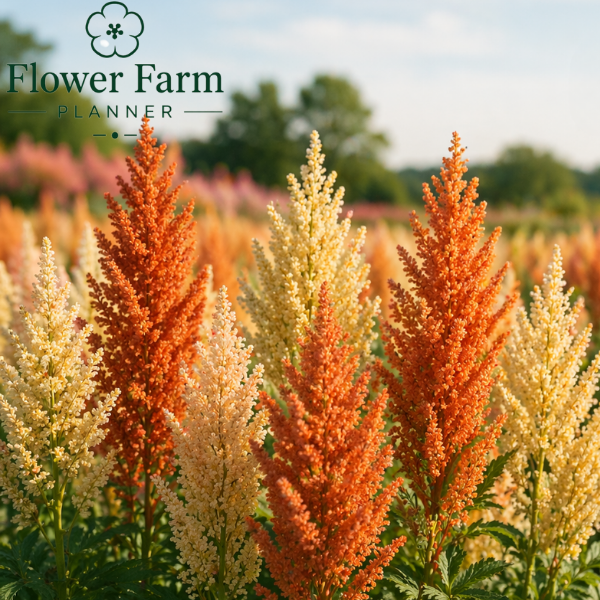
Antirrhinum majus / Snapdragon
Snapdragon ‘Costa Apricot’ is a professional cut-flower snapdragon with strong upright stems and warm apricot-orange flowers touched with rose-pink. It is best treated as a cool-season crop for spring and autumn sales rather than a hot-summer annual. The variety is especially useful where growers need a romantic peach-blush spike flower with better stem strength and uniformity than garden snapdragon types.
Open variety
Antirrhinum majus / Snapdragon
Costa II Mix is a professional early Group 2 snapdragon mix for cool-season cut-flower production. It offers strong stems, useful height, coordinated mixed colours, and high bouquet value in spring, autumn, and protected winter-to-spring crops. It is best for growers who want a full snapdragon palette from one sowing and who can manage netting, airflow, cool timing, and careful upright postharvest handling.
Open variety
Antirrhinum majus / Snapdragon
Snapdragon 'Costa Midly White II' is a bright white F1 Group 2 cut snapdragon for cool-season production. It is best treated as a premium line flower for spring, autumn, and protected winter-to-spring harvests rather than as a hot-season annual. The variety is especially valuable where growers need clean white spikes for florist work, weddings, sympathy designs, and elegant mixed bouquets. Its slightly shorter, compact habit compared with some Costa colors can make it easier to manage in tunnels, but the crop still needs support, airflow, and careful upright postharvest handling.
Open variety
Antirrhinum majus / Snapdragon
Snapdragon ‘Costa Rose II’ is a florist-quality Group II F1 cut snapdragon with medium-dark rose-pink spikes on strong upright stems. It is best grown from plugs in cool, bright production windows and performs especially well in protected autumn, winter, and spring schedules. It gives bouquets height, rhythm, and a romantic pink color that is easy to combine with cream, blush, white, lavender, peach, burgundy, and fresh green materials. It is a strong crop for growers who can manage fine seed, plugs, support netting, airflow, and prompt cooling.
Open variety
Antirrhinum majus / Snapdragon
Snapdragon 'Costa Silver' is a premium pale blush-pink Group 2 cut-flower snapdragon for cool to moderate growing windows. It is grown from seed or plugs, usually transplanted into netted beds or greenhouse benches, and harvested as tall upright spikes for florists, weddings, subscriptions, and market bouquets. Its strength is the combination of a soft antique color, reliable vertical form, strong stems, and usefulness in seasons when many warm-season cuts are not yet available. Its main management needs are correct timing, cool temperatures, support, airflow, disease prevention, and upright cold postharvest handling.
Open variety
Antirrhinum majus / Snapdragon
Snapdragon ‘Costa Summer Lavender’ is a tall, soft lavender-pink cut-flower snapdragon for growers who want elegant vertical stems in a wedding-friendly palette. It should be treated as a cool-to-mild season crop with careful transplant production, support netting, clean culture, and timely harvest. Its value is not only in color but in the way it gives height, fragrance, and movement to bouquets without feeling harsh or heavy.
Open variety
Antirrhinum majus / Snapdragon
‘Costa Summer Orange’ is a warm, bright orange cut-flower snapdragon for growers who need height, color impact, and vertical structure in mixed bouquets and florist bunches. It is best handled as a seed-started or plug-grown annual with cool to moderate growing conditions, strong light, support netting, and disciplined postharvest handling. It is especially useful where orange, apricot, sunset, citrus, harvest, or warm seasonal palettes sell well.
Open variety
Antirrhinum majus / Snapdragon
Snapdragon 'Costa Velvet I–II' is a deep burgundy-red F1 cut snapdragon in the Costa series. It is a cool-season, Group 1–2 type suited to short days, cooler temperatures, and early-season production, yet it is noted for stronger adaptability than many early snapdragon groups. Grow it from seed as plugs, transplant into well-drained beds, support with netting, harvest when the lower third to half of the spike is open, and keep stems upright through postharvest handling.
Open variety
Antirrhinum majus / Snapdragon
Double Frappe Apricot 2 is a premium cool-season cut snapdragon with fully double apricot flowers on tall, upright spikes. It is best grown from seed or plugs in cool, bright conditions and should be scheduled for early spring, fall, winter greenhouse, or mild-climate overwintered production. Its value is strongest where florists want soft peach, apricot, blush, and cream palettes with more texture than a standard snapdragon.
Open variety
Antirrhinum majus / Snapdragon
‘Double Frappe Light Pink 2’ is an early, fully double, soft light-pink snapdragon for premium cool-season cut-flower production. It is especially useful where growers want the romantic texture of double snapdragons earlier than traditional warm-season double types. Plan it as a supported, transplanted crop with careful temperature timing, strong light, clean airflow, and upright postharvest handling. Its best value comes from straight stems, uniform flowering, blush-pink color, and florist-quality double florets.
Open variety
Antirrhinum majus / Snapdragon
DoubleShot™ Appleblossom is a soft blush-pink, cream, and pale peach double snapdragon with a compact, sturdy, branched habit. It is especially useful for growers who want romantic spikes for spring and autumn bouquets, small florist bunches, and containers, but it should be planned as a shorter specialty snap rather than a tall commercial cut-flower line. Grow it cool, bright, evenly moist, and well ventilated, then harvest before too many florets open and cool quickly for the best vase quality.
Open variety
Antirrhinum majus / Snapdragon
Johnny's Potomac Custom Mix is a tall, main-season snapdragon seed mix selected for cut-flower production, long stems, and coordinated bloom timing across a broad color range. It belongs to the Potomac strain, a high-light, warm-season snapdragon line often used when growers need strong spikes for field, tunnel, or greenhouse cutting. The mix is best treated as a premium spike crop rather than a bedding snapdragon, because its value comes from vertical form, usable stem length, and florist-friendly colors. Grow as a cool-season annual or protected annual crop from plugs. Start seed early, transplant young plants before they are rootbound, keep growth steady, and avoid drought stress, heat spikes during establishment, or low-light stretching. It is generally safest to grow through cool weather into brighter, longer days, using support netting and clean postharvest handling to preserve straight stems and reduce flower drop.
Open variety
Antirrhinum majus / Snapdragon
Snapdragon 'Johnny’s Potomac Early Sunrise' is a warm, fiery F1 Group 2-3 cut snapdragon blend selected for strong stems and coordinated sunrise shades of peach, apricot, soft yellow, orange, blush, and rose-pink. It is best treated as a cool-to-mild-season line flower for spring, early summer, and autumn harvests, with support netting, careful watering, and fast postharvest hydration. Its greatest value is in mixed bouquets, subscriptions, and warm event palettes where one crop can provide height, color movement, and a complete warm mood.
Open variety
Antirrhinum majus / Snapdragon
Johnny's Potomac Summer Berry Blend is a warm-season, high-light snapdragon blend selected for coordinated berry shades on tall, florist-useful spikes. It is best raised as transplants, spaced densely, supported early, and harvested upright. The crop is valuable because it gives bouquets height and color harmony, but it needs clean culture, rust prevention, steady moisture, and careful postharvest handling.
Open variety
Antirrhinum majus / Snapdragon
Snapdragon 'Madame Butterfly Bronze' is a warm bronze-apricot, double azalea-flowered F1 snapdragon grown for premium fresh cut stems. It is most useful in cool-season production, where it provides upright line, ruffled texture, and an unusual peach-copper color for florists, weddings, subscriptions, and market bouquets. It can be pinched for branched stems or grown as a one-cut crop for longer premium spikes. Its success depends on careful seed starting, cool timing, support netting, dry foliage, disease prevention, and upright cold handling after harvest.
Open variety
Antirrhinum majus / Snapdragon
Madame Butterfly Bronze With White is a premium double snapdragon with warm bronze, apricot, salmon and creamy white tones on tall, elegant spikes. It is best treated as a cool-season cut flower and scheduled for spring, autumn, or protected winter production. The crop rewards careful seedling production, early support, regular scouting, and timely harvest at one-third to one-half open.
Open variety
Antirrhinum majus / Snapdragon
Snapdragon ‘Madame Butterfly Cherry Bronze’ is a premium double azalea-flowered snapdragon with warm cherry, coral, apricot, and bronze tones. It is best grown as a cool-season, seed-raised cut flower for tall, ruffled spikes that bring height and romantic texture to bouquets. The first flush is the most valuable, especially when plants are grown cool, bright, evenly moist, and well supported. It is more demanding than easy summer annuals because seedlings are tiny, seed must not be buried, and disease prevention matters, but it rewards careful growers with distinctive stems that stand apart from ordinary snapdragons.
Open variety
Antirrhinum majus / Snapdragon
Madame Butterfly Dark Red is a premium double azalea-type snapdragon with rich velvet-red flowers on upright spikes. It is best grown as a cool-season annual from seed or plugs and managed for straight, supported stems. The variety suits farms that can give snapdragons a cool, bright start, steady moisture, and disciplined harvest timing. It is not the easiest crop in hot humid weather, but when scheduled well it produces a distinctive florist stem with fragrance, fullness, and strong design value.
Open variety
Antirrhinum majus / Snapdragon
Madame Butterfly Ivory is a premium double snapdragon for growers who need soft ivory line stems with a more romantic texture than standard snapdragons. It is best started as plugs, transplanted into cool-season beds, supported with netting, and harvested while the lower portion of the spike is opening. The crop is especially valuable for weddings, florists, and spring bouquets because ivory blends into almost every palette and the ruffled double florets look fuller and more luxurious than ordinary snapdragon flowers.
Open variety
Antirrhinum majus / Snapdragon
Snapdragon ‘Madame Butterfly Peaches ‘n Cream Mix’ is a premium soft-color cut snapdragon blend with ruffled, double, azalea-like blooms in peach, apricot, cream, ivory, white, and gentle bronze tones. It is a strong choice for growers who sell to florists, wedding designers, subscriptions, and high-value market bouquets because it offers height, fragrance, romantic color, and a fuller flower form than standard single snapdragons. It performs best as a cool-season or shoulder-season annual with strong light, support netting, clean airflow, and careful upright postharvest handling.
Open variety
Antirrhinum majus / Snapdragon
Snapdragon 'Madame Butterfly Pink' is a warm pink, double azalea-flowered F1 snapdragon grown for premium fresh cut stems. It is most useful in cool-season production, where it provides upright line, ruffled texture, light fragrance, and romantic color for bouquets, florists, and weddings. It needs careful seed starting, good airflow, netting, steady moisture, rust scouting, and upright cold handling after harvest.
Open variety
Antirrhinum majus / Snapdragon
Snapdragon 'Madame Butterfly Rose' is a premium rose-pink, double, azalea-flowered snapdragon grown for tall, romantic, ruffled spikes. It is best treated as a cool-season cut flower that rewards careful timing, support, and postharvest handling. Its value is strongest when stems are straight, clean, hydrated, and harvested with the lower portion of the spike open while the upper florets are still fresh.
Open variety
Antirrhinum majus / Snapdragon
Snapdragon ‘Madame Butterfly Yellow’ is a soft yellow, double, azalea-type F1 snapdragon grown for premium fresh cut spikes. It is best scheduled in cool, bright production windows and handled with support netting, clean postharvest hydration, and careful harvest timing. The variety is especially useful for spring palettes, pastel bouquets, and florist work where a romantic yellow line flower is needed.
Open variety
Antirrhinum majus / Snapdragon
Madame Butterfly™ Mix is a premium F1 snapdragon mixture with double, azalea-like florets on upright spikes. It is best treated as a cool-season cut flower for protected or field production, with strong value in romantic mixed bouquets and florist work. The crop needs careful scheduling, support, airflow, and upright postharvest handling, but rewards good management with distinctive ruffled stems that look softer and fuller than ordinary snapdragons.
Open variety
Antirrhinum majus / Snapdragon
Madame Butterfly™ White is a premium double azalea-type snapdragon grown for creamy white, ruffled vertical stems. It is best treated as a cool-season cut flower that rewards careful sowing, early support, steady fertility, clean postharvest handling, and strong ventilation. The variety is especially valuable for weddings and florist work because it gives the height of a snapdragon with a softer, fuller, more romantic flower face.
Open variety
Antirrhinum majus / Snapdragon
Snapdragon 'Maryland Appleblossom' is a professional blush-white Maryland-series cut snapdragon for cool-season production. It produces tall, sturdy, well-defined spikes that fit winter, early spring, and autumn florist work, especially where soft romantic colors are needed. Grow it from seed or plugs, keep it cool and bright, plant at high density for premium main stems, net early, harvest at the lower-floret-open stage, and handle upright and cold after cutting.
Open variety
Antirrhinum majus / Snapdragon
Maryland Bright Yellow is a professional cool-season cut snapdragon with long, clean, bright yellow spikes on sturdy stems. It is best planned as a transplanted crop for protected autumn, winter, and spring production, especially where growers need reliable line flowers before heat-sensitive crops lose quality. The crop rewards careful timing, clean propagation, netting, and quick upright postharvest handling.
Open variety
Antirrhinum majus / Snapdragon
Snapdragon 'Maryland Dark Orange' is a professional dark orange cut snapdragon in the Maryland F1 Series, bred for cool-season production and reliable florist-quality spikes. It is best scheduled for autumn, winter, and early spring programs, especially in greenhouses, high tunnels, or mild-climate field beds. The crop rewards careful timing, strong light, cool nights, support netting, and disciplined postharvest handling. Its main value is a tall, warm orange line flower that adds height, structure, and seasonal richness to bouquets and florist bunches.
Open variety
Antirrhinum majus / Snapdragon
Snapdragon ‘Maryland Flamingo’ is a professional Group I-II / Group II cut-flower snapdragon with a vivid coral-pink color and a strong fit for cool-season production. It is best treated as a seed-grown annual crop for tunnels, greenhouses, or cool outdoor windows. The plant is valuable because it gives height, line, and a modern warm color before many summer focal crops are available. Its main requirements are good plugs, cool scheduling, support netting, airflow, clean postharvest handling, and upright storage after harvest.
Open variety
Antirrhinum majus / Snapdragon
Snapdragon 'Maryland Ivory White' is a professional cool-season cut-flower snapdragon with tall, clean ivory-white spikes on sturdy stems. It is best scheduled for autumn, winter, and spring production under cool, bright, ventilated conditions. It is especially useful for growers who need a reliable neutral line flower for weddings, florists, subscriptions, sympathy work, and spring bouquets.
Open variety
Antirrhinum majus / Snapdragon
Snapdragon 'Maryland Lavender' is a professional cool-season cut snapdragon for growers who want tall, clean, lavender line flowers in autumn, winter, and spring programs. It is best treated as a Group 1-2 or Group 2 crop, meaning it performs in short-day to moderate-day periods with cool temperatures and good light. It is not the best choice for hot summer finishing, but in the right window it can produce elegant spikes with florist-grade height, soft color, and strong design value.
Open variety
Antirrhinum majus / Snapdragon
Snapdragon ‘Maryland Pink Yosemite’ is a professional soft pink cut snapdragon in the Maryland F1 series, selected for cool-season greenhouse, tunnel, and mild field production. It is best treated as a scheduled group 2 crop for autumn, winter, and spring stems, producing tall, upright, florist-quality spikes when grown in bright, cool conditions with support netting and clean disease management. The variety is especially valuable for soft pink wedding and market bouquets because it gives height, romance, and vertical structure at a time of year when local line flowers can be limited.
Open variety
Antirrhinum majus / Snapdragon
Snapdragon 'Maryland Plumblossom' is a professional Group 1,2 Maryland-series snapdragon with tall florist stems and white florets marked with soft plum to light purple. It is best for cool-season production in greenhouses, tunnels, and protected or high-light field situations. Its strongest use is as a premium line flower for winter, spring, autumn, wedding, and florist markets.
Open variety
Antirrhinum majus / Snapdragon
Maryland Red is a professional cool-season cut snapdragon with long, clean, saturated red spikes on sturdy stems. It is best planned as a transplanted crop for protected autumn, winter, and spring production, especially where growers need reliable line flowers before heat-sensitive crops lose quality. The crop rewards careful timing, clean propagation, netting, and quick upright postharvest handling.
Open variety
Antirrhinum majus / Snapdragon
Snapdragon 'Maryland Rose' is a professional rose-pink cut snapdragon in the Maryland F1 Series, bred for cool-season production and reliable florist-quality spikes. It is best scheduled for autumn, winter, and early spring programs, especially in greenhouses, high tunnels, or mild-climate field beds. The crop rewards careful timing, strong light, cool nights, support netting, and disciplined postharvest handling. Its main value is a tall, rose-pink line flower that adds height, structure, and romantic color to bouquets and florist bunches.
Open variety
Antirrhinum majus / Snapdragon
Snapdragon 'Maryland Royal' is a professional Maryland-series snapdragon selected for tall, upright florist stems and a saturated royal purple-red flower color. It belongs in cool-season snapdragon production where Group 1,2 types are used for short days, moderate light, and relatively cool temperatures. In a cut-flower planting it functions as a strong vertical line crop, giving bouquets and bunches height, color depth, and a polished florist look. It is best treated as a cool-season annual or short-lived tender perennial crop rather than a hot-summer field flower, because stem quality, spike length, and flower finish are highest when plants grow steadily in cool conditions with good light, even moisture, strong airflow, and support netting.
Open variety
Antirrhinum majus / Snapdragon
Snapdragon ‘Maryland Shell Pink’ is a professional Group I-II / Group II cut-flower snapdragon with a soft shell-pink color and a strong fit for cool-season production. It is best treated as a seed-grown annual crop for tunnels, greenhouses, or cool outdoor windows. The plant is valuable because it gives height, line, and romantic pale color before many summer focal crops are available. Its main requirements are good plugs, cool scheduling, support netting, airflow, clean postharvest handling, and vertical storage after harvest.
Open variety
Antirrhinum majus / Snapdragon
Snapdragon ‘Maryland White’ is a professional white cut snapdragon in the Maryland F1 series, selected for cool-season greenhouse, tunnel, and mild field production. It is best treated as a scheduled group 1,2 crop for autumn, winter, and spring stems, producing tall, upright, florist-quality spikes when grown in bright, cool conditions with support netting and clean disease management. The variety is especially valuable for weddings, florists, sympathy work, subscriptions, and mixed market bouquets because it gives clean white height, brightness, and vertical structure at a time of year when local line flowers can be limited.
Open variety
Antirrhinum majus / Snapdragon
Snapdragon ‘Monaco Orange’ is a tall professional cut-flower snapdragon for growers who want saturated warm orange spikes with excellent florist usefulness. It should be planned as a cool-season, spring, autumn, tunnel or greenhouse crop rather than a hot-summer field annual. Use support netting, steady moisture, clean propagation, and upright postharvest handling to protect stem quality.
Open variety
Antirrhinum majus / Snapdragon
Snapdragon 'Opus Early Bronze' is a tall, warm-toned cut-flower snapdragon valued for bronze-orange, mango, dusty rose, and golden aging tones on strong upright spikes. It should be grown as a cool-season to main-season annual crop from seed or plugs, with careful attention to seasonal group timing, support netting, clean propagation, and upright postharvest handling. The cultivar is especially useful where a grower needs a line flower that feels modern, warm, and florist-friendly rather than a standard pastel or primary color snapdragon.
Open variety
Antirrhinum majus / Snapdragon
Snapdragon ‘Potomac Appleblossom’ is a tall, professional F1 cut snapdragon with white florets softly dusted and throated in rose pink. It belongs to the Potomac warm-season Group 3-4 class, so it is useful for high-light, longer-day production windows where strong stems and long spikes are needed. Grow it from fine seed or plugs, transplant into supported beds, keep moisture even, avoid overhead irrigation, and harvest upright at the correct floret stage.
Open variety
Antirrhinum majus / Snapdragon
Premium cool-season spike flower with exceptional vase life and outstanding florist demand.
Open variety
Antirrhinum majus / Snapdragon
Snapdragon ‘Sherbet-toned Chantilly Mix’ is an early, tall, open-faced snapdragon blend in soft peach, cream, lemon, blush, apricot, coral, and warm pastel tones. It is best grown as a cool-season seed-started transplant crop for premium line stems. The crop rewards careful scheduling, early support netting, steady moisture, and clean postharvest handling. Its greatest value is in spring and shoulder-season bouquets where it adds height, softness, and a romantic garden-grown look.
Open variety
Achillea millefolium / Yarrow
Anthea is a soft yellow yarrow with flat flower heads that age toward cream. It is most useful as a calm filler and texture stem for summer bouquets, especially when bright gold yarrow feels too strong. Grow it as a perennial clump crop, cut only when the heads are fully mature, and treat it as a useful fresh-and-dried stem rather than a high-gloss florist flower.
Open variety
Achillea millefolium / Yarrow
‘Appleblossom’ is a soft pink yarrow for growers who want a romantic filler with a flatter, calmer shape than airy fillers such as ammi or feverfew. The flowers open apple-blossom pink and then fade through pale blush into creamy tones, which makes them useful in pastel bouquets but also means they must be cut and sold with care. This is not the strongest long-stem yarrow for wholesale buckets. It earns its place where colour, softness, dried use, and garden-style design matter more than maximum stem length.
Open variety
Achillea millefolium / Yarrow
Compact apricot-pink yarrow with colour-changing flat flower heads, useful for fresh bouquets, dried work, and warm romantic designs.
Open variety
Achillea millefolium / Yarrow
Deep cherry-red yarrow for fresh and dried cuts, adding flat texture and moody colour to summer bouquets.
Open variety
Achillea millefolium / Yarrow
Classic cerise-pink yarrow with flat flower heads, feathery foliage, and useful fresh or dried bouquet texture for bright summer designs.
Open variety
Achillea millefolium / Yarrow
Tall golden yarrow with flat flower heads for fresh bouquets, dried flowers, and sunny meadow-style arrangements.
Open variety
Achillea millefolium / Yarrow
Mixed-colour Colorado yarrow with rosy terra-cotta, salmon, apricot, pink, yellow, cream, and white flat flower heads for fresh and dried bouquets.
Open variety
Achillea millefolium / Yarrow
Coronation Gold is part of the Achillea local plant profile collection.
Open variety
Achillea millefolium / Yarrow
Soft yellow yarrow fading to cream, valued as a tall textural filler for fresh bouquets, dried bunches, and natural wedding or market designs.
Open variety
Achillea millefolium / Yarrow
Fireland yarrow opens red and matures through orange, salmon, peach, and tawny gold, giving warm flat flower heads for fresh and dried bouquets.
Open variety
Achillea millefolium / Yarrow
A tall golden-yellow fern-leaf yarrow with large plate-like heads and strong fresh or dried cut-flower value.
Open variety
Achillea millefolium / Yarrow
Soft pink Island Pink yarrow for meadow bouquets, dried flowers, pollinator plantings, and natural summer arrangements.
Open variety
Achillea millefolium / Yarrow
Rosy-lilac yarrow for soft summer bouquets, meadow-style wedding designs, pollinator plantings, and dried flower work.
Open variety
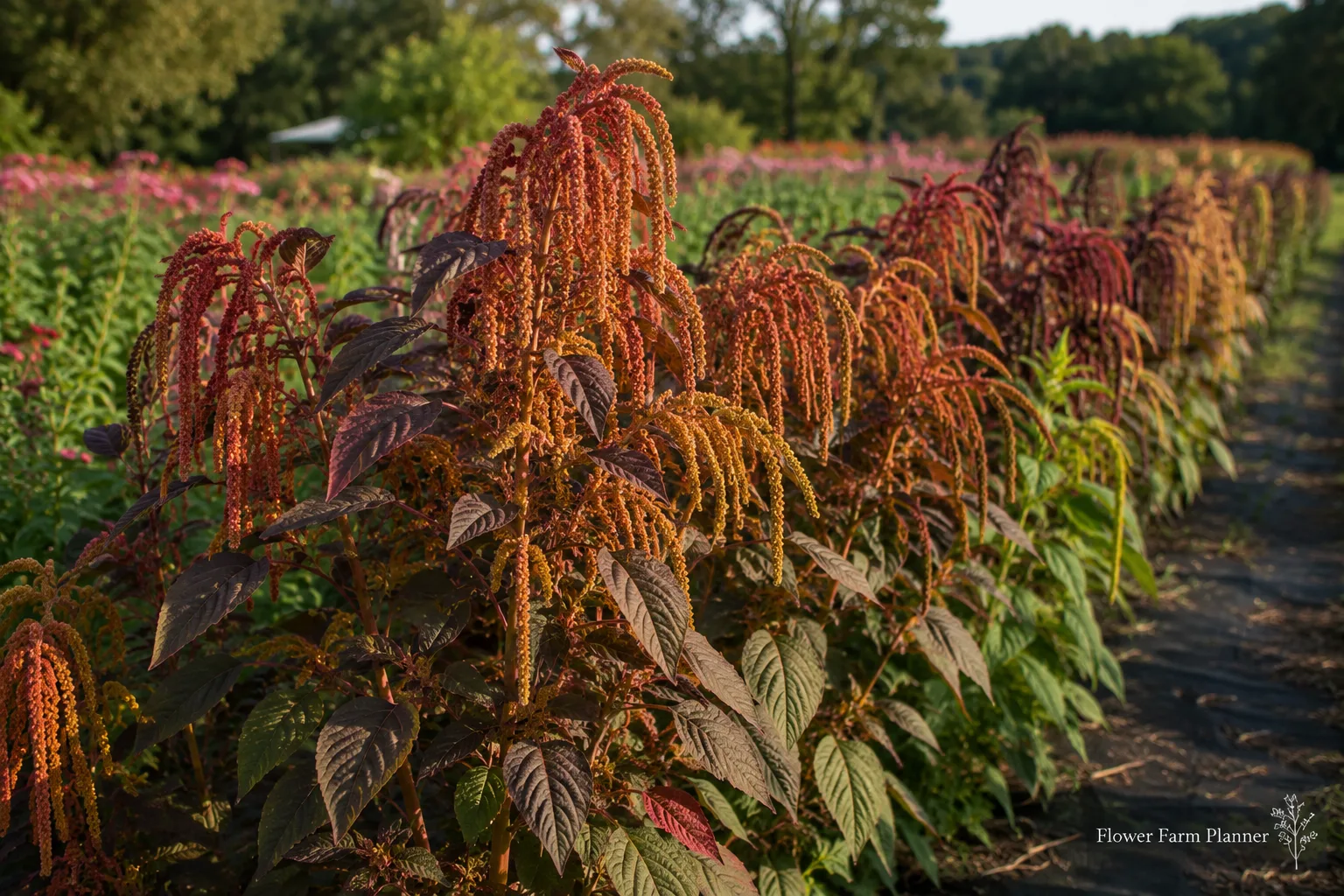
Achillea millefolium / Yarrow
A compact lemon-yellow yarrow with silvery foliage, tidy growth, and useful fresh or dried cut-flower heads.
Open variety
Achillea millefolium / Yarrow
Golden-yellow sweet yarrow with flat flower heads for fresh filler, dried bunches, and sunny pollinator-style bouquets.
Open variety
Achillea millefolium / Yarrow
Compact ruby-red yarrow with cream-eyed flower clusters, ferny foliage, and useful summer stems for local bouquets, dried bunches, and warm event palettes.
Open variety
Achillea millefolium / Yarrow
Compact rose-pink yarrow with flat flower clusters, ferny foliage, and useful summer stems for local bouquets, dried bunches, and romantic event palettes.
Open variety
Achillea millefolium / Yarrow
Compact violet-magenta yarrow with cream-centred flower clusters, ferny foliage, and useful summer stems for local bouquets, dried bunches, and cool romantic event palettes.
Open variety
Achillea millefolium / Yarrow
Rose-pink yarrow that ages to pale pink and white, useful for summer bouquets, dried flowers, and meadow-style designs.
Open variety
Achillea millefolium / Yarrow
Cherry-red yarrow with yellow centres for warm summer bouquets, dried flowers, pollinator plantings, and cottage-style arrangements.
Open variety
Achillea millefolium / Yarrow
A classic tall golden fern-leaf yarrow with long stems, flat deep-yellow heads, and reliable fresh or dried cut-flower value.
Open variety
Achillea millefolium / Yarrow
Compact rose-pink yarrow with creamy ageing tones, flat flower clusters, aromatic foliage, and useful summer stems for fresh bouquets, dried bunches, and soft colour palettes.
Open variety
Achillea millefolium / Yarrow
Compact red-magenta yarrow with flat flower clusters, aromatic foliage, and useful summer stems for fresh bouquets, dried bunches, and warm colour palettes.
Open variety
Achillea millefolium / Yarrow
Rich red yarrow with flat flower clusters, aromatic foliage, and useful summer stems for fresh bouquets, dried bunches, and bold warm palettes.
Open variety
Achillea millefolium / Yarrow
Soft salmon-orange to salmon-pink yarrow that fades to creamy blush, useful for romantic bouquets, meadow texture, and dried flower work.
Open variety
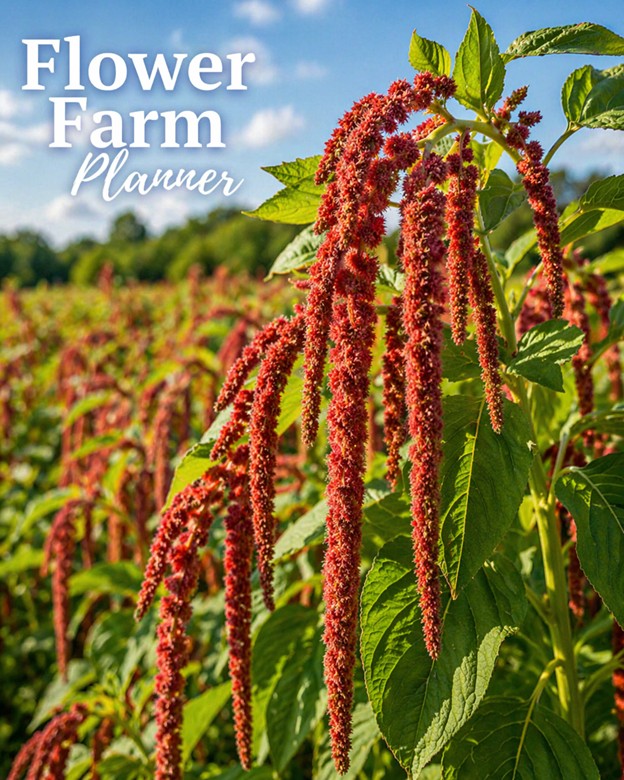
Achillea millefolium / Yarrow
A sturdy lemon-yellow yarrow with flat summer flower heads, fern-like foliage, and strong local bouquet and dried-flower potential.
Open variety
Achillea millefolium / Yarrow
A sturdy dark red yarrow with pale-eyed flat summer flower heads, silvery fern-like foliage, and strong local bouquet and dried-flower potential.
Open variety
Achillea millefolium / Yarrow
A sturdy sunset-orange yarrow with large flat summer flower heads that mature yellow, fern-like foliage, and strong local bouquet and dried-flower potential.
Open variety
Achillea millefolium / Yarrow
A sturdy dark salmon-pink yarrow with flat summer flower heads that age to peachy pink, green fern-like foliage, and strong local bouquet and dried-flower potential.
Open variety
Achillea millefolium / Yarrow
Vivid rose-pink yarrow with white-centred flat flower clusters, compact aromatic foliage, and useful summer stems for bouquets, dried bunches, and pollinator-friendly designs.
Open variety
Achillea millefolium / Yarrow
Clean white yarrow with dark green ferny foliage and summer stems for fresh bouquets, dried bunches, and white garden-style designs.
Open variety
Achillea millefolium / Yarrow
Compact strawberry-red yarrow with gold-centred flower heads, aromatic foliage, and useful summer stems for fresh bouquets, dried bunches, and warm romantic palettes.
Open variety
Achillea millefolium / Yarrow
Seed-grown pastel yarrow mix with soft flat flower heads, aromatic foliage, and useful summer stems for fresh bouquets, dried bunches, and cottage-style designs.
Open variety
Achillea millefolium / Yarrow
Wine-red yarrow with white-eyed flat flower heads, dark green foliage, and summer stems for fresh bouquets, dried bunches, and rich garden-style designs.
Open variety
Achillea millefolium / Yarrow
Compact butter-yellow yarrow with sturdy upright stems, grey-green ferny foliage, and useful summer stems for bouquets, dried bunches, and pollinator-friendly designs.
Open variety
Achillea millefolium / Yarrow
Warm peach-orange to terracotta yarrow that fades to yellow and cream, useful for rustic bouquets, autumn palettes, and dried flower work.
Open variety
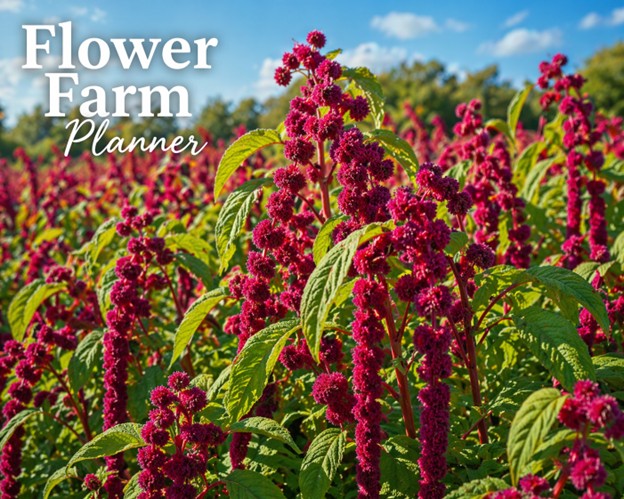
Achillea millefolium / Yarrow
Creamy white yarrow with ferny grey-green foliage and summer stems for fresh bouquets, dried bunches, and white garden-style designs.
Open variety
Zinnia elegans / Zinnia
Zinnia ‘Agave’ is a tall, heat-loving, seed-grown cut zinnia selected for large cactus-form blooms in a cohesive sunset blend of buff, coral, gold, peach, pink, and orange. It is best grown as a warm-season local-market crop in full sun, fertile well-drained soil, and good airflow. The crop is productive and visually distinctive, but quality depends on harvesting only firm-neck stems, avoiding wet foliage, succession planting, and selling promptly while flowers are fresh.
Open variety
Zinnia elegans / Zinnia
Zinnia 'Alpenglow' is a variety-level cut-flower record with starter planning values awaiting review.
Open variety
Zinnia elegans / Zinnia
Zinnia 'Aurora' is a warm-season, seed-grown, cut-and-come-again zinnia mix bred for large dahlia-shaped blooms in warm vintage tones. It is easy to start, fast to flower, and highly useful for local bouquets, but it should be treated as a perishable local-market crop rather than a long-storage commodity flower. The main success factors are warm soil, full sun, succession planting, clean water, strong airflow, and removing plantings before disease ruins stem quality.
Open variety
Zinnia elegans / Zinnia
Zinnia Aztec Burgundy Bicolor is a compact Zinnia haageana variety with small double to semi-double blooms in deep burgundy, rose-red, and cream-tipped bicolor tones. It is best treated as a specialty posy, mini-bouquet, container, and pollinator crop rather than as a tall commercial florist zinnia. The plants are short, well-branched, fast from seed, and capable of producing many small flowers over a long warm-season window when harvested or deadheaded often. Its strongest value is visual personality: the flowers bring high contrast, moody warmth, and a playful vintage look that customers notice at market. Its main limitation is stem length, so it should be sold and designed intentionally as petite seasonal material.
Open variety
Zinnia elegans / Zinnia
Zinnia ‘Aztec Sunset’ is a compact, warm-season Zinnia haageana mix valued for its unusually rich bicolor flowers in buttercream, gold, rust, cranberry, deep red, merlot, copper, and burnt orange tones. It is not a giant florist zinnia; its commercial strength is abundance, charm, heat tolerance, color complexity, and usefulness in mixed bouquets. The plants are bushy and productive, with smaller flowers that bring movement and patterned detail to bunches. Grow it from seed after frost, give it full sun, pinch young plants, cut frequently, and succession sow for clean foliage and steady summer-to-autumn color.
Open variety
Zinnia elegans / Zinnia
Zinnia ‘Ballerina’ is a warm-season seed-grown cut zinnia selected for romantic pastel blooms in soft pink, pale peach, blush, and warm cream tones. The flowers are large, usually 4–6 inches across, and often highly double, with a mixture of dahlia-like and occasional cactus-like forms that gives the crop a softer, more premium look than many standard zinnias. It is best grown as a local-market and wedding-season annual: easy to raise in warm soil, productive when cut regularly, and valuable for bouquets where gentle color is more important than intense brightness. Its main risks are the standard zinnia problems of mildew, leaf spot, beetles, weather-marked petals, and postharvest cold sensitivity, plus the need to sort occasional off-color or off-form blooms.
Open variety
Zinnia elegans / Zinnia
Zinnia 'Benary’s Giant Bright Pink' is a tall, vigorous, professional cut-flower zinnia with large, fully double, dahlia-like blooms in a clear saturated bright pink. It is one of the easiest pink summer focal flowers to understand, sell, and design with, especially for farmers markets, subscriptions, and florist-direct seasonal work. Grow it after frost in warm soil, give full sun and airflow, pinch for branching, harvest only firm mature stems, and sell it fresh rather than treating it as a long-storage commodity stem.
Open variety
Zinnia elegans / Zinnia
Benary’s Giant Carmine is a tall, vigorous, large-flowered zinnia for warm-season cut-flower production. It produces fully double, dahlia-like carmine blooms on long sturdy stems and is one of the classic dependable choices for market bouquets, florist bunches, subscriptions, and high-color event work. It is easy to start from seed and highly productive, but premium quality depends on warm planting conditions, full sun, clean water management, regular harvesting, and strong disease prevention.
Open variety
Zinnia elegans / Zinnia
‘Benary’s Giant Coral’ is a premium large-flowered Zinnia elegans selection in the Benary’s Giant series, grown for bold coral-salmon fully double blooms on strong stems. It is one of the most useful warm-season annuals for growers who need reliable colour, fast turnover, and high bouquet impact. The crop is easy from seed and highly productive, but quality depends on warm soil, full sun, drip irrigation, airflow, frequent harvest, and correct postharvest handling. It should be planned as a local fresh cut flower rather than a long-storage commodity stem.
Open variety
Zinnia elegans / Zinnia
Zinnia 'Benary’s Giant Deep Red' is a tall, heat-loving, cut-and-come-again Zinnia elegans variety from the Benary’s Giant series, valued for large fully double dahlia-like blooms, sturdy stems, strong yield, and rich saturated red color. It is best treated as a reliable premium local stem crop: easy to start, quick to flower, productive when cut often, but vulnerable to foliar disease and postharvest breakdown when grown or handled carelessly.
Open variety
Zinnia elegans / Zinnia
Zinnia ‘Benary’s Giant Golden Yellow’ is a tall, professional cut-flower zinnia with large fully double golden-yellow blooms on sturdy stems. It is one of the clearest and most marketable yellow zinnias for summer bouquets, straight bunches, subscriptions, and florist work. The variety is productive, warm-season, seed-grown, and relatively easy, but it still needs full sun, warm soil, airflow, frequent cutting, and clean postharvest handling to deliver premium stems.
Open variety
Zinnia elegans / Zinnia
Benary’s Giant Lilac is a dependable tall cut zinnia for growers who need large, fully double lilac-purple flowers on sturdy stems. It is easy enough for newer growers, but premium results come from warm soil, succession sowing, good airflow, firm-neck harvest, clean water, and quick local sales.
Open variety
Zinnia elegans / Zinnia
‘Benary’s Giant Lime’ is a large, fully double, lime-green cut-flower zinnia grown for long, strong stems and a color that is far more useful in design than it first appears. The flowers act almost like a floral foliage tone: they bridge pastels, cool down hot colors, brighten white-and-green work, and add a fresh modern note to summer bouquets. It is an easy seed-grown annual, but commercial quality depends on warm planting conditions, full sun, airflow, frequent cutting, clean postharvest handling, and timely successions.
Open variety
Zinnia elegans / Zinnia
Zinnia 'Benary's Giant Orange' is a dependable warm-season cut flower for growers who need bright, sellable color and fast repeat harvests from seed. It is best treated as a local-market crop rather than a long-distance shipping crop: grow it in full sun, harvest mature firm-necked stems, sell it fresh, and keep the postharvest chain clean. The variety rewards regular cutting and successions, but it punishes poor airflow, dirty buckets and humid disease pressure.
Open variety
Zinnia elegans / Zinnia
Zinnia 'Benary's Giant Purple' is a professional cut-flower zinnia grown from seed for large, fully double, violet-purple blooms on long, sturdy stems. It is fast, productive, and highly valuable for local markets, florists, subscriptions, and summer events, but it must be managed as a warm-season, succession-planted crop. The keys are warm soil, full sun, fertile but well-drained beds, airflow, clean foliage, mature harvest, clean buckets, and short storage.
Open variety
Zinnia elegans / Zinnia
Benary’s Giant Salmon Rose is a tall, vigorous, large-flowered zinnia for warm-season cut-flower production. It produces fully double, dahlia-like salmon-rose blooms on long sturdy stems and is one of the most useful zinnias for wedding-friendly summer color. It is easy to start from seed and highly productive, but premium quality depends on warm planting conditions, full sun, clean water management, regular harvesting, and strong disease prevention.
Open variety
Zinnia elegans / Zinnia
Zinnia 'Benary's Giant Scarlet' is a tall, productive, seed-grown annual selected for large, fully double, dahlia-like blooms in a saturated scarlet red. It is especially useful where growers need a reliable warm-season red that photographs strongly, reads clearly from a distance in market bouquets, and supplies repeated cuts from vigorous branching plants. It should be planned as a succession crop rather than a one-time planting, harvested at a firm mature stage, kept clean and well hydrated after cutting, and sold quickly through local channels where its bold color and fresh garden character are strongest.
Open variety
Zinnia elegans / Zinnia
‘Benary’s Giant White’ is a premium large-flowered Zinnia elegans selection in the Benary’s Giant series, grown for clean white fully double blooms on strong stems. It is one of the most useful warm-season annuals for growers who need a reliable white focal or mass flower for local bouquets, weddings, florists, subscriptions, and elegant summer designs. The crop is easy from seed and highly productive, but quality depends on warm soil, full sun, drip irrigation, airflow, frequent harvest, strict grading, and careful postharvest handling. Because the petals are white, blemishes are more visible than on darker zinnias, so this variety rewards clean production and fast local sales.
Open variety
Zinnia elegans / Zinnia
‘Benary’s Giant Wine’ is a premium large-flowered Zinnia elegans selection in the Benary’s Giant series, grown for deep wine-burgundy fully double blooms on strong stems. It is one of the most useful warm-season annuals for growers who need reliable colour, fast turnover, and high bouquet impact, especially in darker or more romantic palettes. The crop is easy from seed and highly productive, but quality depends on warm soil, full sun, drip irrigation, airflow, frequent harvest, and correct postharvest handling. It should be planned as a local fresh cut flower rather than a long-storage commodity stem.
Open variety
Zinnia elegans / Zinnia
Zinnia 'Cactus Flowered Mix' is a warm-season, seed-grown annual cut flower with large, playful, quilled blooms in a broad range of bright colors. It is easy to establish, fast to flower and generous under regular cutting, making it a useful crop for growers who need cheerful summer volume for market bouquets, subscriptions, u-pick and informal event work. Its commercial success depends on freshness and cleanliness: the crop should be succession planted, grown in full sun with airflow, harvested at the firm-stem stage and sold quickly into local channels.
Open variety
Zinnia elegans / Zinnia
Zinnia 'California Giants' is a tall, classic, large-flowered zinnia mix for warm-season cutting. It produces broad, flat-petaled, semi-double to double blooms in bright mixed colors and is best grown in full sun, warm soil, and well-drained beds. It is easy enough for beginners but commercial quality depends on airflow, regular cutting, disease scouting, clean buckets, and fast local sale.
Open variety
Zinnia elegans / Zinnia
Zinnia 'Candy Mix' is a warm-season, seed-grown, cut-and-come-again annual with small frilly scabiosa-style flowers in scarlet, raspberry, rose, salmon, tangerine, gold, cream, and related warm tones. It is easy to grow in full sun after frost, productive when cut often, and especially useful for cheerful local bouquets where texture and color variety matter more than perfect uniformity. Plan it as a fresh local crop with regular successions, careful disease prevention, and grading for stem stiffness, color, and flower form.
Open variety
Zinnia elegans / Zinnia
Zinnia 'Cresto! Peaches and Cream' is a specialty pastel zinnia mix with cream, peach, salmon, blush, and soft pink blooms on moderately tall plants. It is valued for cut-flower use because it brings the warmth of peach and cream without the harsh brightness of standard zinnias. The variety is best grown as a fresh local stem, cut when the neck is firm, and sold quickly through bouquets, subscriptions, florists, and warm pastel event designs.
Open variety
Zinnia elegans / Zinnia
Zinnia ‘Cupcakes Pink’ is a warm-season, seed-grown cut flower with soft pink to bubblegum-pink blooms, peachy accents, and a frilly scabiosa/pincushion look on the best flowers. It behaves like a productive cut-and-come-again zinnia, but it should be planned as a novelty crop rather than a perfectly uniform production series. Grow it in full sun, harvest only when stems are stiff, succession sow every two weeks for continuous quality, and expect the best market value in local bouquets and romantic garden-style event work.
Open variety
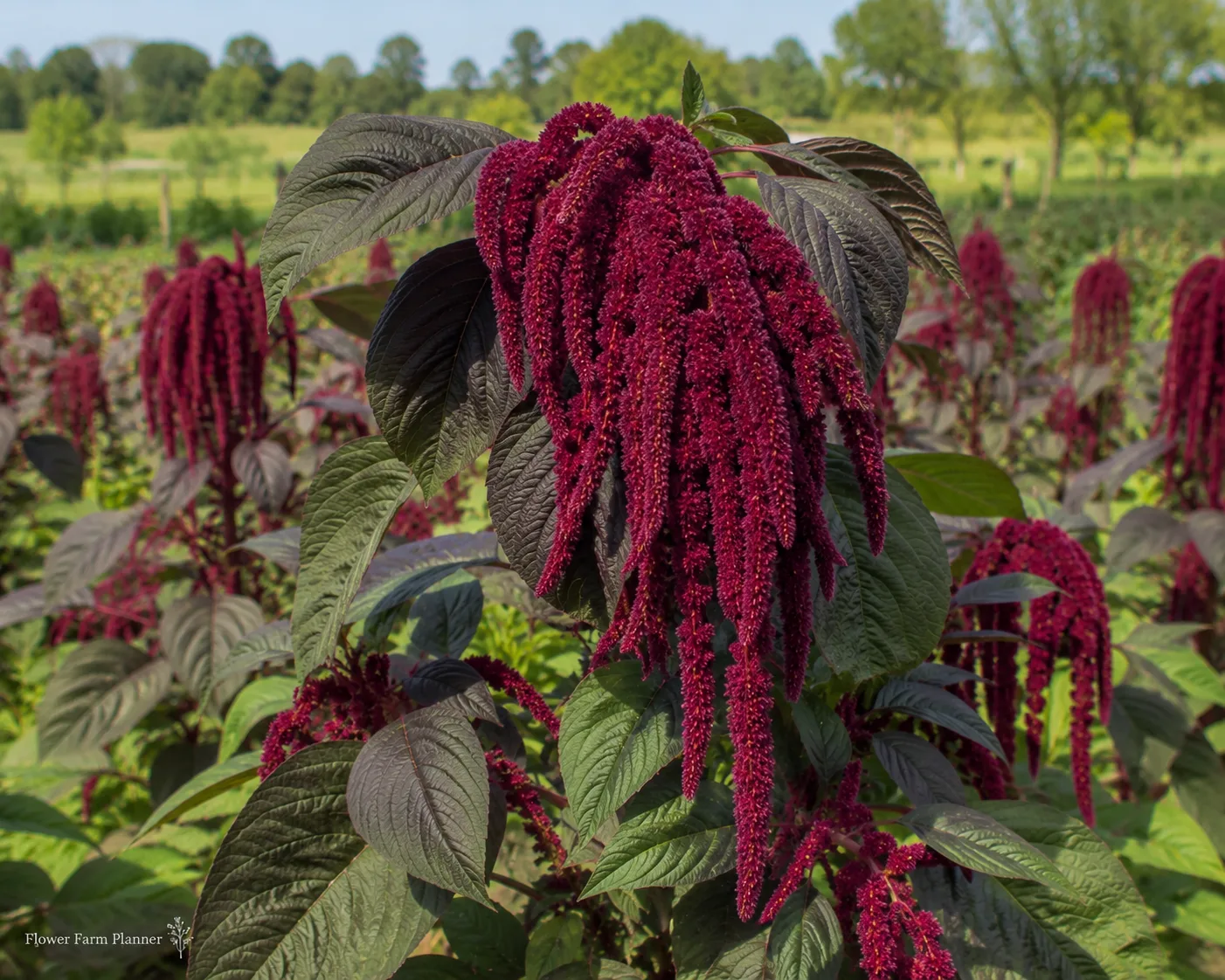
Zinnia elegans / Zinnia
Zinnia ‘Cupid Mix’ is a compact, cheerful mixed-color zinnia with small pompon flowers on plants around 50 cm tall. It is easy to grow from seed, flowers quickly in warm weather, attracts pollinators, and gives abundant informal color for short bouquets, jars, bouquet bars, and farm-stand bunches. Its main limitation is stem length: it should be planned as a short local stem, not a premium long-stem wholesale zinnia. Grow it in full sun, keep the canopy airy, harvest mature firm blooms, and sow successions for clean young plants.
Open variety
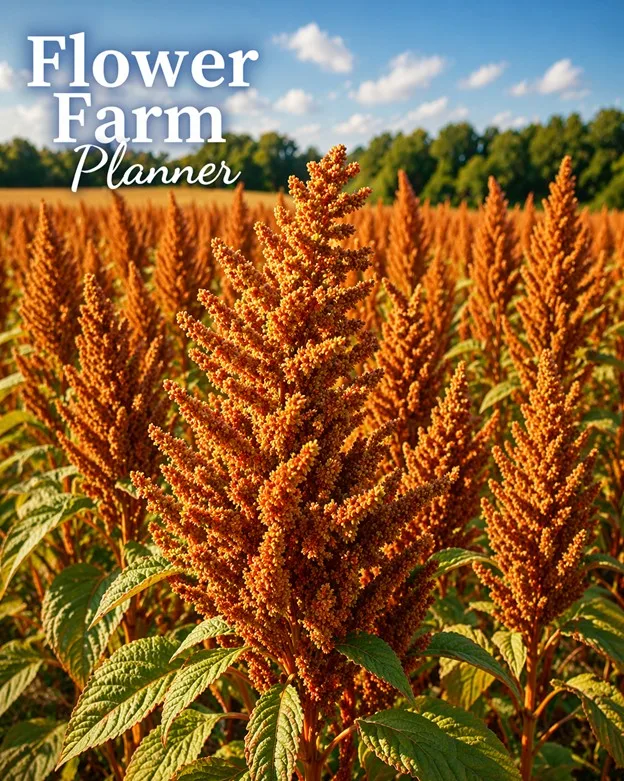
Zinnia elegans / Zinnia
Zinnia 'Dawn Creek Blush' is a tall, productive, seed-grown specialty zinnia selected for soft blush, pale lavender, ivory, cream, soft peach, and occasional pale yellow flowers. It belongs in warm, sunny beds after frost, performs best with pinching and frequent harvest, and is most valuable for local bouquets and event work where its romantic, variable pastel palette is an advantage rather than a defect.
Open variety
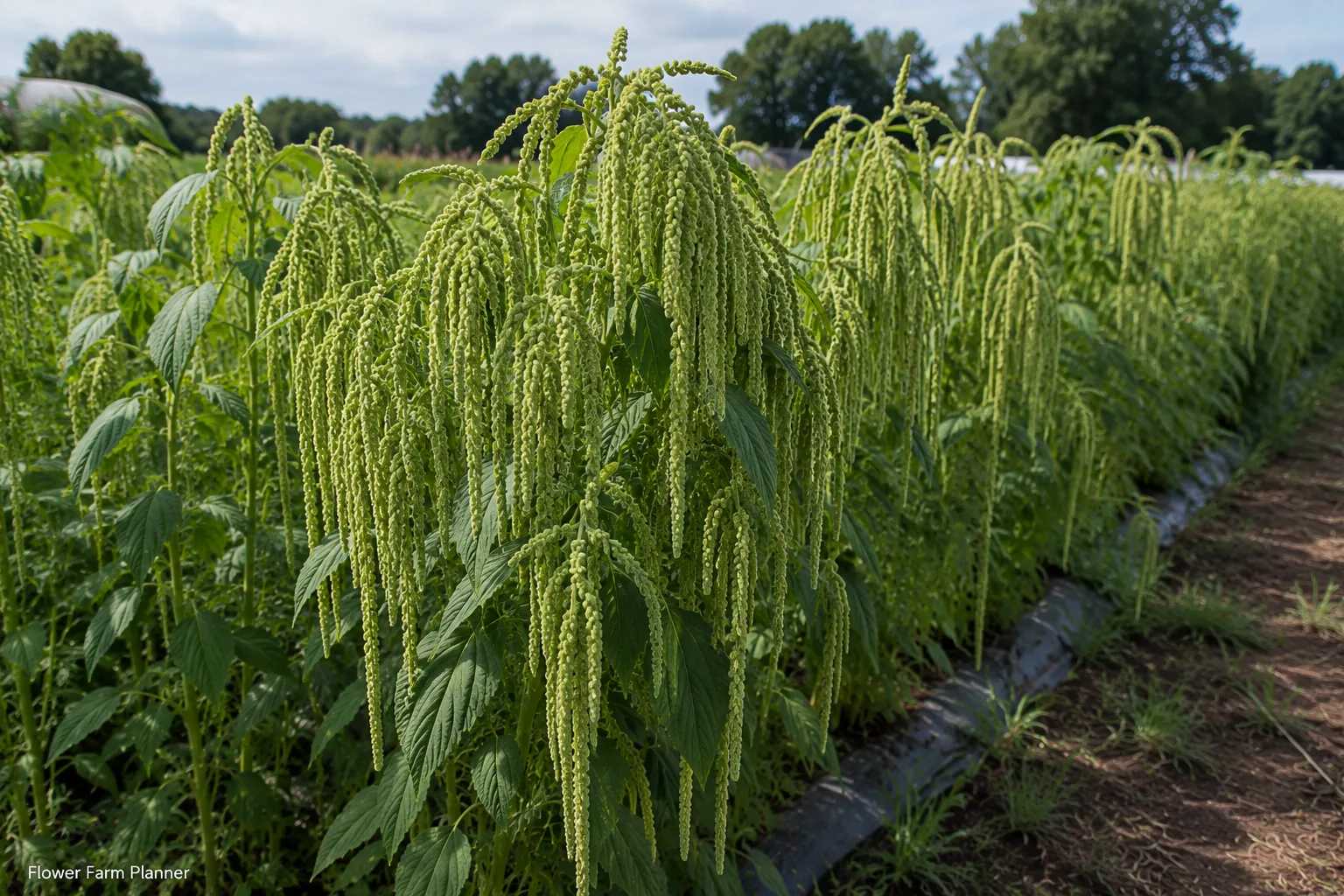
Zinnia elegans / Zinnia
Zinnia ‘Dawn Creek Honey’ is a tall, warm-season annual cut flower grown from seed for premium honey, buff, cream, peach, apricot, and soft gold blooms. It is valuable because it gives the productivity and familiarity of zinnias while offering a much softer, more design-friendly palette than standard bright mixes. Grow it in full sun after all frost danger has passed, pinch young plants, harvest only firm mature stems, and sell quickly into local bouquet, florist, and wedding channels.
Open variety
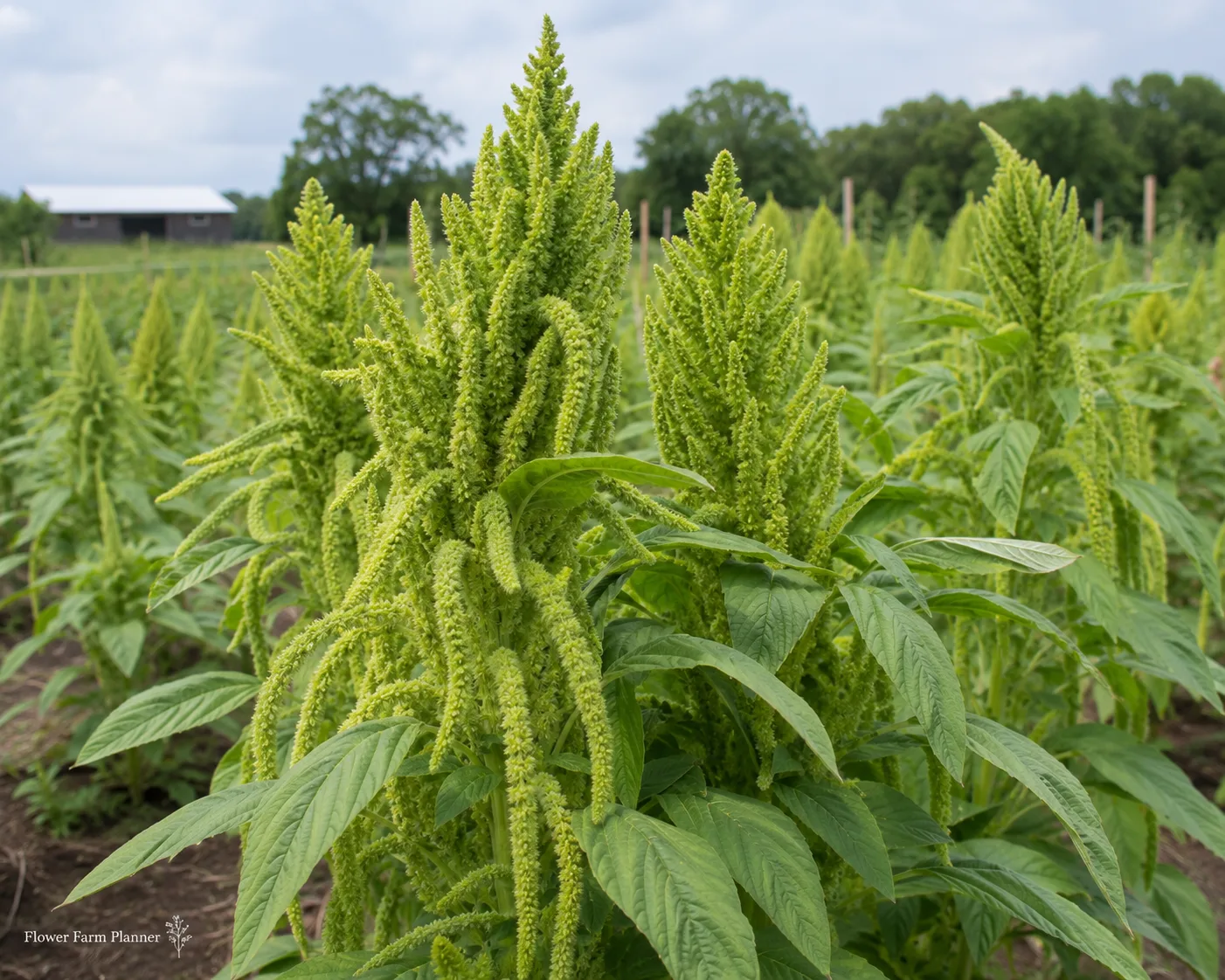
Zinnia elegans / Zinnia
Zinnia 'Dawn Creek Pastels' is a tall, heat-loving, cut-and-come-again Zinnia elegans mix selected for muted romantic color, variable decorative bloom forms, and strong bouquet appeal. It is best treated as a premium local stem crop: easy to start, quick to flower, productive when cut often, but vulnerable to foliar disease and postharvest breakdown when grown or handled carelessly.
Open variety
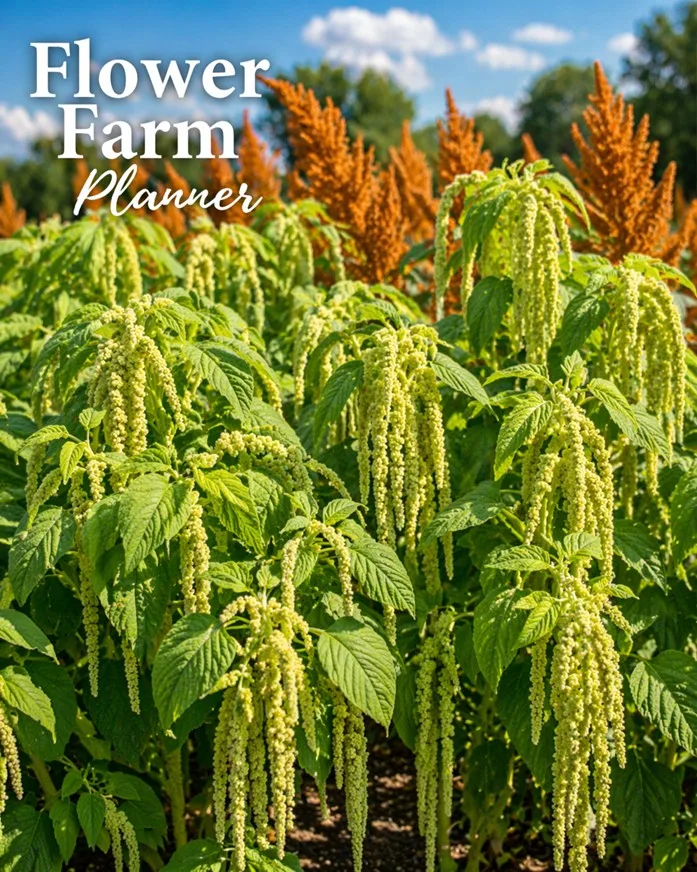
Zinnia elegans / Zinnia
Zinnia 'Dawn Creek Peach' is a tall, productive, warm-season cut zinnia selected for soft buff, peach, apricot, faded coral, blush, and warm pastel tones. It is best treated as a premium local-market zinnia rather than a commodity crop: grow it in full sun, plant after all frost danger has passed, pinch young plants, cut frequently, and harvest only stiff mature stems. Its main strengths are unusual color, strong summer productivity, and bouquet usefulness; its main risks are foliar disease, immature harvest, limited cold-storage tolerance, and some genetic variation in flower form and color.
Open variety
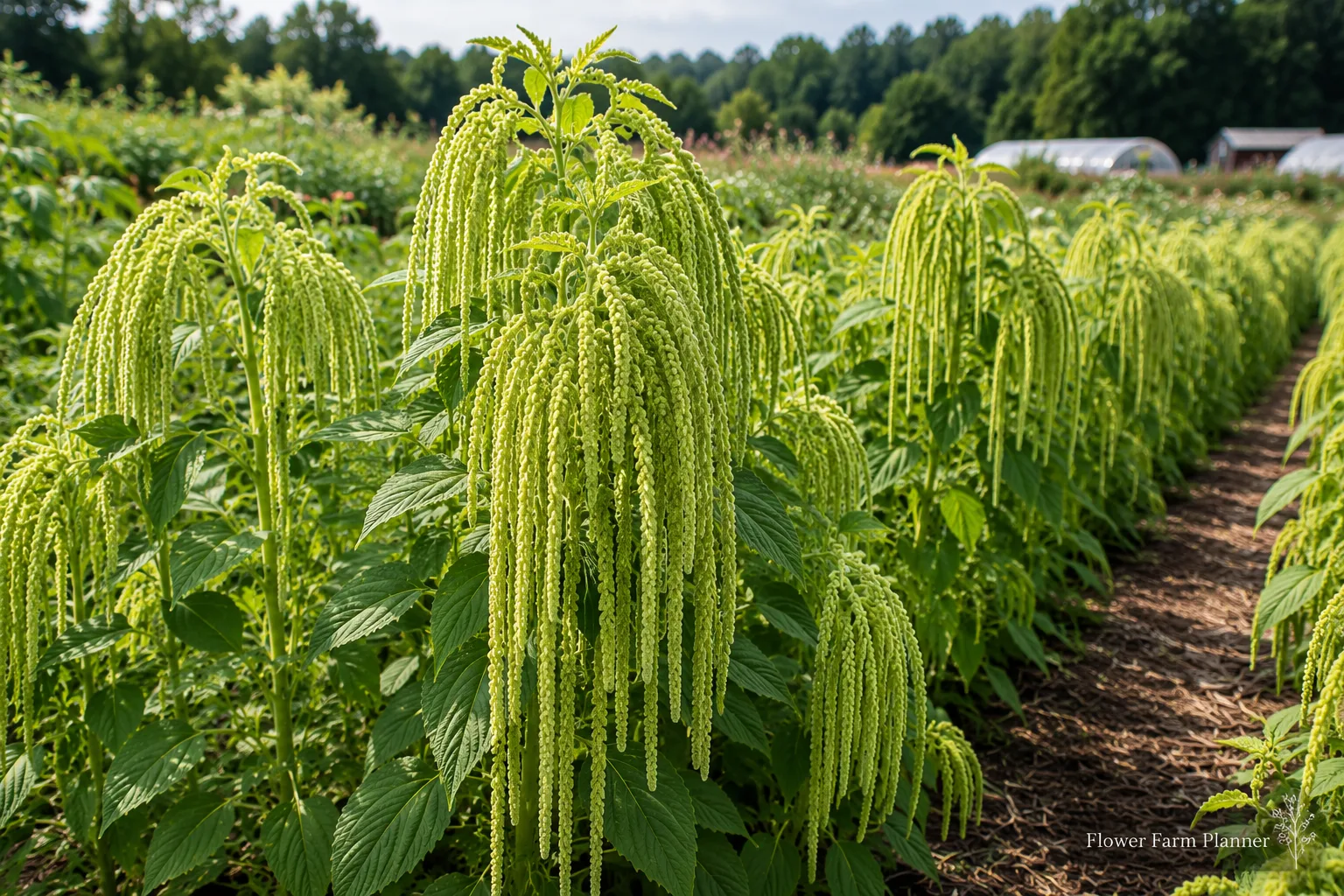
Zinnia elegans / Zinnia
Zinnia ‘Day Glow Mix’ is a vivid, specialty, seed-grown zinnia mix bred by Peace Seedlings and valued for colors that look more tropical and painterly than ordinary zinnia mixes. Expect medium single to semi-double flowers in orange, coral, raspberry, peach, cherry, yellow-tipped, red-washed, and other two-tone combinations. It is easy to grow from seed, loves heat and full sun, and produces useful bouquet stems when cut frequently. Its main weaknesses are not germination or flower power, but disease management, clean postharvest handling, and the natural variability of an open-pollinated mix.
Open variety
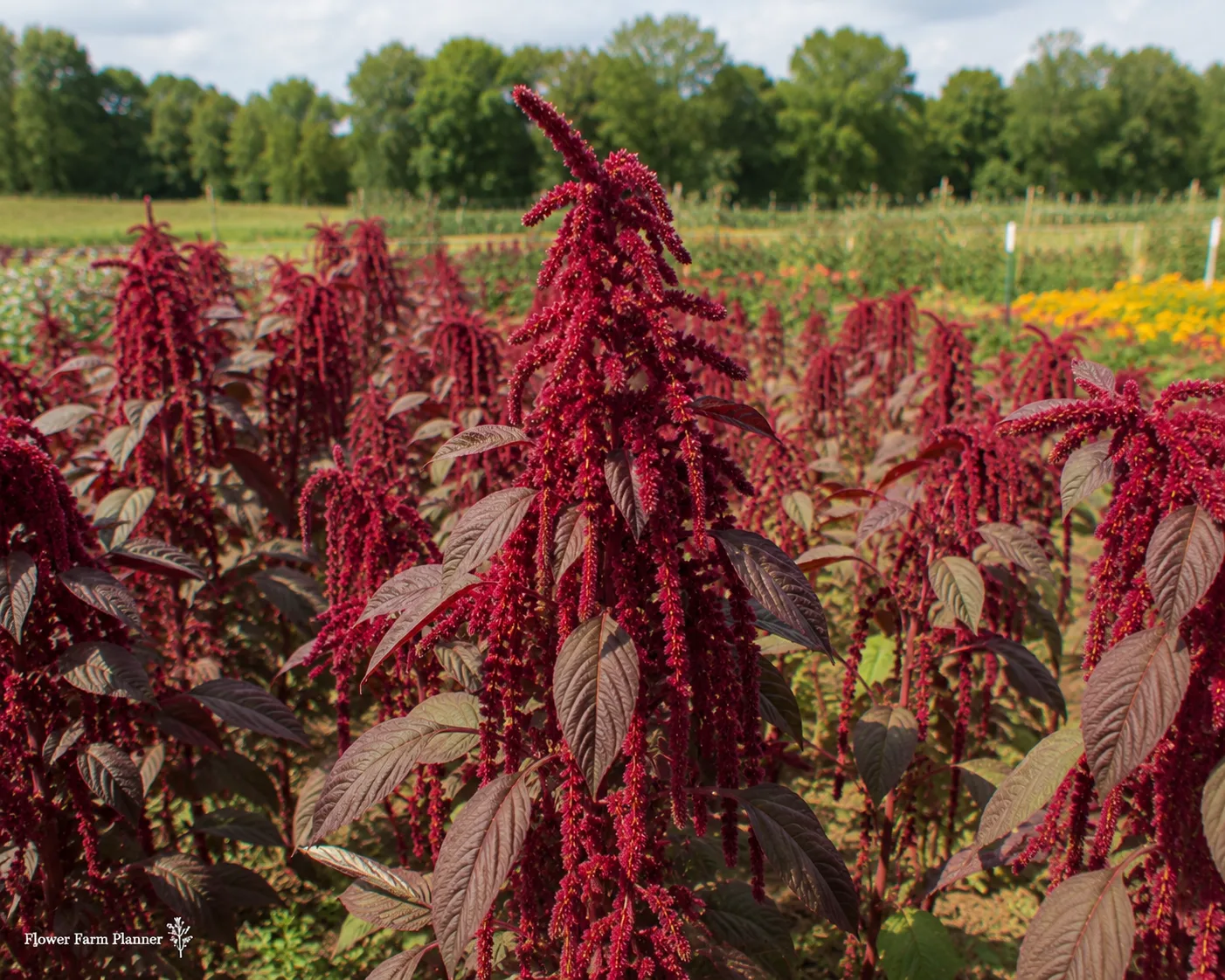
Zinnia elegans / Zinnia
‘Desert Sunset Mix’ is a warm-season cutting zinnia mix selected for tall plants, large blooms, and a cohesive palette of muted buff, peach, coral, gold, orange, pink, and sunset tones. It is easy to grow from seed once the weather is warm, but it rewards professional handling: pinch young plants, provide support netting, harvest frequently, maintain airflow, and keep foliage dry. Its greatest value is not uniformity but palette richness, making it excellent for seasonal bouquets, warm wedding work, subscriptions, and late-summer market bunches.
Open variety
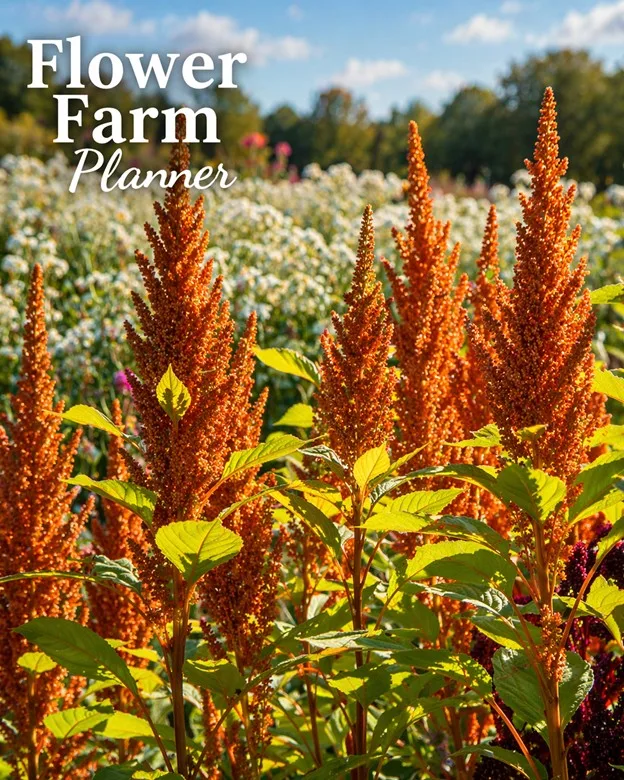
Zinnia elegans / Zinnia
Zinnia Double Zahara™ Bright Orange is a compact, warm-season, seed-grown Zinnia marylandica selected for vivid golden-orange fully double blooms, strong all-season garden performance, and improved resistance to common zinnia foliar diseases. Plants usually form tidy mounded upright clumps around 40–50 cm tall and wide, producing many small to medium double flowers that keep color in hot sunny beds and containers. It is best understood as a durable bedding and landscape zinnia that can also supply cheerful short stems for posies, bouquet bars, subscription bouquets, and local mixed bunches. It is not a long-stem florist zinnia, so growers should plan it for compact production, high color value, pollinator appeal, and low-maintenance summer display.
Open variety
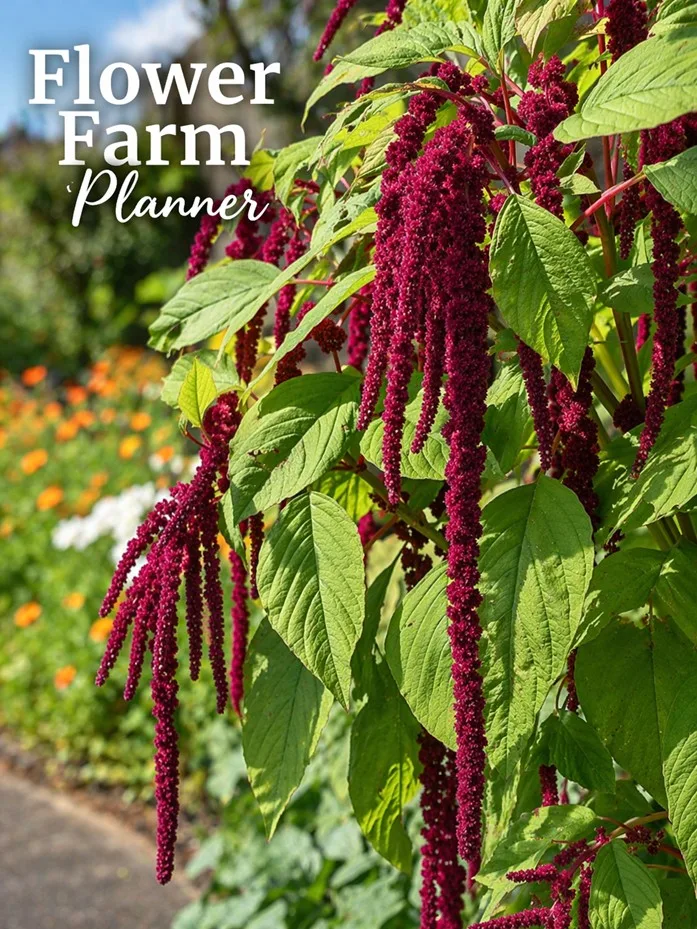
Zinnia elegans / Zinnia
Zinnia Double Zahara™ Cherry is a compact, heat-loving, disease-resistant zinnia with vivid cherry-red double to semi-double flowers and a mounded habit. It is best understood as a durable bedding, container, landscape, and local short-stem bouquet crop rather than a tall florist zinnia. It performs strongly in sunny warm conditions, needs little support, and offers a dependable color show through the warm season. For cut use, harvest firm, nearly mature blooms and move them quickly through local sales channels.
Open variety
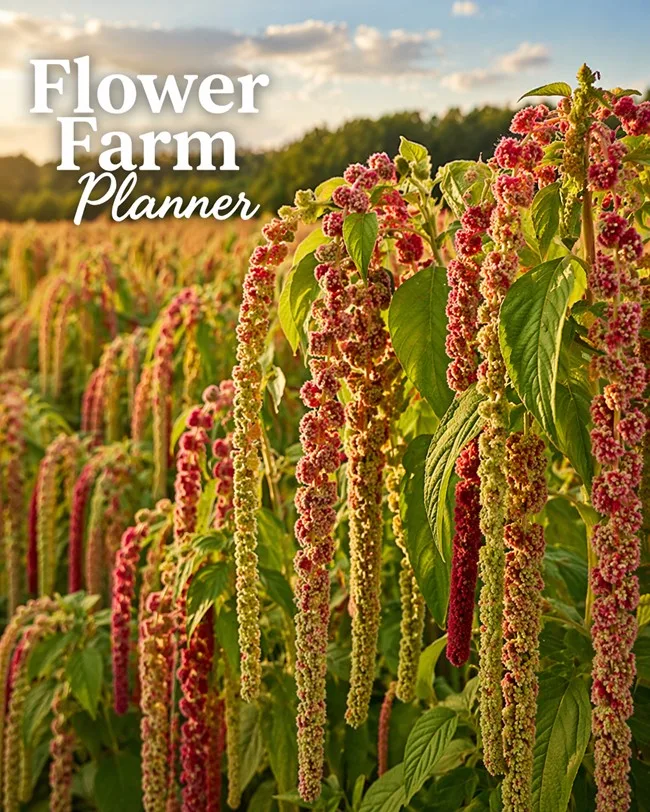
Zinnia elegans / Zinnia
Zinnia ‘Double Zahara™ Fire’ is a compact, heat-loving, disease-resistant zinnia with vivid fully double orange-red flowers on a tidy mounded plant. It is best grown for patio pots, bedding sales, pollinator gardens, landscape color and cheerful short-stem local bunches. It is easier and cleaner in humid or high-disease settings than many classic zinnias, but it still needs sun, airflow, warm soil and sensible watering.
Open variety
Zinnia elegans / Zinnia
Zinnia Double Zahara™ Salmon is a compact, disease-resistant interspecific zinnia with warm salmon-coral double blooms on dense mounded plants. It is excellent for hot-season bedding, containers, farmstand color, pollinator plantings, and cheerful short-stem local bouquets. It is easier and cleaner than many traditional zinnias in humid climates, but it still needs full sun, warm soil, good airflow, and clean postharvest water. Grow it when the goal is resilient summer color and local charm rather than long-stem wholesale production.
Open variety
Zinnia elegans / Zinnia
Zinnia 'Dream' is a tall, warm-season annual cut flower grown for large, dahlia-style rosy-lavender blooms on branching plants. It belongs in a summer cutting program where soft color, easy seed production, repeated harvest, and approachable bouquet value matter. The plant is easy to start from seed and generous when cut regularly, but it is not a neglect-proof commercial crop: spacing, airflow, succession planting, mature harvest stage, and clean postharvest handling determine whether the stems feel florist-ready or merely garden-pretty.
Open variety
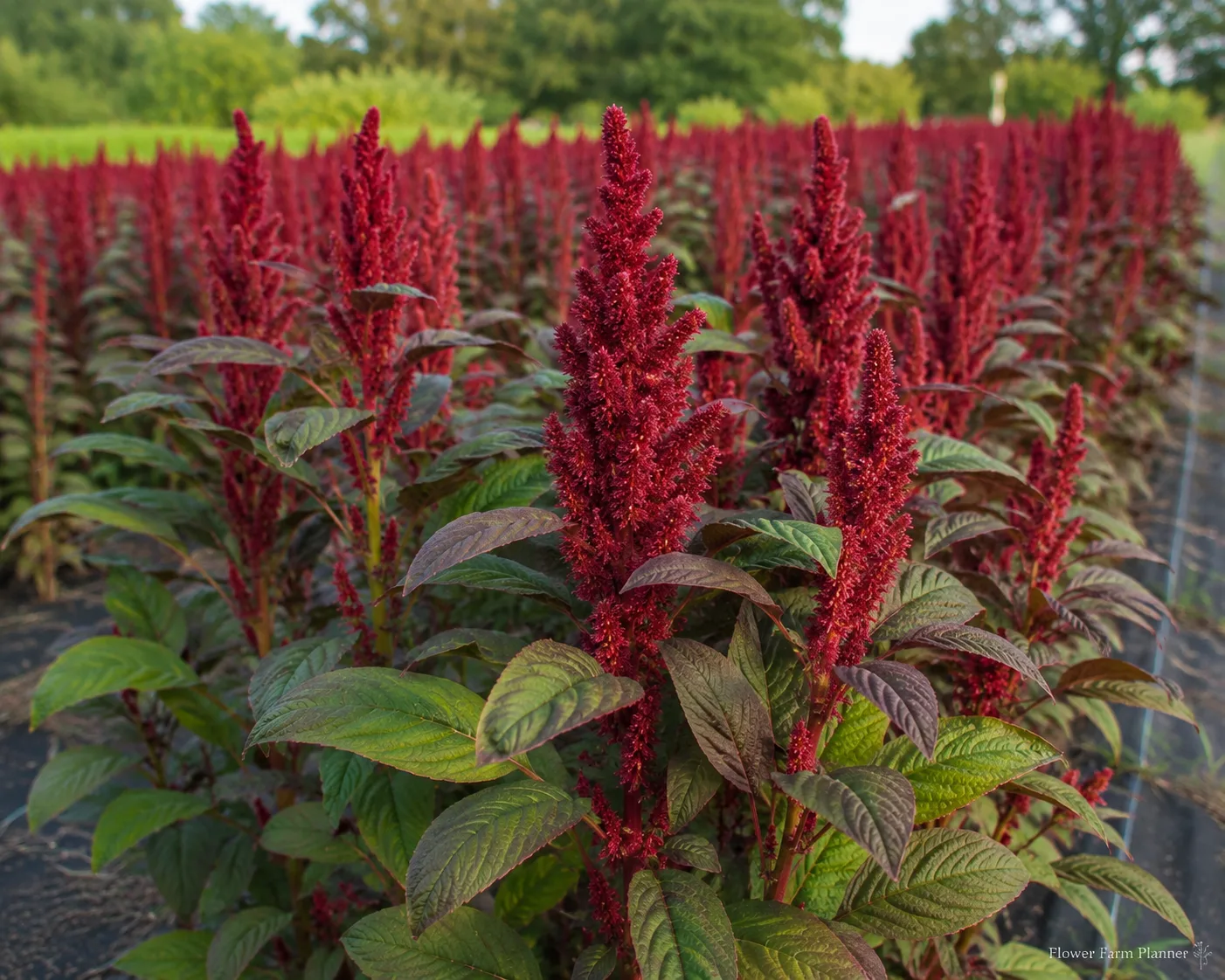
Zinnia elegans / Zinnia
Zinnia ‘Dreamin’ is a tall, warm-season, open-pollinated specialty zinnia mix grown for large, informal, multicolored blooms. It is best handled as a productive local-market cut flower rather than a uniform commodity crop. The plants love heat, full sun, warm soil, regular cutting, and clean postharvest handling. The flowers bring a distinctive painterly mix of maroon, cream, red, yellow, peach, raspberry, orange, magenta, pink, and white tones, often with lighter petal tips over richer bases.
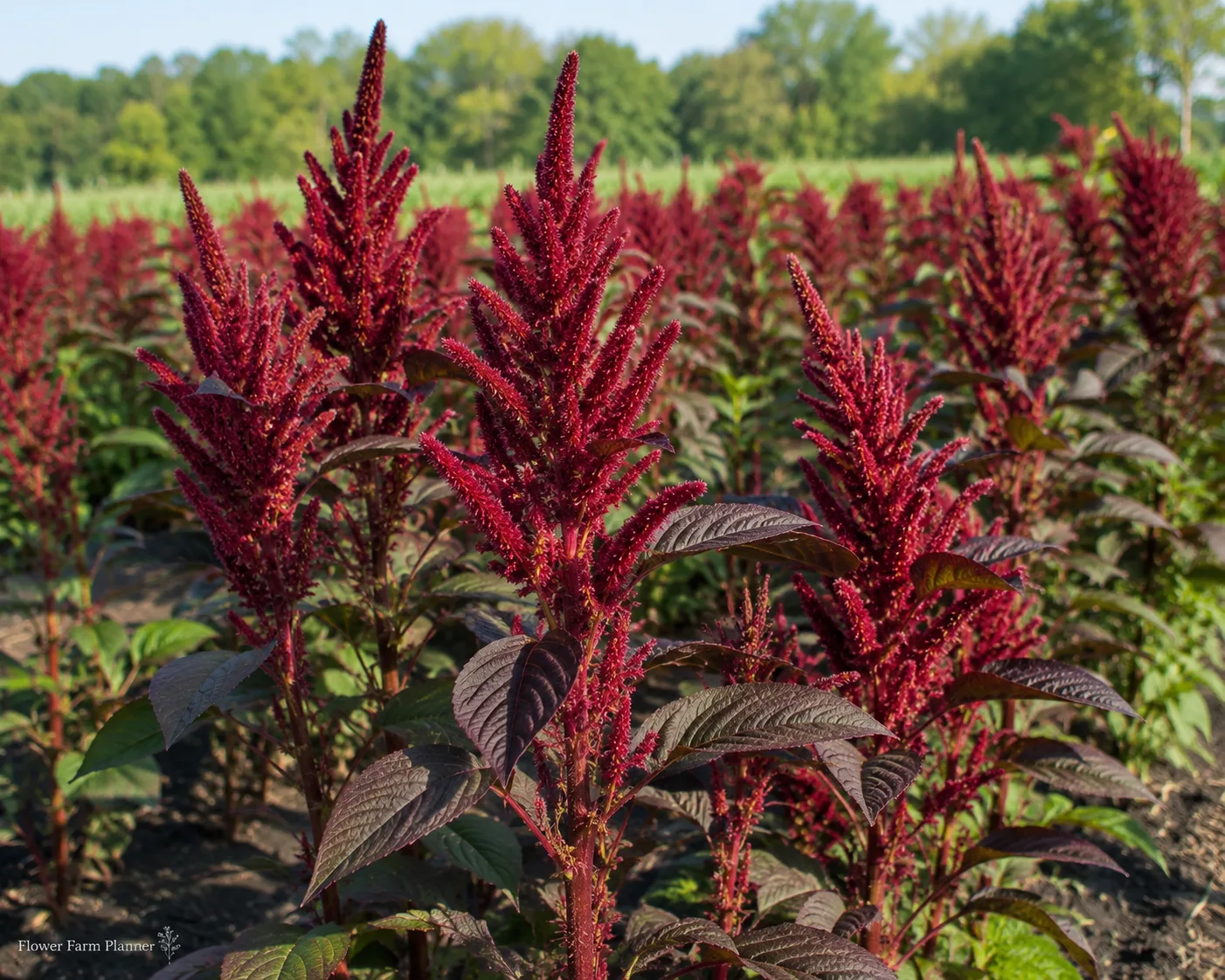
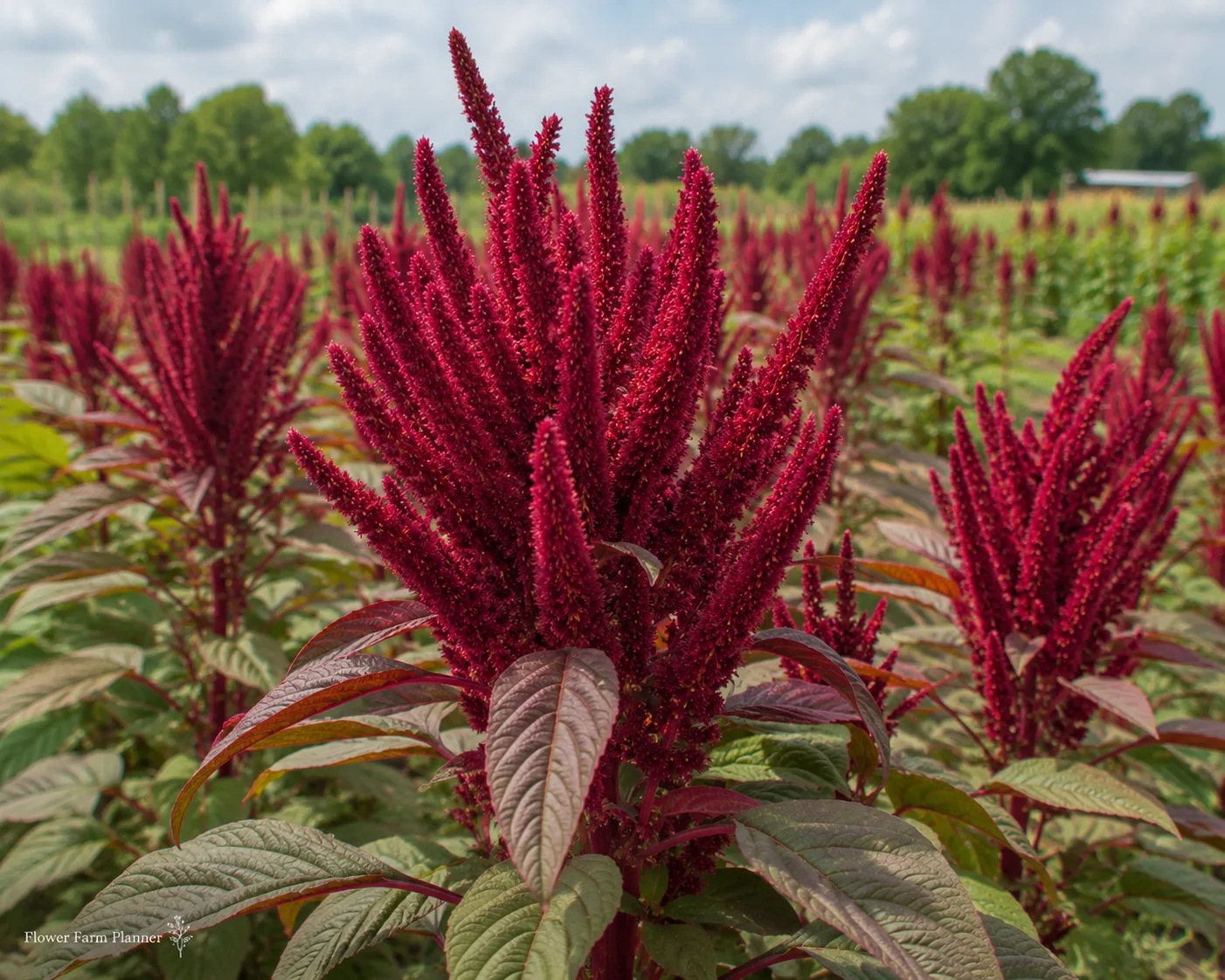
Open variety
Zinnia elegans / Zinnia
Zinnia ‘Eldorado’ is a warm salmon-orange, dahlia-flowered form of Zinnia elegans grown primarily as a fresh cut annual. It is valued for large, double to semi-double blooms on upright branching plants, a hot-season production window, and strong usefulness in market bouquets, subscriptions, roadside bunches, and autumn-toned event work. The crop is simple to establish from seed, but quality depends on warmth, full sun, steady cutting, airflow, and careful postharvest hygiene.
Open variety
Zinnia elegans / Zinnia
Zinnia 'Golden Hour' is a specialty warm-toned Zinnia elegans variety with honey, cantaloupe, apricot, and antique sunset coloring. It should be grown like other tall cut-flower zinnias, but planned as a premium color crop rather than a generic bright zinnia.
Open variety
Zinnia elegans / Zinnia
Zinnia Golden State is a classic bright golden yellow, dahlia-flowered Zinnia elegans variety grown from seed for summer and autumn cut flowers. It produces bold, rounded double to semi-double blooms that bring immediate color impact to market bouquets, subscription bunches, and cheerful event work. The crop is fast, heat-loving, inexpensive to establish, and highly productive when harvested often. Its biggest strengths are its clear color, easy seed culture, and long warm-season harvest; its main weaknesses are the normal zinnia risks of powdery mildew, leaf spot, petal damage, and postharvest collapse if stems are cut too early or handled in dirty water.
Open variety
Zinnia elegans / Zinnia
Zinnia ‘Illumination’ is a vivid deep-rose dahlia-flowered zinnia with large, rounded, fully double blooms on medium-to-tall plants. It is a warm-season, seed-grown annual that offers strong color impact, quick production, repeat cutting, and excellent appeal in local summer bouquets. It should be grown in full sun, warm soil, and airy beds, cut only when blooms are mature and stems are firm, and sold fresh through local channels. Its main risks are foliar disease, petal damage, weak immature stems, and postharvest decline if harvested too early or held too long.
Open variety
Zinnia elegans / Zinnia
Zinnia 'Inca' is a tall, bright-orange, cactus-flowered annual zinnia for growers who want bold summer color, strong bouquet texture and a more controlled orange palette than a mixed cactus blend. It is easy to raise from seed, quick to flower and productive when cut regularly, but it should be handled as a fresh local crop rather than a long-storage commodity. Its best performance comes from warm soil, full sun, steady water, good airflow, clean harvest buckets and repeated succession sowing.
Open variety
Zinnia elegans / Zinnia
Zinnia ‘Isabellina’ is a soft buttercream-to-creamy-yellow cut-flower zinnia grown as a tender annual from seed. It is best planned as a warm-season, full-sun, cut-and-come-again crop for local bouquets and florist work. The variety is valuable because it gives growers a pale, refined zinnia color that bridges cream, ivory, soft yellow, apricot, blush, and champagne palettes without the harshness of bright yellow. It should be grown in successions, pinched for branching, harvested only when stems are firm, and kept on a clean disease-prevention program because pale flowers and mildew-marked foliage quickly lose premium value.
Open variety
Zinnia elegans / Zinnia
Zinnia 'Jazzy Mix' is a compact, highly productive Zinnia haageana mixture grown for small, warm, patterned flowers in burgundy, red, orange, yellow, chestnut, and cream-tipped combinations. It is best understood as a cheerful bouquet accent rather than a long-stemmed exhibition zinnia. The plants branch freely, keep flowering when cut regularly, and bring a distinctive spicy, late-summer character to mixed bunches. Because the flowers are small and the color mix is lively, it is especially useful for farmers market bouquets, subscription work, pollinator-style arrangements, and warm rustic designs where visual movement and repeated harvest matter more than uniformity.
Open variety
Zinnia elegans / Zinnia
‘Jazzy Red’ is a compact, warm-season Mexican zinnia with small dark cherry-red flowers tipped in gold to cream. It is easy to grow from seed, strong for containers and informal beds, and useful as a patterned accent in summer and autumn bouquets. It is not a giant focal zinnia; its value is in charm, color contrast, pollinator appeal, and repeated small-stem harvests. Give it full sun, warm soil, good spacing, and frequent cutting.
Open variety
Zinnia elegans / Zinnia
Zinnia 'Jim Baggett's Choice Mix' is a bright, open-pollinated cut-flower zinnia population with large dahlia- and cactus-type blooms in a wide range of warm and vivid colors. It is productive, joyful, and especially useful for local mixed bouquets, subscriptions, market bunches, and colorful florist buckets. It should be grown as a warm-season succession crop with full sun, warm soil, good airflow, frequent harvest, and clean postharvest handling.
Open variety
Zinnia elegans / Zinnia
Lilac Empress is a warm-season, seed-grown Zinnia elegans with large lilac-purple cactus-type blooms. It is best grown in full sun after frost, planted in successions, pinched for branching, and harvested only when the stem below the bloom is firm. The variety is valuable for local bouquets because it brings purple color, texture, pollinator appeal, and a less ordinary zinnia look. It should be sold through short local channels, not treated as a long-storage commodity flower.
Open variety
Zinnia elegans / Zinnia
Zinnia 'Lilliput Mix' is a warm-season, seed-grown, cut-and-come-again annual with small double to semi-double pompon blooms in a cheerful mix of rose, carmine, red, pink, orange, coral, yellow, white, violet, and related bright shades. It is easy to grow in full sun after frost, productive when cut often, and especially useful for colorful market bouquets, subscriptions, u-pick, farmstand jars, and informal florist work. Its value is charm, abundance, and mixed summer color rather than giant bloom size or strict wholesale uniformity.
Open variety
Zinnia elegans / Zinnia
Zinnia 'Lilliput Salmon' is a compact, heat-loving, seed-grown annual with petite fully double salmon-pink pompon flowers. It is best used as a fresh local bouquet crop where its small button blooms add warmth, repetition, and charm. It is easy to grow, but clean market stems require warm sowing conditions, full sun, drip irrigation, airflow, frequent cutting, and active prevention of powdery mildew and leaf spot.
Open variety
Zinnia elegans / Zinnia
Zinnia 'Little Flower Girl' is a tall, productive, seed-grown specialty zinnia selected for miniature pastel flowers in blush, soft pink, pale peach, and champagne, with occasional warmer off-types. It belongs in warm, sunny beds after frost, performs best with pinching and frequent harvest, and is most valuable for local bouquets, subscriptions, and romantic event work where its small flower size and soft color range create delicate texture.
Open variety
Zinnia elegans / Zinnia
Zinnia ‘Macarenia’ is a compact, warm-season, seed-grown annual zinnia valued for its vivid scarlet-red petals tipped in golden yellow. It is not the longest-stemmed premium zinnia, but it is highly useful for bright local bouquets, cheerful bunches, and summer market color. Grow it in full sun, warm soil, and well-spaced rows, pinch for branching, harvest frequently, and keep foliage dry to reduce disease pressure.
Open variety
Zinnia elegans / Zinnia
Zinnia ‘Mazurkia’ is a warm-season, seed-grown annual zinnia grown for vivid bicolor blooms that read as scarlet, strawberry, or lipstick pink with cream to blush petal tips and a golden center. It is an easy, productive crop for local summer bouquets, but premium quality depends on warm soil, full sun, clean harvest handling, succession planting, and disease prevention. It should be planned as a local, cut-and-come-again bouquet flower rather than a long-storage commodity crop.
Open variety
Zinnia elegans / Zinnia
Zinnia 'Meteor' is a warm-season, deep burgundy-red dahlia-flowered annual zinnia grown from seed for fresh local cuts. It offers large rounded double blooms on medium-tall plants, strong heat tolerance and repeated cutting, but it should be managed for disease prevention, clean water and quick local sales.
Open variety
Zinnia elegans / Zinnia
Zinnia ‘Oklahoma Carmine’ is a rich carmine-wine, small-flowered cut zinnia grown as a tender annual from seed. It belongs to the Oklahoma Series, which is valued by professional cut-flower growers for branching plants, strong stems, smaller 4–6 cm blooms, and a high percentage of semi-double to double flowers. The variety is best used as a warm-season, full-sun, cut-and-come-again crop for local bouquets, subscription bunches, and florist work. Its color is much deeper and more dramatic than soft pastel zinnias, making it useful for berry, jewel, tropical, autumn, and bold summer palettes. Plan it in successions, pinch young plants, harvest frequently, and remove old plantings once disease begins to reduce quality.
Open variety
Zinnia elegans / Zinnia
Zinnia ‘Oklahoma Golden Yellow’ is a professional small-flowered golden-yellow cut zinnia in the Oklahoma series. It produces many semi-double to double blooms on branching plants and is especially useful in mixed bouquets, subscriptions, florist bunches, and bright summer event work. Compared with giant zinnias, it offers a more flexible flower size and often gives a higher count of usable bouquet stems. It needs full sun, warm soil, airflow, regular harvest, and clean postharvest handling to produce premium stems.
Open variety
Zinnia elegans / Zinnia
Zinnia 'Oklahoma Ivory' is a refined, small-flowered ivory zinnia for growers who want the productivity and ease of zinnias without the visual weight of giant blooms. It works best as a local cut flower, harvested frequently at firm-stem stage and sold quickly into bouquets, subscriptions, and wedding/event work. Its soft neutral color is commercially valuable, but it demands cleaner production and handling than bold-colored zinnias because every mark shows.
Open variety
Zinnia elegans / Zinnia
Zinnia 'Oklahoma Mix' is a bright, productive, seed-grown annual zinnia selected for cut-flower use, especially where growers need many cheerful, small, double and semi-double blooms for mixed bouquets. Compared with giant zinnias, the smaller flower heads are easier to design with, lighter on the stem, and less likely to break at the neck. It is a warm-season crop that rewards frequent harvesting, clean postharvest handling, and young succession plantings.
Open variety
Zinnia elegans / Zinnia
Zinnia 'Oklahoma Pink' is a productive small-flowered double zinnia with clear pink blooms on well-branched plants. It is most valuable as a fresh local bouquet crop because the bloom size is easy to repeat through mixed bouquets, subscriptions, and event work. It should be harvested mature, handled cleanly, and replanted in successions for continuous high-quality stems.
Open variety
Zinnia elegans / Zinnia
High-yield summer annual producing colourful blooms continuously until frost.
Open variety
Zinnia elegans / Zinnia
Zinnia ‘Oklahoma Scarlet’ is a bright scarlet-red, small-flowered cut zinnia grown as a tender annual from seed. It belongs to the Oklahoma Series, which is valued by professional cut-flower growers for branching plants, strong stems, smaller 4–6 cm blooms, and a high percentage of semi-double to double flowers. The variety is best used as a warm-season, full-sun, cut-and-come-again crop for local bouquets, subscription bunches, florist buckets, and farmstand sales. Its color is clearer and hotter than carmine or wine zinnias, making it especially useful when a bouquet needs immediate red impact without the oversized scale of giant zinnia blooms.
Open variety
Zinnia elegans / Zinnia
Zinnia 'Oklahoma White' is a warm-season, seed-grown cut zinnia with small, mostly double to semi-double white blooms on branching plants. It is one of the most useful white zinnias for mixed bouquets, wedding work, subscription bunches, and local florist sales because the flower size is easy to design with and the plants produce repeatedly when harvested often. The crop is straightforward in warm, sunny conditions, but white flowers demand stricter grading, clean handling, and good disease prevention.
Open variety
Zinnia elegans / Zinnia
Zinnia 'Park's Picks Scarlet' is a bold scarlet, fully double, seed-grown annual zinnia for warm-season cutting. It is best used as a bright local-market crop rather than a long-storage commodity stem. The crop is simple from seed, productive after repeated cutting, and valuable when customers want clear red summer color. Its main risks are cold soil, frost, humid weather diseases, beetle damage, weak stem harvest, and postharvest collapse from poor sanitation or extended holding.
Open variety
Zinnia elegans / Zinnia
Zinnia ‘Persian Carpet Mix’ is a compact, warm-season Mexican zinnia grown from seed for abundant small double and semi-double flowers in gold, orange, cream, burgundy, red, mahogany, and maroon bicolors. It is cheerful, productive, heat tolerant, pollinator-friendly, and less formal than tall professional zinnias. It belongs in local mixed bouquets, market bunches, subscription flowers, and warm autumn-style palettes, especially where distinctive color matters more than long premium stems.
Open variety
Zinnia elegans / Zinnia
Zinnia 'Polar Bear' is a creamy white, dahlia-flowered heirloom zinnia for warm-season cut-flower production. It gives growers a useful white summer flower at a time when many white crops are either finished, expensive, or difficult in heat. The plant is grown from seed, establishes quickly in warm soil, branches well when pinched, and responds to frequent cutting with repeated stems. It is best planned as a local fresh-cut crop, not a long dry-shipped commodity stem. Its greatest strengths are color usefulness, easy propagation, fast cropping, and broad bouquet appeal. Its biggest weaknesses are disease pressure in humid conditions and the fact that white petals reveal every mark, bruise, beetle scar, and weather stain.
Open variety
Zinnia elegans / Zinnia
Zinnia ‘Precious Metals’ is a tall, giant-flowered, open-pollinated specialty zinnia mix grown for complex metallic pastel colors rather than bright uniform summer color. The flowers include linen, icy lavender, pale pink, soft peach, and palomino, with aging tones that can fade into turquoise and lavender-dusted lower petals. Plants are warm-season annuals that germinate quickly, grow best in full sun, and reward steady cutting with a long harvest window. The crop is easy to start but should be managed carefully for airflow, clean water, and disease prevention because pale premium blooms show blemishes quickly.
Open variety
Zinnia elegans / Zinnia
Zinnia ‘Pumila Mixed’ is a compact to medium-height warm-season annual zinnia grown for abundant semi-double to double mixed-color flowers on short to medium stems. It is a classic cut-and-come-again summer crop for gardens and local markets, especially where cheerful mixed color, repeat bloom, pollinator value, and easy seed culture matter more than uniform florist-grade stem length. It is most dependable when planted after frost in warm soil, grown in full sun with drip irrigation and airflow, and harvested at the firm-neck stage.
Open variety
Zinnia elegans / Zinnia
Zinnia 'Purple Prince' is a tall, seed-grown, warm-season cut zinnia with large double to semi-double royal-purple or magenta-purple dahlia-like blooms on sturdy stems. It is best grown after frost in full sun, pinched young for branching, harvested frequently at the firm-stem stage, and sold through local markets, subscriptions, florist buckets, and bright event work. It gives strong color impact but needs airflow, sanitation, and timely successions to avoid mildew and late-season decline.
Open variety
Zinnia elegans / Zinnia
Zinnia ‘Queen Lime’ is a premium, heat-loving annual cut flower grown for unusual chartreuse-lime blooms on productive branching plants. It belongs in a summer cutting program where color range, bouquet flexibility, and florist appeal matter. The plant is easy to start from seed and generous when cut frequently, but it should not be treated carelessly: disease prevention, airflow, clean harvest water, and correct harvest maturity are essential for saleable stems. Its greatest strength is not maximum yield alone, but the ability to make bouquets look more modern, botanical, and professionally designed.
Open variety
Zinnia elegans / Zinnia
Zinnia ‘Queen Lime Blush’ is a premium antique-toned cut zinnia grown for soft lime-green blooms brushed and overlaid with blush pink, dusty rose, muted mauve, and vintage raspberry tones. It is best treated as a high-value local cut flower for wedding, florist, subscription, and farmers market work. The crop is easy from seed, fast to flower, and productive when cut regularly, but it requires warm soil, full sun, airflow, clean harvest practice, and disease-aware succession planting. Its color is its main selling point: it bridges green, blush, cream, burgundy, peach, and champagne palettes in a way that standard bright zinnias cannot.
Open variety
Zinnia elegans / Zinnia
Zinnia 'Queen Lime Orange' is a distinctive antique-color cut zinnia with apricot-orange, peach, coral, lime-green, and rosy-centered blooms on productive warm-season plants. It is best grown from seed after frost, pinched young, supported in field blocks, succession planted, and harvested frequently at firm-stem stage. Its value is not just productivity but color: it gives bouquets and wedding work a sophisticated warm bridge between orange, blush, green, and rose. The crop is easy enough for beginners but premium-quality stems require clean culture, airflow, and careful postharvest handling.
Open variety
Zinnia elegans / Zinnia
Zinnia ‘Queen Red Lime’ is a premium novelty cut zinnia grown for smoky burgundy-red outer petals that soften into rose, raspberry, wine, and creamy lime-green centers. It is warm-season, easy from seed, and productive when pinched and harvested often, but it must be managed with airflow, clean postharvest handling, and succession planting. The crop is especially useful for growers who want a zinnia that reads sophisticated rather than bright and primary-colored.
Open variety
Zinnia elegans / Zinnia
Zinnia ‘Queeny Formula Mix’ is a premium warm-season annual cut flower grown from seed for a coordinated range of rose, orange, peach, lemon, and lime blooms. It gives growers a more modern palette than standard zinnia mixes while still keeping the easy, generous, cut-and-come-again production habit of Zinnia elegans. The plants are sturdy and productive in heat, but commercial quality depends on correct maturity at harvest, good airflow, clean water, careful grading, and succession planting before old blocks decline.
Open variety
Zinnia elegans / Zinnia
Zinnia 'Queeny Lemon Peach' is a distinctive antique warm-pastel cut zinnia with lemon-yellow petals, peach to rosy centers, and soft buff-coral aging tones on productive warm-season plants. It is best grown from seed after frost, pinched young, supported in field blocks where wind is an issue, and harvested frequently at the firm-stem stage. The variety is most valuable for local bouquets, wedding/event stems, florist buckets, and market work where unusual color earns a premium.
Open variety
Zinnia elegans / Zinnia
Zinnia ‘Queeny Pure Orange’ is a bright, warm-season annual cut flower grown from seed for clear orange double and semi-double blooms on plants tall enough for cutting. It is a useful alternative to oversized orange zinnias because the blooms are smaller to medium sized, easier to blend into bouquets, and strong enough to function as a secondary focal or mass flower. It performs best in full sun, warm soil, good drainage, and regular cutting, with careful attention to mildew, leaf spots, beetles, and clean postharvest water.
Open variety
Zinnia elegans / Zinnia
Zinnia 'Raspberry Limeade' is a distinctive bicolor cut zinnia with lime-green to chartreuse petals brushed and overlaid with raspberry, blush pink, and rose tones on productive warm-season plants. It is best grown from seed after frost, pinched young, supported in field blocks where wind is an issue, and harvested frequently at the firm-stem stage. Its value is strongest in local bouquet and wedding work because the unusual green-and-berry coloring looks intentional, modern, and difficult to replace with standard bright zinnias.
Open variety
Zinnia elegans / Zinnia
Zinnia ‘Red Peruvian’ Organic is a seed-grown Zinnia peruviana with small velvety brick-red flowers that age into warm terracotta and russet tones. It is a warm-season, pollinator-friendly, cut-and-come-again annual suited to mixed bouquets, rustic bunches, naturalistic design work, and heirloom seed-saving projects. It is not a large premium florist zinnia; its strength is character, antique color, organic seed availability, heat tolerance, and informal seasonal charm.
Open variety
Zinnia elegans / Zinnia
Zinnia 'Scarlet Flame' is a bold, scarlet-red, dahlia-flowered annual zinnia for warm-season cut-stem production. It is fast, bright, productive, and easy to understand in the field, making it useful for farmers market bouquets, subscriptions, u-pick patches, and local florist bunches. Its main management requirement is not complicated culture but disciplined timing: sow only into warm conditions, cut often, keep air moving around the plants, remove diseased material quickly, and handle stems in clean water.
Open variety
Zinnia elegans / Zinnia
Zinnia 'Senorita' is a warm-season, seed-grown annual zinnia valued for textured cactus-form blooms in salmon-pink, coral, cherry, and rose tones. It is fast, productive, and highly useful for local mixed bouquets, but it should be treated as a fresh local crop rather than a long-distance shipping flower. Plan successions, keep foliage dry, harvest fully mature stems, and sell quickly for best results.
Open variety
Zinnia elegans / Zinnia
Zinnia ‘Soleado’ is a compact, warm-season, seed-grown annual with small single blooms in glowing orange edged with lemon to golden yellow and a mahogany-toned center. It is easy to grow, quick to flower, attractive to pollinators, and especially useful for cheerful local bouquets, cottage-style bunches, containers, borders, and informal event work. It should be planned as a short-to-medium accent crop rather than a tall wholesale zinnia. Grow it in full sun, warm soil, and well-drained beds, harvest frequently, and keep foliage dry and airy to reduce mildew and leaf spot.
Open variety
Zinnia elegans / Zinnia
Zinnia ‘State Fair Mix’ is a vigorous warm-season annual zinnia grown for large, bright, mixed-color flowers on useful cutting stems. It is a classic summer workhorse for farms and gardens that want bold color, easy establishment from seed, pollinator value, and a long harvest window. It is most dependable when planted after frost in warm soil, grown in full sun with drip irrigation and airflow, and harvested at the firm-neck stage.
Open variety
Zinnia elegans / Zinnia
Zinnia 'Sungod' is a warm-season, seed-grown annual zinnia selected for bright golden yellow to warm yellow-orange cactus-textured blooms. It is best used as a local cut flower where its cheerful color, strong visual impact, and cut-and-come-again production can be turned quickly into bunches and mixed bouquets. The crop is easy to germinate and grow in warm soil, but professional-quality stems depend on high light, regular harvesting, clean foliage, good airflow, and short postharvest handling. It is not a cold-weather crop and should be succession planted rather than expected to stay pristine all season.
Open variety
Zinnia elegans / Zinnia
Zinnia 'Unicorn Mix' is a tall, productive, warm-season cut zinnia selected for medium-sized domed blooms in raspberry, tangerine, magenta, lemon, apricot, dusty lilac, and blush tones, usually with striking lavender centers and a rainbow-like ombré effect. It is best treated as a premium local-market zinnia rather than a commodity crop: grow it in full sun, plant after all frost danger has passed, pinch young plants, cut frequently, and harvest only stiff mature stems. Its main strengths are unusual color, strong summer productivity, customer appeal, and bouquet usefulness; its main risks are foliar disease, immature harvest, limited cold-storage tolerance, and some genetic variation in flower color.
Open variety
Zinnia elegans / Zinnia
Zinnia ‘Uproar Rose’ is a large-flowered, rose-pink F1 zinnia for warm-season cutting and garden production. It gives bold, very full blooms on productive, slightly contained plants and is easiest to sell through local bouquet channels, u-pick, subscriptions, and cheerful summer events. Grow it in full sun, warm soil, and clean airflow, harvest when stems are firm, and succession sow to keep stems long and foliage clean.
Open variety
Zinnia elegans / Zinnia
Zinnia 'Victorian Wedding' is a tall, heat-loving, cut-and-come-again annual zinnia grown from seed for soft buff, pale peach, rose-pink, blush, and occasional soft orange double blooms. It is best treated as a premium local-market and wedding/event crop rather than a long-distance shipping flower. Plant after frost in warm soil, pinch young plants, succession sow, harvest only mature stems by the wiggle test, and prioritize sanitation and airflow to protect pale, high-value stems.
Open variety
Zinnia elegans / Zinnia
Zinnia ‘Whirlygig Mix’ is a warm-season, seed-grown annual zinnia valued for lively bicolor and multicolor flowers, often with contrasting petal tips and semi-double or semi-cactus expression. It is easy to grow in full sun after frost and responds well to regular cutting, but clean commercial production depends on good airflow, warm soil, drip irrigation, and timely harvest. It is best for local mixed bouquets, subscriptions, u-pick flowers, and cheerful summer bunches where variation is part of the appeal.
Open variety
Zinnia elegans / Zinnia
Zinnia 'Zinderella Fizz' is a warm-season, seed-grown specialty zinnia with a distinctive scabiosa-crested flower form and a playful strawberry-pink, raspberry, cream, and blush bicolor effect. It is grown like other tall zinnias: sow or transplant only after warm conditions arrive, provide full sun, avoid overhead irrigation, space for airflow, harvest frequently, and sell through short local channels. Its value is not simply yield; its value is the unusual flower texture and romantic bicolor palette that make bouquets look more designed and less ordinary. Because Zinderella types can vary in how many flowers become fully crested, the crop should be trialed and sorted carefully rather than planned as a perfectly uniform premium stem from the first planting.
Open variety
Zinnia elegans / Zinnia
Zinnia ‘Zinderella Lilac’ is a specialty scabiosa-flowered zinnia grown for soft lilac-pink blooms with a darker central eye and a fluffy raised crest. It offers a more refined, design-led look than standard bright zinnias and is especially useful where growers want pastel summer stems with texture. It is easy to germinate, quick to flower, and productive when pinched and cut regularly, but the crop should be managed as a local-market flower because harvest stage, foliage cleanliness, and fast postharvest handling determine quality.
Open variety
Zinnia elegans / Zinnia
Zinnia ‘Zinderella Peach’ is a warm-season novelty cut zinnia with scabiosa-style blooms in salmon, peach, cream, rose, apricot, and soft coral tones, usually accented by a dark central eye. It is grown for charm, texture, and color rather than strict uniformity. The most valuable stems have a firm neck, clean petals, a developed central crest, and a rounded face that reads like a small gerbera, echinacea, or cupcake zinnia in bouquets. It is easy from seed, heat-loving, and productive when cut regularly, but it must be harvested mature and graded carefully because immature stems wilt and not every flower will be fully double or perfectly crested.
Open variety
Zinnia elegans / Zinnia
Zinnia 'Zinderella Punch' is a warm-season, seed-grown annual zinnia in the Zinderella series, grown for scabiosa-like crested blooms in a ready-made mix of lilac, orange and purple. It is best treated as a local, fresh-cut specialty crop: easy to start, quick to flower, productive when pinched, and highly useful in mixed bouquets, but not as uniform as standard commercial dahlia-flowered zinnias. Its strongest value is design personality rather than maximum stem length.
Open variety
Zinnia elegans / Zinnia
Zinnia 'Zinderella Purple' is a warm-season, seed-grown annual zinnia selected for unusual scabiosa-style blooms in deep lilac-purple to purple-magenta tones with a darker central eye. It is best treated as a specialty fresh-cut crop rather than a standard mass-market zinnia, because the flower form is decorative, textured, and attention-grabbing but may vary from semi-double to more fully crested blooms. Grow it in full sun, warm soil, and well-drained beds with steady moisture, good air movement, and strict sanitation. Pinching young plants and harvesting only fully mature, firm-necked blooms gives the best stem quality. It is strongest for local bouquets, farmers markets, subscriptions, florist bunches, and garden-style event work where novelty texture and rich color matter more than perfect uniformity.
Open variety
Zinnia elegans / Zinnia
Zinnia ‘Zinderella Red’ is a warm-season annual zinnia grown for scarlet-red blooms with a dark eye and an unusual scabiosa-style crest on the best flowers. It is shorter and more compact than giant florist zinnias, but it can still be useful for local bouquets, subscriptions, and florist novelty bunches when grown in full sun, pinched for branching, harvested mature, and sold fresh. The crop should be graded carefully because scabiosa-form zinnias can produce a mix of crested, semi-double, and simpler blooms.
Open variety
Zinnia elegans / Zinnia
Zinnia ‘Zinderella Zest’ is a specialty scabiosa-flowered zinnia with orange-yellow bicolor blooms, a dark central eye, and a raised crested center that gives the flower a pincushion-like, highly textural look. It belongs to the Zinderella series and is notable because the bicolor orange-yellow pattern gives more movement and seasonal warmth than a flat orange zinnia. It is a tender annual, grown from seed, and performs best in warm soil, full sun, good airflow, and a regular cut-and-come-again harvest routine. Treat it as a local-market specialty flower: it is easy and fast to grow, but the most profitable stems come from clean, healthy, well-spaced plantings harvested at full maturity when the neck is firm.
Open variety
Zinnia elegans / Zinnia
Zowie!™ Yellow Flame is a bright, bicolor, semi-double Zinnia elegans that gives summer bouquets a dramatic scarlet-red and golden-yellow flame effect. It is easier and more compact than the tallest giant zinnias, generally needs no support, and performs best as a warm-season local-market crop with repeated harvesting. Its main management needs are airflow, clean water, disease prevention, and quick local sale after cutting.
Open variety